


Walking stability often begins with matching your personal mobility needs to the proper support device. Many adults seeking balance assistance on neighborhood sidewalks, paved greenways, or gravel paths wonder which leki walking pole best serves their daily walking routine. While standard orthopedic canes focus on indoor rehabilitation, hybrid walking poles offer ergonomic palm grips and adjustable telescoping shafts that absorb ground contact across varied surfaces. Choosing the wrong configuration can lead to unnatural wrist angles, poor posture, or inadequate traction on slick pavement. When planning outdoor excursions with a carry-on travel backpack, selecting a lightweight walking pole with a secure locking mechanism helps maintain an upright, confident posture throughout the day.
Understanding the mechanical differences between dedicated cane-handle models and dual trekking poles prevents common purchasing mistakes. Single walking poles equipped with cane-style palm grips, such as the Aergomed and Multimed designs, provide direct downward support for users managing mild joint discomfort or balance hesitation. In contrast, standard dual trekking poles cater to rhythmic trail pacing rather than focal downward body-weight offloading. Checking shaft materials, adjustment systems, and rubber street tips ensures your selected walking pole matches your specific height requirements and walking environment.





How to Choose the Right LEKI Walking Pole for Mobility and Support
Selecting the appropriate walking pole requires understanding how different shaft structures, grip angles, and tip components interact with your body weight and gait. Walking poles from LEKI fall into distinct functional categories ranging from cane-style single walking staffs to technical dual trekking and Nordic fitness poles. Determining which leki walking pole aligns with your personal mobility goals depends primarily on whether you require localized downward balance assistance or rhythmic bilateral stability across outdoor paths. Evaluating these differences ensures you select a model that promotes joint comfort and dependable footing.
Cane-Style Ergonomic Grips Versus Traditional Trekking Handles
Handle geometry dictates how force transfers from your hand and upper arm into the pole shaft. Standard trekking poles feature vertical grips designed for a forward-angled wrist position during active hill climbing. In contrast, cane-hybrid models utilize specialized horizontal grips, such as the LEKI Aergomed and Multimed contours, which position the palm directly over the vertical shaft. This flat, wide-topped handle configuration allows users to press downward comfortably with the thenar eminence of the hand. Spreading vertical force across a broader surface area minimizes focal pressure points on the palm and reduces wrist hyperextension during casual strolls.
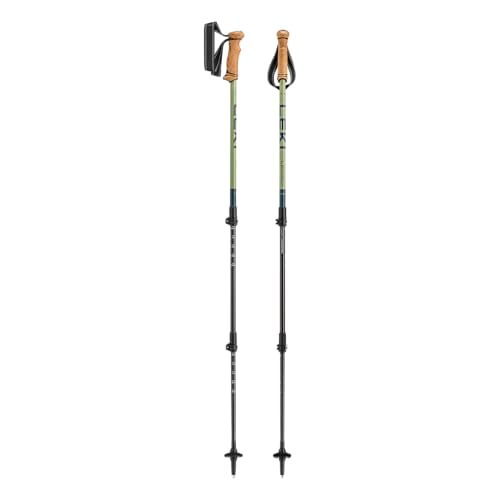
Material selection in the grip also influences long-term comfort and hand fatigue. Natural cork blends, like those used in the Multimed grip on the Wanderfreund, adapt subtly over time to your hand while absorbing excess palm moisture during warm weather. Rubberized and composite grips, such as the Aergomed on the Super Micro, provide a secure non-slip texture that remains easy to clean after outdoor use. For individuals managing mild joint stiffness or reduced grip strength, a wide, cane-styled grip provides far better palm support than narrow, cylindrical hiking handles.
Dedicated Single Walking Poles: Wanderfreund and Super Micro
For walkers who want a single walking aid styled like a modern walking cane, models like the LEKI Wanderfreund High Fives Trekking Pole and the LEKI Super Micro Trekking Pole provide the closest equivalent. The Wanderfreund features a two-section Speed Lock Plus system that adjusts between 60 and 120 centimeters, offering substantial reach for taller individuals while collapsing down to 23.6 inches for convenient transit. Built with robust aluminum HTS 6.5 tubing, this single pole weighs only 9.6 ounces yet delivers rigid stiffness under downward palm pressure. Its cork Multimed grip provides an open, comfortable resting platform for the palm, functioning much like an ergonomic Fritz or Derby cane handle.
The LEKI Super Micro Trekking Pole (Single) takes packability and low carry weight a step further for shorter walkers and travelers. Adjusting across a compact 66 to 90 centimeter range with an 18.1-inch collapsed pack size, this single pole weighs a remarkably light 7.5 ounces. It utilizes an Aergomed cane-style handle that cradles the palm comfortably during everyday neighborhood walks and park outings. Because it adjusts lower than standard trekking poles, the Super Micro caters specifically to individuals with shorter statures who find standard 100-centimeter minimum poles too tall for natural elbow alignment.
Both the Wanderfreund and Super Micro come equipped with interchangeable carbide flex tips and vulcanized rubber traction pads. This dual-tip functionality makes them adaptable across indoor hard floors, polished patios, and outdoor gravel pathways. When paired with supportive hiking pants for joint comfort during long outdoor excursions, these single cane-hybrid poles provide dependable balance support without the cumbersome feel or clinical aesthetic of institutional medical aids.
Bilateral Trekking Poles for Rhythmic Trail Walking: Voyager and Legacy Lite
Walkers who need balanced stability across both sides of the body typically benefit from dual trekking poles rather than a single walking cane. The LEKI Voyager Trekking Poles – Blue – White provides an accessible option with a substantial 110 to 145 centimeter adjustment range designed for moderate to tall hikers. Built with durable aluminum HTS 6.0 shafts and a Super Lock twisting mechanism, the Voyager utilizes PAS Soft vertical grips that support a natural hiking grip. Dual poles encourage a rhythmic, reciprocal arm swing that engages upper body musculature, offloading mild impact from the knees and hips during gentle ascents and descents.
The LEKI Legacy Lite Trekking Poles – Denimblue offers an upgraded alternative for walkers seeking lighter swing weight and external lever locks. Weighing approximately 8.9 ounces per pole, the Legacy Lite incorporates dual Speed Lock Plus levers that adjust smoothly between 100 and 135 centimeters. Its EVOCON Cor-Tec grip blends rubber and cork composites, delivering an ergonomic shape that cushions the hand during prolonged outdoor outings. The external lever clamps remain easy to manipulate with cold hands or lightweight gloves, eliminating the wrist strain often associated with twisting internal expanding mechanisms.
Using dual poles like the Voyager or Legacy Lite fundamentally changes gait mechanics compared to a single walking stick. Rather than leaning on one side for focal support, walkers plant alternating poles in rhythm with their opposite footfalls. This bilateral propulsion promotes an upright posture, opens the chest for relaxed breathing, and distributes physical effort across four contact points. For outdoor enthusiasts exploring natural parks and rolling terrain, wearing flexible hiking pants for trail mobility alongside dual trekking poles maximizes stride freedom while maintaining consistent trail security.
Nordic Walking Mechanics and the Instructor Model
Nordic walking represents a distinct fitness discipline that differs substantially from casual trail hiking and mobility support. The LEKI Nordic Walking Instructor (Lt Blue) pole is specifically tailored for this active technique, adjusting from 100 to 135 centimeters with an internal Super Lock system. Its standout feature is the releasable Trigger Energy+30 strap system, which wraps securely around the wrist and hand like a glove. This integrated harness allows the walker to open their hand completely at the end of each backward arm swing while retaining immediate control of the pole shaft.
The Instructor model includes specialized cylindrical tips and angled rubber pavement paws designed to provide positive traction on asphalt and concrete. During proper Nordic walking form, the pole plants behind the body at an angle rather than upright in front of the user. Because this technique relies on pushing backward to propel the body forward, Nordic poles are not intended for vertical balance support or downward joint offloading. Individuals seeking stability assistance should avoid specialized Nordic fitness poles in favor of upright cane-style designs.
Locking Mechanisms: Speed Lock Plus Versus Super Lock Twist Systems
Height adjustability relies entirely on the security of the pole locking mechanism, and LEKI implements two primary engineering solutions across its line. The Speed Lock Plus is an external cam lever system made from high-strength components that clamps the telescoping shaft sections firmly in place. Adjusting the pole requires simply flicking the external lever open, extending the aluminum shaft to the desired centimeter mark, and snapping the lever shut. A knurled tension wheel allows users to dial in clamping force without tools, ensuring the shaft cannot slip under vertical loading.
The Super Lock System (SLS) is an internal twist-lock mechanism that expands an internal locking plug against the inside wall of the aluminum shaft as the sections are turned in opposite directions. The SLS design provides a sleek, snag-free pole profile without external levers that could catch on brush or pack straps. However, internal twist locks require adequate wrist strength to twist firmly into the locked position. Users with hand stiffness, severe arthritis, or reduced grip strength generally find the external Speed Lock Plus levers far easier and more reassuring to operate.
Ground Traction: Carbide Flex Tips Versus Vulcanized Rubber Walking Tips
The ground contact point determines how securely a walking pole grips different surface textures. LEKI poles come standard with carbide Flex Tips that deliver aggressive bite into dirt, loose gravel, packed snow, and rocky trails. The concave carbide point flexes slightly to protect the lower shaft from extreme lateral bending forces if the tip catches between tree roots or boulders. However, exposed metal tips slip easily on smooth indoor tile, polished concrete, and wet asphalt, creating a noticeable slipping hazard when used in urban environments.
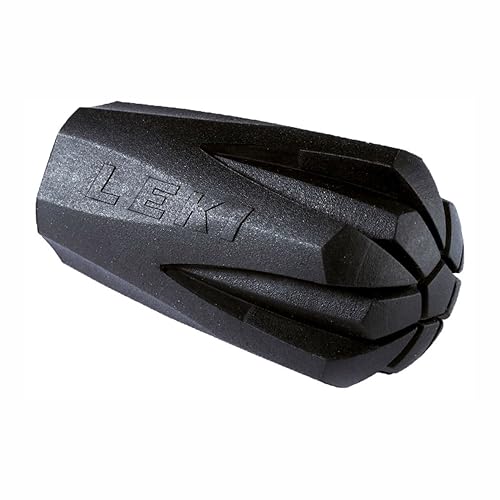
To provide safe grip on hard paved surfaces, the LEKI Walking Rubber Tip presses snugly over the carbide point. Made from dense, abrasion-resistant vulcanized rubber, these replacement tips absorb vibration from hard pavement strikes and prevent loud clicking noises. The textured tread pattern maintains friction across asphalt sidewalks, concrete ramps, and shopping center floors. Regularly inspecting the rubber tip for tread wear or internal puncture from the sharp carbide point ensures continued slip resistance and floor protection.
Anatomical Sizing Procedure and Ergonomic Posture Alignment
Proper height adjustment is critical for maintaining healthy walking biomechanics and avoiding shoulder elevation. To size a cane-hybrid pole such as the Wanderfreund or Super Micro, stand upright wearing your standard walking shoes on a flat, level floor. Allow your arms to relax naturally at your sides with your shoulders loose and unraised. The top of the pole handle should align approximately with your wrist crease or the greater trochanter of your hip.
When grasping the cane handle with your hand resting comfortably on the contoured grip, your elbow should bend naturally between 15 and 20 degrees. If the pole is adjusted too tall, your shoulder will hike upward toward your ear, leading to chronic neck tightness and upper back fatigue. Conversely, setting the pole too low forces a forward stoop that compresses the lumbar spine and reduces your stride length. Using the laser-etched centimeter scale on the shaft makes it simple to return to your precise measurement every time you extend the pole.
When sizing dual trekking poles like the Voyager or Legacy Lite, the setup differs slightly to support active swinging. Stand erect with your forearms held parallel to the floor, forming a crisp 90-degree angle at the elbow joint while holding the vertical grip. This 90-degree bend provides optimal leverage for pole plants on flat terrain while allowing quick adjustments shorter for steep uphill climbs or longer for controlled downhill descents. Always ensure both poles in a pair are set to identical lengths on level ground to maintain spinal symmetry.
Biomechanical Support Differences: Walking Poles Versus Medical Canes
While cane-hybrid walking poles offer excellent balance assistance for active individuals, they operate under different biomechanical principles than clinical walking canes. A certified orthopedic cane is engineered to bear substantial vertical loads, typically offloading between 15 and 25 percent of a user body weight away from a recovering hip, knee, or ankle. Walking poles, even those crafted from rigid HTS 6.5 aluminum with cane-style grips, are primarily intended for dynamic stability, terrain balance, and rhythmic guidance rather than bariatric load-bearing or strict post-surgical non-weight-bearing rehabilitation.
Single walking poles feature narrow base tips with a small footprint, offering quick maneuverability across varied outdoor terrain. However, they lack the broad, multi-pod stability of small-base or large-base quad canes, which can stand independently and support patients with moderate to severe neurological or orthopedic balance deficits. Furthermore, walking poles should never be relied upon for stair climbing when substantial body weight must be shifted onto the device. Clinical guidance advises using a sturdy handrail and an approved medical cane when navigating stairs, leading upward with the unaffected leg and downward with the injured leg.
Anyone recovering from joint replacement surgery, managing significant lower-extremity weakness, or experiencing frequent unprovoked falls should consult a licensed physical therapist or physician for formal gait prescription. A clinician can determine whether a lightweight walking pole provides sufficient stability or if an approved medical cane, quad cane, or bilateral walker is required for safety. For active walkers needing modest balance reassurance on paths and parkways, however, a properly sized cane-hybrid pole delivers an empowering, dignified balance solution.
Routine Maintenance and Pre-Walk Safety Verification
Routine maintenance keeps telescoping walking poles operating quietly and securely across years of use. After walking in damp, muddy, or dusty environments, pull the pole sections completely apart and wipe the aluminum shafts dry with a clean cloth. Never apply grease, oil, or lubricants inside the shaft tubes or on the locking mechanisms, as petroleum products cause locking plugs and friction collars to slip under load. Allowing the disassembled sections to air dry prevents internal oxidation and preserves smooth telescoping action.
Before every walking outing, perform a quick three-point safety check to ensure structural integrity. First, confirm that the adjustment lock is clamped securely by pressing downward firmly onto the handle with your full upper-body weight on a non-slip floor. Second, inspect the rubber walking tip to confirm that the internal metal washer is intact and that the carbide point has not worn through the rubber tread. Finally, check that the wrist strap and grip fasteners are secure. Taking a moment to verify your equipment ensures steady footing and peace of mind on every walk.
Choosing the right LEKI walking model ultimately comes down to your personal walking style, height requirements, and balance expectations. For individuals seeking a single walking companion that functions like an outdoor walking cane, models with Aergomed or Multimed horizontal handles like the Super Micro and Wanderfreund provide natural palm support and adjustable travel convenience. For active walkers seeking whole-body cadence and trail stability, dual poles with external Speed Lock Plus levers deliver dependable endurance across changing terrain. Always match your equipment to your physical capabilities, install rubber pavement tips on hard ground, and consult a mobility professional whenever formal rehabilitation support is required.





Write Your Review
No reviews yet. Be the first to share your experience!