


Outdoor walkers and rehabilitation patients frequently face moments when both hands are needed to open gates, manage hydration, or navigate level paths. Mastering how to attach walking poles to backpack ensures that your essential walking sticks or folding mobility canes remain firmly fastened rather than swinging loose or creating a tripping hazard. Elastic cord fasteners and locking buckle lanyards provide a flexible attachment method that prevents equipment rattling, shaft scratching, and accidental drops along the trail. When you pair proper attachment hardware with structured hiking packs, weight distributes evenly across your torso without pulling backward on your shoulders.
Improperly secured poles can snag low branches, alter your center of gravity, or slide downward through backpack loops during sudden movements. Using dedicated elastic bungee straps and quick-release fasteners allows you to mount or retrieve your walking gear in seconds while protecting delicate tips and joints. Understanding the biomechanics of pack loading and exterior mounting safeguards both your posture and your mobility equipment on every outing. This practical guide breaks down reliable mounting steps, hardware distinctions, and safety checks so you can hike with steady confidence.

Pros
- Ultralight listed package weight of roughly 0.022 pounds keeps pack weight down.
- Four-piece bundle provides versatile placement options across one or two backpacks.
- Sliding buckle mechanism adjusts quickly to secure poles of different diameters.
- Inexpensive upgrade for daypacks and hiking bags lacking factory pole attachment hardware.
Cons
- Requires existing webbing, daisy chains, or anchor points on your backpack to secure the cord.
- Elastic cord can lose tension over time if exposed to repeated heavy snagging or over-stretching.
- Not engineered or rated for technical climbing protection, heavy axes, or high-load carrying.
The Marsrut 4-Piece Trekking Pole Holder set is an aftermarket external attachment accessory designed for hikers, backpackers, and travelers who need a secure way to stow trekking poles or walking sticks on their packs. Many daypacks and minimalist backpacking bags omit dedicated pole attachment bungees to reduce production costs or maintain clean exterior profiles. This four-piece kit bridges that gap by providing standalone, adjustable elastic cord ties that attach to existing exterior anchor points.
On the trail, managing trekking poles during scrambles, stream crossings, or flat access walks requires a dependable hands-free storage method. These holders measure 20.3 cm (8 inches) in length and feature a slide-lock plastic buckle. When anchored through an exterior loop or compression strap on your pack, the elastic cord wraps around the pole shaft, allowing the buckle to slide forward and clamp the shaft tightly against the pack body. At an ultra-low total weight of approximately 0.022 pounds, this accessory adds no noticeable load to your setup.
The build centers around resilient elastic cord paired with molded plastic locking buckles. The cord provides enough elasticity to hold poles firmly without slippage, while the plastic friction hardware bites into the cord to prevent unwanted loosening during motion. While this hardware is engineered for light-duty tensioning rather than heavy load-bearing support, it offers dependable day-to-day security for standard aluminum or carbon fiber trekking poles, canes, and lightweight accessories like compact umbrellas.
Setup is straightforward and tool-free. To attach a pole, you thread the cord loop through a backpack daisy chain, shoulder harness loop, or side compression strap, insert the pole shaft into the open loop, and cinch the buckle down. Cleaning and maintaining these straps is simple: they can be rinsed with clear water to remove trail dust or grit from the buckle mechanism and air-dried before storage. Having four straps in the package means you can equip two attachment points on two separate packs or keep spares in a repair kit.
Prospective buyers should note realistic limitations regarding compatibility and load capacity. These holders do not create attachment loops out of thin air; your backpack must already feature some form of external webbing, loop, or strap to anchor the cord. Furthermore, these elastic cords are intended strictly for secondary retention of walking poles and umbrellas, not for technical mountaineering ice tools, heavy tools, or safety-critical climbing hardware.
For day hikers, section backpackers, and outdoor enthusiasts seeking an affordable, lightweight method to add pole-carrying functionality to an existing backpack, the Marsrut 4-Piece Trekking Pole Holder set offers practical value and effortless utility.
The Marsrut trekking pole straps are designed specifically to interface with backpacks that feature external attachment hardware such as daisy chains, ice-axe loops, trekking pole tip retainers, or side compression straps. At an 8-inch (20.3 cm) overall length, the cord provides ample reach to loop around common trekking pole diameters, walking stick shafts, and compact accessories.
Because these straps function as an upper or mid-shaft stabilizer, they work best when paired with a lower loop or side bottle pocket to cradle the pole tips. Confirming that your daypack or multi-day backpack has accessible webbing loops or strap anchor points will ensure smooth installation and optimal stability on the trail.
The holders combine resilient elastic shock cord with durable molded plastic slide buckles. The plastic components are designed to resist outdoor exposure and maintain friction against the cord during normal trail vibration, preventing poles from shifting while you walk.
To maintain peak function, keep the plastic sliding mechanisms clean of mud, sand, and fine trail dirt. Rinsing them periodically in lukewarm water and allowing the elastic to dry away from direct high heat or prolonged UV exposure will help maintain cord elasticity and long-term grip strength.

Pros
- Generous 8-pack bundle lets you outfit multiple hiking daypacks or keep spares in your gear bin
- Glove-friendly buckle mechanism allows quick one-handed securing and release of trekking poles
- Elastic bungee cord maintains steady tension around gear shafts to minimize annoying trail wobble
- Tool-free lashing setup mounts effortlessly to standard pack straps, daisy chains, or webbing loops
Cons
- Fixed 7.68-inch length limits use on larger tools or thick bundle diameters
- Requires existing webbing, loops, or daisy chains on your backpack to anchor properly
- Elastic cord and PP plastic buckles can show wear or lose elasticity after prolonged outdoor exposure
The Xinjoduz 8-Pack Hiking Stick Holders are external gear-attachment accessories designed for hikers, backpackers, and campers who need to lash poles or slender gear directly to their packs. Many daypacks and overnight packs lack dedicated pole loops or feature worn-out attachment points, making these elastic fasteners an accessible upgrade for managing loose trail gear.
When navigating rough scrambles or sections where hands need to be free, hiking poles can become cumbersome if not secured properly. These 7.68-inch bungee fasteners anchor poles against your pack body, shoulder straps, or hip belt webbing, helping to eliminate annoying swaying and snagging against branches. The design also works well for stabilizing compact camera tripods or walking canes, keeping your hands unburdened without having to dig inside your main backpack compartment.
Each strap combines a durable rubber elastic cord with a solid polypropylene (PP) buckle. The elastic core provides continuous clamping tension around gear shafts of varying diameters, preventing items from slipping down while hiking. Meanwhile, the lightweight PP buckle holds the loop firmly without adding noticeable weight to your overall gear setup, offering dependable retention across diverse trail environments.
Installing these fasteners requires no tools or sewing, making them easy to loop through daisy chains, compression strap webbing, or shoulder harness attachment points. The buckle and cord-lock system supports quick adjustment and one-handed operation, which is particularly helpful when wearing gloves in chilly morning conditions. Maintenance is minimal, requiring only a quick rinse with clean water to remove mud, trail grit, or sand.
While practical for standard trekking poles, these holders measure 7.68 inches in total length, meaning they cannot wrap around bulky gear like rolled sleeping pads, oversized tent poles, or wide camp axes. Furthermore, they depend on your backpack having suitable attachment points such as webbing straps, MOLLE loops, or lash tabs. Because plastic hardware and elastic rubber degrade over extended sun and moisture exposure, hikers should periodically check the cord tension before heading out on multi-day routes.
For day hikers, weekend backpackers, and outdoor photographers needing a simple gear-retention solution, the Xinjoduz 8-pack delivers strong utility. With four color options and eight separate fasteners, it is a smart addition to any gear closet for organizing external backpack gear.
Mounting Requirements: These fasteners require existing anchor points on your backpack, such as daisy chains, compression straps, shoulder-harness webbing, or side loops. They do not attach to flat, featureless fabric panels without an anchor loop.
Gear Sizing: At 7.68 inches in length, these bungee cords are optimized for standard trekking poles, walking sticks, collapsible canes, and slim camera tripods. They are not intended for large shelter bundles, bear canisters, or wide foam pads.
Cord Construction: Built with a rubber elastic core that stretches to accommodate varying shaft thicknesses while maintaining continuous clamping pressure.
Buckle Hardware: Features solid polypropylene (PP) plastic clips engineered for one-handed release and glove-friendly operation in cool outdoor weather.

Pros
- Generous 10-pack quantity allows multiple attachment points across several hiking packs or shared family gear
- Extends up to 15 inches to accommodate varied pole diameters, sun hats, and lightweight trail essentials
- Integrated reflective strip enhances visibility around the campsite or along roads in dim lighting
- Dual buckle mechanism holds tension securely without complex knot tying
Cons
- Elastic cord tension may degrade over time with heavy sun exposure and repeated full-stretch use
- Requires existing backpack webbing loops, daisy chains, or anchor points to function effectively
- Not suitable for heavy or load-bearing gear such as climbing hardware
The CHIVOLONA Backpack Hiking Stick Holders are dedicated external gear retainers designed for day hikers, section hikers, and backpackers who need a fast, reliable method to lash trekking poles and loose outdoor items to the outside of their packs. Arriving as a 10-pack, these elastic lanyards solve the common issue of trekking poles sliding loose or bouncing during steep scrambles when your hands need to be free. Their universal loop design also makes them practical for hanging sun hats, securing light water bottles, or keeping trail accessories anchored to exterior daisy chains.
In practical trail use, these retainers function through tension-based elastic rubber cordage that relaxes at 8.3 inches and extends to a maximum length of 15 inches. This stretch range offers enough clearance to wrap around standard aluminum or carbon-fiber trekking pole shafts, including folded Z-poles or telescoping sections. By threading the cord through existing backpack lash tabs, ice-axe loops, or side compression straps, hikers can quickly lock gear against the pack frame, stabilizing the load and preventing noisy, off-balance shifts while walking.
Build quality is centered on high-elasticity rubber bands wrapped with a protective sheath featuring embedded reflective striping. Each unit includes two plastic locking buckles that grip the cord, allowing users to slide and lock the fastener into place under tension. The reflective accents serve a dual safety role by making your backpack visible to headlamps in dark camps or near trailheads at dawn, while also making dropped or detached cords easier to spot on the forest floor.
Setting up the CHIVOLONA holders is straightforward and completely tool-free. Hikers can pass the bungee through any standard webbing loop or attachment point on their pack, insert the gear, and cinch the dual buckles down to eliminate slack. Maintenance is equally simple, requiring only an occasional rinse with clean water to clear trail dust or grit from the cord and buckle springs. Weighing just 0.01875 pounds, individual lanyards add negligible weight to your trail setup and store flat inside any hip-belt pocket or pack brain.
Realistic limitations should be kept in mind before relying on these retainers on technical terrain. These cords are non-load-bearing accessories designed strictly for lightweight gear retention, meaning they cannot support heavy tools or be used for safety-critical tasks. In addition, their effectiveness depends entirely on your backpack having suitable exterior anchor points, and like all elastic rubber components, prolonged exposure to severe ultraviolet rays can eventually cause the cord to lose its initial snap.
For hikers and backpackers seeking an affordable, customizable external lashing solution, the CHIVOLONA 10-Pack offers outstanding practical value. It provides enough spare retainers to outfit multiple packs or replace worn loops across several seasons, making it a handy organizational upgrade for keeping trekking poles and trail accessories right where you need them.
The CHIVOLONA Hiking Stick Holders serve as secondary external attachment points for packs that lack dedicated pole carry systems. By anchoring through existing loops, webbing, or lash tabs, they give hikers an easy way to lash trekking poles securely against the side or front panel of a daypack or backpacking pack.
Beyond hiking sticks, the stretch capacity from 8.3 inches up to 15 inches allows these cords to hold items like wide-brim sun hats, light rolled layers, or small gear items that hikers want to access quickly without unzipping main compartments.
Each holder features a resting length of 8.3 inches (with specified product dimensions listed at 0.4 by 0.4 by 7.5 inches) and an expanded stretch capacity up to 15 inches. This length accommodates single pole shafts, paired poles, and broad accessory brims.
The entire setup weighs approximately 0.01875 pounds and comes in a 10-piece package. The hardware includes two adjustable plastic locking buckles per lanyard combined with a black elastic rubber band and high-visibility reflective striping.
Mastering Walking Pole and Mobility Cane Attachment on Trail Packs
Fastening walking equipment to a backpack requires a reliable two-point anchor system that eliminates vertical slippage and lateral sway. When hiking trails or walking neighborhood paths, loose equipment can disrupt your natural cadence, brush against trailside branches, or cause balance hesitation. Dedicated elastic bungee fasteners paired with pack attachment loops create a snug cradle that keeps shafts secure against the backpack panel. This setup preserves internal pack volume while giving you quick access whenever shifting terrain demands added physical stability.
Biomechanical Mechanics of External Gear Carry
External gear carry relies on stabilizing long objects along their vertical axis so that weight moves naturally with your torso. Walking poles and mobility canes feature slender profiles that act as levers if fastened at only a single anchor point. When a pole is clamped only near its grip, the lower tip swings freely with each stride, creating momentum that tugs against your backpack harness. Securing the shaft at two distinct vertical points neutralizes this pendulum swing and keeps the load aligned with your center of gravity.
The lower attachment point absorbs gravitational pull, while the upper anchor restrains outward tilt and lateral oscillation. High-density elastic shock cords exert continuous radial tension around the pole circumference, compensating for trail vibrations that often loosen traditional static webbing. Elastic cord systems easily adapt to tapered shafts, telescoping locking collars, and handle contours without requiring tedious knots. This continuous tension keeps your equipment steady across varied walking speeds, from level rehabilitation strolls to steep park trails.
Step-by-Step Procedure for Securing Poles with Bungee Lanyards
Begin by collapsing your walking poles or folding mobility canes to their shortest transport configuration. For telescoping poles, loosen the twist locks or lever clamps, collapse the shafts into their nesting sleeves, and retighten the hardware to prevent unexpected extension. For multi-segment folding canes, fold the segments tightly and wrap any integrated retaining bands around the bundled sections. Collapsing both poles to an identical length ensures they sit symmetrically on your pack without extending past your shoulders or below your hips.
Next, anchor the lower section of your poles using your backpack base loops or an auxiliary bungee fastener. Slide the rubber-capped tips downward through the pack lower fabric loop, then rotate the shafts upward one half-turn to create a self-locking twist in the webbing. If your pack lacks dedicated bottom loops, loop an elastic bungee lanyard through lower daisy-chain webbing, wrap the cord around the pole baskets, and tighten the barrel lock. This creates a secure lower shelf that stops the poles from sliding toward the ground while you walk.
Finish the attachment by fastening the upper shafts near the backpack shoulder harness or upper compression strap. Wrap an adjustable elastic cord around both shafts just below the grips, then snap the plastic locking buckle into place to secure the tension. Pull the free cord end until the elastic stretches snugly against the pole tubing, eliminating all lateral play between the gear and the pack panel. Tuck any excess elastic lanyard cord under the strap to prevent loose loops from snagging on trailside obstacles.
Evaluating Elastic Cord Construction and Buckle Fasteners
The reliability of an exterior gear harness depends on the mechanical strength of its elastic cords and clamping hardware. The Marsrut 4pcs Climbing Stick Holder uses an eight-inch elastic cord paired with a solid plastic slider buckle designed to handle repetitive stretching across varied shaft diameters. This compact length provides ample holding tension for single walking canes or paired trekking poles without creating cumbersome slack. A dense woven outer sheath shields the inner rubber strands from friction wear against abrasive backpack canvas and metal shafts.
For users needing extra reach around wider gear bundles, the CHIVOLONA Backpack Hiking Stick Holders offer an eight-inch resting length that extends up to fifteen inches. Each holder features dual locking buckles, allowing walkers to create multiple anchoring points or secure thicker items like wide-handle walking canes alongside drink bottles. The high-elasticity rubber core maintains consistent rebound tension after repeated expansion, resisting the permanent cord stretching that often causes gear to slip during longer outings.
Quick-release efficiency becomes critical when weather changes abruptly or physical fatigue requires immediate gear deployment. The Xinjoduz 8 Pack Backpack Hiking Stick Holders feature solid polypropylene snap mechanisms paired with one-hand operable buckles. This design allows walkers to release tension and retrieve their walking aids in seconds, even while wearing thick cold-weather gloves or managing reduced hand dexterity. The rigid polypropylene housing resists structural cracking in chilly outdoor conditions, ensuring dependable clamping performance across varied outdoor environments.
Visibility and Color-Coded Organization on Trail Packs
Walking in low-light environments introduces unique safety risks that require deliberate equipment choices. The CHIVOLONA holder cords feature integrated reflective stripes that catch vehicle headlights and flashlight beams during twilight walks or early morning outings. This reflective surface acts as an active visual warning, signaling your presence to passing cyclists, motorists, and fellow trail users. For seniors and balance-conscious walkers navigating road shoulders, reflective elements provide valuable passive safety without adding extra bulk to your gear setup.
Color coding also improves practical gear organization when managing multiple accessories on a single backpack. The multi-color assortment provided in the Xinjoduz pack allows walkers to assign distinct colors to specific attachment zones or different items of equipment. High-contrast colors stand out clearly against dark pack fabrics, helping users locate release buckles quickly inside dim vestibules or vehicle interiors. Dropped straps are also much easier to spot on forest floors or gravel paths when made with brightly colored outer jackets.
Securing Mobility Canes Versus Trekking Poles
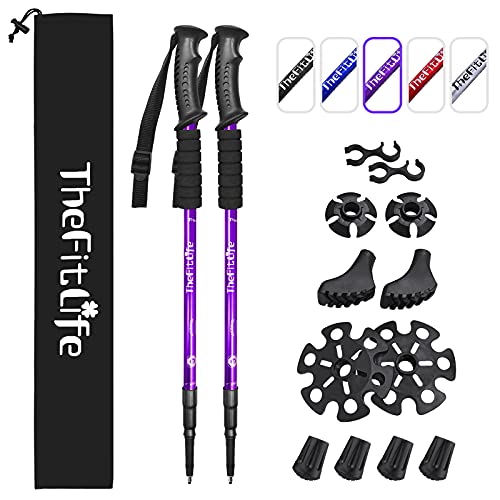
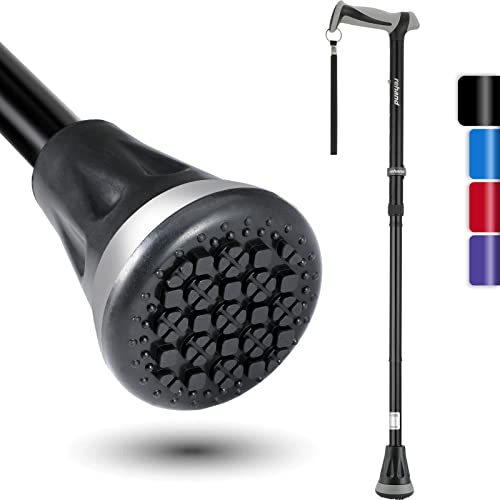
While trekking poles and mobility canes share similar tubular profiles, adult mobility canes feature specific design elements that require careful handling. Walking canes typically incorporate wider rubber ferrules, offset necks, or ergonomic palm-contoured handles that cannot slide through narrow trekking pole webbing. When securing an adult mobility cane, position the offset curve or Fritz handle facing inward against the backpack body to prevent snagging. Always verify that the thick rubber ferrule is firmly seated at the lower anchor so the metal tubing never rubs directly against pack fabrics.
Folding mobility canes rely on internal elastic cords to hold their aluminum or carbon fiber segments together under tension. When strapping a folded cane to your pack, never compress the joint ferrules unevenly under overtightened bungee clamps. Clamping directly across a folding joint can bend the aluminum mating sleeve or pinch the internal shock cord, undermining structural integrity when you reassemble the cane. Position your elastic fasteners around the midsection of the bundled shafts where the tubing walls provide uniform support against strap pressure.
Users managing joint pain or recovering from orthopedic surgery should never stow their primary mobility aid if unassisted balance remains uncertain. A walking cane or trekking pole provides critical ground contact that offloads fifteen to twenty-five percent of lower-extremity body weight away from recovering joints. Stowing a cane onto a pack should only occur during seated transit, when switching to bilateral handrail support, or under clear clinical guidance. If you experience persistent gait hesitation or balance instability, consult a licensed physical therapist or physician for personalized mobility advice before walking hands-free.
Pack Weight Distribution and Postural Alignment
Distributing exterior gear symmetrically across your pack panel preserves your natural walking gait and prevents compensatory spinal leaning. Mounting both poles on a single side of your bag creates an asymmetrical weight bias that forces your opposite torso muscles to work harder to maintain upright posture. Over several miles, this uneven torque can trigger lower back tightness, hip fatigue, and unnatural lateral trunk lean. Fastening one pole on each side of the pack balances the lateral load and keeps your center of gravity squarely over your pelvis.
Pairing your attachment accessories with well-designed lightweight trail daypacks further stabilizes the load by keeping the gear positioned close to your thoracic spine. Daypacks featuring side compression straps allow you to pull stowed poles tight against the internal load, eliminating dead space that permits gear oscillation. Keeping the pack contents compacted prevents your walking poles from swaying backward, which would otherwise exert an exhausting lever force on your shoulder harness. Protruding handles easily catch overhead tree limbs or door frames, so positioning the equipment close to your center of mass minimizes rotational inertia.
Navigating Transit, Flights, and Trailhead Portability
Transitioning from open trails to public transit vehicles requires quick, discreet gear management to prevent accidents. Exposed metal carbide tips can easily scratch vehicle interiors, tear passenger clothing, or damage seats when boarding buses and commuter trains. Before stowing your poles on carry-on travel packs, install thick rubber walking tips over any exposed metal points to shield surrounding surfaces from abrasive damage. This simple step protects your gear while maintaining courteous manners in crowded transit environments.
Collapsing your walking gear completely before boarding public conveyances also reduces your physical profile in tight aisles. Fasten both poles securely against the pack side panels using double bungee straps so that neither shaft protrudes laterally into neighboring seats. When stowing your bag in overhead bins or underneath vehicle seats, verify that the buckle clasps face inward toward the bag to prevent them from catching on seat frames. Keeping your gear tightly bundled ensures that you can retrieve your pack swiftly without snagging straps on nearby luggage.
Common Attachment Errors and Wear Inspection
A frequent mistake when mounting walking sticks is relying entirely on loose fabric loops without securing radial cord tension. When you step across rocky drops or drainage ditches, vertical pack movement can cause straight shafts to slide straight through oversized bottom loops. Using an adjustable elastic bungee lanyard with a dedicated barrel lock creates positive mechanical clamping around the shaft, preventing vertical slippage entirely. Always verify that the cord compresses snugly against the tubing before taking your first steps down the trail.
Orienting walking poles with the sharp points facing upward represents a severe safety hazard to yourself and fellow hikers. An upward-pointing carbide tip can cause injury if you stumble backward or turn around abruptly in a tight group setting. Always mount poles with the tips pointed downward toward the ground and seated inside protective rubber tips or lower pack pockets. Continuous exposure to sunlight, moisture, and temperature changes eventually degrades the internal elastic strands, so inspect your lanyards regularly for frayed braiding or cracking buckles.
Pre-Walk Safety Verification and Deployment Routine
Establishing a dependable pre-walk inspection routine prevents trail interruptions and keeps your gear secure across varying terrain. Before lifting your backpack onto your shoulders, perform a gentle two-second pull test on each mounted pole. Grasp the pole grip firmly and give it an upward tug to confirm that the lower anchor stops vertical travel, then shake the pack slightly to ensure zero lateral rattle. This brief manual check verifies that all sliding locks, plastic snap buckles, and elastic cords remain under proper working tension.
When changing terrain requires deploying your walking aids, unfasten the upper quick-release buckle first while supporting the pole shafts with your free hand. Once the upper tension is released, slide the tips upward out of the lower loop, keeping the sharp ends pointed safely toward the ground. Extend and lock each telescoping or folding segment before applying body weight, and verify that all push-button pins or clamping levers are fully engaged. Combining systematic pack attachment habits with patient deployment checks protects your physical balance and ensures dependable stability throughout your journey.





Write Your Review
No reviews yet. Be the first to share your experience!