


Maintaining joint health and upright posture often starts with learning the proper movement patterns for full-body balance. While a traditional single-point walking cane offers unilateral support to offload an injured leg, understanding what is nordic walking technique opens up a dynamic way to distribute body weight across both sides of the upper body. Developed from cross-country ski training, this fitness walking style pairs specialized poles with a rhythmic stride to actively push your body forward rather than merely catching a stumble. For active adults seeking joint relief, pairing proper pole mechanics with supportive walking apparel can help ease knee strain while encouraging steady cardiovascular endurance across paved paths or park trails.
The core movement relies on a coordinated arm swing where you plant the pole angled backward behind your body to propel your momentum. Unlike standard hiking sticks or medical canes held vertically in front of the feet, genuine Nordic walking uses ergonomic glove straps that let you open and close your hands with each stride. This continuous push-and-release motion activates the triceps, shoulders, and core muscles while cushioning the downward strike on your lower joints. Before starting any new exercise routine, discussing your balance and mobility goals with a physician or physical therapist ensures that active pole walking matches your personal physical therapy needs.



Biomechanical Principles and Functional Mechanics of Nordic Walking
Learning what is nordic walking technique requires understanding how specialized poles transform an ordinary stroll into an active, whole-body movement. Instead of relying solely on your legs, this method engages your arms, shoulders, and core to propel you forward with every step. The movement pattern mirrors the rhythm of classic cross-country skiing, turning your regular daily walk into a low-impact fitness workout. When executed correctly, the backward pole angle provides forward drive while taking excess strain off your lower body.
Defining the Core Movement and the Push-and-Release Stride
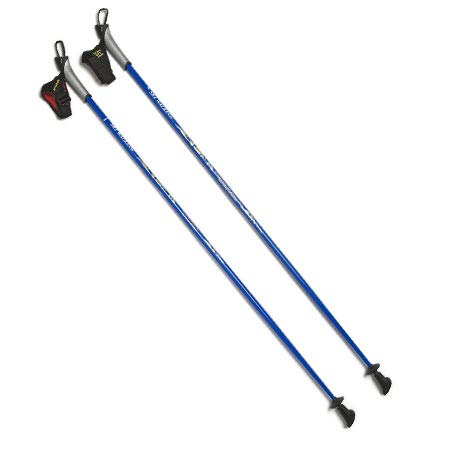
Nordic walking relies on a continuous push-and-release mechanism that sets it apart from all other forms of pole-assisted walking. The user plants the pole tip into the ground at an acute angle of roughly forty-five degrees behind the trailing foot. As your arm swings back, you push firmly through the wrist strap to propel your torso forward. Once the hand passes behind your hip line, you release your grip completely, allowing the palm to open while the strap keeps the pole secure.
This distinct opening of the hand allows for a full, natural extension of the arm and shoulder joint. Many beginners mistakenly clutch the pole handle tightly through the entire stride, which restricts arm travel and causes early forearm fatigue. Opening the fingers at the end of the push allows your blood to circulate freely through the wrist. As you bring the arm forward again for the next plant, your fingers naturally close around the contoured handle to prepare for the subsequent push.
The arm action works in direct opposition to the leg movement in a standard reciprocal gait pattern. When your left heel strikes the ground, your right arm plants its pole opposite your left foot. This cross-pattern coordination mirrors natural human walking mechanics while amplifying torso rotation. As a result, the technique strengthens deep postural muscles along the spine without forcing awkward compensatory movements.
Differentiating Nordic Poles from Medical Mobility Aids
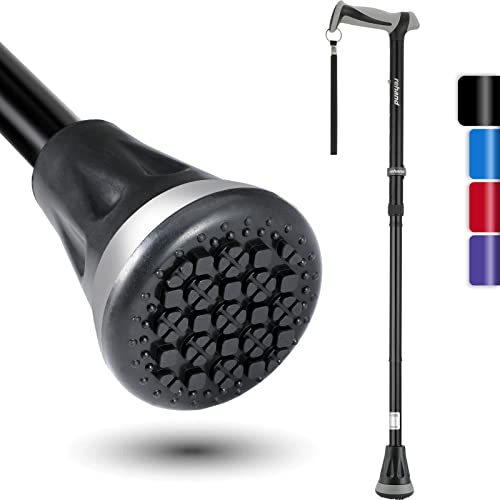
Fitness walking poles serve a very different biomechanical purpose than clinical walking canes. Standard mobility aids, such as single-point aluminum canes or four-legged quad canes, are designed for vertical downward loading to offload up to twenty-five percent of body weight from an injured limb. Medical canes feature broad, slip-resistant rubber bases that remain flat against the ground to provide static balance during post-surgical orthopedic recovery. In contrast, Nordic walking poles are angled fitness tools engineered for active propulsion rather than sudden fall prevention.
Using fitness poles as a substitute for a prescribed medical cane can create severe safety hazards for individuals with acute balance deficits. Fitness poles have narrow ground contact points and lack the broad structural base required to support sudden, full-weight leaning. A patient recovering from recent hip or knee replacement surgery needs the vertical stability of a dedicated cane or walker. Anyone experiencing neurological balance instability or severe joint weakness should consult a physical therapist before trying fitness poles.
For individuals who have already achieved stable, unassisted balance, Nordic poles provide an excellent functional bridge to higher activity levels. They offer light, bilateral support that builds confidence during longer community walks. Distributing effort between four limbs reduces perceived exertion and cushions the impact on knees, ankles, and hips. However, this supportive benefit only functions when the user maintains sufficient baseline stability to walk without immediate fall risk.
Essential Hardware Features: Glove Straps, Grips, and Asphalt Paws
Proper execution of the Nordic walking stride requires specialized hardware that you will not find on standard hiking sticks. The most critical component is the ergonomic glove strap, seen on models from brands like LEKI and York Nordic. These straps wrap securely around the thumb and wrist with hook-and-loop fasteners, transferring your body weight directly from the arm to the shaft without requiring finger pressure. Systems like the LEKI Trigger setup allow quick release from the grip when you need to drink water or adjust your gear.
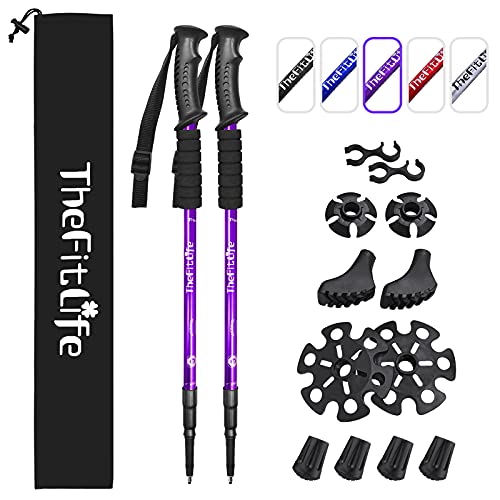
Grip materials directly influence long-term comfort and moisture management during vigorous walking sessions. Natural cork handles, featured on poles like the York Nordic and TheFitLife models, mold to the contours of your palm over time and absorb sweat during warm weather. Synthetic rubber or plastic grips offer excellent durability in wet conditions but can feel abrasive during long push phases if you do not wear light walking gloves. Choosing ergonomic, slim grips ensures that the pole swings smoothly between your fingers during the open-palm release phase.
The tip of the pole must adapt to the surface you are walking on to maintain continuous propulsion. For paved streets, concrete sidewalks, and indoor tracks, walkers install angled rubber feet often referred to as asphalt paws or fitness tips. These rubber pads feature beveled treads that grip hard pavement at a backward angle without skidding. Walking in flexible lightweight walking pants keeps your stride unhindered while transitioning between paved neighborhood sidewalks and packed dirt park paths where you remove the rubber paws to expose durable carbide or tungsten tips.
Step-by-Step Instruction for the Diagonal Movement Sequence
Mastering the movement sequence begins by finding your natural walking cadence before you attempt to push through the poles. Start by securing the glove straps onto your hands while leaving the poles dragging on the ground behind you. Walk forward for fifty paces with your arms swinging freely at your sides, keeping your posture tall and your shoulders relaxed. This initial drag drill teaches your arms to move in natural opposition to your legs without overthinking the pole placement.
Once your natural rhythm feels smooth, begin making gentle ground contact with the rubber tips as your hands swing forward. The pole should plant firmly into the ground roughly level with your trailing heel or opposite hip. Never reach forward to plant the pole in front of your lead foot, as this creates a braking force that slows your forward momentum. The pole shaft must always maintain a backward slant relative to the ground.
The third phase involves applying active downward and backward pressure through the glove strap. As your lead foot rolls from heel to toe, press down through the heel of your hand to propel your body past the planted pole. You should feel your triceps, latissimus dorsi, and core muscles engage as you drive forward. Keep your elbows relatively straight with only a slight, relaxed bend to maximize your leverage against the ground.
The final phase completes the stride with the open-hand release behind your hip. Push the pole all the way back until your arm forms a straight line from your shoulder to the tip. Open your fingers completely to release the handle, letting the wrist strap carry the final thrust. Then, swing your arm forward in a smooth arc, closing your fingers around the grip just as the tip makes its next ground contact.
Sizing Rules and Shaft Construction Choices
Selecting the correct pole length is vital because improper sizing disrupts your body mechanics and strains your neck. A standard mathematical formula multiplies your total height in centimeters by 0.68 to establish the baseline pole length. Alternatively, you can stand upright in your regular walking shoes and grasp the pole vertically; your elbow should rest at an approximate ninety-degree angle. If the pole is too long, your shoulders will hike upward, causing tension headaches and upper back fatigue.
Walkers must choose between rigid one-piece shafts and adjustable telescoping designs. One-piece poles, such as the custom-fitted models from the American Nordic Walking System, eliminate all internal vibration, clicking noises, and accidental shaft slippage. They provide unmatched structural stiffness that many regular fitness walkers prefer for daily street use. However, rigid single-piece poles cannot collapse for travel, making them less convenient for storage in car trunks or airplane overhead compartments.
Adjustable poles use either internal twist-lock mechanisms or external lever flip locks to accommodate varying user heights. Systems like the LEKI Super Lock System or external flip locks on aircraft-grade aluminum and carbon fiber poles offer portable convenience. Aluminum poles, such as the 7075 alloy used by York Nordic, provide high impact durability and flex resistance under heavy strides. Carbon fiber models, like those from TheFitLife, offer exceptional weight savings and natural vibration dampening that protects sensitive wrist joints from harsh surface impacts.
Correcting Common Technical Faults on the Trail
The most frequent error among new Nordic walkers is planting the pole tip far ahead of the body. Planting forward turns the pole into a physical brake that arrests forward momentum and jars the shoulder joints. The correct angle always points backward, directing your force into propulsion rather than resistance. If you notice your pole tips landing ahead of your toes, return to the dragging exercise to reset your arm swing cadence.
Another common mistake is known as the camel gait, where the walker swings the arm and leg on the same side forward simultaneously. This unnatural pacing ruins your balance and creates an awkward, stiff waddle that strains your lower spine. Human walking is naturally cross-diagonal, pairing the left arm with the right leg. If your rhythm breaks down into a camel gait, pause immediately, drop the poles to a drag position, and re-establish your normal unassisted walking stride.
Tightly gripping the handle through the backswing also ruins the fluid dynamics of the exercise. Holding the grip continuously prevents the pole from extending fully behind the hip, which shortens your stride and robs you of core rotational benefits. Trusting the glove strap takes practice, but opening your palm at the rear of the stroke is essential for proper biomechanics. Focus on feeling the pressure along the strap webbing rather than squeezing the handle with your fingertips.
Leaning excessively forward from the waist represents another posture flaw that compromises spinal health. While a slight whole-body lean from the ankles helps initiate forward drive, bending at the hips collapses your chest and limits lung capacity. Maintain an upright spine with eyes looking twenty yards ahead toward the horizon. Good posture allows your rib cage to rotate freely while keeping your center of gravity stable over your feet.
Joint Offloading and Functional Conditioning Benefits
Research into gait mechanics shows that active pole walking redistributes ground reaction forces across the entire body. By sharing load-bearing demands with the upper extremities, the technique reduces compressive stress on the knee, hip, and lumbar joints during each heel strike. This offloading effect makes the activity popular for adults managing mild knee osteoarthritis or recovering general fitness after lower-limb orthopedic procedures. You gain cardiovascular conditioning without subjecting your cartilage to harsh, unmitigated impact.
The continuous upper-body push recruits major muscle groups that remain largely inactive during standard walking. Pushing down through the straps activates the triceps, posterior deltoids, pectorals, and latissimus dorsi. At the same time, the alternating diagonal motion creates gentle spinal rotation that strengthens internal and external obliques. This increased muscular involvement elevates heart rate and oxygen consumption compared to regular walking at the same pace.
Functional balance and stability also improve through the broad four-point ground contact sequence. While not a medical intervention for severe ataxia, the dynamic rhythm enhances spatial awareness and foot placement security. Active older adults often report greater walking confidence on uneven park paths and gravel trails. By cultivating a steady cadence and upright carriage, the technique helps preserve independence and functional endurance over long distances.
Practicing consistent form is the most reliable way to unlock the conditioning and joint-relieving benefits of this movement style. Focus first on relaxing your shoulders, trusting the glove straps, and maintaining a steady backward pole angle before increasing your walking speed. If you have underlying joint replacements, vestibular balance changes, or mobility restrictions, consult with your physical therapist to confirm that dynamic pole training fits safely into your routine. With properly fitted equipment and deliberate practice, you can transform your everyday walk into a comfortable, full-body workout.





Write Your Review
No reviews yet. Be the first to share your experience!