


Maintaining steady balance during daily walking requires equipment that functions seamlessly with the body’s natural movement patterns. When recovering from joint surgery or navigating mild balance hesitation, an assistive stick transfers weight away from sensitive lower limbs while providing continuous sensory feedback from the ground. Learning what are the parts of a cane allows individuals and caregivers to identify worn components, adjust hardware accurately, and select configurations that reduce joint fatigue. Pairing reliable mobility aids with targeted supportive knee mobility gear can significantly boost physical confidence on indoor and outdoor walking surfaces.
Every single-point or multi-point mobility aid relies on a synchronized collection of mechanical elements engineered to offload up to twenty-five percent of body weight safely. From contoured handles that distribute palm pressure to reinforced rubber tips that grip slick floors, each element plays a distinct protective role. Selecting the correct combination of shaft materials, secure locking collars, and terrain-ready bases prevents unexpected rattles, loose telescoping segments, and hazardous slips. Understanding how these mechanical parts interact ensures that every stride remains stable, comfortable, and biomechanically sound throughout everyday routines.




Anatomy of a Walking Cane: Essential Parts and Functions
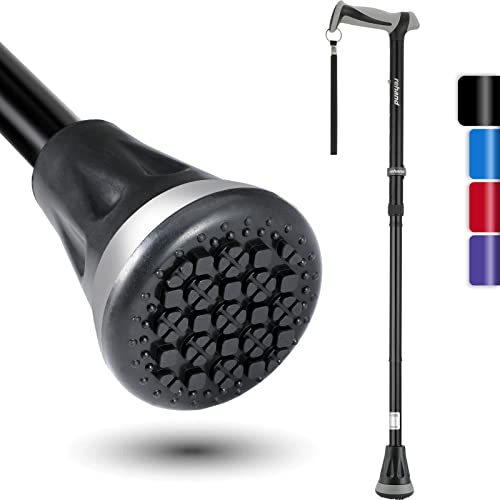
A standard walking cane consists of several mechanical sections engineered to provide balance, structural support, and ground traction. The core anatomy includes the handle or grip, the vertical load-bearing shaft, the height adjustment mechanism, the anti-rattle locking collar, and the rubber ferrule base. Decorative collars, wrist lanyards, and specialty quad bases frequently augment these foundational parts. Understanding how these mechanical components function empowers users and caregivers to perform routine safety checks, replace worn parts, and maintain steady daily balance.
Handle and Grip Configurations for Hand Comfort
The handle sits at the top of the cane, serving as the main interface for transferring downward body weight away from recovering limbs. Common designs include the traditional curved crook, the flat-topped Fritz handle, the rounded Derby grip, and anatomical palm-contoured grips. An offset handle curves the upper shaft forward so downward force aligns directly over the vertical center of the cane. This offset configuration centers user weight over the shaft to improve walking stability and joint comfort during every stride.
Grip materials range from polished hardwoods and acrylics to textured thermoplastic rubber and dense foam padding. Smooth wooden handles offer classic style but can feel slippery for users with arthritis or reduced hand strength. Anatomical palm grips mold to the shape of the hand, spreading downward pressure across the thenar eminence and reducing carpal tunnel strain. Selecting an ergonomically contoured handle protects sensitive finger joints while facilitating a steady, natural arm swing during daily walking routines.
Shaft Materials, Structural Load Ratings, and Travel Folding
The shaft forms the primary vertical column of the cane, carrying downward force and dictating overall weight, rigidity, and durability. Manufacturers craft shafts from extruded tubular aluminum, solid turned hardwood, lightweight carbon fiber, or reinforced steel. Anodized aluminum is the most widespread material because it provides exceptional strength while resisting corrosion, moisture, and scratches. Carbon fiber delivers remarkable vibration damping and ultra-lightweight handling, helping users with upper-limb fatigue navigate longer walking distances without tiring.
Shaft construction directly determines the certified load capacity of the mobility aid. Standard canes typically support between two hundred fifty and three hundred pounds, whereas reinforced bariatric models utilize heavy-duty steel or widened aluminum tubes rated for four hundred to five hundred pounds. Folding canes feature segmented shaft pieces linked by an internal elastic cord, allowing the device to collapse into a compact profile for transit. When packing a folding mobility stick for trips, reviewing a practical carry-on luggage sizing guide helps travelers ensure their collapsed walking aid fits smoothly into airline storage spaces.
Telescoping Height Adjustment Pins and Sizing Holes
Telescoping walking canes utilize an internal spring-loaded brass detent pin that snaps through pre-drilled sizing holes along the outer shaft tube. This adjustment system enables users to change cane height in one-inch increments to match individual body proportions accurately. Proper height alignment is critical for maintaining an upright walking posture and preventing compensatory shoulder hiking or lower back fatigue. Setting the cane too high strains the shoulder joint, while an excessively low handle forces forward spinal flexion and compromises balance.
To size an adjustable cane correctly, the user stands upright wearing everyday walking shoes with arms hanging loosely at the sides. The top of the handle should align with the user’s wrist crease or the greater trochanter bone of the hip. Gripping the handle at this height produces a comfortable elbow bend between fifteen and twenty degrees. Users must visually verify that the brass push-button is fully extended through the adjustment hole before putting weight on the cane to prevent sudden shaft slippage.
Tightening Collars and Anti-Rattle Locking Nuts
Positioned directly below the height adjustment holes, the tightening collar or lock nut secures overlapping telescoping tubes firmly together. Products such as the DeaHea 2 Pack Walking Cane Tightening Nut and the Cabilock metal lock nut replacement provide an adjustable compression clamp across the inner and outer shafts. When tightened, this threaded collar grips the inner tube, eliminating mechanical play between the segments. Without a properly tightened locking nut, telescoping canes frequently produce an irritating metallic clicking sound with every step.
Beyond eliminating noise, a secure locking nut provides essential structural rigidity that prevents subtle side-to-side wobble during weight-bearing strides. Continuous wobbling can wear down the adjustment holes and weaken the brass pin over time. Threaded metal or heavy-duty plastic collars resist loosening during repeated daily outings, ensuring consistent reliability for active users. Replacing a cracked or stripped collar with an appropriately sized replacement nut takes only minutes and immediately restores the solid feel of the mobility aid.
Decorative Collars and Joint Connectors
Located directly below the handle joint, decorative collars and metal ferrules provide both aesthetic refinement and structural reinforcement. Traditional wooden canes, such as the Handmade Vintage Art Walking Cane Tips Wooden assembly, incorporate brass collars that reinforce the transition between the wooden shaft and handle. This metal ring compresses the wood grain, preventing the top of the timber from splitting under repetitive downward force. On aluminum models, molded plastic or metal rings neatly conceal welding seams and connection hardware.
Decorative collars also help normalize mobility aid use by transforming clinical devices into handsome personal accessories. Overcoming aesthetic stigma encourages seniors and recovering individuals to use their canes consistently rather than risking unassisted falls. Sleek metal accents, polished brass rings, and wood collars add dignity and visual appeal to everyday mobility gear. Verifying that the collar fits flush against the handle prevents snagging on clothing or pinching fingers during everyday handling.
Rubber Tips, Internal Steel Washers, and Traction Grooves
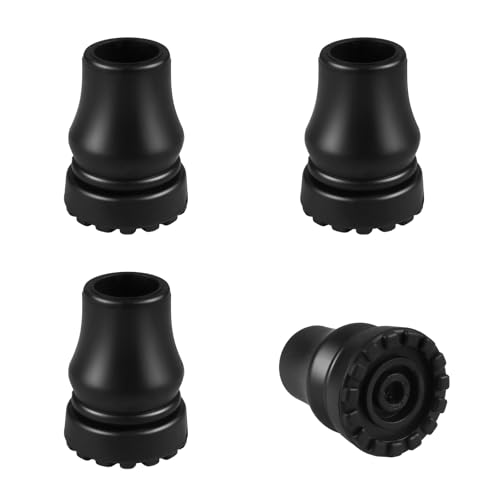
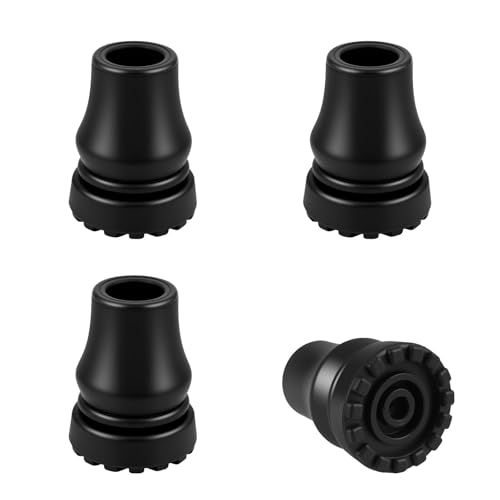
The rubber tip, or rubber ferrule, sits at the bottom of the cane shaft and provides the only contact point between the mobility aid and the ground. This critical component absorbs impact shock, shields indoor floors from marks, and generates frictional grip across smooth or uneven surfaces. Heavy-duty replacement parts, such as the OXDFK rubber cane tips, utilize dense rubber compounding with deep tread grooves to channel moisture away on slick indoor tiles or wet sidewalks. Maintaining good tread traction helps reduce slip anxiety on polished hardwood and rainy outdoor pavements.
A crucial interior feature inside quality rubber ferrules is the embedded metal washer or steel insert. The narrow, hard bottom edge of an aluminum or wooden cane shaft concentrates strong downward force into the base of the tip. Without a steel insert, the shaft would quickly slice through the rubber compound, exposing bare metal to the floor and creating severe slipping hazards. The internal metal washer distributes vertical pressure across the entire base, significantly extending the usable lifespan of the rubber foot pad.
Cane tips come in specific internal diameter sizes, commonly including 5/8-inch, 3/4-inch, and 7/8-inch bore dimensions to match different shaft diameters. Installing a 3/4-inch tip on a 5/8-inch tube produces a dangerous, loose fit that can slip off mid-stride, while forcing a small tip onto a wide tube causes torn rubber walls. Measuring the outer diameter of the bare cane shaft before ordering replacements ensures a tight, slip-resistant friction fit. Keeping spare tips on hand allows users to replace worn rubber before tread wear exposes the metal washer.
Quad Base Attachments and Multi-Point Foot Platforms
While single-point rubber tips provide agile maneuverability, quad cane bases feature an expanded four-point footprint that delivers superior standing stability. Conversion accessories, such as the GALPADA Four-Legged Cane Bottom Cap, attach directly to walking stick ends to transform a single-point cane into a stable multi-point support. Quad bases distribute user weight over a wider surface area, offering enhanced balance for individuals recovering from strokes or managing orthopedic weakness. The broad base also allows the cane to stand upright on its own, eliminating the need to bend down to retrieve dropped canes.
Despite their balance benefits, quad bases require careful handling to avoid creating tripping hazards during forward strides. Quad canes feature an asymmetrical design where the flat side must always face the user’s body, preventing the outer legs from catching on the opposite foot. Furthermore, quad canes pose distinct hazards on staircases because standard stair steps are frequently too shallow to fit all four rubber feet securely. Users should always use a sturdy wall handrail when climbing stairs rather than attempting to balance a wide quad base across narrow stair edges.
Safety Wrist Straps and Retractable Ice Cleats
Secondary accessories attached to the cane shaft provide added safety and practical convenience during daily routines. Braided leather or nylon wrist straps fasten beneath the handle, slipping over the user’s wrist to prevent the cane from falling if grip is temporarily released. Table clips snap onto the middle shaft, allowing individuals to rest their cane securely against restaurant tables, counters, or desks. These drop-prevention attachments help seniors and post-surgical patients maintain access to their mobility aid without repetitive, painful bending.
In winter conditions, retractable ice pick attachments clamp onto the lower shaft above the rubber tip to provide traction on frozen ground. These accessories feature durable steel prongs that flip downward beneath the rubber ferrule to bite into ice and packed snow. When stepping indoors onto smooth floors, the user flips the steel spikes upward, allowing the clean rubber pad to contact the surface without damaging tiles. Checking accessory mounting brackets regularly ensures that screws remain tight and attachments do not rotate unexpectedly during walking.
Routine Inspection, Proper Sizing, and Biomechanical Gait Technique
Preserving the safety of a walking cane requires regular visual inspections of every mechanical component. Users should check the bottom rubber ferrule weekly for thinning tread, uneven wear angles, rubber cracking, or metal washer exposure. Tightening the anti-rattle locking nut after every adjustment prevents tube vibration, while testing the push-button pin ensures firm spring engagement. Promptly replacing degraded parts, such as worn ferrules or loose locking collars, prevents sudden hardware failures and maintains confident ground stability.
Safe cane use also depends on correct biomechanical technique during daily movement. Clinicians instruct individuals to hold the cane in the hand opposite the injured, weak, or painful leg to preserve a natural reciprocal gait. This opposite-side placement offloads fifteen to twenty-five percent of lower-limb body weight onto the cane while keeping the body balanced. When climbing stairs, the user steps up with the stronger leg first, while descending requires leading with the cane and affected leg together while gripping the handrail.
Recognizing when a single walking cane is no longer sufficient is essential for continuous fall prevention. If an individual experiences progressive balance loss, frequent stumbling, severe bilateral leg weakness, or freezing episodes, transitioning to a two-handed walker or rollator provides crucial bilateral support. Consulting a licensed physical therapist or physician ensures accurate equipment prescription, professional gait assessment, and proper device fit tailored to specific medical needs. Understanding how every part of a cane functions ultimately helps individuals move safely, preserve independent mobility, and protect their physical well-being.
Knowing how handles, shafts, adjustment detents, locking nuts, and rubber tips interact makes managing mobility equipment straightforward and safe. Routine inspections, accurate height adjustments, and timely part replacements ensure that a walking cane remains a dependable partner for balance and fall prevention. Selecting quality components designed to match your physical needs restores daily walking confidence, keeping you steady and active on every stride.





Write Your Review
No reviews yet. Be the first to share your experience!