


Negotiating steep mountain descents with a heavy multi-day pack places substantial cumulative force on your knees, ankles, and lower back. Hikers often look for immediate gear solutions around the garage and wonder: can you use ski poles as trekking poles without running into stability issues? While alpine ski poles provide rigid support against the winter snowpack, taking them straight to technical hiking trails introduces distinct ergonomic, mechanical, and safety compromises. Heavy shafts and non-breathable grips can quickly turn an afternoon walk into an exhausting struggle.
Dedicated hiking sticks feature specialized carbide tips, moisture-wicking grips, and quick-adjust locking mechanisms designed specifically for rocky ascents and varied backcountry terrain. Using the wrong equipment on rocky singletrack increases slip hazards and accelerates upper-body fatigue. If you regularly pack your trail kit into travel luggage, consulting a carry on backpack sizing options guide illustrates how critical compact gear dimensions can be. Understanding how standard ski gear measures up against modern trekking poles will keep your joints protected and prevent unexpected gear failure in remote territory.

Pros
- Collapses down to a compact 15-inch profile that fits inside most hiking daypacks and travel bags.
- Aircraft-grade aluminum shafts and metal flip locks resist trail impacts better than fragile plastic clamps.
- Natural cork grips offer comfortable, sweat-resistant hand placement with lower EVA foam extensions for switchbacks.
- Listed at 9.95 ounces per pole, keeping carried base weight and trail fatigue low.
Cons
- The 100-120 cm adjustment range is strictly limited to hikers 5 feet 9 inches and under.
- Folding cord design requires manual joint alignment during deployment compared to standard twist or slide poles.
- Aluminum construction is slightly heavier than ultralight carbon fiber alternatives.
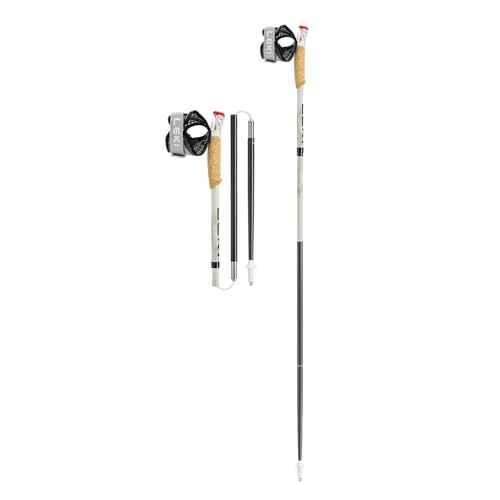
The Hiker Hunger Foldable Aluminum Trekking Poles are compact, packable hiking sticks designed for trail balance, stability, and joint relief during day hikes or backpacking excursions. With an adjustable range spanning 100 to 120 centimeters, this specific short variant is built specifically for hikers standing 5 feet 9 inches and under. For hikers who prefer to stow their poles inside or alongside a pack when scrambling rocky sections, boarding planes, or commuting to trailheads, the folding configuration provides a distinct packability advantage over standard full-length telescoping options.
On the trail, the main benefit of this system is the compact 15-inch collapsed length combined with a manageable listed weight of 9.95 ounces. The multi-section folding shafts slide smoothly into side water-bottle pockets, slip behind exterior pack compression straps, or stow entirely within internal gear compartments. This makes them especially useful for technical trail segments where hands-free movement is required, as well as for minimalist backpackers who value clean external pack lines without protruding gear.
Construction quality centers around aircraft-grade aluminum tubing connected by reinforced joints and secured with external metal flip locks. Metal locking levers provide reliable holding strength against vertical slippage on steep descents and resist impact damage better than brittle molded plastic alternatives. Hand comfort is supported by genuine cork main grips that shape to the palms and absorb sweat, while lower EVA foam grip extensions allow hikers to choke down during sudden steep switchbacks without pausing to unlock and shorten the poles.
Deploying and adjusting the poles is straightforward once familiar with folding-shaft mechanics. The lower segments lock into place via an internal tension cable, while the uppermost section provides 20 centimeters of fine height adjustment secured by the metal cam lever. Basic maintenance involves wiping away trail mud, letting the shafts and inner cable dry thoroughly before long-term storage, and checking the flip-lock tension screw occasionally to maintain firm clamping force.
Realistic limitations must be noted before purchase. Because this model reaches a maximum length of 120 centimeters, hikers taller than 5 feet 9 inches will lack sufficient extension for a proper 90-degree arm angle, particularly on steep downhill sections. Furthermore, while aluminum bends rather than snaps abruptly under extreme lateral loads, it carries a small weight penalty over premium carbon fiber alternatives. The folding joints also require routine visual checks to ensure trail grit does not interfere with proper joint seating.
For day hikers, section hikers, and adventure travelers who fit within the recommended height parameters, these Hiker Hunger poles represent a well-constructed, travel-friendly trail tool. Their 15-inch packed profile, durable metal hardware, and ergonomic cork handles make them a dependable asset for any hiker seeking reliable stability without taking up unnecessary pack volume.
This model features an adjustable usable length between 100 and 120 centimeters, designed to fit hikers who are 5 feet 9 inches tall and shorter. Proper ergonomic trekking pole fit requires that your elbow forms approximately a 90-degree bend when holding the grip with the pole tip resting on level ground.
Hikers near the upper limit of 5 feet 9 inches who frequently tackle steep mountain descents may find themselves near the pole maximum extension. Hikers taller than 5 feet 9 inches should look toward the longer 115 to 135 centimeter variant to ensure adequate downhill reach and optimal joint support.
Collapsing down to just 15 inches, these folding poles pack considerably smaller than standard two-section or three-section telescoping poles that typically collapse to 24 inches or more. This compact profile allows them to slide entirely inside daypacks, luggage, or trunk storage compartments without sticking out.
When stowing poles on your backpack exterior, the 15-inch length minimizes snagging hazards when hiking through dense brush or off-trail terrain. To maintain the internal tension cord and prevent corrosion, ensure all sections are completely dry before packing them away for extended off-season storage.
Evaluating Ski Poles Versus Dedicated Trekking Poles on the Trail
Downhill ski poles can function as makeshift walking sticks in an emergency, but they remain ill-suited for regular hiking and backpacking. Ski shafts are engineered for snow pushing and downhill bracing, whereas trekking poles are precision tools built for trail gradients, joint offloading, and continuous balance. Hikers using rigid ski poles frequently encounter wrist fatigue, blister formation, and frustrating undergrowth snags. Examining mechanical differences clarifies why dedicated hiking hardware provides superior safety and comfort across diverse terrain.
Core Mechanical Differences Between Downhill Ski Poles and Hiking Sticks
The primary functional difference between ski poles and trekking poles centers on length adjustability. Alpine ski poles feature a fixed, single-piece shaft that cannot adapt as trail gradients change. Dedicated trekking poles utilize telescoping or folding sections secured by external cam levers or push pins. This adjustability allows hikers to customize shaft length based on user height, pack weight, and shifting terrain.
Maintaining a ninety-degree elbow angle is the standard guideline for efficient pole propulsion on flat ground. When ascending steep switchbacks, shortening your poles by five to ten centimeters maintains forward leverage without straining your shoulders. Descending steep trails demands lengthening each shaft so you can plant tips forward without stooping your posture. A fixed downhill ski pole forces your upper body into unnatural, fatiguing angles during extended climbs and rocky drops.
Adjustability also determines whether poles can perform secondary camp tasks during wilderness backpacking journeys. Ultralight hikers routinely rely on adjustable trekking poles to pitch A-frame shelters, tarps, and pyramid tents. Because these shelters require precise peak heights between one hundred fifteen and one hundred thirty-five centimeters, fixed ski shafts cannot tension fabric canopies properly. Using fixed ski poles often results in sagging shelters or punctured fabric apexes.
Grip Ergonomics, Wrist Straps, and Blister Prevention
Grip materials reflect completely different operating environments and temperatures. Downhill ski poles feature hard plastic or non-porous rubber handles designed for insulated winter gloves. Gripping hard rubber with bare, sweaty hands during a summer hike traps friction and moisture against your skin. This constant friction softens skin layers, rapidly generating hot spots and painful blisters over moderate distances.
Dedicated trekking poles rely on breathable natural cork or closed-cell EVA foam handles. Natural cork absorbs skin oils and gradually molds to your hand shape while channeling perspiration away from your palms. Closed-cell EVA foam provides soft shock absorption and resists water saturation in damp conditions. Many hiking poles also include extended lower foam sleeves, allowing you to choke down on steep traverses without adjusting mechanical locks.
Wrist strap architecture creates another vital contrast between the two pole designs. Ski pole straps are simple nylon loops meant to prevent gear loss during high-speed downhill tumbles. Trekking pole straps are directional load-bearing systems engineered to support body weight through your wrists. By entering straps from below and resting your palms against the webbing, you transfer downward force without maintaining an exhausting white-knuckle grip.
Shaft Metallurgy, Swing Weight, and Upper Body Fatigue
Resort ski poles are built to survive lateral bending forces when skiers carve heavy snow or strike race gates. Manufacturers use thick-walled aluminum tubing that prioritizes lateral crush resistance over light trail weight. While robust, this heavy tube profile adds noticeable dead weight when carried across miles of trail. Lifting thick alpine poles over thousands of vertical feet places needless strain on shoulders and upper arms.
Trekking poles utilize refined metallurgy to maximize structural strength while keeping swing weight exceptionally low. High-grade aircraft aluminum, such as 7075-T6 alloy, offers high tensile yield strength with remarkably thin shaft walls. Foldable poles crafted from aircraft aluminum weigh around ten ounces per pole while retaining the elasticity needed to flex under heavy packs. Controlling rotational inertia at the tip reduces repetitive forearm strain over long hiking days.
Trail impact produces continuous micro-vibrations that travel up rigid shafts into human joints. Downhill ski poles lack vibration-dampening properties, sending harsh metallic feedback into wrists and elbows on hard ground. High-grade aluminum and carbon fiber hiking shafts absorb high-frequency trail buzz before it reaches your hands. This subtle dampening preserves upper-body stamina and prevents chronic joint tenderness on extended backcountry treks.
Tip Construction, Traction Surfaces, and Basket Dynamics
The ground-contact interface determines your security on loose scree, wet granite, and packed dirt. Downhill ski poles feature blunt steel pins or rounded studs made to punch through snowpack. On dry rock or firm dirt trails, these blunt points cannot bite into surface textures, causing poles to slide unpredictably. A slipping pole tip on steep terrain presents a fall hazard that compromises balance.
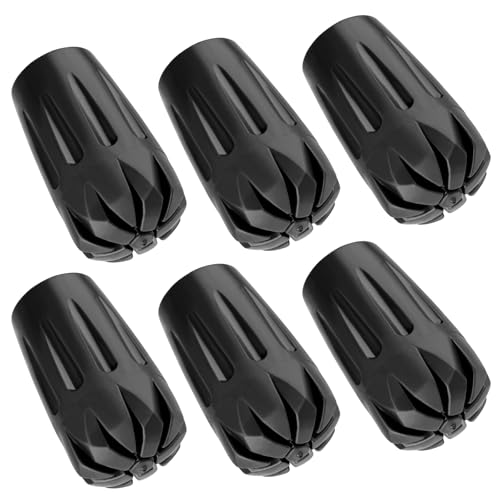
Dedicated trekking poles use concaved tungsten carbide flex tips that bite aggressively into rock, shale, and hardpack. Carbide is an extremely hard material that resists dulling after hundreds of trail miles. Hiking pole packages also include removable rubber road tips and boot caps for walking on pavement or sandstone. These modular rubber caps prevent rock scarring and eliminate clicking noises on hard surfaces.
Basket diameter also causes practical headaches when using winter gear on hiking trails. Ski poles feature wide plastic discs meant to prevent sinking into soft snow. On narrow dirt trails, these wide baskets constantly snag on brush, roots, and loose rocks. Snagging a ski basket in trailside bushes can pull you off balance or bend the shaft. Trekking poles use compact mud baskets that provide push-off support without catching vegetation.
Joint Offloading and Biomechanical Support on Mountain Descents
Backpackers rely heavily on walking poles to relieve patellofemoral pressure and protect knee joints. Stepping down steep stone stairs with a loaded pack sends impact forces equal to several times body weight through knees and ankles. Trekking poles transfer downward momentum into your chest, shoulders, and arms, reducing strain on quadriceps and patellar tendons. This biomechanical offloading stabilizes your stride and minimizes joint soreness after long descents.
Hikers managing joint tenderness often combine proper pole technique with trail clothing designed for mobility. Pairing your poles with supportive knee hiking pants provides comprehensive comfort across rocky descents. Because fixed ski poles cannot be lengthened for downhill hiking, you must stoop forward to plant them. This awkward forward lean transfers heavy compressive loads onto your lower back and knees.
Bending forward to plant short ski poles also pulls your center of gravity ahead of your feet on steep drops. If your boot slips on loose scree while leaning forward, recovering balance becomes difficult. Lengthening trekking poles lets you keep your torso upright and your center of gravity balanced over your hips. Having reliable forward contact points controls downhill momentum and cushions joint impact.
Packability, Storage, and Commercial Air Travel Practicalities
Wilderness hiking requires gear that stows easily when your hands must be free for scrambling. Alpine ski poles are rigid shafts measuring forty to fifty-four inches in length. When traversing technical rock scrambles requiring handholds, rigid ski poles become awkward hazards. They cannot fit inside a backpack, forcing you to lash unwieldy shafts where they catch on overhanging tree branches.
Modern foldable trekking poles solve storage problems through compact sectional design. Multi-section folding poles collapse down to roughly fifteen inches, sliding easily into daypack pockets or side sleeves. When moving between steep climbs and exposed rock, you can deploy or pack folding poles in seconds. This compact profile also keeps gear secure when riding trail shuttles or regional trains.
Commercial air travel presents another logistical challenge when packing for mountain destinations. Rigid ski poles exceed airline carry-on limits, requiring expensive sports gear luggage fees. While sharp carbide hiking tips must travel in checked baggage under airline security rules, compact collapsible poles fit inside standard checked bags. Carrying full-length ski poles through transit terminals for a hiking vacation is cumbersome and unnecessary.
Scenarios Where Ski Poles Can Function as an Acceptable Substitute
Despite clear mechanical disadvantages on dry trails, ski poles can work in specific winter conditions. On snowshoe outings across gentle terrain, downhill ski poles perform reliably. Deep snowpack replicates winter ski conditions, where wide powder baskets and blunt steel tips provide traction. In freezing weather, wearing insulated gloves also prevents hand blisters from hard rubber handles.
Ski poles also serve as temporary walking aids on flat, maintained park trails. If you need balance support around local paths, a single ski pole provides basic stability. In backcountry emergencies where a hiking pole breaks, using a ski pole is certainly better than walking unsupported. However, relying on ski poles for regular three-season hiking remains an uncomfortable and inefficient compromise.
Backcountry touring ski poles represent an exception because many models feature telescoping shafts with lever locks. If you already own adjustable touring poles, they adapt to summer trails better than resort poles. You still must swap wide snow baskets for compact mud discs and manage warm-weather grip sweat. For standard hiking, dedicated trekking poles remain substantially lighter and more comfortable.
Key Engineering Features Found in Purpose-Built Trekking Poles
Purpose-built trekking poles incorporate specific hardware designed for natural trail surfaces. Premium folding poles, including the Premium Foldable Hiking Poles by USA Brand, feature sturdy metal flip locks over reinforced joints. Metal cam levers provide reliable clamping pressure, preventing shaft collapse when you lean your weight onto the poles during steep drops. This holding power is essential for navigating rocky talus and stream crossings safely.
Shaft materials balance durability against overall weight. Aircraft-grade aluminum offers dependable yield strength, keeping weight around ten ounces per pole while resisting bending under heavy packs. Aluminum absorbs trail stress with ductile resilience, avoiding the brittle shattering risk that cheaper carbon fiber can suffer in rock crevices. Combining aircraft aluminum with folding joints creates a durable, travel-friendly hiking tool.
Adjustability across height tiers ensures proper ergonomic alignment for hikers of different statures. Quality poles typically provide size ranges spanning from one hundred to one hundred twenty centimeters for shorter hikers, and one hundred fifteen to one hundred thirty-five centimeters for taller users. This adjustment span ensures a ninety-degree elbow angle on flat trail while leaving ample extension for downhill sections. Clear height markings let you reset your preferred length quickly.
Practical Verification and Final Field Recommendations
Taking thirty seconds to inspect pole hardware before hitting remote trails guarantees safety. If you use adjustable touring or hiking poles, verify that external cam locks are properly tensioned by applying firm body weight to the grips. The shafts must hold firm without slipping or creeping downward under vertical load. Inspect carbide tips and confirm that mud baskets are tightly threaded before departure.
While alpine ski poles might seem like convenient substitutes sitting in your garage, they fall short on hiking trails. Dedicated trekking poles deliver the adjustability, moisture management, joint protection, and packability needed for enjoyable trail days. Investing in purpose-built folding or telescoping poles protects your knees, stabilizes your footing, and prevents blisters across every mountain mile.






Write Your Review
No reviews yet. Be the first to share your experience!