


Transitioning outdoor equipment between summer alpine hiking and winter snow travel often tempts adventurers to streamline their gear closet. When the snow begins to accumulate on mountain trails, many winter travelers wonder: can you use trekking pole for skiing without compromising trail safety or structural stability? Standard summer walking sticks are designed primarily to absorb repetitive downward strikes and reduce strain on knees, ankles, and hips across rocky footpaths. Dynamic winter sports like backcountry touring, cross-country travel, and resort skiing expose gear to severe lateral leverage, sub-freezing temperatures, and deep powder conditions. Balancing these changing forces requires understanding how shaft metallurgy, locking mechanisms, and specialized hardware hold up under cold-weather mountain demands.
Adapting standard poles for snowy conditions is often possible, but it requires specific mechanical adjustments and realistic performance expectations. Swapping narrow summer mud rings for broad powder baskets provides essential flotation, while inspecting external cam levers prevents sudden slippage on steep descents. Backpackers organizing their seasonal gear alongside a comprehensive wilderness packing checklist must evaluate whether their summer shafts can handle sudden side-loads in deep snow drifts. While dedicated alpine skiing often demands thicker, rigid single-piece shafts, hybrid four-season models bridge the gap between summer summits and winter tours. Understanding how shaft materials, locking hardware, and ergonomic wrist straps function in sub-freezing environments ensures you make safe decisions before heading onto snow-covered slopes.


Converting Trekking Poles for Skiing: Mechanics, Safety, and Limitations
Using hiking sticks on snow is entirely possible, but your success depends on your terrain, skiing style, and hardware setup. If you want a direct answer to whether can you use trekking pole for skiing, the reality is a qualified yes for backcountry touring and cross-country travel, but a firm warning against aggressive resort skiing. Trekking poles excel at vertical load bearing, yet they lack the lateral strength required for high-speed downhill carving. Converting your summer walking gear into functional winter equipment requires swapping specific components, checking mechanical locks, and understanding where telescoping shafts reach their structural limits.
The Core Mechanical Differences Between Hiking and Ski Poles
Standard trekking poles are engineered around continuous, cyclical downward compression along their vertical axis. When you descend a steep trail, the pole absorbs axial forces to offload your leg joints and lower back. Dedicated alpine ski poles, by contrast, must withstand severe lateral bending forces, aggressive pole plants at speed, and hard impacts against frozen snow. Most downhill ski poles feature stout, single-piece aluminum shafts that resist bowing under heavy sideways shear. Multi-piece hiking poles incorporate nested segments that naturally flex more and present joint seams where lateral pressure can cause permanent bending.
The joints between shaft sections represent the most vulnerable mechanical areas during dynamic ski turns. While a solid one-piece ski pole distributes bending stress smoothly along its length, an adjustable hiking pole concentrates leverage right at the locking collars. Planting a telescoping pole while moving fast downhill can easily crimp the aluminum tube or fracture a composite section. Backcountry touring involves slower, rhythmic uphill travel where poles experience mostly vertical loading, which is why adjustable poles thrive in the backcountry but struggle inside resort boundaries. Recognizing the difference between vertical support and lateral deflection helps you evaluate whether your hiking gear matches your winter plans.
Powder Basket Flotation and Surface Area Requirements
The most obvious limitation when using hiking poles on snow is the small basket installed at the tip. Summer hiking poles typically ship with compact mud baskets measuring thirty-five to fifty millimeters across, designed only to keep tips from wedging between rocks or sinking into trail mud. On groomed paths, these compact discs provide minimal stability, but in fresh powder, they punch straight through the snowpack. Sinking deep into the snow with every stride ruins your balance and wastes enormous amounts of energy pulling the shafts back up.
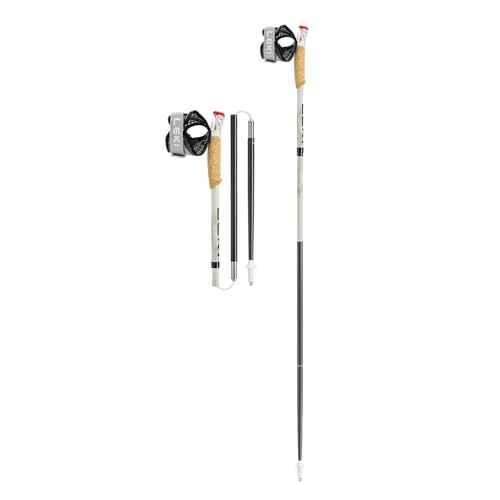
Converting your setup requires installing wide winter powder baskets, such as the eighty-five millimeter discs on accessories like the Qiutdisn(4Pcs ) Trekking Poles Snow Powder Sand replacements. Dedicated winter gear like the LEKI Sherpa Lite Ski Poles – Neonorange – Black includes broad snow baskets engineered with stiff edges that can also adjust ski binding heel risers. Wide baskets distribute downward pressure across more surface area, providing the flotation needed to keep your grips at an efficient working height. Before heading out, inspect the lower shaft threads to ensure replacement winter baskets screw on firmly without stripping or slipping loose.
Shaft Materials Under Sub-Zero Stress: Aluminum Versus Carbon Fiber
Temperature changes alter how different shaft materials behave under heavy mechanical strain. Winter touring models like the Backcountry Access Scepter Aluminum use aircraft-grade aluminum because metal alloys retain dependable ductile toughness in sub-freezing conditions. Alloys like heat-treated 7075 or LEKI’s HTS 6.5 aluminum bend slightly under extreme force rather than shattering abruptly. This ductile behavior offers an important safety advantage in the backcountry, since a slightly bent aluminum pole can often be carefully straightened in the field to help you return safely to the trailhead.
Carbon fiber shafts offer an ultralight feel that appeals to splitboarders and tourers focused on low swing weight. Backcountry designs like the MSR Dynalock Ascent Carbon Backcountry Poles add Kevlar reinforcement to their composite weave to boost resistance against rock impacts and sharp ski edges. However, unreinforced carbon fiber can behave unpredictably in severe cold, where resin matrixes stiffen and become more prone to brittle fracture. If a basic carbon shaft catches between hidden rocks beneath the snowpack, lateral leverage can cause sudden cracking without warning.
Locking Mechanisms in Freezing Temperatures: Cam Levers Versus Twist Locks
Adjustable poles rely on either external lever clamps or internal friction expanders to hold their telescoping sections at height. Internal twist locks use an expanding plastic wedge that presses against the interior tube walls when turned. In sub-freezing weather, internal twist systems often slip because condensation inside the shaft freezes into slick frost, preventing the wedge from gripping the metal. Freezing temperatures also cause plastic expanders to contract slightly, leaving internal twist locks spinning freely or frozen solid when you attempt to adjust them.
External cam lever locks provide much better reliability for winter trips because they clamp directly around the outside of the tube. Hardware like LEKI’s Speed Lock 2 Plus and MSR’s DynaLock mechanism allows quick tension adjustments without needing tiny tools. Before putting your full weight on an adjustable pole during a snow descent, test that the cam lever closes with firm mechanical resistance. Cold temperatures cause metal and composite parts to contract at different rates, so turning the tension dial slightly ensures the clamp will hold firmly under a heavy winter pack.
Grip Ergonomics and Extended Sleeves for Sidehill Traverses
Ski touring and mountain snowshoeing involve long sidehill traverses where your uphill pole must be significantly shorter than your downhill pole. Stopping constantly to open lever locks and adjust section lengths wastes daylight and interrupts your climbing pace. Purpose-built winter poles solve this problem by adding extended grip sleeves that reach several inches down the upper shaft. Models equipped with extended foam sleeves let you comfortably choke down on the uphill shaft with gloved hands while keeping your downhill grip at full extension.
Handle materials also directly affect hand warmth and overall comfort in freezing air. Natural cork grips, including the Kisangel Cork Trekking Pole Handle Grip options on versatile hiking poles, mold gradually to your palm while offering good tactile control. Closed-cell EVA foam handles provide valuable thermal insulation, creating a protective barrier between your warm gloves and the icy metal tube. Hard plastic or uninsulated rubber grips conduct sub-zero cold straight toward your fingers, accelerating hand fatigue and numbness on windy alpine ridgelines.
Wrist Strap Hazards and Downhill Safety Differences
Using wrist straps on summer trails involves different biomechanics and safety rules than skiing on snow. On dry footpaths, putting your hand upward through a padded strap loop allows you to rest body weight directly on the webbing rather than clenching the grip. When skiing downhill, however, wearing tight wrist straps introduces severe orthopedic and avalanche risks. If a planted pole catches on a hidden stump or hard snow crust at speed, a locked strap can wrench your thumb backward, causing a painful ligament injury known as skier’s thumb.
In avalanche terrain, winter safety recommendations advise removing your hands from wrist loops entirely so the poles do not pull you down if caught in a slide. Some skiers use simple straps like the NAMOARLY Ski Pole Wrist Strap to prevent dropped gear while keeping the loop loose enough for rapid release. Backcountry poles often include releasable straps that unclip under strong upward tension during a fall. If you choose to ski with regular hiking poles, keep your hands out of the loops on downhills to protect your wrists and shoulders.
Evaluating Feasibility Across Different Winter Disciplines
Whether your trekking poles work well on snow depends on your winter activity and travel speed. Backcountry splitboarders and touring skiers often prefer adjustable hiking-style poles because they collapse down for simple pack storage. When splitboarders transition to ride downhill, their poles must shorten enough to strap flat against a backpack without snagging trees. Adaptable options like the Hiking Stick Carbon Fiber Aluminum Alloy or the Hiking Poles, Trekking Poles for Hiking offer versatile length settings that easily handle both climbing skins and flat meadow approaches.
Cross-country touring on rolling trails and ungroomed forest paths is another setting where converted trekking poles perform well. Nordic touring involves steady forward motion rather than sharp downhill turns, so pole forces remain well within standard design limits. In contrast, fast alpine skiing on groomed resort runs subjects poles to violent lateral shocks that lightweight telescoping shafts cannot handle. Using multi-piece summer poles for resort carving creates a real hazard of sudden shaft collapse, making dedicated one-piece alpine poles the right choice for lift-accessed slopes.
Hardware Inspection, Tip Selection, and Pre-Tour Sizing
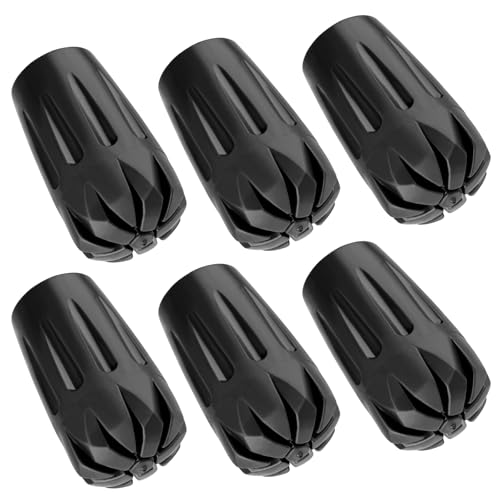
Before taking converted poles onto winter snow, examine your tip hardware and shaft connections carefully. Standard carbide tips grip well on summer rock, but dull tips can skate across hard-packed winter ice during steep kick-turns. Checking replacement parts like the Vaveren Replacement Tips for Ski Poles ensures your tips have sharp edges capable of biting into frozen surfaces. Also verify that the plastic stops above the tips keep your wide powder baskets from sliding upward when pushing through wet, heavy snow.
Setting pole length for skiing differs from standard hiking sizing, where a ninety-degree elbow bend is the benchmark. Ski boots and bindings elevate your stance several inches off the snow, and pole tips naturally penetrate slightly beneath the surface. For skiing, most people set their poles five to ten centimeters longer than their usual hiking height to balance this height difference. When packing spare pole sections or winter camp gear, using reliable techniques for attaching bulky gear to a pack keeps your equipment stable and out of the way.
Winter Field Maintenance and Freeze Prevention
Using telescoping poles in sub-zero winter conditions requires simple maintenance to prevent moving joints from freezing together. When melting snow seeps between telescoping aluminum tubes, it can freeze overnight into an icy seal that jams the sections. After every snow trip, pull your pole sections apart and wipe them completely dry with a clean towel before storing them indoors. Never apply grease, oils, or silicone spray inside telescoping shafts, as lubricants attract grit and destroy the friction needed for cam locks to hold.
Field adjustments also require care when your hands are cold and you are wearing thick winter gloves. If an external lever becomes stiff from packed snow or frost, clear the mechanism with a glove instead of forcing the plastic tab open. Applying steady finger pressure to the knurled tension screw maintains safe clamping power without stripping threads or cracking parts. Making these practical checks a standard habit ensures your multi-season poles provide dependable support across snowy ridgelines, frozen valleys, and scenic winter trails.






Write Your Review
No reviews yet. Be the first to share your experience!