


Winter trail conditions present distinct physical demands on outdoor enthusiasts transitioning between summer foot travel and snow-covered terrain. Many hikers exploring snowbound forests wonder can you use trekking poles for cross country skiing without investing in an entirely separate collection of specialized winter sports gear. While standard summer hiking setups prioritize vertical balance and downward joint protection, winter glide mechanics demand sustained rearward thrust and flotation across deep powder. Adapting your standard trail equipment for snowy trails requires an understanding of length requirements, basket surface areas, and shaft security under cold-weather loads.
Backcountry ski tourers and cross-country enthusiasts often appreciate adjustable poles for their modular versatility across varying snowpack depths. If you frequently pack your winter gear for remote trips, reviewing our carry-on backpack sizing guide can help you plan your gear transport effectively. Taking a closer look at clamp holding force, winter powder baskets, and ergonomic strap construction ensures that using your summer hiking sticks on snowy trails remains both safe and mechanically efficient.


Using standard hiking equipment on snow is physically possible, but the practical outcome depends heavily on your skiing discipline and terrain. Casual touring across rolling meadows or off-trail backcountry exploration allows for significant gear crossover when appropriate winter hardware is installed. Groomed track classic skiing and high-tempo skate skiing, however, impose mechanical demands that standard summer poles cannot satisfy efficiently. Understanding these functional boundaries helps prevent trail equipment failures and protects joint mechanics over long winter outings.
The Direct Answer: When Trekking Poles Work and When They Fail
The straightforward answer is yes, you can use trekking poles for cross country skiing if you are engaged in backcountry nordic touring or casual off-track exploration. These slower-paced winter activities prioritize stability, deep snow balance, and adaptable length over explosive forward glide speed. Adjustable poles excel on variable slopes where skiers shorten the shafts for steep climbs and lengthen them for sweeping descents. When paired with proper winter snow discs, a sturdy pair of adjustable hiking poles delivers reliable stability across rolling woodland terrain.
In contrast, attempting to use standard hiking poles for groomed track skiing or dedicated skate skiing leads to rapid frustration and compromised technique. Skate skiing requires exceptionally long shafts that reach the skier’s nose or chin to generate high-speed forward momentum. Classic groomed tracks demand aggressive backward pole planting where downward-facing summer grips fail to transfer power smoothly. Furthermore, hard-packed track surfaces cause undersized summer tips to slip, while standard hiking straps cause palm cramping during repetitive kick-and-glide cycles.
Pole Length Discrepancies Between Hiking and Nordic Skiing
Biomechanics dictate vastly different pole lengths for walking compared to sliding across snow. For standard hiking, the universal rule establishes a 90-degree elbow bend, positioning grips around 110 to 125 centimeters for average adult heights. Classic cross-country skiing, however, requires pole shafts that reach the armpit, translating to approximately 80 to 84 percent of total body height. Skate skiing pushes that requirement even higher, demanding shafts that reach between the skier’s chin and lip, or nearly 90 percent of standing height.
Most telescoping trekking poles offer a maximum extension of 135 to 140 centimeters, which presents an immediate constraint for taller skiers. For example, the MSR DynaLock Explore 3-Section Alumunium features an adjustment span of 100 to 140 centimeters, providing enough height for average adults practicing classic touring. Skier heights above six feet, however, will find that a 140-centimeter limit forces a hunched posture during double-poling sessions. Extending any telescoping pole past its marked stop line to gain extra reach severely compromises structural integrity and invites sudden shaft snapping.
When traversing undulating backcountry terrain, length adjustability transforms from a potential limitation into a significant asset. Ascending steep snowdrifts demands shorter pole lengths to prevent excessive shoulder strain and maintain a balanced forward lean. Descending rolling snowpack requires extending the poles by several centimeters to plant stabilizing contact points ahead of the skis. Two-section models like the MSR DynaLock Trail 2-Section Alumunium Backcountry provide reliable length variation between 100 and 140 centimeters while minimizing joint seams that could wobble under load.
Basket Diameter and Snowpack Flotation Mechanics
The single most common failure when taking summer hiking poles onto winter snow is neglecting to swap the baskets. Summer trekking poles arrive equipped with small mud discs measuring roughly four to five centimeters across. In powdery winter conditions, these narrow discs offer virtually zero surface resistance, punching straight through the unconsolidated snowpack down to underlying brush or rock. This deep sinking, known as postholing, throws skiers off balance and exerts severe lateral bending forces on the lower shaft sections.
Winter cross country touring requires broad powder baskets measuring at least eight to ten centimeters in diameter to distribute downward force effectively. Many four-season systems incorporate modular winter baskets directly into their packaging to ensure dependable snow flotation. The LEKI Sherpa Lite Ski Poles – Neonorange – Black includes both standard trekking discs and a Big Mountain Binding Basket featuring specialized edges for scraping ice and manipulating heel lifts. Utilizing purpose-built winter discs prevents deep shaft penetration and preserves the energy skiers expend on every forward push.
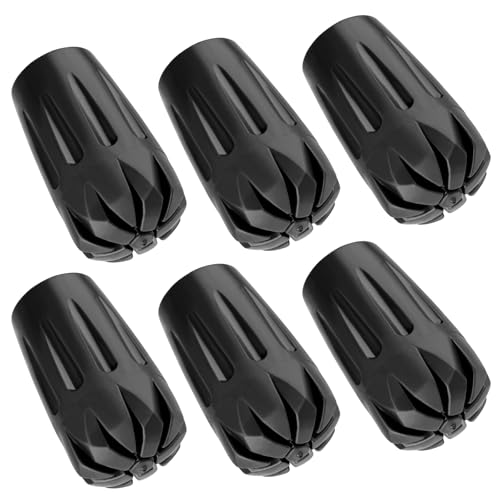
If your current hiking poles feature worn tips or lack threaded winter attachments, aftermarket accessories offer a practical solution. The Vaveren Replacement Tips for Ski Poles provides an eight-centimeter polypropylene rubber replacement component engineered for cross country activities and standard pole diameters. Replacing worn summer ferrules with proper snow-ready tips ensures firm grip engagement on icy crusts while securing wide flotation discs in place. Inspecting basket attachment threads prior to departure prevents discs from spinning loose and vanishing into deep trail powder.
Strap Ergonomics and Upper-Body Propulsion Forces
Propulsion dynamics highlight another major mechanical difference between hiking sticks and purpose-built nordic ski poles. During summer trekking, poles function primarily as vertical weight-bearing columns to absorb impact and support knees on descents. Skiers, however, rely on poles as horizontal propulsion levers, driving their body weight forward through an explosive rearward push. This movement requires releasing the pole grip at the end of the stroke and relying entirely on the wrist strap to carry the momentum before catching the handle again.
Standard hiking pole straps consist of simple nylon webbing loops that concentrate force narrowly across the back of the wrist. Over several miles of cross country poling, these basic webbing loops create painful pressure spots and accelerate palm fatigue. Dedicated nordic ski poles feature ergonomic wrap-around harness straps that distribute pressure evenly across the palm and wrist joint. When using trekking poles for winter touring, skiers must actively grip the handle throughout the entire stroke, which recruits forearm muscles heavily and limits backward swing extension.
Grip construction plays an equally vital role in managing hand fatigue and thermal comfort in sub-freezing temperatures. Models such as the Backcountry Access Scepter Aluminum address winter handling needs by incorporating a scraper grip with a rubber overmold and removable webbing straps. The textured rubber upper provides positive friction through thick insulated gloves while allowing skiers to scrape heavy ice accumulation from ski topsheets. Pairing proper glove layers with ergonomic grip profiles keeps hands warm and prevents blister development during repetitive gliding motions.
Locking Mechanism Security Under Angled Winter Thrust
Vertical loads applied during hiking differ substantially from the angled, dynamic thrust generated during cross country poling. Downhill hiking applies axial downward weight directly parallel to the pole shaft, where external lever locks hold securely. Cross country poling introduces repetitive angled shear stresses combined with freezing temperatures that can cause marginal locking collars to slip unexpectedly. Internal twist-expanders are notoriously vulnerable in sub-freezing weather, as condensation freezes on inner aluminum walls and causes internal friction plugs to spin freely.
External cam lever locks offer vastly superior dependability for winter touring because they physically clamp the outer shaft diameter. Premium locking systems incorporate tool-free knurled tension dials that allow users to calibrate clamping force in the field without searching for micro-screwdrivers. The external DynaLock mechanism featured on MSR backcountry poles delivers dependable holding power across fluctuating sub-zero temperatures. Maintaining proper lever resistance ensures that sudden downward double-poling thrust will not collapse the shaft and pitch the skier forward into the snow.
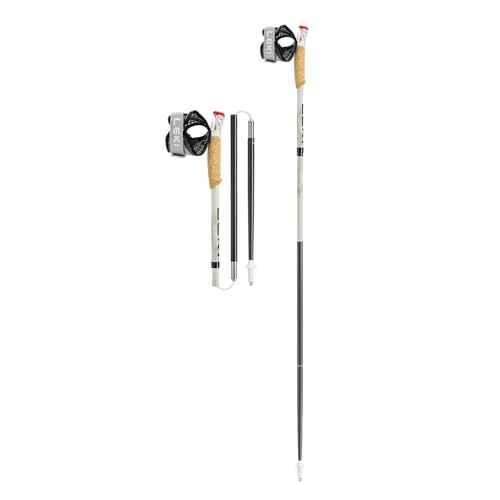
Folding Z-pole designs provide compact storage benefits for travelers but require careful evaluation for winter cross country use. The MSR DynaLock Ascent Foldable Carbon Backcountry combines a Kevlar-reinforced folding layout with an external DynaLock adjustment collar, packing down to 44.5 centimeters. While folding poles stow effortlessly on daypacks, the internal tension cord and joint ferrules must remain free of compacted ice to seat flush. Skiers should inspect all shaft joints before gliding to verify that every connection point has locked securely without lingering play.
Shaft Metallurgy and Carbon Fiber Behavior in Freezing Temperatures
Selecting between aluminum alloys and carbon fiber composite shafts involves significant trade-offs regarding weight, thermal conductivity, and cold-weather durability. Aluminum shafts constructed from aircraft-grade 7075-T6 or specialized HTS 6.5 alloys deliver exceptional ductile toughness when subjected to accidental lateral impacts. If an aluminum pole gets caught under a hidden log or struck by a metal ski edge, it generally bends rather than shattering catastrophically. In backcountry settings, a slightly bent aluminum pole can often be coaxed straight enough to safely complete the journey.
Carbon fiber shafts provide noticeable benefits in vibration dampening and featherweight swing weight, reducing upper-body fatigue over lengthy winter touring sessions. Carbon composite does not conduct freezing temperatures into the hands as rapidly as bare aluminum, keeping fingers warmer in cold winds. The primary vulnerability of carbon fiber lies in its brittle failure mode under sudden shear impacts against sharp rocks or steel ski edges. The Kevlar reinforcement utilized in the MSR DynaLock Ascent design directly addresses this issue by reinforcing composite fibers against abrasive lateral strikes.
Swing weight distribution significantly influences energy conservation during multi-hour ski tours across undulating snowpack. A pole with heavy lower sections requires more muscular effort to bring forward at the end of every kick-and-glide cycle. When spending long hours maneuvering through winter terrain, pairing lightweight poles with supportive knee trail apparel helps minimize cumulative joint strain. Maintaining an awareness of material behavior allows skiers to choose equipment that balances durability against the physical efficiency demanded by winter routes.
Step-by-Step Adaptation Checklist for Winter Nordic Touring
Before venturing onto snow-covered trails with summer trekking equipment, following a thorough adaptation checklist ensures safety and performance. Begin by thoroughly cleaning the telescoping shaft sections to remove residual trail dust, grit, and moisture that could freeze inside clamp collars. Inspect the bare metal or composite surfaces for hairline fractures, deep scratches, or oxidation that might compromise structural integrity under poling stress. Disassembling and drying sections thoroughly before winter trips prevents internal ice formation from seizing telescoping joints.
Next, remove standard summer mud baskets and install wide-diameter powder snow discs firmly onto the lower tip ferrules. Verify that the baskets thread securely into place or lock past the retention rings so they do not dislodge in dense snow. Test the cam lever tension by applying firm vertical force while bracing the pole against a solid floor surface. If the shaft creeps downward under moderate body weight, tighten the tool-free adjustment dial until the lever closes with positive resistance.
Adjust the total pole length to match your classic touring height by aligning the grips with your armpits while wearing ski boots. Secure the wrist straps so they cradle the base of your hands comfortably without constricting circulation inside thick winter gloves. Dressing in breathable, weather-resistant layers such as lightweight hiking pants allows comfortable mobility as you transition between kicking, gliding, and poling. Finally, carry a compact multitool or spare basket in your pack to handle unexpected trail adjustments without cutting your winter adventure short.
Backcountry Touring Versus Groomed Track Decision Criteria
Determining whether your trekking poles are suitable for an outing ultimately comes down to the snow surface and skiing format. For off-track backcountry touring, wilderness ski mountaineering, and rolling snowshoe-trail cruising, adaptable four-season poles represent an outstanding, multi-functional gear choice. Their adjustable height accommodates varying snow crusts, sidehill traverses, and steep climbs where fixed nordic poles feel awkward and unwieldy. The ability to collapse the poles and stow them on a pack duffel makes them exceptionally practical for hybrid winter trips.
For fitness-oriented classic skiing and skate skiing on machine-groomed tracks, investing in dedicated nordic ski poles remains the proper decision. Dedicated cross-country poles feature stiff, one-piece carbon shafts that eliminate energy-wasting flex and maximize forward thrust with every powerful poling motion. Their specialized biathlon straps and forward-angled grips promote technically sound kick-and-glide mechanics that trekking poles simply cannot replicate. Matching your equipment to your trail expectations guarantees rewarding days gliding across winter landscapes while preserving the lifespan of your outdoor gear.






Write Your Review
No reviews yet. Be the first to share your experience!