


Maintaining upright posture and rhythmic balance during outdoor walking begins with setting your equipment to the correct anatomical height. When walking sticks or poles are adjusted improperly, the body naturally compensates by hiking the shoulders upward or hunching forward, creating unnecessary strain along the cervical spine, lower back, and wrists. Understanding how tall should walking poles be allows walkers, hikers, and active seniors to transfer impact away from vulnerable knees, hips, and ankles while preserving natural gait biomechanics. Pairing proper pole geometry with supportive gear like knee joint support apparel creates a reliable foundation for joint comfort on steep descents or rolling paths.
Finding your ideal pole height involves measuring the distance from the ground to your hand while keeping your elbow bent at a comfortable right angle. Quality adjustable poles, such as telescoping aluminum and carbon fiber models, provide quick locking mechanisms that adapt to flat trails, steep inclines, and declining slopes. While bilateral walking poles excel at enhancing stability and offloading joint stress during exercise, individuals requiring formal medical rehabilitation or unilateral partial weight-bearing should consult a physical therapist to determine whether a dedicated medical mobility cane is clinically indicated. Checking your setup before every walk ensures that each stride feels secure, controlled, and comfortable.


Pros
- Collapses down to a compact 15 inches, fitting easily inside backpacks or carry luggage bags
- Natural cork handles absorb hand perspiration effectively during strenuous hikes
- Sturdy aircraft-grade aluminum construction with protective metal caps at the folding joints
- Simple height adjustment between 110 cm and 130 cm via a sturdy metal flip lock lever
Cons
- TSA regulations require trekking poles to be packed in checked luggage rather than carry-on bags
- Users must verify the push-button lock is fully popped out to ensure shaft stability before hiking
- At 11.5 oz per pole, aluminum construction is heavier than ultralight carbon-fiber alternatives
The Trekology Trek-Z Cork Grip Collapsible Trekking Poles are three-section folding hiking sticks designed for day hikers, backpackers, and adventure travelers who require portable stability on uneven trails. Rather than using traditional telescoping designs that remain long when collapsed, these poles utilize a tri-fold folding cable system that stows down to a compact 15 inches. This makes them a strong match for hikers who prefer storing their poles directly inside a daypack or securing them flat against external pack compression straps without poles protruding past the top lid.
On trail, these poles offer an adjustable length range of 110 cm to 130 cm, covering a stated user height range between 5'2" and 6'5". Each pole weighs 11.5 oz (330 g), delivering a solid feel that helps distribute carried weight and stabilize joint impact on steep descents. The main handle is shaped from natural cork, which naturally absorbs hand moisture and sweat during warm trail outings. Trekology notes that the cork grips incorporate a slight rotational flex as an anti-torque ergonomic feature. Below the cork, secondary EVA foam grips allow hikers to quickly choke down on the poles when negotiating short, steep step-ups without adjusting overall pole length.
Build quality centers on aircraft-grade aluminum alloy shafts, chosen to withstand lateral loads and rocky terrain where brittle materials might crack. To reinforce high-stress connection points, Trekology adds metal caps around the folding joints, reducing play once the poles are deployed. Extension and length adjustments are secured using a durable metal flip lock at the upper section, ensuring reliable clamping power once clamped to the hiker's preferred height marker.
Deploying the poles requires extending the folding sections until the internal tension cable pulls tight and an internal metal lock button pops through the shaft hole. Ensuring this button is fully seated is essential for complete structural rigidity before latching the upper flip lock. For transport, collapsing the poles takes seconds, allowing both poles to slip neatly into the included storage bag. When traveling by commercial air to hiking destinations, keep in mind that TSA and airline policies classify trekking poles as checked luggage, meaning they must be stowed inside checked duffels or backpacks rather than overhead carry-on bags.
While the folding mechanism provides impressive packability, the design does present a few practical limitations. The total adjustment range is 20 cm (110 to 130 cm), which may not suit hikers under 5'2" who require a shorter pole setup. Additionally, at 11.5 oz per pole, weight-conscious thru-hikers aiming for sub-pound base weights might find aluminum folding poles heavier than fixed-length carbon options. The locking button also requires careful initial alignment during assembly to ensure the segments seat properly without wobbling.
For hikers, backpackers, and travelers seeking dependable trail support without spending top-tier outdoor brand prices, the Trekology Trek-Z Cork poles offer exceptional value. The combination of sweat-wicking cork handles, reinforced aluminum joints, and an ultra-packable 15-inch folded size makes them a versatile accessory for everything from local forest walks to rugged mountain backpacking trips.
The Trekology Trek-Z poles adjust between 110 cm and 130 cm in length, accommodating hikers measuring roughly 5'2" to 6'5" (159 to 195 cm) in height. Length adjustments are managed via a metal flip lock clamp on the top shaft section, allowing users to fine-tune height based on trail slope or individual arm ergonomics.
Hikers shorter than 5'2" may find the minimum 110 cm setting too tall for standard 90-degree elbow positioning on level terrain. Always confirm that your forearm rests parallel to the ground when holding the cork grip before clamping the metal flip lock.
Thanks to a three-piece folding design, the Trek-Z poles collapse down to just 15 inches (38 cm) in length. This compact size allows them to fit horizontally or vertically inside most standard daypacks, carry duffels, or luggage cases without hanging loosely off external attachment points.
The poles come with a dedicated carry bag to keep trail mud and dust away from clean gear inside your backpack. Hikers traveling by air should remember that TSA guidelines prohibit trekking poles in carry-on baggage, requiring these poles to travel inside checked luggage.
The pole shafts are manufactured from aircraft-grade aluminum alloy, delivering reliable strength-to-weight performance and high resistance to bending stresses on demanding rocky routes. The connection joints are strengthened with metal caps to guard against joint wear and slippage over time.
The handles feature genuine cork, which helps manage perspiration and adapts comfortably to hand pressure over long miles. A secondary EVA foam grip sits directly beneath the cork for quick hand repositioning on steep gradients without stopping to change shaft length.

Pros
- Lightweight 3K carbon fiber construction reduces carried and swinging weight to 7.6 ounces per pole
- Metal flip locks offer secure, slip-resistant tension compared to traditional twist-lock mechanisms
- Ergonomic cork handles paired with secondary EVA foam grips provide versatile hand positioning on varying trail grades
- Wide 24-inch to 55-inch adjustment span suits a diverse range of user heights and terrain angles
Cons
- Carbon fiber shafts can fracture if wedged between rocks and subjected to severe lateral bending forces
- Collapsed length of 24 inches may extend beyond the top or bottom of ultra-compact daypacks when mounted externally
- Metal flip lock levers require occasional thumb-screw tension checks to prevent slippage over extended mileage
The Hiker Hunger 100% Carbon Fiber Trekking Poles are adjustable three-section telescoping trail poles built for day hikers, section hikers, backpackers, and campers seeking to shed weight without giving up stability. Constructed from 3K carbon fiber, each pole weighs approximately 7.6 ounces, making them an excellent choice for hikers looking to reduce joint impact on rugged trails while keeping their base gear manageable.
In terms of trail adjustment, these poles expand from a compact 24 inches up to a full 55 inches, comfortably serving both shorter and taller hikers across diverse terrain grades. Rather than relying on twist locks that can slip or freeze when exposed to dirt and moisture, Hiker Hunger equips these poles with quick-adjust flip locks built with metal hardware. This provides firm, slip-resistant clamping whether you are lengthening the poles for a steep downhill descent or shortening them for an aggressive ridge climb.
Grip comfort is a primary design focus, featuring ergonomic natural cork handles that actively wick moisture away from your palms while molding to your hand shape over time. Directly beneath the cork handles, secondary nonslip EVA foam extensions provide an immediate choke-down point for short, steep switchbacks, eliminating the need to stop and adjust pole length. Soft neoprene-padded wrist straps further enhance comfort, distributing downward pressure across your wrists without causing chafing during long mileage days.
Transporting and maintaining these poles on the trail is straightforward. When not in use, the shafts collapse down to 24 inches, allowing them to nest securely into side water bottle pockets, slide behind backpack compression straps, or strap onto front trekking-pole attachment loops. Maintenance involves basic trail hygiene: simply wipe away grit and moisture after wet outings and periodically check the thumbscrew tension on the metal flip locks to preserve optimal clamping force.
While carbon fiber provides exceptional weight savings and natural vibration damping, it behaves differently than aluminum under severe lateral stress. If a carbon pole becomes trapped between roots or granite boulders and is subjected to heavy sideways leverage, it is susceptible to cracking or snapping rather than bending. Additionally, hikers using compact daypacks under 20 liters should note that the 24-inch collapsed height will protrude somewhat above the pack rim when lashed to external straps.
For day hikers, multi-day backpackers, and travelers seeking an agile pair of poles with natural cork ergonomics and durable metal locking mechanisms, the Hiker Hunger Carbon Fiber Trekking Poles represent strong trail value. Backed by a 1-year warranty and a USA-based company, they provide dependable knee-saving support and steady balance across varied backcountry trails.
The Hiker Hunger trekking poles feature a telescoping three-section shaft that adjusts smoothly between 24 inches and 55 inches. This expansive range accommodates men, women, and younger hikers across flat paths, steep alpine ascents, and knee-jarring descents.
Length adjustments are secured using external flip locks equipped with metal levers. Unlike plastic components that can warp or weaken over time, the metal locking mechanism maintains consistent clamping pressure against the carbon fiber sections to help prevent unexpected slippage while hiking under load.
Constructed entirely from 100% 3K carbon fiber, these poles offer high tensile strength and natural vibration absorption while weighing only 7.6 ounces per pole. This lightweight profile substantially lowers the energy required per arm swing over long trail days.
The upper handle combines natural moisture-wicking cork with dense EVA foam for the lower grip extension, providing comfortable handholds in both warm and cold weather. To maintain the structural integrity of carbon fiber, hikers should avoid using the poles as pry bars and keep the locking collars clean of trail debris.
With a collapsed length of 24 inches, these poles integrate easily with standard hiking daypacks and multi-day backpacking packs. They can be threaded through dedicated lower trekking-pole loops, secured via upper bungee cords, or held fast by side compression straps.
For travel or public transit to the trailhead, the 24-inch collapsed size allows the pair to fit inside standard checked luggage or across larger duffel bags, keeping your trail gear neatly consolidated between outings.
Sizing Standards and Biomechanical Setup for Walking Poles
Setting the correct height on your walking poles directly dictates how effectively your upper body offloads weight from your lower joints. When walking across level ground, the primary baseline standard requires your elbow to rest at a clean 90-degree angle when holding the grip with the pole tip resting on the ground near your heel. This right-angle orientation keeps your forearm completely parallel to the ground while allowing your shoulder muscles to remain relaxed. Adopting this neutral posture prevents unnecessary tension in the neck and upper back while ensuring immediate forward propulsion with every stride.
An improper height setting immediately disrupts this biomechanical balance and increases physical fatigue. If the poles are adjusted even two inches too tall, your shoulders are forced into a permanent shrug, placing repetitive stress on your rotator cuffs and trapezius muscles. Conversely, poles set too short cause you to hunch your upper torso forward, compromising your spine alignment and reducing the stability needed on uneven terrain. Taking a few moments to establish your baseline height on flat ground sets the stage for efficient movement and dependable joint protection.
Step-by-Step Floor-to-Grip Measurement Method
Establishing your measurement begins with standing on a firm, flat surface while wearing the shoes you plan to walk in. Footwear thickness plays a noticeable role in your overall height, as thick hiking lugs or cushioned walking sneakers can elevate your stance by more than an inch. Stand upright with your shoulders dropped back and your arms resting naturally at your sides. Avoid leaning forward or arching your lower back while preparing to gauge your arm position.
Bend your elbow so that your forearm extends straight forward, forming a sharp 90-degree bend at the elbow joint. Grasp the pole handle naturally, allowing the strap to sit flat against your wrist without twisting. The tip of the walking pole should rest directly on the floor beside your foot, roughly in line with your ankle bone. If your forearm slopes upward toward your hand, the pole is too long; if it slopes downward, the pole needs to be extended.
Adjust the telescoping shaft sections until the grip meets your hand precisely at this parallel forearm angle. Secure the locking levers firmly and take several test steps on the level floor to evaluate how the poles feel in motion. Your elbows should swing comfortably without feeling cramped against your ribs or strained away from your body. This baseline position serves as your standard reference point before making any minor trail-specific modifications.
Height Calculations and Standard Sizing Charts
If you are purchasing adjustable poles or checking sizing before heading outdoors, mathematical formulas provide a dependable starting estimate. A widely accepted guideline involves multiplying your overall height in centimeters by 0.68 to calculate your recommended pole length. For example, a walker who stands 5 feet 8 inches tall (approximately 173 centimeters) would multiply 173 by 0.68 to arrive at a baseline pole setting of roughly 118 centimeters. Those working in inches can multiply their standing height in inches by 0.68 to find an equivalent benchmark.
Adjustable poles accommodate a broad spectrum of user heights by offering sliding telescoping ranges. The Trekology Trek-Z Cork Grip Collapsible Lightweight poles, for instance, adjust from 110 centimeters to 130 centimeters, which comfortably serves individuals between 5 feet 2 inches and 6 feet 5 inches tall. Meanwhile, the TrailBuddy 3K Carbon Fiber Hiking Poles and the 100% Carbon Fiber Trekking Poles by USA Brand from Hiker Hunger Outfitters offer telescoping ranges spanning from 24 inches up to 54 or 55 inches. These generous adjustment windows allow both shorter and taller walkers to lock in their personalized measurements without sacrificing shaft overlap.
Keep in mind that individual body proportions can cause variations from standard sizing formulas. People with longer arms relative to their torso height may require a pole setting that is an inch or two shorter than the chart suggests. Similarly, walkers with longer legs and shorter arm reach often need slightly more pole length to maintain the desired 90-degree forearm angle. Always treat formula calculations as an initial guideline and rely on your actual elbow bend for final verification.
Terrain Adjustments for Climbing and Descending Slopes
Outdoor walking rarely occurs on perfectly flat surfaces, meaning your pole height must adapt to fluctuating trail gradients. When approaching a sustained uphill section, the ground rises in front of you, effectively bringing the trail surface closer to your hands. To prevent your shoulders from lifting upward as you plant your poles forward, shorten both poles by roughly two to three inches (5 to 8 centimeters). This adjustment allows you to push down through your forearms and engage your core muscles without straining your upper back.
Many modern walking poles feature extended foam grips beneath the primary handle to simplify climbing. Both the Trekology Trek-Z and the Hiker Hunger 100% Carbon Fiber models include nonslip EVA foam extensions located directly below their main cork grips. Choking down onto these lower grip extensions allows you to tackle brief, steep ascents without stopping to loosen and reset your flip locks. Once the trail levels out, you can instantly return your hands to the primary handles.
Descending steep hills requires the exact opposite modification to safeguard your knee joints. As the trail drops away beneath you, lengthening your poles by two to three inches enables you to plant the tips downhill without bending your spine forward. Planting the poles slightly ahead during descents allows your arms to absorb braking forces, taking substantial impact off your quadriceps and patellar tendons. Pairing proper downhill pole extension with comfortable lightweight hiking pants ensures your legs retain complete freedom of movement on challenging downward steps.
Walking Poles Versus Single-Point Medical Mobility Canes
Understanding the distinction between fitness walking poles and medical mobility canes is essential for safety. Walking poles are designed to be used bilaterally in pairs to support an active, alternating walking gait and enhance overall balance during exercise. They distribute impact across the upper body and offload joint stress by roughly 15 to 25 percent during distance walking. However, they are engineered for dynamic stability rather than full, unilateral weight-bearing recovery.
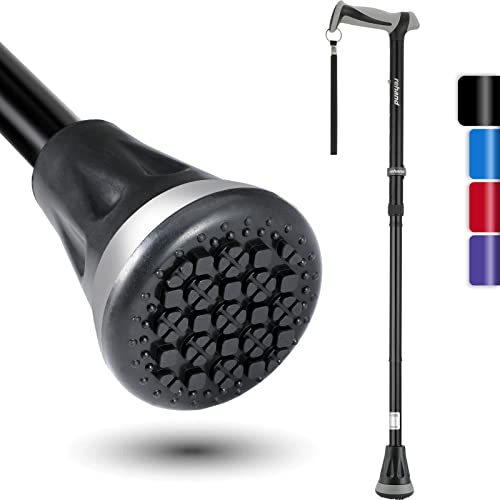
Medical mobility canes follow an entirely different sizing protocol and biomechanical purpose. A standard single-point cane or quad cane is sized to align with the user’s wrist crease when the arm hangs naturally, producing a gentle 15- to 20-degree elbow bend rather than a 90-degree right angle. Furthermore, a medical cane is held in the hand opposite the weak or recovering leg to offload body weight during daily rehabilitation. The handle designs on medical canes, such as offset or ergonomic palm grips, are structured to channel downward vertical force directly through a reinforced shaft.
Walking poles should never be used as a casual substitute for a prescribed medical walking cane or walker. If you are recovering from joint replacement surgery, managing severe vestibular imbalance, or navigating acute orthopedic trauma, consult a physical therapist or physician for personalized mobility recommendations. Recreational trekking poles provide wonderful balance assistance for active walkers, but they do not replace certified medical mobility aids when structured weight-bearing restrictions exist.
Telescoping Flip Locks and Segment Balancing
Most multi-section walking poles utilize telescoping aluminum or carbon fiber tubes connected by external lever locks. When adjusting a three-section pole, extending both adjustable segments equally preserves the structural balance of the pole. For instance, extending the lower section to its maximum limit while leaving the middle section fully collapsed concentrates stress on the lower joint, making the pole feel unbalanced in your hands. Distributing the extension evenly across both sections keeps the pole rigid and minimizes shaft deflection under downward pressure.
Flip lock mechanisms rely on adjustable tension screws to maintain a firm grip on the inner shaft. The TrailBuddy 3K Carbon Fiber poles and the Hiker Hunger carbon fiber models feature durable metal lever assemblies that resist slipping during heavy trail use. If an adjustable section slides inward when you lean onto the grip, open the lever and tighten the small knurled thumb screw by hand before clamping the lever shut. Avoid overtightening the screw to the point where the lever requires excessive force to close, as this can crack carbon fiber tubing.
Folding poles employ a slightly different locking mechanism that requires careful attention during setup. The Trekology Trek-Z uses a tri-fold design connected by an internal cord, requiring you to pull the upper shaft until a spring-loaded metal button pops out to lock the lower segments. Once that main button engages, the uppermost flip lock allows you to adjust the total height between 110 and 130 centimeters. Ensuring the metal button is fully seated eliminates wobble and ensures the pole remains rigid throughout your walk.
Shaft Materials and Vibration Damping Under Load
The material composition of your walking poles directly influences how much trail vibration reaches your hands and wrists. Carbon fiber poles, such as the TrailBuddy and Hiker Hunger models, are celebrated for their natural shock-absorbing qualities and lightweight construction. The 3K carbon fiber weaves utilized in these poles weigh approximately 7.6 to 7.7 ounces per pole, significantly reducing arm fatigue over extended distances. Carbon fiber also flexes microscopic amounts under downward load, dampening harsh vibrations that can aggravate wrist arthritis or tendonitis.
Aircraft-grade aluminum alloys, utilized in the Trekology Trek-Z, prioritize rugged tensile strength and bend resistance. While aluminum poles are slightly heavier at roughly 11.5 ounces per pole, they offer exceptional durability when navigating rocky terrain where poles might become wedged between boulders. Aluminum bends rather than snaps when subjected to sudden lateral stress, providing dependable structural feedback on demanding surfaces. Walkers carrying heavy gear or seeking maximum long-term durability often appreciate the robust nature of aluminum construction.
Choosing between carbon fiber and aluminum depends largely on your personal walking habits and physical comfort preferences. If hand fatigue, joint sensitivity, or carpal tunnel discomfort are your primary concerns, the vibration damping of lightweight carbon fiber delivers clear benefits. If you prioritize maximum structural resilience on rocky mountain paths and compact folding capability, aircraft-grade aluminum provides a dependable foundation. Both materials deliver adequate stability when sized correctly and locked securely.
Ergonomic Grip Materials and Wrist Strap Technique
The contact point between your hand and the pole handle plays a major role in preventing blisters, hand cramps, and finger stiffness. Natural cork grips, featured on both the Trekology Trek-Z and Hiker Hunger models, conform over time to the unique contours of your hand. Cork is naturally porous, allowing it to wick sweat away from your skin and maintain a secure grip during warm weather walking. Cork also dampens subtle vibrations and resists the sticky feeling that smooth plastic grips can cause.
Molded EVA foam grips, such as those found on the TrailBuddy 3K Carbon Fiber poles, offer a soft, cushioned surface that feels comfortable in all weather conditions. EVA foam does not absorb moisture, remains pliable in freezing temperatures, and provides excellent shock absorption beneath the palm. The ergonomic shaping on quality foam handles includes finger grooves and palm swells that distribute downward contact pressure across the entire hand, preventing focal pressure points on the sensitive thenar eminence.
Using the wrist strap correctly is just as important as choosing the right grip material. Instead of slipping your hand downward through the top of the loop, insert your hand upward through the bottom opening of the strap, then grasp the handle so the strap rests flat against the base of your palm. This technique allows your body weight to rest comfortably onto the wide, padded strap during forward propulsion. Proper strap usage eliminates the need to grip the handle with excessive force, preventing hand fatigue and joint cramping during long outings.
Interchangeable Tips and Traction Across Surfaces
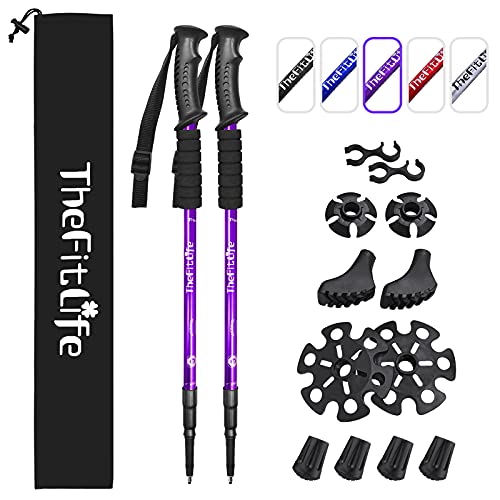
Walking poles rely on specialized tip attachments to deliver dependable traction across various walking environments. Bare carbide or tungsten tips provide aggressive bite on loose dirt, gravel, packed woodland trails, and slick outdoor rocks. These durable metal tips dig into irregular soil surfaces, preventing the base of the pole from slipping backward during push-off. However, bare metal tips should never be used on indoor flooring, glazed tile, or hard asphalt, where they slide uncontrollably and create excessive noise.
Removable rubber tips slip over the metal points to transform your poles for hard surface walking. Dense rubber ferrules grip smoothly on concrete sidewalks, paved recreational trails, and indoor floors while eliminating sharp clacking sounds. Rubber tips also act as an additional shock absorber, blunting the impact forces that travel up the shaft with every ground strike. Regularly inspect the tread on your rubber tips to ensure the internal metal washer has not punctured through the rubber base.
Mud and snow baskets prevent the poles from sinking deep into soft ground. Small mud baskets, which are typically included with all-terrain pole packages, screw onto the lower shaft just above the tip. In loose sand, boggy earth, or deep leaf litter, these baskets catch the surface and provide a solid platform for balance support. Wider snow baskets serve a similar role during winter walks, allowing you to maintain rhythmic stability across packed powder or slushy trails.
Packability, Travel Considerations, and Field Maintenance
Portability is a major factor for walkers who frequently travel or commute to trailheads. Folding poles offer the most compact storage footprint; the Trekology Trek-Z collapses down to an impressive 15 inches thanks to its three-section folding layout. This compact length fits easily into everyday duffel bags, vehicle trunks, and standard carry-on luggage. If you are packing gear for multi-day transit, consulting a carry-on travel backpack sizing guide helps you organize your collapsible poles alongside your daily essentials.
Standard telescoping poles, such as the TrailBuddy and Hiker Hunger designs, collapse down to approximately 24 inches for transport. Walkers can also disassemble the individual shaft segments entirely, reducing the packed length to roughly 21 inches for tighter spaces. While telescoping designs take up slightly more vertical space than folding poles, their continuous shaft overlap provides outstanding lateral rigidity. Both designs pack easily into included travel bags for clean, hassle-free transport.
Routine maintenance keeps your pole adjustment mechanisms operating smoothly season after season. After walking in damp or dusty environments, pull the telescoping sections apart and wipe each tube clean with a dry, lint-free cloth. Never apply oil, grease, or silicone spray to the inner shafts, as lubricants cause the locking collars to slip under body weight. Store your poles in a dry area with the flip lock levers left loosely unlatched to preserve tension elasticity in the locking clamps.
Troubleshooting Height and Gait Alignment Issues
Recognizing the physical signs of improper pole height allows you to make quick corrections before discomfort develops. If your pole tips consistently land too far ahead of your body or you feel tightness accumulating in your upper neck and shoulders, your poles are almost certainly adjusted too tall. Setting the grips too high prevents you from using your upper body effectively, turning what should be a helpful balance tool into an awkward physical burden. Shorten the shafts by an inch and observe whether your shoulders naturally drop into a relaxed position.
Conversely, poles that are set too short will cause you to bend your spine forward and lean heavily over your toes. You may notice your elbows straightening out completely during your stride, or you may feel a persistent ache in your lower back after walking. Lengthening the poles allows your torso to stand tall and keeps your head aligned over your pelvis. Your walking posture should always feel upright, open, and relaxed rather than hunched or compressed.
Pay close attention to your natural walking cadence and arm swing to prevent tripping hazards. Walking poles should move in natural opposition to your legs, with your right arm swinging forward as your left foot steps ahead. Plant the pole tips slightly outward and angled back rather than directly in front of your walking path. Planting the poles too close to your centerline can cause you to catch your own feet, disrupting your balance rather than enhancing it.
Pre-Walk Stability Verification Checklist
Taking sixty seconds to verify your equipment before setting out on any trail prevents unexpected equipment failures and accidental slips. Begin by confirming that both poles are set to the identical height measurement using the numbered markings printed on the shafts. Check each flip lock lever or push button to ensure it is completely closed and resting flush against the tube. Press both pole tips firmly into the ground with your full upper body weight to verify that neither section slips downward under load.
Next, inspect the base attachments and grip straps to ensure everything is properly aligned for your route. Make sure your rubber tips are clean and seated tightly over the carbide points if you plan to walk on pavement or hard paths. Check your wrist straps to ensure the padding is smooth and the adjustment tabs are locked tight. Taking these simple precautions ensures that your walking poles provide dependable balance, reduced joint impact, and a steady rhythmic pace on every mile of your journey.





Write Your Review
No reviews yet. Be the first to share your experience!