


Walking with hesitation or feeling unsteady on slick tile and uneven outdoor sidewalks can quickly erode daily confidence. Recovering from lower-limb joint surgery or managing persistent knee osteoarthritis often means transferring fifteen to twenty-five percent of your body weight away from painful joints to maintain mobility. Learning how to choose a walking cane requires looking past basic aesthetic styles to evaluate structural stability, correct anatomical height, and ergonomic handle designs. Finding the proper balance aid helps you preserve an active routine while protecting your posture and preventing dangerous missteps.
Many individuals pair their daily mobility routines with supportive apparel like tendon knee hiking pants to ease strain across vulnerable leg joints. A well-fitted cane acts as an extension of your arm, offloading pressure from vulnerable knees and hips while restoring a steady, natural gait cadence. Whether you need a compact folding model for errands or a wide pivoting base for standing stability, understanding how frame materials and handle shapes interact ensures reliable support. Taking time to understand how to choose a walking cane gives you the reassurance needed to move safely across diverse indoor and outdoor environments.



Biomechanical Principles and Practical Factors for Selecting a Walking Cane
Choosing the right mobility aid requires understanding how physical design, anatomical sizing, and daily walking demands interact. A walking cane is not simply an accessory to lean on; it is a mechanical tool engineered to offload weight from vulnerable joints and improve your lateral base of support. Matching the cane to your specific physical needs ensures comfort, promotes good posture, and significantly decreases the risk of accidental slips or falls.
Anatomical Height Sizing: Measuring from Wrist Crease to Floor
Proper sizing forms the structural foundation of safe cane usage. To determine the correct shaft height, stand upright on a flat surface while wearing your regular walking shoes with your arms hanging naturally at your sides. The top of the cane handle should align directly with your wrist crease, which corresponds closely to the height of your hip joint. This precise measurement ensures that when you grasp the handle, your elbow rests comfortably at a fifteen to twenty-degree bend.
Maintaining this slight elbow flexion allows your arm muscles to absorb downward shock without forcing your shoulder into an unnatural upward shrug. If a cane is adjusted too tall, you will constantly hike your shoulder toward your ear, causing persistent neck strain and upper back fatigue. Conversely, using a cane that is adjusted too low forces you to stoop forward, placing excessive compressive force across your lumbar spine and shifting your center of gravity precariously forward.
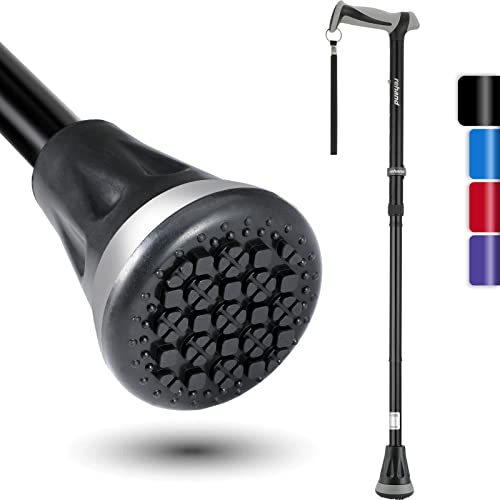
Adjustable aluminum shafts typically feature telescoping push-button detents that let you modify height in convenient one-inch increments. Models such as the REHAND adjustable cane provide eight distinct height settings to accommodate users between five feet and six feet five inches tall. Other designs, like the supregear folding stick, offer five height levels spanning thirty-three to thirty-seven inches. When selecting solid wooden canes like Asterom, you must choose the exact shaft length or trim the bottom precisely before attaching the rubber tip.
Handle Geometries: Distributing Palm Pressure and Protecting Joints
Handle ergonomics directly determine how comfortably you can transfer body weight without developing blister hotspots or nerve irritation. Traditional rounded crook handles focus downward force into a narrow band across the center of your palm, which can compress the median nerve over extended strolls. Modern ergonomic handles, including contoured Fritz and Derby styles, broaden the contact surface to distribute pressure evenly across the fleshy base of your thumb and palm.
Offset handle geometry offers a significant mechanical advantage by angling the neck forward before curving back over the central shaft. This intentional curvature positions your downward body weight directly above the vertical axis of the cane rather than slightly behind it. Aligning your downward push directly over the ground contact point minimizes rotational torque on your wrist, providing greater stability for individuals managing joint inflammation.
Grip materials also influence long-term comfort and control during everyday walking routines. Dual-material handles that combine a rigid inner polypropylene core with a softer thermoplastic rubber exterior help dampen ground vibrations before they reach your wrist. The REHAND walking cane utilizes an extended ergonomic handle crafted with soft TPR material to reduce palm fatigue during extended outings. Alternatively, hand-carved solid hardwood handles on Asterom canes offer a smooth, rigid feel that supports the natural curvature of the fingers without shifting under load.
Base Stability and Traction: Single-Point Versus Articulating Pivot Designs
The base of your walking stick dictates how effectively it grips the floor and supports your balancing efforts. Standard single-point rubber tips remain popular because they are lightweight, agile, and easy to maneuver through crowded spaces or narrow hallways. A single rubber ferrule provides sufficient assistance for people who need mild sensory feedback or slight balance assurance rather than substantial weight bearing.
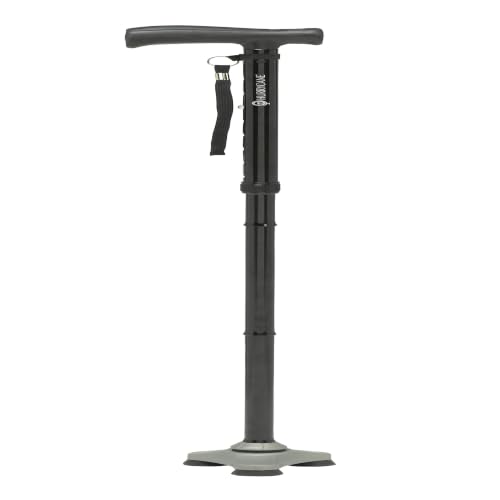
Articulating pivot bases elevate ground contact by incorporating flexible joints that mimic natural ankle motion. Devices such as the HurryCane Freedom Edition utilize a patented three-point SteadiGrip base with WhisperFlex pivoting technology that maintains surface traction as your walking angle changes throughout a stride. Similarly, the REHAND pivot quad cane employs a rotating four-pronged base that maintains continuous traction across uneven outdoor sidewalks and indoor thresholds.
Self-standing bases provide a major daily living advantage by remaining upright when you let go of the handle. Standard canes frequently topple to the floor when propped against tables or checkout counters, forcing users to bend over awkwardly to retrieve them. A freestanding multi-contact base eliminates this fall hazard, keeping your mobility aid safely within reach while you rest, sign receipts, or wash your hands.
Shaft Materials and Portability: Anodized Aluminum Versus Solid Hardwood
Shaft composition determines the total carry weight, structural rigidity, and travel convenience of your mobility aid. Anodized aluminum tubing is the most prevalent material because it delivers strong load resistance while keeping the overall cane weight extremely manageable. Lightweight models like the Comfkey folding stick and the half-pound supregear cane allow individuals with reduced upper-body strength to swing the device forward without shoulder exhaustion.
Folding mechanisms offer unmatched convenience for active individuals who travel frequently or dine out regularly. Collapsible models break down into four or five compact sections connected by heavy-duty internal elastic cords, allowing them to collapse to ten to fourteen inches in length. This ultra-compact profile slips easily into a tote bag, wheelchair pouch, or a carry on luggage pack during long journeys.
Solid hardwood canes provide an entirely different ownership experience characterized by silent operation and traditional craftsmanship. Premium turned wood designs like Asterom canes eliminate internal joint rattle and clicking push-button pins, delivering completely rigid support beneath your hand. Wooden canes also carry an elegant, dignified aesthetic that helps many adults overcome the social reluctance or stigma often associated with clinical hospital equipment.
Structural Weight Capacities and Safe Load Limits
Verifying the manufacturer load rating is a critical safety step when choosing any mobility device. Walking canes are engineered with specific weight capacities based on tubing thickness, joint tolerances, and fastener durability. For instance, compact travel models like the supregear cane specify a maximum weight capacity of one hundred ninety-eight pounds, making them suitable for lighter users seeking temporary support.
Standard daily walking canes generally support between two hundred fifty and three hundred pounds, accommodating a wider demographic of adults. The aircraft-grade aluminum frame of the TIRAROME walking cane is rated to support up to two hundred fifty pounds safely without structural flexing. If your body weight exceeds these standard ratings, you must seek reinforced bariatric canes built with thicker aluminum or steel to prevent catastrophic bending under sudden downward impact.
Keep in mind that a walking cane is designed for partial weight offloading rather than full body suspension. Biomechanical principles indicate that a properly utilized single cane transfers roughly fifteen to twenty-five percent of your body weight away from a lower limb. If you require complete lower-extremity offloading following a fracture or severe surgical intervention, a single cane cannot provide adequate mechanical support.
Gait Mechanics: Contralateral Placement and Step Sequencing
Even the highest quality mobility aid will fail to protect your joints if you carry it on the incorrect side of your body. Clinical gait guidelines instruct users to hold the walking cane in the hand opposite the weak, painful, or recovering leg. Holding the cane on the contralateral side preserves your natural reciprocal arm swing, matching the forward movement of the cane with the forward step of your vulnerable leg.
Moving the cane forward simultaneously with the affected leg creates a wider base of support and splits downward force across two contact points. When you step onto your recovering leg, you push downward through the cane handle, redirecting compressive forces through your arm and core muscles. Holding the cane on the same side as the injury disrupts your natural gait rhythm and actually increases lateral pelvic tilt, straining your lower back.
Navigating staircases requires deliberate step sequencing to ensure stability and prevent dangerous tripping incidents. The standard clinical memory rule for stairs is up with the good leg and down with the bad leg. When ascending, step up first with your stronger leg, then bring your cane and weaker leg up to meet it on the step. When descending, lower the cane and your weaker leg down first, then step down with your stronger leg to control your body weight smoothly.
Integrated Safety Features and Sit-to-Stand Leverage
Modern mobility aids frequently incorporate specialized mechanical additions that address common physical challenges beyond simple walking. Rising from low armchairs, soft sofas, or car seats often places intense strain on aging knees and weak wrist joints. Dual-handle designs provide a secondary lower grip that offers mechanical leverage, allowing you to push upward with balanced two-handed support before taking your first step.
The TIRAROME walking cane incorporates a fold-down second handle specifically designed to assist with sit-to-stand transitions without straining your back. This same model includes an integrated high-decibel audible SOS alarm and a forty-five-degree adjustable LED headlight. Illuminated walking paths help seniors spot curb transitions, pet toys, and floor rugs in dimly lit hallways, reducing nighttime tripping hazards.
Wrist tether straps are another simple yet vital feature found on models like the REHAND and supregear canes. Slipping the nylon lanyard over your wrist prevents the cane from falling if your fingers momentarily relax to open a door or carry groceries. Selecting a cane equipped with a sturdy hook and loop storage strap also keeps folded segments tightly bundled when stowed in vehicles or bags.
Recognizing When to Transition to Bilateral Mobility Support
Understanding the practical limitations of a walking cane is just as crucial as knowing how to select one. Single canes excel at managing unilateral leg discomfort, mild balance hesitation, and minor post-operative rehabilitation. However, if you experience frequent stumbling, progressive neurological tremors, severe bilateral knee arthritis, or episodes of freezing gait, a single point of ground contact may no longer keep you safe.
Bilateral mobility aids such as standard folding walkers or four-wheeled rollators provide a much broader stability polygon around your center of mass. They allow you to offload weight through both upper extremities simultaneously while providing built-in seating for rest breaks during longer outings. Attempting to compensate for severe bilateral weakness using only a single cane can cause severe postural tilt and increase your risk of a serious fall.
Always schedule a formal gait evaluation with a licensed physical therapist or physician if you feel uncertain about your balance needs. A professional clinician can accurately analyze your stride length, cadence, and joint stability to recommend the safest mobility device for your daily routine. Taking a proactive, informed approach to equipment selection ensures you maintain independent mobility with comfort, dignity, and peace of mind.




Write Your Review
No reviews yet. Be the first to share your experience!