


Maintaining an upright posture and stable gait can transform an ordinary daily stroll into an invigorating full-body routine that protects sensitive lower joints. When recovering from joint stiffness or seeking greater stability on varied walkways, incorporating specialized poles helps distribute body weight across the upper limbs while promoting an active reciprocal arm swing. Learning how to do nordic walking allows individuals to offload stress from the hips, knees, and ankles while naturally engaging core musculature. Pairing this low-impact discipline with supportive joint-friendly walking pants provides flexibility and warmth during outdoor exercise sessions.
Unlike standard hiking poles that keep the hands locked in an upright vertical plant, classic Nordic walking mechanics rely on a dynamic backward push and deliberate grip release. Specially designed glove straps and angled rubber paws work together to propel your body forward without jarring delicate wrist joints. Understanding the fundamental mechanics behind how to do nordic walking technique ensures you gain maximum stability, improved cardiovascular rhythm, and confident posture without creating unnecessary shoulder tension. Whether you use lightweight aluminum poles from brands like York Nordic or Fizan, adopting the right cadence creates a smooth, continuous rhythm across pavement and park pathways alike.


Essential Mechanics, Equipment, and Form for Nordic Walking
Developing an effective Nordic walking practice requires coordinating smooth arm movement with a natural, flowing walking stride. By pairing active upper-body propulsion with standard walking strides, this Scandinavian-born discipline transforms simple outdoor walking into an efficient, low-impact full-body workout. Mastering the fundamental technique early prevents inefficient habits, reduces stress across weight-bearing joints, and builds cardiovascular endurance safely. With the proper pole height, secure glove straps, and rhythmic backward pushing, you can unlock greater stability across neighborhood paths and nature trails alike.
Biomechanics and Lower-Extremity Joint Offloading
Traditional walking places repetitive compressive forces across the hip, knee, and ankle joints with every forward heel strike. Nordic walking changes this dynamic by activating the muscles of the chest, back, shoulders, and triceps to absorb and redistribute impact forces. By planting angled poles and driving through the straps, walkers can offload substantial downward body weight away from the lower limbs. This mechanical offloading can significantly alleviate discomfort for individuals managing mild osteoarthritis or recovering from lower-extremity stiffness.
Beyond offloading joint pressure, the active pole plant encourages a taller, more upright spinal posture that opens the chest cavity for improved respiratory volume. Many individuals fall into a forward-leaning posture when walking briskly, which strains the lumbar spine and neck muscles over time. The rhythmic backward thrust of Nordic walking poles gently rotates the thoracic spine, counteracting rounded shoulders and engaging the deep core stabilizers. This rotational motion reinforces natural contralateral balance, ensuring that the spine remains supported through every stride.
Selecting and Adjusting Your Pole Height Accurately
Determining the correct pole height is the foundational step in learning how to do nordic walking properly. A standard starting rule involves multiplying your overall height in centimeters by 0.68 to calculate the target pole length. When standing upright in your everyday walking shoes with the poles held upright beside your feet, your elbows should rest comfortably at an approximate 90-degree bend. Setting the poles too high can force the shoulders toward the ears, while setting them too low reduces propulsion and collapses posture.
Adjustable telescoping models provide the flexibility needed to fine-tune your measurements across varied footwear and terrain gradients. For example, Official Nordic Walking Poles by York Nordic feature durable aircraft-grade 7075 aluminum shafts that adjust smoothly from 32 inches to 54 inches using external flip locks. These flip-style lever locks offer positive mechanical clamping that eliminates slippage during vigorous downward push phases. Similarly, the ultralight FIZAN Speed aluminum poles utilize a patented flexible locking system engineered to remain exceptionally rigid while keeping carry weight around seven ounces per pole.
Mastering the Quick-Release Glove Strap and Grip Mechanics
The defining hardware component distinguishing Nordic walking poles from conventional trekking poles is the specialized glove-style harness strap. Rather than looping loosely around the wrist, Nordic grips incorporate an ergonomic harness that wraps securely around the palm and base of the thumb using adjustable hook-and-loop fasteners. This close-fitting design transfers propulsion forces directly through the strap into the pole shaft without requiring the user to squeeze the handle constantly. Continuous tight gripping can tire the forearm muscles and trigger wrist stiffness over long distances.
York Nordic models pair classic contoured cork grips with quick-release thumb buttons, enabling users to detach their hands rapidly when reaching for a water bottle or phone. The natural cork material absorbs hand moisture effectively, preventing blisters and maintaining friction even during warm weather workouts. Fizan Speed poles also emphasize swift detachment, incorporating an intuitive in-out push button on top of the grip that releases the harness instantly. Taking time to adjust the strap tension so that the pad sits snugly across the back of the hand ensures smooth power transfer on every stride.
Step-by-Step Stride Execution and Propulsion Technique
Beginners should start by letting the poles drag passively behind them while walking with an open, relaxed posture. With the wrist straps secured, open your hands completely and allow your arms to swing naturally from the shoulders in a relaxed contralateral rhythm. Notice how the left arm swings forward naturally as the right heel strikes the ground, followed immediately by the opposite pairing. Dragging the poles for several minutes helps eliminate the urge to place the poles down deliberately in front of your body before your natural rhythm is established.
Once a fluid walking cadence feels natural, begin gently catching the rubber tips against the ground as each arm swings forward. The pole should strike the ground at an acute angle of approximately 45 degrees, landing directly opposite the heel of your leading foot rather than out ahead of your toes. As the tip makes contact, press firmly downward and backward against the glove strap to propel your torso forward into the next step. Keep the elbows relatively relaxed with a slight natural bend, allowing the power of the push to originate from the lats and shoulders.
The final phase of the stride requires extending the pushing arm backward past the hip line while consciously relaxing the grip. As your hand travels behind your pelvis, open your fingers and push entirely through the wrist harness to achieve full extension through the triceps. The pole will trail behind at an angle, staying supported purely by the glove harness until the arm naturally recoils forward. As the arm swings forward again, your fingers gently close around the contoured handle to prepare for the subsequent plant and push cycle.
Surface Traction: Switching Between Rubber Paws and Carbide Tips
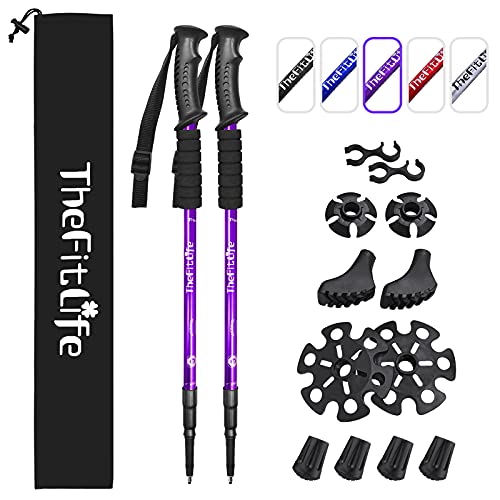
Nordic walking poles utilize interchangeable tips engineered to provide optimal traction across hard pavement and soft outdoor surfaces. For asphalt sidewalks, concrete walkways, and paved greenways, always install the angled rubber feet, often referred to as fitness paws or road boots. These rubber boots feature beveled treads designed to contact the ground at an angle, cushioning impact vibrations while gripping smooth surfaces securely. Walking on hard pavement without rubber paws creates harsh metallic vibrations that travel directly into the elbow and shoulder joints.
When transitioning from city sidewalks to grass, crushed limestone paths, or woodland trails, remove the rubber paws to expose the sharp tungsten steel or carbide tips. The hard metal tip bites into damp soil, packed gravel, and loose mulch, preventing backward slippage during vigorous propulsion. Both York Nordic poles and Fizan Speed models include detachable rubber boots alongside small snow baskets that prevent the shafts from sinking into soft ground. Always verify that the angled rubber paw points directly backward along the line of travel before beginning your pavement walking routine.
Identifying and Correcting Common Walking Errors
One of the most frequent mistakes among novice Nordic walkers is known as pacing, where the same arm and leg swing forward simultaneously. This unnatural, robotic motion disrupts balance, strains the hips, and prevents the torso from rotating naturally. If you notice your right arm swinging forward alongside your right leg, immediately drop the poles to your sides and drag them until your natural cross-pattern swing returns. Rebuilding rhythmic muscle memory takes patience, but establishing natural reciprocal movement is essential for long-term comfort.
Another common error involves planting the poles vertically in front of the body, similar to the technique used when hiking down steep mountain descents. Planting the pole vertically creates a braking force that halts forward momentum and transmits jarring shock into the shoulder capsule. The pole must always point diagonally backward at an angle, acting as an engine of propulsion rather than a physical barrier. Furthermore, avoid clenching the handles throughout the stroke, which restricts circulation and prevents the harness from performing its designed load-bearing function.
Applying Nordic Technique for Joint Rehabilitation and Active Mobility
Adults managing joint stiffness, balance hesitation, or post-operative rehabilitation often find Nordic walking to be a reassuring exercise bridge toward greater autonomy. Because the two poles create four points of contact with the ground, they provide enhanced lateral stability compared to unassisted walking. Pairing this low-impact discipline with flexible, breathable walking pants ensures ease of movement across changing terrain and weather conditions. Users recovering from orthopedic procedures should always consult a physical therapist or physician for personalized gait evaluation before initiating any vigorous new exercise program.
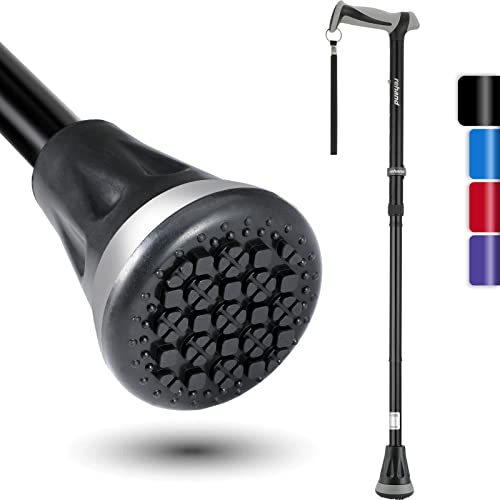
It is important to differentiate fitness poles from single-point canes or clinical quad canes prescribed for acute non-weight-bearing recovery. Nordic poles are designed for dynamic forward propulsion and bilateral balance training rather than supporting unilateral body weight transfer during acute injury phases. For active seniors looking to maintain joint mobility, the dual-pole rhythm reduces fall anxiety and encourages longer, more confident strides. The steady cadence also improves gait symmetry, helping individuals overcome compensatory limps developed after knee or hip discomfort.
Training Resources and Structuring a Progressive Exercise Routine
Building physical conditioning through Nordic walking requires a gradual progression in session duration, walking speed, and terrain complexity. Beginners benefit from starting with ten to fifteen minutes of level walking on smooth paths, focusing entirely on rhythm and grip release rather than speed. Reading authoritative instructional literature, such as the Complete Guide to Nordic Walking published by Bloomsbury, offers practical training drills and conditioning programs. Literature of this caliber provides structured guidance on posture correction, interval training, and heart rate management for fitness enthusiasts.
Before each walk, perform dynamic arm circles, torso twists, and calf stretches to prepare major muscle groups for active engagement. As your endurance improves over several weeks, you can extend your workouts to thirty or forty-five minutes and incorporate gentle rolling hills. Ascending slopes with Nordic poles encourages deeper triceps engagement and greater cardiovascular output, while descending hills provides controlled joint buffering. Incorporating a humorous novelty tee, such as the Funny Nordic Walking Tshirt, can keep the atmosphere light while walking with local community groups.
Hardware Inspection, Locking Systems, and Routine Maintenance
Regular maintenance of your Nordic walking poles preserves mechanical safety and prevents sudden shaft collapse during vigorous downward pushing. After walking through rain, mud, or dusty gravel, pull the telescoping aluminum sections apart and wipe each tube clean with a dry microfiber cloth. Moisture trapped inside metal shafts can cause corrosion or mineral buildup that interferes with internal locking mechanisms. Never apply greasy lubricants or oils to pole shafts, as lubricants cause locking collars and friction sleeves to slip under pressure.
Periodically inspect the bottom of your rubber paws for uneven tread wear or puncture holes caused by the internal tungsten tips. High-mileage walking naturally erodes rubber compounds, eventually allowing the sharp metal tip to push through and scratch hard surfaces or slip on pavement. When adjusting external flip locks, check the tension thumb screw on the lever clamp to ensure it holds the telescoping tube firmly without flexing. If you feel any vibration or rattling during the pole plant, tighten the clamping screws slightly until the shaft feels entirely solid and silent.
Mastering the art of Nordic walking provides a sustainable, full-body exercise that enhances cardiovascular vitality while protecting delicate joints from excessive impact. By taking time to dial in your pole height, securing your quick-release glove harnesses, and practicing the backward push-and-release rhythm, you will develop an efficient and confident outdoor stride. Always listen to your body, maintain your equipment diligently, and consult a qualified healthcare professional if you have underlying balance or orthopedic concerns. With consistent practice, Nordic walking transforms every routine neighborhood path into an enjoyable pathway toward lasting mobility and physical strength.





Write Your Review
No reviews yet. Be the first to share your experience!