


Navigating technical mountain trails with a loaded pack places heavy, cumulative impact on the lower body, particularly across the knees and ankle joints during steep descents. Learning how to trekking pole mechanics transforms simple walking sticks into dynamic stability tools that distribute downward forces across the upper body and core musculature. Adjustable aluminum shafts allow hikers to maintain balanced posture over scree, loose gravel, and slick mud without overextending their stride. Integrating these trail tools alongside protective hiking pants for knee strain provides a dependable defense against repetitive joint fatigue on demanding backcountry routes.
Whether trekking across undulating alpine ridges or managing rocky descents, dialed-in hardware prevents unexpected slippage and keeps your forward momentum steady. Many modern designs rely on external lever clamps or collapsible folding joints that pack neatly into luggage or lash directly onto heavy load frame backpacks. Understanding how grip materials, proper wrist strap loading, and correct section lengths function together ensures that every plant of the tip delivers maximum traction. Mastering these practical techniques allows backpackers to hike longer distances with greater confidence and reduced physical wear.


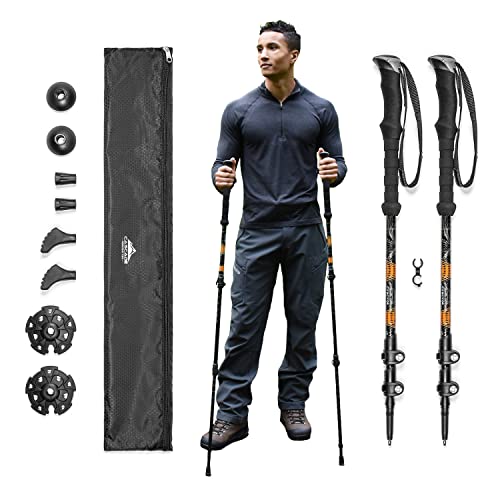


Comprehensive Field Guide to Trekking Pole Operation and Mechanics
Mastering how to trekking pole execution requires a clear understanding of biomechanics, locking hardware calibration, and terrain-specific adjustments. Trekking poles serve as an extension of the skeletal frame, actively transferring load away from overworked quadriceps into the latissimus dorsi, shoulders, and chest. Achieving this balance depends on dialing in the physical length of the pole, securing the clamping collars, and utilizing the straps correctly. By treating poles as calibrated structural supports rather than passive walking sticks, hikers gain immense stability on technical trails.
Anatomical Sizing and the Ninety-Degree Elbow Baseline
Proper pole setup begins by establishing a neutral anatomical baseline on flat, level ground while wearing standard trail footwear. Stand upright with your shoulders relaxed, elbows bent at your sides, and forearms held parallel to the ground to form a clean ninety-degree angle at the elbow joint. The pole grips should rest comfortably in your palms with the tips touching the floor directly adjacent to your feet. If your elbows bend at an acute angle sharper than ninety degrees, the poles are adjusted too long, which creates unnecessary shoulder tension and fatigue over long mileage days.
Conversely, an obtuse elbow angle greater than ninety degrees forces you to hunch forward, reducing posture stability and compromising your breathing mechanics. Telescoping models like the Cascade Mountain Tech Trekking Poles provide continuous length adjustment from 26 inches up to 54 inches, allowing exact matching to this anatomical angle. When configuring multi-section telescoping shafts, distribute the extension equally across both lower and middle sections using the printed centimeter scale. Equalizing the sections maintains optimal structural stiffness and prevents unnecessary shaft flex under vertical load.
Adjusting Shaft Length for Ascents, Descents, and Contoured Slopes
Trail topography constantly changes, meaning a single static pole length rarely suits an entire backcountry journey. When climbing steep inclines, shorten each shaft by roughly five to ten centimeters depending on the severity of the slope gradient. Shortened poles allow you to plant the tips ahead without reaching above your chest, which keeps your center of gravity driving forward into the mountain. Pushing down through the grips on an uphill pitch recruits your triceps and lats to assist your legs, saving vital quad energy.
Descending steep, rocky trails demands the exact opposite adjustment to protect your joints from jarring impacts. Lengthen your poles by five to ten centimeters so that the tips contact the downhill terrain before your lead foot strikes the ground. This extended reach allows you to control your downward descent and transfer braking forces into the poles before your knees absorb the shock. When traversing along a steep sidehill ridge, shorten the uphill pole and lengthen the downhill pole to maintain an upright, neutral torso.
Correct Wrist Strap Entry and Load-Bearing Grip Mechanics
Many hikers mistakenly grip their poles by reaching straight down through the wrist strap loop, which negates the mechanical advantage of the webbing. The proper method requires inserting your hand upward through the bottom opening of the strap loop before grasping the handle. Once your hand passes through from below, pull downward so the strap rests smoothly across the back of your wrist and palm base. Grasping the handle and strap webbing together creates a supportive cradle that transfers your body weight directly through your skeleton without requiring a tight hand grip.
Relying on a relaxed, open-palm grip supported by the tensioned strap prevents forearm cramping, finger stiffness, and blister formation over ten-mile stretches. The strap should be adjusted snugly enough to support your wrist under downward pressure, yet loose enough to release easily in the event of an unexpected fall. Clenching the handle with a death-grip wastes muscular endurance and restricts circulation to your fingers during cold morning hikes. Letting the strap carry the primary load allows you to lightly guide the pole with your fingertips, maximizing swing efficiency.
External Cam Lever Locks versus Folding Z-Pole Mechanisms
Modern trekking poles rely primarily on two structural locking architectures: external lever cam locks and folding tension-cord designs. External lever locks, featured on telescoping models like the Cascade Mountain Tech Trekking Poles, utilize an outer clamp that compresses an aluminum collar around the inner shaft. These lever locks are exceptionally reliable in muddy, freezing conditions because hikers can easily operate them with thick winter gloves. Furthermore, telescoping shafts provide an expansive adjustment range that easily accommodates varied body heights and gradient changes.
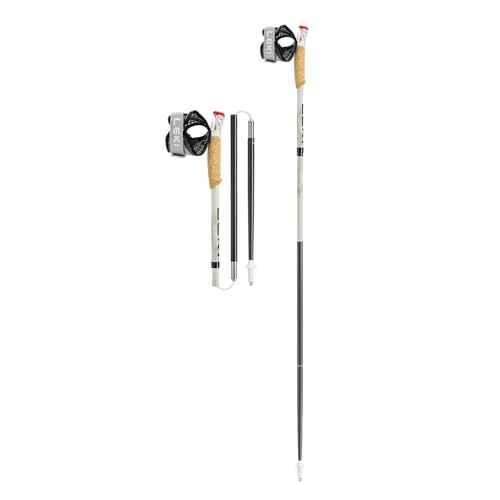
In contrast, folding Z-poles like the Trekology Trek-Z Hiking Trekking Poles and CONTOOSE Collapsible Hiking Poles for Women utilize segmented shafts linked by an internal tension cord. These collapsible models slide together quickly and lock into place with a single push-button pin, folding down to just fifteen inches or less for travel. While folding poles offer less overall telescoping length adjustability, their ultra-compact folded size makes them ideal for packing inside luggage or running packs. Pairing packable trekking poles with breathable, lightweight trail pants streamlines your mobility across long, fast-paced mountain traverses.
Calibrating Cam Lock Clamp Tension to Prevent Sudden Collapse
A slipping trekking pole presents a serious fall hazard, especially when you commit your full weight during a steep step-down over wet granite. Cam lever mechanisms depend entirely on mechanical friction generated by an external knurled thumbscrew or tension wheel. If a pole shaft begins creeping downward under pressure, open the lever clamp fully and turn the thumbscrew clockwise by a quarter turn. Close the lever firmly; you should feel distinct, smooth resistance that requires moderate palm pressure to snap the lever flush against the collar.
Never force a cam lever closed if the thumbscrew is over-tightened, as excessive torque can crack composite collars or warp aluminum lock housings. Before heading down the trail, always perform a vertical load check by placing both tips on the ground and bearing down firmly with your upper body weight. If either shaft slides downward even a millimeter, unclamp the collar, tighten the screw slightly, and retest the vertical lock security. Keeping the inner and outer aluminum shafts clean and free of lubricating trail oils or sunscreen ensures steady holding power.
Grip Materials and Ergonomics: Natural Cork versus Closed-Cell EVA Foam
The contact interface between your hands and the pole dictates your overall comfort and blister resistance on high-mileage backcountry days. Natural cork grips, featured on select models like the Trekology Trek-Z Hiking Trekking Poles, conform gradually to the unique contours of your hands over time. Cork naturally wicks away palm sweat and dampens trail vibration, making it a favorite for hot summer hikes and humid mountain environments. However, cork requires periodic cleaning and should be allowed to dry thoroughly after rainstorms to maintain its structural integrity.
Closed-cell EVA foam handles, such as those on the A ALAFEN 7075 Aluminum Collapsible Ultralight and A ALAFEN Aluminum Collapsible Ultralight Trekking, deliver a soft, highly secure grip in wet or freezing weather. EVA foam resists water absorption completely and provides reliable thermal insulation when temperatures plunge below freezing. Many modern designs also feature an extended EVA choke-up sleeve positioned just below the primary handle. This extended lower grip allows you to momentarily choke down on steep switchbacks without pausing to readjust your mechanical lever locks.
Shaft Metallurgy: 7075 Aluminum versus 6061 Alloy Durability and Yield Strength
Trekking pole shafts endure relentless bending moments, rock strikes, and lateral torsional stresses when tips become wedged between boulders. High-grade 7075 aircraft aluminum alloy offers exceptional tensile yield strength, resisting deformation under aggressive trail loads while remaining remarkably lightweight. Models constructed from 7075 aluminum, like the Trekology Trek-Z Hiking Trekking Poles, provide rigid stability for backpackers carrying heavy multi-day gear. If subjected to extreme leverage in a boulder crevice, aluminum will typically bend gradually rather than snapping abruptly into sharp shards.
Meanwhile, 6061 aluminum alloy offers an economical, highly corrosion-resistant alternative that balances dependable strength with approachable value. While slightly heavier than 7075 alloys, 6061 aluminum exhibits excellent ductility, allowing it to withstand repeated trail impacts and rugged abuse. Both aluminum formulations provide reliable dampening and structural resilience across extreme summer heat and sub-zero winter mountaineering environments. Regardless of the alloy selected, hikers should regularly inspect their shafts for severe dents or bends that could compromise vertical load capacity.
Trail Hardware Configurations: Carbide Tips, Rubber Feet, and Baskets
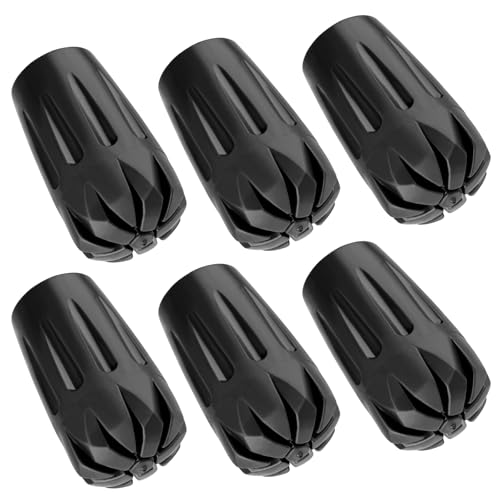
The base of your trekking pole interacts directly with the ground, making proper hardware selection critical for traction and trail preservation. Raw tungsten carbide tips bite aggressively into dirt, decomposed granite, and slick ice, providing unwavering purchase across wild backcountry surfaces. However, bare carbide tips can scar sensitive sandstone, slip dangerously across asphalt, and create loud clicking noises on paved approach paths. Sliding removable rubber boot tips or road covers over the carbide tips protects fragile rock surfaces and enhances grip on hard surfaces.
Interchangeable baskets prevent your poles from sinking excessively deep into loose terrain and losing structural support. Small diameter mud discs stop shafts from plunging into soft loam and forest muck without snagging on low brush or roots. Wide powder snow baskets provide flotation across winter snowpack, keeping the tip from diving beneath the crust on snowshoe journeys. Always ensure baskets are screwed on firmly past their retention detents before venturing out to prevent them from unscrewing in deep mud.
Field Maintenance, Grime Removal, and Airline Travel Packing
Fine silt, trail sand, and moisture inevitably find their way inside telescoping sections and folding joints during rugged hikes. After wet outings, pull all telescoping sections apart completely and wipe the interior and exterior surfaces with a clean, dry cloth. Never apply grease, oil, or aerosol lubricants to the bare aluminum shafts, as petroleum products destroy clamp friction and cause uncontrollable slippage. Storing your poles disassembled in a dry location prevents galvanic oxidation and keeps the locking collars operating smoothly for upcoming seasons.
Transporting trekking poles requires careful preparation due to commercial aviation security regulations. The Transportation Security Administration prohibits hiking sticks with sharp carbide tips from being transported inside aircraft carry-on baggage. Tri-fold poles like the CONTOOSE models pack down under fifteen inches, fitting effortlessly into checked baggage, duffel bags, or checked packs. Hikers planning international trips can consult a carry-on travel backpack dimensions guide to coordinate their checked and carry-on packing strategies effectively. Using accessories like the 6-Piece Hiking Pole Holder,Heavy Duty 3.0mm allows you to lash collapsed poles securely to pack exteriors between trailheads.
Practical Trail Cadence and Forward Propulsion Habits
Establishing a natural walking rhythm with your poles maximizes energy efficiency and prevents awkward foot-and-pole tangles. Most hikers find success utilizing an alternating cadence, planting the left pole synchronously with the right foot and vice versa. This natural cross-body motion mirrors standard human walking biomechanics, keeping your shoulders relaxed and your stride fluid. Plant each tip slightly behind your lead foot at a slight backward angle so that downward pressure creates direct forward propulsion.
On technical river crossings or slick boulder fields, switch from alternating cadence to a double-pole planting technique for enhanced stability. Planting both poles firmly ahead of you creates a secure tripod base before stepping forward across swift currents or unstable talus. Always unloop your wrists from the straps during deep water crossings so you can discard the poles instantly if swept off balance. Developing these adaptable trail habits ensures your gear functions as a dependable extension of your body across any terrain.






Write Your Review
No reviews yet. Be the first to share your experience!