


Navigating uneven mountain switchbacks requires reliable upper body stability to take pressure off tired legs. Many hikers instinctively clamp their hands around their grips with white-knuckle force, leading to early forearm exhaustion and numb fingers within a few miles. Learning how to use trekking pole wrist straps properly transforms your poles from clumsy sticks into dynamic extensions of your arms. When adjusted correctly, the strap loop cradles your wrist and transfers downward weight directly through your skeletal structure, allowing your hands to stay relaxed while maintaining steady forward propulsion.
Distributing your pack weight efficiently is essential when carrying gear across miles of rugged terrain, especially when using a supportive load-bearing hiking backpack. Understanding proper strap mechanics prevents severe joint fatigue and keeps your rhythm consistent across rocky climbs and technical drops. This guide breaks down the biomechanics of strap support, step-by-step hand placement, tension calibration, and critical moments when you should slip your hands out of the loops for safety.

Pros
- Ultralight listed package weight of roughly 0.022 pounds keeps pack weight down.
- Four-piece bundle provides versatile placement options across one or two backpacks.
- Sliding buckle mechanism adjusts quickly to secure poles of different diameters.
- Inexpensive upgrade for daypacks and hiking bags lacking factory pole attachment hardware.
Cons
- Requires existing webbing, daisy chains, or anchor points on your backpack to secure the cord.
- Elastic cord can lose tension over time if exposed to repeated heavy snagging or over-stretching.
- Not engineered or rated for technical climbing protection, heavy axes, or high-load carrying.
The Marsrut 4-Piece Trekking Pole Holder set is an aftermarket external attachment accessory designed for hikers, backpackers, and travelers who need a secure way to stow trekking poles or walking sticks on their packs. Many daypacks and minimalist backpacking bags omit dedicated pole attachment bungees to reduce production costs or maintain clean exterior profiles. This four-piece kit bridges that gap by providing standalone, adjustable elastic cord ties that attach to existing exterior anchor points.
On the trail, managing trekking poles during scrambles, stream crossings, or flat access walks requires a dependable hands-free storage method. These holders measure 20.3 cm (8 inches) in length and feature a slide-lock plastic buckle. When anchored through an exterior loop or compression strap on your pack, the elastic cord wraps around the pole shaft, allowing the buckle to slide forward and clamp the shaft tightly against the pack body. At an ultra-low total weight of approximately 0.022 pounds, this accessory adds no noticeable load to your setup.
The build centers around resilient elastic cord paired with molded plastic locking buckles. The cord provides enough elasticity to hold poles firmly without slippage, while the plastic friction hardware bites into the cord to prevent unwanted loosening during motion. While this hardware is engineered for light-duty tensioning rather than heavy load-bearing support, it offers dependable day-to-day security for standard aluminum or carbon fiber trekking poles, canes, and lightweight accessories like compact umbrellas.
Setup is straightforward and tool-free. To attach a pole, you thread the cord loop through a backpack daisy chain, shoulder harness loop, or side compression strap, insert the pole shaft into the open loop, and cinch the buckle down. Cleaning and maintaining these straps is simple: they can be rinsed with clear water to remove trail dust or grit from the buckle mechanism and air-dried before storage. Having four straps in the package means you can equip two attachment points on two separate packs or keep spares in a repair kit.
Prospective buyers should note realistic limitations regarding compatibility and load capacity. These holders do not create attachment loops out of thin air; your backpack must already feature some form of external webbing, loop, or strap to anchor the cord. Furthermore, these elastic cords are intended strictly for secondary retention of walking poles and umbrellas, not for technical mountaineering ice tools, heavy tools, or safety-critical climbing hardware.
For day hikers, section backpackers, and outdoor enthusiasts seeking an affordable, lightweight method to add pole-carrying functionality to an existing backpack, the Marsrut 4-Piece Trekking Pole Holder set offers practical value and effortless utility.
The Marsrut trekking pole straps are designed specifically to interface with backpacks that feature external attachment hardware such as daisy chains, ice-axe loops, trekking pole tip retainers, or side compression straps. At an 8-inch (20.3 cm) overall length, the cord provides ample reach to loop around common trekking pole diameters, walking stick shafts, and compact accessories.
Because these straps function as an upper or mid-shaft stabilizer, they work best when paired with a lower loop or side bottle pocket to cradle the pole tips. Confirming that your daypack or multi-day backpack has accessible webbing loops or strap anchor points will ensure smooth installation and optimal stability on the trail.
The holders combine resilient elastic shock cord with durable molded plastic slide buckles. The plastic components are designed to resist outdoor exposure and maintain friction against the cord during normal trail vibration, preventing poles from shifting while you walk.
To maintain peak function, keep the plastic sliding mechanisms clean of mud, sand, and fine trail dirt. Rinsing them periodically in lukewarm water and allowing the elastic to dry away from direct high heat or prolonged UV exposure will help maintain cord elasticity and long-term grip strength.
The Complete Guide to Trekking Pole Wrist Straps: Biomechanics, Proper Threading, and Trail Safety
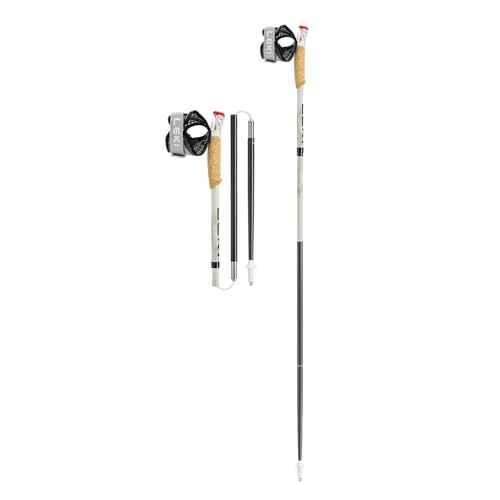
Mastering the technique behind how to use trekking pole wrist straps is one of the most effective ways to boost trail efficiency and protect your upper body from unnecessary strain. Trekking pole straps are not simple safety tethers meant to prevent you from dropping your gear down a ravine. Instead, they serve as load-bearing cradles engineered to transfer your downward body weight and pack momentum into the ground. When you configure the straps properly, you can propel yourself uphill and stabilize downhill descents without tiring out your fingers or forearms.
The Biomechanical Purpose of Trekking Pole Wrist Straps
Human hands are designed for dexterity and fine motor control rather than sustaining hours of continuous isometric squeezing. When hikers grip their pole handles without strap support, the forearm flexor muscles remain under constant tension across every single step. This sustained tension quickly leads to forearm fatigue, finger cramping, and blistering friction hot spots across the palms. By relying on the structural tension of the strap, your skeletal system absorbs the downward force while your fingers simply guide the pole tip.
The load transfer begins at the shoulder and lats, traveling down through the arm bones and exiting through the heel of the hand directly into the strap webbing. This mechanism enables you to walk with an open, relaxed grip, occasionally brushing the cork or EVA foam handle with just your fingertips. The reduction in muscular strain allows you to hike longer distances without the nagging wrist stiffness that plagues many beginners. Furthermore, maintaining an open grip promotes better blood circulation to your extremities, keeping your hands warmer in cold mountain air and preventing excessive swelling in high summer heat.
Offloading your lower body also requires coordinating your upper body propulsion with the right leg mechanics and lower-body apparel. Hikers managing knee tenderness often pair efficient pole mechanics with specialized hiking pants designed for joint comfort to reduce joint shock during long mountain descents. The combination of structural strap loading and proper stepping form significantly decreases the peak impact forces absorbed by the patellar tendons. Over high-mileage backpacking routes, this energy conservation translates into faster recovery times and far less cumulative joint inflammation.
Step-by-Step Guide: How to Thread Your Hands Correctly
Threading your hand through the strap incorrectly is the single most common mistake hikers make on the trail. Many beginners slide their hand down from the top of the loop, which traps the strap between the palm and the grip in an awkward, bunched position. When you enter from above, the webbing cannot form a supportive sling under your wrist, forcing you to grip the handle tightly to keep the pole upright. Correcting this hand entry angle takes only a few seconds and immediately transforms how the pole feels in your palm.
To begin, let the pole hang freely by your side while holding the grip loosely with your opposite hand. Bring your walking hand upward and pass it completely through the strap loop from underneath, moving from the bottom toward the top. Once your hand clears the loop, open your fingers wide and spread your thumb away from your index finger. This movement positions the two sides of the strap webbing flat against the sides of your wrist and across the base of your palm.
Next, lower your hand downward over the handle so that your palm wraps directly over the front of the grip. The webbing should now pass cleanly between your thumb and index finger, resting smoothly under the fleshy heel of your palm. As you grasp the pole handle, you should feel the strap loop pressing firmly yet comfortably against the underside of your wrist. If the strap feels twisted, tangled, or bunched against your skin, slide your hand back out and flatten the webbing before trying again.
Finally, confirm that your grip pressure remains minimal when you plant the pole and push downward. You should be able to bear significant upper body weight on the pole while keeping your fingers almost completely straight. The strap acts as a secure hammock, holding the pole firmly in position beneath your palm without requiring any squeezing force. If the handle slips downward through your hand when you press down, the strap is adjusted too loosely and needs immediate tightening.
Calibrating Strap Length and Tension Adjustment
Setting the correct strap tension is essential for achieving an ergonomic connection with your poles. Most modern trekking poles feature an internal cam wedge or friction buckle located directly inside the crown of the grip handle. To adjust the loop size, you typically pull upward on the top strap tail or push the locking wedge outward to release the internal clamping pressure. Once the clamp disengages, you can lengthen or shorten the loop until it matches the specific circumference of your hand and wrist.
When the strap length is calibrated perfectly, the top of your hand aligns naturally with the ergonomic contour of the pole grip. Your forearm should form a comfortable 90-degree angle at the elbow when standing on flat ground with the pole tip planted near your boots. If the strap is too long, your hand will sit too low on the handle, forcing your wrist into an awkward backward bend that strains the carpal tunnel. Conversely, if the strap is adjusted too short, the webbing will pinch your skin and pull your hand upward off the grip shelf.
Always account for weather conditions and handwear when setting your strap tension at the trailhead. Hiking in cold rain or sub-freezing temperatures often requires thick fleece gloves or waterproof mountaineering mittens. Bulky glove fabric dramatically increases the volume of your hand, requiring you to loosen the strap wedge to accommodate the extra material. Taking a moment to recalibrate your straps whenever you add or remove gloves prevents restricted blood flow and keeps your hands comfortable throughout the day.
Terrain-Specific Strap Management on Ascents and Descents
Trail gradients shift constantly, and your approach to strap usage should adapt to changes in elevation. When grinding up steep mountain switchbacks, you naturally push backward against the poles to boost forward propulsion. Leaning your wrists into the straps allows your pectoral and core muscles to assist your quadriceps during each step. Some hikers prefer to shorten the shaft sections by five to ten centimeters on long climbs to keep their elbows at a powerful 90-degree angle without over-reaching.
Extended downhill switchbacks present a completely different set of mechanical challenges for your wrists. On steep descents, your pole tips plant significantly lower than your boots, which can cause your wrists to angle sharply if your straps remain locked tight. Many hikers lengthen their pole shafts by five to ten centimeters so they can plant their poles forward without hunching their shoulders. When walking downhill, resting the palm of your hand on the flat top crown of the grip often provides superior downward stability compared to pulling on the strap webbing.
Traversing steep sidehills requires asymmetrical pole management across your uphill and downhill arms. Instead of repeatedly readjusting the shaft locks or strap lengths, you can utilize the extended lower EVA foam choke-up sleeve found on many quality poles. Slipping your uphill hand out of the strap and holding the lower foam grip allows your shoulder to stay level across tilted switchbacks. Meanwhile, your downhill hand can remain securely strapped to the main handle to provide steady braking support as you walk.
Critical Safety Moments: When to Remove Your Hands from Straps
While trekking pole straps offer undeniable biomechanical advantages, keeping your hands strapped in at all times can create serious safety hazards. The most prominent danger occurs during sudden tripping falls on rocky or exposed trails. If your carbide tip wedges into a narrow rock fissure while you stumble forward, a strapped wrist can hyperextend or twist violently. In severe cases, this mechanism can cause fractures or tear the ulnar collateral ligament of the thumb, a painful injury commonly known as skier’s thumb.
Whenever you traverse boulder fields, loose talus, or technical scree slopes, slipping your hands completely out of the straps is a wise precaution. If you lose your balance on jagged boulders, you must be able to jettison your poles instantly so your palms are free to break your fall or grab stable rock edges. Holding the grip handles without using the straps allows you to drop the gear immediately if an ankle rolls or a rock shifts underfoot. Sacrificing strap leverage on technical scrambles is a worthwhile trade-off for protecting your wrists and shoulders.
Swift water crossings represent another critical scenario where you should never use trekking pole wrist straps. Fast-moving currents exert immense pressure against submerged pole shafts and baskets, increasing the likelihood of a tip becoming trapped between riverbed stones. If you slip into the current while your wrists are trapped inside the strap loops, the poles can anchor your arms underwater or snag on submerged logs. Freeing your hands before wading into streams ensures you can react instantly, discard gear, or swim if you lose your footing.
Strap Ergonomics, Webbing Materials, and Blister Prevention
The construction and materials used in your pole straps directly affect long-term comfort over multi-day backpacking trips. Budget poles often feature stiff, unlined nylon webbing that feels abrasive against sweaty skin after several hours of hiking. In contrast, higher-end trekking poles utilize moisture-wicking lined webbing, brushed microfiber padding, or breathable mesh inserts that reduce friction against sensitive wrist bones. Investing in poles with soft, pliable strap materials pays huge dividends by preventing chafing and raw friction sores on long summer days.
Many modern trekking poles are built with directional left and right straps marked with subtle L and R indicators. These ergonomic straps are cut with an asymmetrical taper designed to wrap smoothly around the specific anatomy of the left or right hand. Swapping left and right poles results in uncomfortable edge pressure along the pinky side of your wrist and uneven weight distribution across the handle. Checking the directional indicators before setting off ensures the webbing conforms smoothly to your wrists without causing hot spots.
Preventing blisters also requires proactive sweat and hygiene management during warm weather treks. Dried sweat crystals and trail silt accumulate inside the porous strap fabric over time, turning soft webbing into abrasive sandpaper. Rinsing your straps with clean water at camp washes away salt deposits and keeps the fabric flexible and smooth. If you are prone to skin chafing on high-mileage hikes, applying a small strip of athletic tape or lubricating balm across the base of your thumbs provides dependable protection against rubbing.
Stowing Poles on Your Pack When Straps Are Not Needed
There are many situations where trail conditions dictate that you stow your trekking poles entirely and keep both hands completely free. Navigating class 3 mountain scrambles, thick brushy bushwhacks, or long paved road walks often makes holding poles unnecessary or dangerous. Stowing poles improperly can lead to loose shafts swinging erratically, catching on low-hanging branches, or stabbing your hiking companions. Securing your collapsed poles neatly against the exterior of your backpack ensures they remain quiet, stable, and ready for quick deployment.
A reliable way to secure collapsed poles is using dedicated elastic attachment cords like the 4pcs Climbing Stick Holder from Marsrut. This accessory features tough elastic ropes and sliding plastic buckles that wrap tightly around pole shafts of varying thicknesses to prevent shifting. By anchoring the bungee cords through your pack daisy chains or side compression straps, you can lock the poles firmly against your pack body. This setup prevents irritating shaft rattle and ensures the sharp carbide tips remain pointed downward away from your arms and neck.
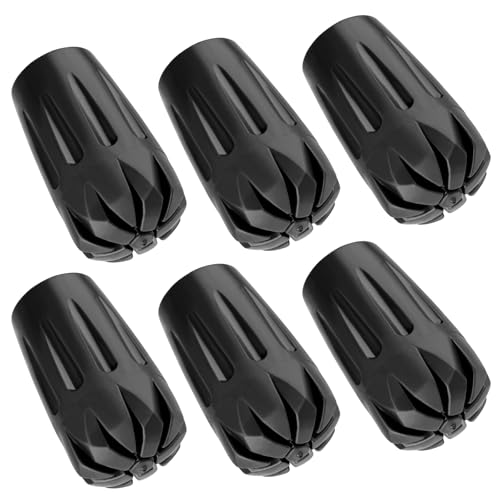
Packing gear efficiently for flights or transit to trailheads requires careful planning regarding luggage dimensions and airline security regulations. Travelers carrying ultralight gear can consult a carry-on luggage volume guide to see how folding or telescoping poles integrate into carry-on luggage limits. Because sharp tungsten carbide tips are frequently flagged by airport security screeners, checking your poles or packing protective rubber tip covers is always recommended. Stowing your poles cleanly with bungee keepers prevents loose straps from snagging on airport baggage belts or transit racks.
Routine Strap Inspection, Cleaning, and Trail Verification
Regular gear maintenance keeps your wrist straps operating smoothly and prevents unexpected failures in the backcountry. Over a full season of hiking, dust, mud, and trail grit can work their way into the internal locking cam wedges inside the handle crown. This accumulation can cause the wedge mechanism to jam or slip under pressure, making fine tension adjustments frustratingly difficult. Disassembling the friction wedge, brushing away dried dirt, and washing the strap webbing with mild soap restores smooth mechanical operation.
Inspect the high-stress stitching where the strap loop anchors into the pole grip before embarking on any major wilderness trip. Check the edges of the webbing for fraying, cuts from sharp granite edges, or signs of dry rot. If the internal locking wedge shows hairline cracks or the teeth appear worn down, the strap may slip unexpectedly under body weight. Replacing worn straps or rebuilding the grip hardware before hitting the trail prevents mid-hike malfunctions when you need downward support the most.
Before stepping onto the trail each morning, take thirty seconds to perform a quick load verification check with both poles. Thread your hands through the straps from underneath, plant the carbide tips firmly into the ground, and lean your upper body weight onto the handles. Confirm that the cam wedge holds steady without slipping and verify that the webbing lies completely flat against your skin. Practicing consistent strap discipline protects your joints, conserves your physical energy, and ensures an enjoyable, injury-free adventure across every mile.






Write Your Review
No reviews yet. Be the first to share your experience!