


Steep descents place significant biomechanical stress on the quadriceps, patellar tendons, and knee joints, multiplying impact forces with every downward step. Learning how to use walking poles downhill transforms this punishing descent into a controlled, stable movement by transferring weight from your lower extremities into your upper body. When you establish solid contact points in front of you, walking poles absorb jarring ground reactions and minimize slips on loose gravel, rocky declivities, or slick dirt paths. Pairing proper pole biomechanics with flexible apparel like supportive knee hiking pants keeps your joints protected against cumulative descent fatigue.
Proper downhill technique requires more than simply planting poles into the dirt at random intervals. Adjusting pole length, repositioning your grip over the handle crown, and coordinating deliberate foot placement are critical steps for maintaining steady equilibrium. Whether you manage mild joint stiffness or seek greater stability on steep outdoor paths, adjusting your equipment correctly protects your posture and preserves lower body stamina. Understanding the mechanical fundamentals of descent support ensures you navigate declines smoothly without straining your wrists, shoulders, or lower back.

Pros
- Compact 15-inch folded size fits easily inside daypacks or stows neatly against backpack compression straps
- Aircraft-grade aluminum construction with reinforced metal joint caps offers reliable trail strength
- Moisture-wicking EVA foam grip and extended shaft sleeve provide secure handling during steep climbs
- External flip-lock mechanism allows quick, tool-free height adjustments between 100 and 120 cm
Cons
- Height range of 100 to 120 cm fits users up to 5'10", requiring taller hikers to select the longer pole size
- TSA regulations require folding trekking poles to be packed in checked luggage rather than airline carry-on bags
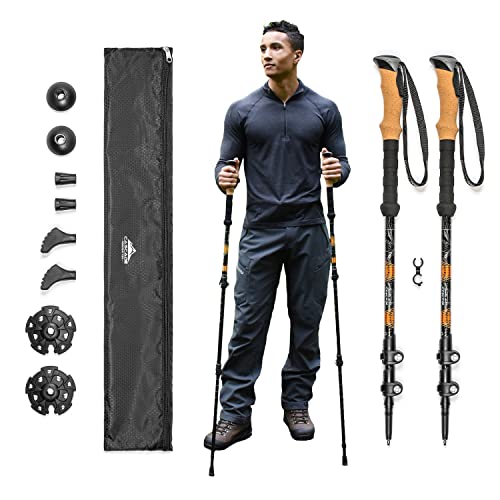
The Trekology Trek-Z Folding Trekking Pole set is a compact, tri-fold aluminum walking stick pair engineered for day hikers, backpackers, and active travelers who need dependable trail balance without taking up excessive pack space. Sized with an adjustment range of 100 to 120 cm, this specific model suits hikers between 4'11" and 5'10" who want an adjustable walking aid that easily stows on or inside a hiking backpack.
Collapsing down to just 15 inches (38 cm), the Trek-Z poles eliminate the awkward overhang common with traditional telescoping poles when strapped to backpack gear loops or slipped into stretch water bottle pockets. Weighing 10.4 oz (294 g) per pole, they offer solid ground support on ascents and descents while adding minimal base weight to your daypack or multi-day backpacking load. The included mud stops help prevent the tips from sinking into soft ground, making them useful across forest tracks, dirt trails, and wet crossings.
Built with aircraft-grade aluminum alloy tubing and reinforced joints fitted with metal lock caps, these poles are crafted to handle rugged trail conditions and repeated folding cycles. The ergonomic handle features moisture-wicking EVA foam that helps keep your hands dry during sweaty summer hikes. An extended EVA foam section down the upper shaft allows hikers to quickly choke up on the grip when climbing steep switchbacks without pausing to readjust pole height.
Deploying the poles involves snapping the folding sections into place and securing the top flip-lock mechanism, which provides 20 cm of micro-adjustment to dial in the correct 90-degree elbow angle. When you reach the trailhead or take a lunch break, unlocking the system allows the poles to quickly fold back down to 15 inches. Trekology includes a custom holder bag to shield the rest of your backpack contents from dirt and sharp tips during transport.
While the tri-fold aluminum design is versatile, buyers should be aware of a few practical constraints. Hikers taller than 5'10" will need the longer 115 to 135 cm version, as this model caps out at 120 cm. Additionally, for travelers heading to destination hikes via commercial airlines, TSA guidelines require trekking poles to be packed in checked baggage rather than carry-on luggage.
For day hikers, weekend campers, and budget-conscious backpackers seeking reliable walking support that packs down small enough for almost any daypack, the Trekology Trek-Z poles deliver practical utility and straightforward adjustment at an accessible price point.
A key advantage of the Trekology Trek-Z poles is their 15-inch (38 cm) collapsed length, making them significantly easier to carry than standard telescoping poles that often measure 24 inches or more when retracted. This short profile allows them to slide vertically inside a typical 20-liter daypack or tuck securely into the side water-bottle pockets of a backpacking pack without snagging low-hanging branches.
The included carry bag provides a clean barrier between trail mud and your gear, keeping the interior of your backpack dry and organized. Hikers who prefer external storage can easily lash the folded poles to standard pack compression straps, ice-axe loops, or trekking-pole attachments without throwing off the balance of their pack.
This 100 to 120 cm Trek-Z model is specifically tailored for hikers with heights between 4'11" and 5'10". Proper trekking-pole sizing generally requires your elbow to rest at a comfortable 90-degree angle when holding the grip with the pole tip resting on flat ground.
Height adjustment is controlled by an intuitive external flip-lock equipped with a metal stopper, offering 20 cm of variable adjustment. Hikers can shorten the poles slightly for steep uphill pushes or lengthen them for descents to maintain balanced posture on uneven terrain.
Constructed from aircraft-grade aluminum alloy, the Trek-Z poles balance structural rigidity with manageable trail weight. Aluminum is well-suited for rugged terrain because it tends to bend under extreme stress rather than snapping abruptly like ultralight carbon fiber.
Trekology reinforces the connecting joints with metal lock caps, reducing play and wobble across the tri-fold joints during heavy downhill impacts. The moisture-wicking EVA foam handles resist sweat buildup and provide soft, all-day hand comfort in varied weather conditions.
Pros
- Sturdy 6061 aluminum shafts resist bending under load across rocky trails and uneven terrain
- Ergonomic cork handles combined with EVA lower grips provide comfortable, versatile hand positions
- Lever-style quick locks allow fast, tool-free length adjustments between 26 and 54 inches
- Generous accessory bundle includes mud baskets, snow baskets, rubber boots, tip covers, and a carry bag
Cons
- Collapsed length of 26 inches may extend above the top collar of smaller 15L to 20L daypacks
- At 10 ounces per pole, aluminum construction is heavier than ultralight carbon fiber designs
- Quick-lock cam tensioners require occasional thumb-screw checks to maintain firm holding pressure over time
The Cascade Mountain Tech 6061 Aluminum Trekking Poles serve as a dependable, budget-conscious trail accessory designed for day hikers, weekend backpackers, and outdoor walkers seeking upper-body engagement and knee relief. Built to pair with standard hiking daypacks and larger backpacking packs, these two-section adjustable poles provide steady points of contact across varied outdoor surfaces.
On the trail, the quick-lock lever mechanism allows smooth height adjustments spanning from 26 inches up to 54 inches to accommodate various hiker heights and changing slope angles. Weighing approximately 10 ounces per pole, the shafts offer solid balance without excessive swing weight. When you reach a flat trail section or scramble where free hands are required, the poles collapse to a manageable 26-inch profile that fits neatly onto external backpack gear loops, side compression straps, or inside the included travel bag.
Material construction centers on aircraft-grade 6061 aluminum, which provides dependable bend resistance when navigating rocky terrain, boulder fields, or stream crossings. The ergonomic handles combine genuine cork tops with extended EVA down grips. The cork sections help dampen ground vibrations and wick moisture away during warm summer hikes, while the lower foam sections let hikers quickly lower their hand positions during steep switchbacks without pausing to readjust pole length.
Dialing in the poles for specific trails is straightforward thanks to the included accessory bundle. The core shafts feature tungsten carbide tips that bite into hard-packed dirt and slick rock surfaces. For paved greenways or sensitive rock paths, push-on rubber boots and tip covers provide traction and prevent surface scarring. When transitioning to wet spring trails or winter routes, the interchangeable mud and snow baskets screw on easily to prevent the poles from sinking deeply into soft ground.
While these poles provide dependable trail stability, prospective buyers should recognize a few practical design tradeoffs. The three-section telescoping design collapses to 26 inches, which is longer than folding Z-style poles and may extend beyond the top of compact 15-liter to 20-liter daypacks. At roughly 10 ounces per pole, aluminum construction also carries a modest weight penalty compared to premium carbon fiber poles. In addition, the quick-lock cam tensioners may require occasional finger-tightening of the thumbscrews to maintain positive locking force over miles of continuous vibration.
For beginner hikers, weekend backpackers, and budget-conscious outdoor enthusiasts looking for reliable trekking poles with comprehensive multi-season accessories, the Cascade Mountain Tech 6061 Aluminum Trekking Poles offer balanced durability and practical trail support.
When not in use, each pole collapses down to a compact 26 inches, allowing hikers to stow them easily along the exterior of most hiking backpacks. Hikers can thread the tungsten carbide tips through standard lower trekking-pole attachment loops and secure the upper shafts using side compression straps or elastic bungi cords.
For travel or vehicle storage, the set includes a lightweight zippered travel bag that prevents dirt, mud, and trail debris on the baskets and tips from contacting the interior fabric of your backpack or luggage. At 10 ounces per pole, carrying them on your pack adds minimal base weight during trail approaches.
The poles arrive with an extensive accessory package configured for year-round hiking versatility. Hard tungsten carbide tips serve as the baseline contact point for dirt singletrack, loose scree, and rugged mountain paths where maximum purchase is necessary.
For asphalt trails, slick boardwalks, or indoor transit, the included rubber boots and tip covers slip over the metal ends to dampen noise and enhance surface grip. The kit also includes wide rubber snow baskets and medium mud baskets, which prevent the poles from sinking into deep drifts, boggy soil, or loose river gravel.

Pros
- Folds down to 15 inches, making it significantly easier to pack inside travel luggage or strap to compact daypacks than standard telescoping poles
- Moisture-wicking natural cork handles keep palms dry and comfortable across humid hiking conditions
- Sturdy metal flip locks and reinforced joint caps provide solid structural support without slippage when properly tensioned
- Lower EVA foam grips allow instant trail adjustment for steep uphill climbing
Cons
- At 11.5 ounces per pole, they carry more weight than specialized ultralight carbon fiber poles
- The 110 cm minimum height setting may feel slightly too long for hikers under 5 feet 2 inches
- Per TSA regulations, trekking poles with metal tips must be packed in checked luggage rather than carried on flights
The Trekology Trek-Z Cork Grip Trekking Poles are folding, multi-section hiking sticks designed for hikers, backpackers, and travelers who require sturdy trail stability without the awkward bulk of traditional telescoping poles. Sold as a pair with an included carry bag, these poles suit day hikers tackling uneven paths, weekend backpackers managing load transfer on descents, and outdoor enthusiasts who need compact gear that fits inside travel luggage or standard daypack side sleeves.
Trail packability is one of the standout characteristics of this design. Utilizing a retractable tri-fold cable system, each pole breaks down to just 15 inches (38 cm) in overall length. This short folded dimension lets you slip the pair directly into the main compartment of an overnight pack, tuck them into side stretch-mesh water bottle pockets, or strap them beneath external compression straps without snagging overhead brush. For length adjustment, an upper aluminum section provides a 20 cm sliding range from 110 cm to 130 cm, catering to user heights between 5 feet 2 inches and 6 feet 5 inches.
Component construction focuses on long-term trail durability. Trekology builds the Trek-Z poles from aircraft-grade aluminum alloy, which provides higher impact resistance and flex tolerance against rocky crevices compared to brittle carbon fiber. The folding shaft joints feature protective metal caps to resist wear at stress points during repeated assembly. Up top, the natural cork grip wicks moisture away from sweaty palms during steep ascents, while a secondary EVA foam grip sleeve allows you to lower your hand placement instantly on steep trail grades without adjusting the shaft length.
Deploying and adjusting the poles requires a straightforward two-step setup. After letting the lower segments drop into place, you pull the upper shaft section until an internal metal locking button pops outward with a firm click. A durable metal external flip lock then secures the upper telescoping section at your desired height marker. Proper setup is essential; if the lower shaft feels loose or disconnected, the metal lock button must be firmly pulled until fully seated in its designated catch hole. Maintenance is simple, requiring only an occasional wipe-down with a dry cloth after muddy hikes before packing into the included storage sleeve.
While practical and durable, the Trek-Z design carries a few realistic limitations. Each pole weighs 11.5 ounces (330 grams), resulting in a combined pair weight around 23 ounces, which may deter dedicated ultralight thru-hikers who prefer minimal swing weight. Additionally, the minimum length of 110 cm means youth hikers or adults under 5 feet 2 inches might find the grip positioning too elevated on flat terrain. Travelers should also remember that TSA guidelines require trekking poles with rigid tips to travel inside checked baggage rather than carry-on packs.
For hikers seeking an affordable, compact, and robust set of walking poles, the Trekology Trek-Z Cork Grip poles deliver excellent overall value. They provide dependable joint support, sweat-wicking cork comfort, and pack-friendly folding convenience that fits easily into standard hiking backpacks and travel duffels.
The Trekology Trek-Z poles feature an adjustable working range between 110 cm and 130 cm, making them compatible with users measuring between 5 feet 2 inches and 6 feet 5 inches in height. Sizing adjustments are controlled via a durable metal flip-lock clamp positioned on the upper shaft section, marked with clear centimeter increments for quick alignment.
Hikers can lengthen the poles slightly for steep downhill sections to maintain an upright posture, or shorten them for prolonged uphill climbs. For fast grade transitions where stopping to loosen the clamp is impractical, the extended EVA foam grip below the primary cork handle allows instant choke-down positioning.
Thanks to a three-section folding architecture linked by an internal tension cable, the Trek-Z poles collapse down to an ultra-compact 15 inches (38 cm). This compact footprint allows them to slide vertically inside most 20-liter to 65-liter hiking backpacks, eliminating the tip-heavy snagging hazards common with longer two-piece or three-piece telescoping poles.
A matching carry bag is included to keep trail mud and dust away from sleeping bags, pack liners, and clothing when stored internally. When flying to destination trailheads, note that airline security guidelines require trekking poles to be packed within checked baggage rather than carry-on luggage.
The shafts are manufactured from aircraft-grade aluminum alloy, delivering high tensile strength and resilience against bending forces when supporting heavy backpack loads on rocky trails. The connection joints between segments are reinforced with metal caps to resist cracking and wall deformation under load.
The upper handle utilizes natural cork material that absorbs hand moisture, resisting slick spots during warm summer outings. The handle is engineered with a slight rotational flex that acts as an anti-torque buffer, reducing jarring impacts transmitted through the hands and wrists across prolonged trail miles.

Pros
- Compact 13.4-inch folded size packs easily into daypacks, travel luggage, or side bottle sleeves
- Aircraft-grade 7075 aluminum alloy provides reliable strength against bending on rocky trails
- External Quick Lock mechanism allows simple height adjustments from 43.3 to 49.2 inches
- Grooved EVA foam handle absorbs hand sweat while maintaining a comfortable, non-slip grip
- Includes a durable tungsten steel tip with a protective rubber foot for varied surfaces
Cons
- Sold as a single pole (1 PC), meaning hikers who prefer dual-pole stability must purchase two units
- Maximum extended length of 49.2 inches may not suit taller hikers above 6 feet 2 inches
- Fixed adjustment range (43.3 to 49.2 inches) may be too long for individuals under 5 feet 3 inches
The A ALAFEN 7075 Aluminum Collapsible Trekking Pole is a single, folding walking stick designed for day hikers, backpackers, and travelers who require portable stability on the trail. Unlike standard telescoping poles that can remain awkwardly long when strapped to a backpack, this model folds down to a compact 13.4 inches. That manageable profile makes it especially suitable for hikers carrying mid-sized daypacks, overnight packs with external gear attachments, or travel bags where packing volume is limited.
Real-world trail utility centers on how easily the pole stows and deploys. Weighing approximately 0.6875 pounds (about 11 ounces), the pole adds very little base weight to your hiking pack. When assembled, its Quick Lock mechanism allows you to adjust the functional length between 43.3 inches and 49.2 inches. The pole shaft includes a printed measuring scale, which helps you quickly set your preferred height depending on whether you are climbing uphill or descending steep terrain. According to manufacturer specifications, this adjustment range accommodates hikers between 5 feet 3 inches and 6 feet 2 inches.
Construction quality centers on aircraft-grade 7075 aluminum alloy, a material well-regarded in the outdoor gear space for its resilience against bending and impact deformation. At the handle, an EVA foam grip features a skid-resistant grooved surface and sweat-absorbent texture to help maintain control during warm-weather hikes or strenuous ascents. The attached wrist strap adds stability and helps distribute grip pressure. For ground traction, the bottom houses a rugged tungsten steel tip that bites into packed dirt, mud, and scree, while an included rubber footing covers the metal tip for pavement or slick rock slabs.
Packing and trail-side handling are straightforward thanks to the multi-section folding design. When collapsed to 13.4 inches, the pole easily slips inside standard backpack main compartments, fits into tall side water bottle sleeves, or lashes onto external compression straps and trekking pole loops. Deploying the pole involves extending the connected segments until the internal tension cord locks in place, followed by securing the lever-action Quick Lock clamp at your desired height mark. Maintenance requires minimal effort, mainly consisting of wiping away trail grit, rinsing off mud, and allowing the sections to air dry completely before long-term storage.
Potential buyers should consider a few practical limitations before ordering. This listing includes only a single pole (1 PC), so hikers who rely on a dual-pole setup for knee relief or balance will need to purchase a second unit. Additionally, the adjustment range of 43.3 to 49.2 inches limits proper ergonomic fit for hikers under 5 feet 3 inches or taller than 6 feet 2 inches. While 7075 aluminum is durable and impact-resistant, it does weigh slightly more than high-end carbon fiber options, and the folding mechanism requires careful locking to prevent slippage under heavy downward force.
For hikers, campers, and travel enthusiasts seeking a reliable and budget-friendly single walking stick, the A ALAFEN collapsible pole delivers excellent practical value. Its ability to tuck neatly into or onto almost any hiking backpack makes it a hassle-free addition to your gear lineup. If you fall within the supported height range and want dependable trail support without the bulk of traditional full-length poles, this compact aluminum model is a sensible choice.
When fully collapsed, the A ALAFEN trekking pole measures 13.4 inches, making it short enough to fit inside most daypacks or slide into exterior side pockets without protruding excessively. This makes it far more pack-friendly than conventional three-section telescoping poles that typically collapse to 24 inches or more.
The working length adjusts from 43.3 inches (110 cm) to 49.2 inches (125 cm) using an external Quick Lock lever. The manufacturer lists a recommended user height range of 5 feet 3 inches to 6 feet 2 inches (160 cm to 187 cm). If your height falls outside this window, the pole may not provide an optimal 90-degree elbow angle on flat terrain.
The pole shaft is constructed from aircraft-grade 7075 aluminum alloy, offering solid structural resistance to bending forces common on rocky descents. The handle is shaped from grooved EVA foam designed to absorb hand moisture and reduce slippage during humid trail conditions.
The tip features a tungsten steel point engineered for firm penetration into dirt, gravel, and packed forest trails. A removable rubber foot is included to shield the metal tip and provide traction on asphalt, stone walkways, or slick granite slabs.

Pros
- Lightweight 3K carbon fiber construction reduces carried and swinging weight to 7.6 ounces per pole
- Metal flip locks offer secure, slip-resistant tension compared to traditional twist-lock mechanisms
- Ergonomic cork handles paired with secondary EVA foam grips provide versatile hand positioning on varying trail grades
- Wide 24-inch to 55-inch adjustment span suits a diverse range of user heights and terrain angles
Cons
- Carbon fiber shafts can fracture if wedged between rocks and subjected to severe lateral bending forces
- Collapsed length of 24 inches may extend beyond the top or bottom of ultra-compact daypacks when mounted externally
- Metal flip lock levers require occasional thumb-screw tension checks to prevent slippage over extended mileage
The Hiker Hunger 100% Carbon Fiber Trekking Poles are adjustable three-section telescoping trail poles built for day hikers, section hikers, backpackers, and campers seeking to shed weight without giving up stability. Constructed from 3K carbon fiber, each pole weighs approximately 7.6 ounces, making them an excellent choice for hikers looking to reduce joint impact on rugged trails while keeping their base gear manageable.
In terms of trail adjustment, these poles expand from a compact 24 inches up to a full 55 inches, comfortably serving both shorter and taller hikers across diverse terrain grades. Rather than relying on twist locks that can slip or freeze when exposed to dirt and moisture, Hiker Hunger equips these poles with quick-adjust flip locks built with metal hardware. This provides firm, slip-resistant clamping whether you are lengthening the poles for a steep downhill descent or shortening them for an aggressive ridge climb.
Grip comfort is a primary design focus, featuring ergonomic natural cork handles that actively wick moisture away from your palms while molding to your hand shape over time. Directly beneath the cork handles, secondary nonslip EVA foam extensions provide an immediate choke-down point for short, steep switchbacks, eliminating the need to stop and adjust pole length. Soft neoprene-padded wrist straps further enhance comfort, distributing downward pressure across your wrists without causing chafing during long mileage days.
Transporting and maintaining these poles on the trail is straightforward. When not in use, the shafts collapse down to 24 inches, allowing them to nest securely into side water bottle pockets, slide behind backpack compression straps, or strap onto front trekking-pole attachment loops. Maintenance involves basic trail hygiene: simply wipe away grit and moisture after wet outings and periodically check the thumbscrew tension on the metal flip locks to preserve optimal clamping force.
While carbon fiber provides exceptional weight savings and natural vibration damping, it behaves differently than aluminum under severe lateral stress. If a carbon pole becomes trapped between roots or granite boulders and is subjected to heavy sideways leverage, it is susceptible to cracking or snapping rather than bending. Additionally, hikers using compact daypacks under 20 liters should note that the 24-inch collapsed height will protrude somewhat above the pack rim when lashed to external straps.
For day hikers, multi-day backpackers, and travelers seeking an agile pair of poles with natural cork ergonomics and durable metal locking mechanisms, the Hiker Hunger Carbon Fiber Trekking Poles represent strong trail value. Backed by a 1-year warranty and a USA-based company, they provide dependable knee-saving support and steady balance across varied backcountry trails.
The Hiker Hunger trekking poles feature a telescoping three-section shaft that adjusts smoothly between 24 inches and 55 inches. This expansive range accommodates men, women, and younger hikers across flat paths, steep alpine ascents, and knee-jarring descents.
Length adjustments are secured using external flip locks equipped with metal levers. Unlike plastic components that can warp or weaken over time, the metal locking mechanism maintains consistent clamping pressure against the carbon fiber sections to help prevent unexpected slippage while hiking under load.
Constructed entirely from 100% 3K carbon fiber, these poles offer high tensile strength and natural vibration absorption while weighing only 7.6 ounces per pole. This lightweight profile substantially lowers the energy required per arm swing over long trail days.
The upper handle combines natural moisture-wicking cork with dense EVA foam for the lower grip extension, providing comfortable handholds in both warm and cold weather. To maintain the structural integrity of carbon fiber, hikers should avoid using the poles as pry bars and keep the locking collars clean of trail debris.
With a collapsed length of 24 inches, these poles integrate easily with standard hiking daypacks and multi-day backpacking packs. They can be threaded through dedicated lower trekking-pole loops, secured via upper bungee cords, or held fast by side compression straps.
For travel or public transit to the trailhead, the 24-inch collapsed size allows the pair to fit inside standard checked luggage or across larger duffel bags, keeping your trail gear neatly consolidated between outings.
Biomechanical Guide to Descending Hills with Walking Poles
Walking downhill forces your knees to absorb up to four times your body weight with every foot strike. Executing how to use walking poles downhill properly counteracts this gravitational strain by establishing forward stabilization points that redistribute forces across your upper body. When used correctly, poles act as supplementary brakes, steadying your center of mass and decreasing the risk of slips on loose terrain. Mastering downhill coordination protects sensitive joints and preserves lower body stamina.
Lengthening Your Poles for Downward Slope Geometry
When descending an incline, the trail falls away below your feet, increasing the vertical distance between your hands and the ground. Keeping poles at their level-ground setting forces you to bend forward at the waist, pulling your center of gravity past your base of support. Lengthen both poles by five to ten centimeters depending on the descent grade to maintain an upright posture with a comfortable elbow bend. Extending the shaft length allows tips to touch down ahead without compromising spinal alignment.
Telescoping models with external flip locks, such as Cascade Mountain Tech Trekking Poles or Hiker Hunger Carbon Fiber poles, make this adjustment straightforward via printed height measurement scales. If you encounter rolling terrain with frequent short descents, utilizing poles equipped with extended lower EVA foam grips allows you to instantly drop your hand position without unlocking clamps. For continuous downward trekking, adjusting overall pole length ensures optimal mechanical leverage. Taking a moment to adjust your gear at the ridge crest pays major dividends in joint comfort.
Grip Mechanics and the Palm-Over-Grip Technique
On level terrain, hikers typically grasp the handle barrel while threading hands through wrist straps from underneath. Downhill walking requires a fundamental shift in hand placement because downward pressure shifts from a pulling motion to direct downward braking. Cupping the palms of your hands over the rounded top crown of the grips provides a broad surface that disperses force through your palms, wrists, and forearms. This modified palm grip prevents wrist strain while transferring descent forces smoothly into your upper body.
Natural cork grips, like those found on Trekology Trek-Z Cork Grip or Hiker Hunger poles, conform gradually to hand shape and absorb moisture from perspiration during sustained downhill braking. Ergonomic cork and textured EVA foam surfaces reduce focal palm pressure, helping prevent blisters, palm bruising, and hand fatigue on prolonged descents. By resting the fleshy part of your palm securely over the top cap, you can lean partial upper body weight onto the poles without hyperextending your wrists or clenching your fingers tightly. This relaxed hold allows your arms to absorb trail feedback efficiently while keeping your grip muscles fresh.
The Critical Safety Decision on Wrist Straps Downhill
Wrist straps offer valuable support when ascending or traversing flat trails, but downhill descents introduce a specific mechanical hazard. If a pole tip wedges between buried roots or boulders while your hands remain cinched inside the straps, your forward momentum can twist your wrist or pin your arms. Many hikers intentionally remove their hands from the straps when beginning steep descents to allow immediate release if they lose footing. This simple precaution ensures that you can discard poles instantly during an unexpected slide.
Removing hands from straps enables you to break a fall naturally with open palms rather than landing on a rigid pole shaft or trapped thumb. If you choose to keep straps engaged for light support, adjust them loosely so hands can slip free instantly without resistance if a pole wedges into rocks. Comfort-focused straps lined with soft neoprene help avoid chafing, yet maintaining freedom of movement remains paramount when navigating rocky declivities. Prioritizing hand mobility over strap retention significantly reduces trail-related wrist sprains.
Pole Planting Placement and Forward Reach Timing
Planting poles too far forward or too wide compromises stability and creates awkward leverage angles that increase shoulder strain. Ideal pole placement lands the tips slightly ahead of your lead foot and roughly shoulder-width apart, creating a stable tripod structure between your legs and the poles. Plant the poles firmly into the trail surface before your lead foot touches down, allowing your arms to absorb the initial braking impulse. This coordinated timing prevents jarring heel strikes by transferring decelerating forces to the poles first.
Avoid planting poles directly in front of your toes, as this creates a serious tripping hazard if your foot catches the shaft mid-stride. Instead, maintain a rhythmic cadence where poles plant in alternating sequence with opposite feet on moderate slopes, or plant both poles together on steep descents for maximum dual-point braking. Keeping poles slightly angled back toward you provides steady forward friction without jarring your elbows upon ground contact. Practicing this placement on gentle slopes builds the coordination needed for steeper mountain descents.
Cadence and Footwork: Short Steps Over Knee Locking
Proper pole mechanics must work in harmony with disciplined downhill footwork to protect your musculoskeletal system. Taking excessively long strides down a slope leads to aggressive heel striking, hyperextended knees, and increased chances of slipping on loose aggregate. Focus on shortening your stride length, keeping your knees slightly flexed at all times, and maintaining a light-stepping cadence that keeps your center of mass over your feet. Small steps keep your balance centered and allow poles to provide steady guidance.
Bending your knees turns your quadriceps into natural shock absorbers, while walking poles manage excess deceleration forces. Pairing disciplined pacing with comfortable apparel like lightweight hiking pants for trail mobility prevents fabric binding around the knees and preserves full range of motion over uneven steps. Never lock your knee joints straight on descent, as this transfers violent impact shocks directly into knee cartilage, hip sockets, and lumbar vertebrae. Maintaining soft knees combined with firm pole plants creates a smooth descent on challenging terrain.
Locking Mechanism Security and Load Verification
A sudden collapse of a pole segment under downhill body weight can cause severe balance loss and dangerous tumbling accidents. External lever flip locks, engineered from durable metal or reinforced composite hardware, generally offer superior holding power and simpler visual verification than internal twist locks. Before beginning any descent, verify that each lever clamp is fully tightened and securely locked against the shaft tubing to prevent unexpected slippage. If a lever feels loose, turn the knurled adjustment thumbscrew clockwise to increase clamping friction before latching.
Tri-fold collapsible models, such as Trekology Trek-Z and A ALAFEN 7075 Aluminum poles, utilize spring-loaded pop-up metal lock pins to secure telescoping segments alongside external flip clamps. When deploying folding poles, confirm that the tension lock button fully protrudes from its detent hole and seats completely before applying downward body pressure. Test both poles by leaning downward with moderate body weight on flat ground before committing to steep drop-offs to ensure no segment slips under load. Verifying structural lock integrity protects you from unexpected mechanical failures.
Material Considerations for Vibration Dampening and Trail Rigidity
Shaft material composition plays a vital role in balancing structural deflection, durability, and vibration transmission during sustained downhill braking. High-grade 7075 and 6061 aircraft aluminum alloys offer outstanding bend resistance and tensile toughness, capable of flexing slightly under heavy lateral stress without snapping catastrophically. This resilient bending property makes aluminum shafts well-suited for rocky descents and heavier loads where reliable structural integrity is essential. If an aluminum shaft bends slightly during a slip, it often remains functional enough to complete the hike.
In contrast, 100% 3k carbon fiber shafts, featured in models like Hiker Hunger trekking poles, offer ultralight carry weight and superior natural vibration dampening. Carbon fiber absorbs trail vibrations that travel upward into wrists, forearms, and shoulders, significantly reducing upper body joint soreness during multi-mile descents. However, carbon fiber shafts require careful visual inspection for hairline cracks or deep rock abrasions, as composite materials can shear if subjected to sharp impacts against granite ledges. Choosing between aluminum resilience and carbon fiber vibration absorption depends on your personal trail conditions.
Tip Selection, Rubber Footing, and Mud Basket Management
The interface between your pole and the ground determines traction security on varying downhill surfaces. Durable tungsten carbide or tungsten steel tips bite firmly into packed dirt, outdoor rock, decomposed granite, and ice, delivering dependable friction that prevents outward tip skid. Leaving bare carbide tips exposed is ideal for rugged natural trails where aggressive surface bite is necessary to stop sudden sliding. These hard metal tips provide immediate feedback about ground solidity, allowing you to gauge foothold stability before stepping down.
Conversely, rubber tips or walking boots should be installed over metal points when descending paved mountain paths, wooden boardwalks, or slick rock slabs where bare metal can skid uncontrollably. Small mud baskets installed above tips prevent poles from sinking too deeply into soft dirt, muddy pockets, or loose scree, which could otherwise pitch you forward. Regularly inspect the tread on rubber accessories, as worn, smooth rubber loses its grip on damp downhill transitions. Swapping accessories to match trail conditions guarantees reliable traction.
Navigating Boulders, Steep Drop-Offs, and High Step-Downs
Encountering steep rock steps or large downward trail boulders requires adapting your pole technique to preserve balance. When stepping down off a ledge higher than standard stair risers, plant both poles down onto the lower surface first, keeping them wide enough to allow your body to pass between them safely. Lower yourself gradually by bearing weight through your palms on the grip heads while bending your supporting back leg, rather than leaping downward onto a straight front knee. This controlled lowering movement reduces shock load on your patellar tendons.
Never jump down onto a planted pole, as the shock load can bend the shaft or cause hands to slip off the grip crowns. On narrow switchbacks and steep traverses, keep the uphill pole shorter and the downhill pole lengthened, or utilize the extended lower grip on the uphill side to maintain level shoulder posture. This asymmetric approach stabilizes your torso and stops dangerous leaning toward the exposed slope edge. Moving methodically through complex rock steps ensures each footfall is secure before committing your full weight.
Clinical Distinction: Outdoor Walking Poles Versus Medical Canes
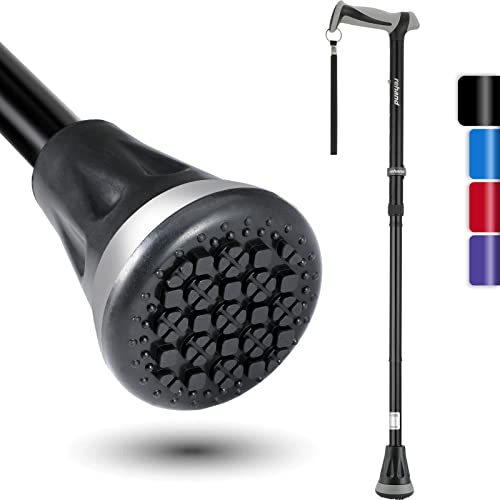
While walking poles offer exceptional balance enhancement and joint protection on outdoor hiking trails, they are not direct substitutes for certified medical mobility aids. Recreational trekking poles are designed for bilateral kinetic balance and active dynamic braking, whereas orthopedic walking canes and quad canes are engineered with specific static load certifications to offload fifteen to twenty-five percent of body weight during clinical rehabilitation. Fitness walking poles lack the broad, slip-resistant base profiles and rigid single-leg support required for severe neurological or orthopedic balance deficits.
Adults recovering from acute lower-extremity surgeries, hip replacements, or managing severe balance disorders should use prescribed single-point canes, quad canes, or walkers under clinical supervision. If you manage chronic joint conditions such as mild knee osteoarthritis or degenerative hip stiffness, trekking poles can be safely incorporated into outdoor walks to mitigate descent strain, provided your physician or physical therapist approves your gait plan. Always consult a licensed physical therapist or medical professional for tailored gait evaluations when managing clinical balance impairments.
Daily Maintenance and Joint-Friendly Downhill Checklist
Maintaining your walking poles ensures consistent reliability whenever you face steep declines. After completing dusty or wet hikes, wipe down aluminum or carbon fiber shafts with a clean, dry cloth to prevent grit from scouring telescoping joints or corroding internal clamping surfaces. Check tension screws on your flip locks periodically using a coin or screwdriver to ensure clamps maintain firm pressure against telescoping shafts without slipping. Storing your poles with lever clamps unlocked prolongs the life of the plastic cams and prevents fatigue.
Prior to every downhill segment, perform a rapid safety sweep: verify pole length extension, double-check that locking levers and detent buttons are fully engaged, remove wrist straps if the trail is technical, and place palms securely over the grip crowns. Adopting these disciplined habits preserves your joints, instills trail confidence, and ensures you descend even daunting slopes with smooth, controlled stability. Consistent preparation transforms challenging downward hikes into comfortable, low-impact outdoor adventures.





Write Your Review
No reviews yet. Be the first to share your experience!