


Trekking across uneven trails in heavy trousers often causes restricted knee mobility and lower-body exhaustion before making camp. After hours of climbing with a loaded pack, your body requires solid insulation from damp, cold soil to recuperate. Reviewing quality smart hiking pants sleeping mats choices alongside your hiking apparel solves this fatigue by balancing thermal protection against packable bulk. Analyzing listed dimensions, pad thickness, and outdoor user feedback shows how different sleeping mats prevent ground chill from stiffening your legs.
Traditional closed-cell foam builds deliver reliable puncture immunity on rocky ground, whereas inflatable pads offer compact packability and side-sleeping support. Matching your sleep setup to your trail kit, including flexible trail trousers and gear setups, keeps your entire load light and balanced. Solid insulation blocks dampness from reaching your hips, preventing the joint aches that ruin early morning trail starts. Understanding these material tradeoffs ensures you carry dependable bedding without wasting pack volume.
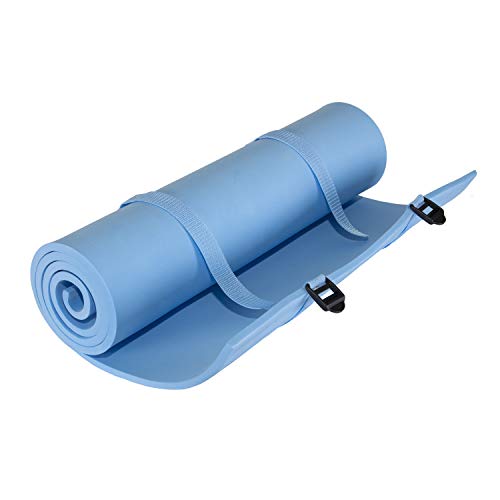
Pros
- Ultralight 0.6-pound weight adds minimal bulk to a backpacking kit
- Puncture-proof closed-cell foam eliminates the risk of leaks or deflation on rough terrain
- Waterproof material keeps ground moisture from soaking through to sleeping gear
- Included straps keep the pad rolled tightly for exterior pack attachment
- Backed by a one-year manufacturer warranty against defects
Cons
- Thin 3/8-inch to 0.5-inch profile provides minimal cushioning on hard or rocky surfaces
- Narrow 19-inch width leaves little room for active or broad-shouldered sleepers
- Rolled foam design is bulkier on pack exteriors compared to compact inflatable pads
The Stansport Pack Lite Camping and Backpacking Sleeping Pad is a minimalist closed-cell foam ground mat designed for backpackers, campers, and day hikers who require an ultralight, fail-safe barrier against the elements. Weighing just 0.6 pounds, this pad is built for outdoor users who prioritize simplicity and dependability over the plush thickness of heavy inflatable mattresses.
For trail use, the primary advantage of closed-cell foam is reliable thermal protection without the risk of punctures or air leaks. The manufacturer highlights waterproof and puncture-proof construction, which helps keep cold and dampness away from the body when sleeping on bare earth, tent floors, or shelter platforms. Unlike inflatable sleeping pads that can fail if punctured by sharp rocks, pine needles, or thorns, this foam mat maintains its protective structure regardless of trail debris.
The build consists of closed-cell foam insulation measuring 72 inches long by 19 inches wide, with thickness listed between 3/8 inches and 0.5 inches in the product specifications. Because closed-cell foam does not absorb water, moisture management is effortless on wet terrain. Condensation, rain, or dew can be wiped or shaken off in seconds before you pack up and hit the trail.
Handling and packability are geared toward straightforward exterior pack carry. At 0.6 pounds, the mat adds minimal weight to your load, and the included straps keep it rolled tightly during transit. Because a roll-up foam mat does not compress down to pocket dimensions, backpackers will typically lash it to the exterior loops or compression straps of a backpack rather than storing it inside a main compartment.
The most significant limitation of this sleeping pad is its lean cushioning and narrow profile. With a thickness under half an inch, side sleepers or hikers on hard, uneven ground will experience firm contact with the terrain. Additionally, the 19-inch width provides limited surface area, meaning restless sleepers may slide off onto the tent floor during the night.
The Stansport Pack Lite is best suited for budget backpackers, thru-hikers seeking an indestructible secondary thermal layer beneath an air pad, and campers needing a lightweight ground shield. Backed by a one-year manufacturer warranty, it offers practical, worry-free ground protection for anyone willing to trade plush cushioning for trail-ready durability.
Closed-cell foam serves as an effective physical barrier against cold earth and damp ground during outdoor sleep. The Stansport Pack Lite uses solid foam cells that resist moisture absorption and prevent cold conduction from reaching your sleeping bag.
This waterproof build makes the mat versatile beyond nighttime sleeping, serving as a clean, dry sit pad during trail breaks, meal prep, or glassing sessions in wet grass or snowy conditions.
At 0.6 pounds, the Stansport Pack Lite is one of the lightest full-length sleep pads available for trail use. The included tie straps secure the pad into a tight roll for transit.
Because rolled foam retains its physical volume, hikers should plan to strap the pad to the top, side, or bottom lash points of a backpack using external straps.

Pros
- Weighs only 17.5 ounces and packs down to the dimensions of a standard water bottle for effortless pack organization.
- Detachable foot-pump sack prevents moisture accumulation inside the air chamber and speeds up camp setup.
- ErgoCushion outer rails measure 3.35 inches thick to help side sleepers stay securely positioned overnight.
- Durable 20D nylon shell with TPU coating is rated by the manufacturer to support up to 440 pounds.
- Includes a dedicated repair kit and is supported by a manufacturer lifetime replacement guarantee.
Cons
- The listed R-value of 2 limits reliable thermal insulation to mild spring and summer trail conditions.
- Lightweight 20D nylon shell requires careful campsite clearing to prevent punctures from sharp rocks or thorns.
- The tapered center profile may feel thin for heavy side sleepers who prefer uniform high-loft cushioning across the entire width.
The Gear Doctors Ether 17.5oz Ultralight Camping Sleeping Pad is a compact inflatable air mattress designed for warm-weather backpackers, thru-hikers, and tent campers seeking dependable ground cushioning at minimal pack weight. Weighing only 17.5 ounces and rolling down to an 8.6-inch by 3.1-inch cylinder, this mat fits easily into side bottle pockets or internal backpack compartments. It is best suited for warm-weather hikers who prioritize low carry weight, fast setup, and cradling comfort during weekend excursions, national-park trips, or extended backcountry trail treks.
Sleeping comfort on the trail depends heavily on pad thickness and body stability. The Ether pad features an ErgoCushion contoured chamber system that rises to 3.35 inches at the outer borders and tapers to 2.36 inches in the middle, creating a gentle cradle that helps back and side sleepers stay centered overnight. Inflation takes under 90 seconds using the included detachable foot-pump sack and anti-leak valve system. This pump mechanism eliminates the need for lung inflation, which keeps breath moisture out of the interior chamber and preserves pad hygiene over repeated trail cycles.
The exterior shell is built from 20D nylon finished with a water-resistant TPU coating designed to repel moisture and resist trail abrasions. Despite its lightweight construction, the manufacturer rates the pad to support static loads of up to 440 pounds. The TPU laminate adds an airtight seal to the nylon weave, while the included repair kit ensures that unexpected micro-punctures from trail debris can be patched at camp. Gear Doctors also backs the pad with a manufacturer lifetime replacement policy for added reassurance on rugged terrain.
When fully inflated, the pad measures 76 inches long by 25 inches wide, offering adequate surface area for adult campers while maintaining a clean footprint inside one-person or two-person backpacking tents. However, with a manufacturer-listed 2-R value, this pad is designed specifically as a 2-season sleeping mat suited for warm spring and summer outings. Hikers tackling freezing shoulder seasons or alpine terrain will need to pair it with a closed-cell foam base to achieve sufficient thermal protection against cold ground heat loss.
The primary tradeoff of this ultralight design is its specialized warm-weather thermal limit. The listed 2-R value provides adequate ground insulation when overnight temperatures remain mild, but it does not offer enough radiant heat retention for sub-freezing shoulder seasons or winter backpacking. In addition, while the 20D nylon fabric provides strong weight savings, it demands more mindful site selection and ground-cloth use than heavier car-camping mats to protect against sharp roots, thorns, or granite chips.
The Gear Doctors Ether 17.5oz pad is a practical, budget-friendly sleeping solution for U.S. hikers, backpackers, and travelers who need an ultralight, packable sleep system for warm-weather trail trips. Campers who prioritize quick, lung-free setup with a foot pump and crave edge support will find strong functional value here. For mild summer hikes along Appalachian trails or dry desert routes in the American Southwest, it delivers reliable cradling comfort without weighing down your pack.
The Gear Doctors Ether pad achieves an exceptionally small pack size that simplifies gear loading in lightweight backpacking kits. Compressing down to approximately 8.6 inches in height and 3.1 inches in diameter, the rolled pad takes up roughly the same volume as a standard one-liter water bottle. At a listed weight of 17.5 ounces, it reduces base weight for long-distance section hikers and thru-hikers who must carry their gear across demanding elevation gains.
Its minimal footprint leaves ample internal capacity in standard 40 to 60 liter packs for food, sleep insulation, and technical clothing. For fast-and-light travelers and weekend adventurers, this compact profile allows effortless organization without the bulk of traditional foam rolls.
The integrated detachable foot-pump sack and anti-leak valve provide rapid, hands-free inflation in under 90 seconds. Campers simply attach the pump sack and depress it with their foot or hands, forcing high volumes of air into the pad without requiring strenuous lung power at high elevations. This system prevents moisture from breath condensation from collecting inside the pad, which helps protect the internal TPU coating over long-term use.
Deflation and pressure adjustment are equally straightforward thanks to the smart valve setup. Hikers can micro-adjust the internal firmness by tapping the valve or open the primary exhaust port for rapid deflation when breaking camp at dawn.
With an R-value rating of 2, the Gear Doctors Ether is specifically engineered for warm spring and summer backpacking. An R-value of 2 provides sufficient thermal resistance against moderately cool ground on warm trail nights, preventing the earth from pulling body heat downward. This rating makes the pad well matched for warm-weather desert journeys, humid summer outings, and low-elevation forest camping.
For shoulder-season trips with frosty mornings or high-altitude alpine camps, campers will find that an R-value of 2 offers limited resistance against freezing soils. In cooler conditions, pairing this pad with an underlying closed-cell foam mat can improve ground warmth while preserving the air mattress cushioning.
Trail Rest and Smart Hiking Pants Sleeping Mats Common Questions
Tight hiking trousers and long trail miles can cause severe leg soreness, making restful recovery essential. Selecting the right smart hiking pants sleeping mats setup protects resting joints from cold terrain so you wake up ready for the next ridge.
How does closed-cell foam compare to inflatable pads for trail durability?
Closed-cell foam mats deliver complete puncture immunity because they have no air chambers that can leak. The Stansport Pack Lite Camping & Backpacking Sleeping uses solid foam insulation measuring 3/8 inches thick, so sharp rocks or briars cannot deflate it. In contrast, inflatable designs like the Gear Doctors® Ether 17.5oz Ultralight Camping rely on 20D nylon coated with TPU, which requires care around sharp debris.
Can you layer a foam mat with an inflatable pad in cold weather?
Yes, stacking a closed-cell foam mat beneath an inflatable air mattress significantly improves warmth on frozen ground. The solid foam base blocks damp chill first, preventing cold ground temperatures from cooling the air inside your inflatable pad. This system pairs nicely with base layers or comfortable hiking pants for long miles during late-season trips.
What packed size should hikers expect from an ultralight inflatable mat?
Ultralight inflatable pads typically roll down to the size of a standard water bottle. The Gear Doctors Ether compresses to 8.6 inches tall by 3.1 inches in diameter and weighs only 17.5 ounces. Solid foam pads roll into a 19-inch-wide cylinder and must be lashed to pack exterior straps.
How does pad thickness support side sleepers on rough ground?
Inflatable pads with contoured thickness provide essential hip clearance for side sleepers on uneven soil. The Gear Doctors Ether features 3.35-inch outer rails tapering to 2.36 inches in the center, keeping pressure points elevated off hard roots. A 3/8-inch foam pad insulates well but offers minimal cushioning for side sleeping.
Are closed-cell foam sleeping pads fully waterproof on wet terrain?
Yes, closed-cell foam does not absorb moisture, making it completely waterproof on soggy ground. The Stansport Pack Lite creates a firm barrier that keeps ground dampness away from your sleeping bag. Any water on the exterior wipes dry with a cloth before rolling up the mat.




Write Your Review
No reviews yet. Be the first to share your experience!