


Steep descents covered in loose gravel often leave hikers struggling to keep their balance while dodging painful ankle roll and underfoot stone bruising. Exploring different trail footwear styles usually leads people to ask what are mid hiking boots and how their hybrid shaft height bridges the divide between low-cut trail shoes and heavy mountaineering footwear. A mid-cut hiker features an ankle collar that sits directly around or just above the malleolus bones, providing moderate lateral stability without the rigid, restrictive feel of tall backpacking boots. Pairing these versatile boots with flexible lightweight hiking pants creates a functional trail system that shields your lower legs from trail debris while keeping your stride agile.
These boots cater to day hikers and weekend adventurers who demand dependable underfoot protection and weather resistance without carrying excess foot weight over long miles. Modern designs typically combine supportive leather or suede overlays with cushioned EVA midsoles and aggressive lugged outsoles to navigate mud, wet roots, and rocky switchbacks. Understanding how this collar height balances joint security against rotational freedom helps you choose the ideal footwear setup for your pack weight and terrain ambitions. By identifying the engineering behind the shaft cut, you can avoid common issues like collar bite, heel slippage, and unnecessary lower-leg fatigue.

Pros
- Seam-sealed waterproof leather and suede upper provides reliable wet-weather defense
- Omni-GRIP non-marking rubber outsole delivers dependable grip across varied terrain
- TECHLITE midsole provides lightweight cushioning and responsive energy return
- Reinforced toe and heel barriers with extended toe overwrap protect critical wear points
Cons
- Designed specifically for three-season hiking rather than severe winter snowpack or sub-zero conditions
- Leather and suede exterior requires occasional brushing and natural drying after wet, muddy outings
- Mid-cut ankle coverage may feel warmer during high-heat midsummer hikes than low-cut trail shoes
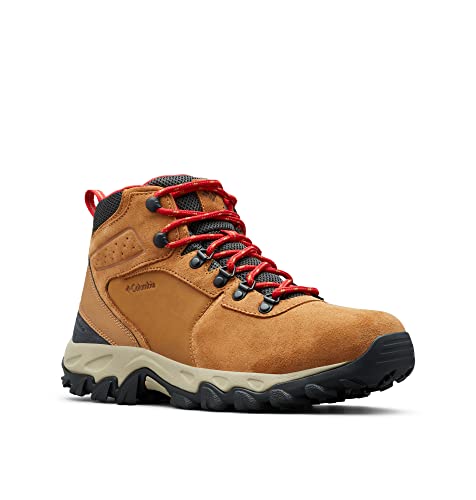
The Columbia Women's Newton Ridge Plus Waterproof Amped is a mid-cut hiking boot engineered for day hikers, outdoor walkers, and weekend adventurers who need dependable trail traction and weather defense. Built with classic mountaineering style cues in a women's size 8 Stratus and Canyon Rose colorway, this boot targets hikers seeking reliable foot support without excess bulk on established trails, forest paths, and mixed outdoor terrain.
On the trail, the boot relies on Columbia's TECHLITE lightweight midsole to deliver sustained cushioning and high energy return across hours of walking. Underneath, the signature Omni-GRIP non-marking rubber outsole provides traction across a wide variety of terrain, making it suitable for loose gravel, packed dirt, slick roots, and rocky inclines throughout spring, summer, and fall.
Construction highlights include a waterproof combination of supportive leather and suede paired with seam-sealed craftsmanship to lock out moisture from wet grass, shallow puddles, and unexpected rainfall. Durability is further reinforced at key wear points with dedicated toe and heel barriers, as well as an extended outsole toe overwrap designed to protect the front of the boot against scrapes and rocks over extended use.
The traditional mid-cut lace-up setup allows hikers to customize tension across the instep and collar for a stable, secure fit around the ankle. For ongoing maintenance, wiping away caked mud with a damp cloth, gently brushing the suede sections, and letting the boots air dry at room temperature helps preserve the upper materials and waterproofing performance between outings.
While the seam-sealed design provides solid moisture protection on damp trails, this boot is specifically rated for three-season use and is not built for deep winter snow or mountaineering crampon compatibility. Additionally, hikers who tackle very warm summer trails in dry climates may find the leather and suede construction holds more heat than lightweight, mesh-heavy low-cut trail running alternatives.
For hikers seeking a sturdy, comfortable waterproof trail boot with solid grip and proven protective overlays, the Columbia Newton Ridge Plus Waterproof Amped delivers excellent practical value. It serves as a dependable choice for day hikes, state park loops, and general outdoor recreation where ankle support, traction, and dry feet are top priorities.
The Columbia Newton Ridge Plus Waterproof Amped combines supportive leather and suede panels to create an abrasion-resistant outer shell. Seam-sealed construction works directly with the treated upper materials to prevent water from penetrating through needle holes and panel joints during wet conditions.
High-wear areas receive dedicated reinforcement, including heavy-duty toe and heel barriers. An extended rubber overwrap from the Omni-GRIP outsole shields the front toe box against impact from trail obstacles, extending the functional lifespan of the boot across seasons of trail use.
This boot is well suited for day hikers navigating variable trails where changing weather and uneven footing are common. The mid-cut height provides supportive coverage around the ankle joint, which helps manage balance over rocky stretches and uneven dirt trails.
Underfoot cushioning from the TECHLITE midsole reduces ground impact during longer day treks, while the Omni-GRIP rubber tread maintains reliable footing on dry switchbacks, damp leaves, and loose gravel paths without marking indoor surfaces at the trailhead.
Routine care for the leather and suede upper begins with removing dried mud and dust using a soft-bristle brush after every trail outing. Spot cleaning with cool water and a mild soap helps preserve the appearance of the Stratus and Canyon Rose colorway without damaging the material structure.
Always allow the boots to dry naturally at room temperature away from campfires, radiators, or direct high heat, as excessive heat can dry out leather and compromise seam adhesives. Occasional treatment with a water-repellent spray designed for suede and leather can help maintain outer water bead performance.
Understanding Mid Hiking Boots and Trail Performance
A mid hiking boot is defined by its collar height, which rises just above the ankle joint to cradle the malleolus bones. This cut bridges the gap between low trail shoes below the ankle and tall backpacking boots encasing the calf. By resting right at the ankle line, mid hikers shield against trail debris while offering moderate lateral joint bracing. Footwear designers engineer these boots for practical foot protection and weather resistance without the heavy stiffness of mountaineering footwear.
Anatomical Collar Height and Malleolar Coverage
The defining feature of a mid-cut silhouette lies in how the padded collar wraps around the lateral and medial malleolus. Low-cut footwear leaves these delicate bony protrusions exposed to scrapes from loose stones, jagged roots, and scrub. In contrast, the padded perimeter of a mid boot acts as an impact buffer that cushions the joint against direct abrasions. This raised collar also prevents dirt, sand, and small pebbles from slipping past your socks into the footbed.
Ankle stabilization in a mid boot works through sensory proprioception rather than acting like a rigid medical cast. The padded collar provides tactile feedback as your foot rolls across uneven granite or sloping ground. When your ankle tilts unexpectedly, the collar presses gently against your lower leg to prompt your stabilizer muscles to self-correct. This dynamic feedback helps reduce the risk of common trail sprains without locking the joint into an unnatural, stiff position.
Natural stride flexibility is usually preserved through an ergonomic contour known as the Achilles notch. This scoop at the rear of the collar prevents the upper rim from digging into your tendon during steep uphill climbs. Tall backpacking boots can restrict forward articulation, which increases calf fatigue over rolling trail terrain. A well-designed mid boot maintains fluid walking mechanics while keeping your heel centered securely over the sole platform.
Torsional Rigidity and Internal Chassis Mechanics
Underfoot stability on rugged trails depends far more on internal chassis stiffness than on upper collar height alone. Torsional rigidity measures how firmly the sole platform resists twisting along its length when stepping on angled rocks. Mid hiking boots often incorporate internal shanks made from molded thermoplastic polyurethane, hardened nylon, or lightweight composite materials. These internal plates sit between the midsole and outsole, stopping sharp rocks from twisting your foot sideways.
A supportive chassis also helps prevent plantar fascia strain over long days on rocky singletracks. Stepping repeatedly on uneven gravel forces the arch muscles in your foot to work overtime to keep your balance. The internal shank distributes body weight across the entire platform, creating a stable foundation with every step. This structural reinforcement prevents painful underfoot stone bruising and promotes efficient forward momentum across rocky ground.
Molded heel counters work alongside the internal shank to lock the rear of the foot in position. These semi-rigid cups surround the calcaneus bone, preventing lateral shifting that causes friction hot spots and blisters. When footwear secures the heel pocket properly, your foot moves in harmony with the boot rather than sliding inside. Mid hikers balance this rearfoot control with a flexible forefoot break that allows natural toe splay during push-off.
Upper Materials, Leather, and Waterproof Liners
Upper construction in mid hiking boots determines durability, breathability, and how quickly the footwear adapts to your foot shape. Many versatile designs, such as the Columbia Womens Newton Ridge Plus Waterproof, combine supportive waterproof leather with supple suede overlays. Leather provides tough abrasion resistance against sharp trail hazards, while suede sections cut down overall boot weight. This combination softens the break-in period compared to rigid full-grain backpacking boots.
Waterproof protection in mid-cut boots relies on internal membrane booties paired with seam-sealed exterior stitching. These microscopic membranes feature tiny pores that block exterior liquid droplets while permitting internal sweat vapor to escape. The tongue plays a central role in moisture defense through integrated side bellows that connect directly to the upper. These gussets prevent water and slush from entering through the lacing eyelets during shallow stream crossings.
Knowing the water entry height of your boot helps prevent soaked socks in wet backcountry conditions. Because mid collars sit lower than tall boots, the maximum wading depth is determined by the top edge of the tongue bellows. Stepping into creek water that rises above this gusset line causes water to overtop into the interior. Once flooded inside, waterproof linings take longer to air-dry, making careful step placement essential near deep water.
Midsole Cushioning and Outsole Traction Dynamics
The midsole layer serves as the primary shock absorber between your body and hard trail surfaces. Mid hikers often utilize lightweight compounds like compression-molded EVA or proprietary foams such as Columbia TECHLITE cushioning. These specialized midsoles absorb vertical impact forces when your heel strikes hard-packed dirt or stone slabs. By dissipating trail shock, the responsive foam helps relieve cumulative stress across your ankles, knees, and hips.
Outsole rubber compounds determine how securely your boots grip wet granite, greasy roots, and loose scree. Outsoles like Omni-GRIP feature multi-directional lug patterns engineered to bite into soft mud while shedding debris as the sole flexes. Perimeter lugs are spaced widely to promote self-cleaning, preventing mud buildup from reducing traction. Under the heel, directional braking lugs face backward to give you reliable stopping power on steep downhill trails.
Protective rubber overlays around the perimeter shield high-wear zones against premature trail abrasion. Manufacturers frequently wrap extended rubber toe bumpers over the front of the boot to protect against rock collisions. Heel barriers also receive reinforced wraps to preserve the structural stability of the rear chassis over extended seasons. These reinforcements prevent seam delamination where the flexible upper material bonds to the rigid rubber outsole.
Pack Load Capacity and Weight Considerations
Choosing mid-cut footwear depends heavily on the gear weight you carry on your adventures. Mid hiking boots are optimized for day trips and weekend outings where pack weights stay under thirty pounds. If you plan an extended backcountry trek requiring an iron frame hiking backpack loaded with heavy camp gear, a stiffer high-cut boot may provide better support. Mid hikers shine during moderate outings where agile movement matters more than heavy-duty load carriage.
Weight on your feet consumes significantly more energy than weight carried directly on your back. Heavy leather boots weighing over four pounds per pair force your leg muscles to work harder with every stride. Mid boots trim away several inches of dense leather and metal hardware to lighten the load on your feet. This weight savings reduces fatigue in your hips and calves, letting you maintain a steady pace across long trail miles.
Terrain difficulty also helps determine whether a mid-cut profile offers enough protection for your plans. Groomed forest singletracks, rolling dirt paths, and moderate switchbacks are ideal for the lighter build of mid boots. Navigating off-trail talus fields, alpine scree, or dense underbrush might expose bare lower shins to sharp scrapes. Matching your boot shaft height to the ruggedness of your trail prevents painful contact with trail debris.
Biomechanics, Downhill Descents, and Joint Protection
Steep downhill descents place intense mechanical stress on your toes, ankles, and knee joints. When walking down steep slopes, gravity pushes your body forward into the front of your footwear. Pairing mid boots with tendon knee hiking pants helps support leg mobility while your joints absorb repeated descent impacts. Without proper heel lockdown inside the boot, your toes slam against the front toe cap, causing painful bruising and black toenails.
Mid hiking boots help prevent downhill toe collisions by using ankle-level eyelets that anchor the instep securely. Lacing firmly across the midfoot holds your heel back into the counter before your foot can slide forward on declines. Low-cut shoes lack this upper lacing leverage, often allowing excess forward slippage on steep terrain. By locking the calcaneus firmly in place, a mid boot keeps your toes from jamming into the front bumper.
Joint stabilization on uneven ground also relies on how the padded collar interacts with side-to-side foot movement. When you step across off-camber bedrock, the collar distributes pressure across a wider surface area of the ankle. This distributed support reduces focal tension on the lateral ankle ligaments during awkward foot placements. The reassuring resistance from the collar encourages deliberate foot placement across slippery roots and wet granite.
Boot Fitting, Volume Management, and Lacing Adjustments
Achieving a secure fit requires accounting for natural foot swelling over long hours on the trail. Feet naturally expand by half a size during sustained hiking due to increased circulation and impact pressure. It is best to try on boots late in the day while wearing the hiking socks you intend to use on the trail. A simple finger-width test behind your heel with toes pushed forward unlaced confirms adequate interior length.
Lacing adjustments allow hikers to customize internal boot volume for wide forefeet or high insteps. If you feel pinching along the top of your foot, a window lacing pattern can bypass painful eyelets to relieve pressure. Hikers dealing with persistent heel slippage can tie a surgeon’s knot above the instep to lock lower lace tension before securing collar hooks. This customized lacing keeps your heel anchored without cutting off circulation to your toes.
Aftermarket insoles can further improve mid boot comfort for hikers needing extra arch support or relief from plantar fasciitis. Standard factory footbeds are often thin foam liners that provide minimal arch structure under load. Installing supportive orthotic insoles aligns your foot bones, preventing arch collapse under the weight of your pack. This improved alignment seats the heel firmly in the rear cup, minimizing friction that leads to blisters.
Maintenance, Cleaning, and Preserving Trail Longevity
Routine cleaning preserves both breathability and leather durability in your mid hiking boots. Dried trail mud acts like a desiccant that pulls natural oils from leather, leading to cracking along flex lines. After muddy hikes, scrub off grime using a soft nylon brush and clean lukewarm water. Avoid harsh household detergents that break down factory water-repellent treatments and dry out natural leather fibers.
Drying wet hiking footwear properly requires gentle room-temperature air rather than intense heat. Never dry wet boots near open campfires, wood stoves, or household heating vents. Excessive radiant heat hardens leather uppers and can melt the adhesives bonding the outsole to the cushioned midsole. Instead, pull out the insoles, loosen the laces, and let your boots air-dry naturally in a shaded, well-ventilated space.
Restoring the durable water repellent finish keeps moisture beading on the surface rather than soaking into the leather. When uppers become saturated, the leather wets out and blocks internal sweat vapor from escaping through the waterproof membrane. Spraying a water-based reproofing treatment onto damp uppers rebuilds surface tension without harming internal breathability. Regular conditioning keeps leather panels supple, preventing collar stiffness and extending the usable lifespan of your boots.
Matching Mid Boots to Your Personal Trail Goals
Mid hiking boots offer a practical balance of weight, ankle security, and underfoot stability for outdoor enthusiasts. They provide dependable protection against trail debris while keeping your stride light and agile on varied terrain. For day hikers, weekend campers, and light backpackers, mid-cut boots deliver the comfort and traction needed for rugged paths. Selecting the right fit, dialing in your lacing, and maintaining the uppers ensures many comfortable miles on the trail.



Write Your Review
No reviews yet. Be the first to share your experience!