


Steep alpine descents and loose gravel switchbacks place immense repetitive strain on the lower body, turning an enjoyable mountain outing into an exercise in joint preservation. Hikers often question what are trekking poles for when preparing their kits, especially if they are accustomed to walking unassisted on smooth recreational paths. In simple terms, these adjustable trail sticks serve as an active extension of your upper body, transferring downward body weight and pack inertia directly into your arms and core. When integrated into your standard backcountry gear checklist, trekking poles transform two-legged balance into a four-point stability system that stabilizes ankles, relieves patellofemoral knee pressure, and provides crucial rhythm across technical terrain.
Beyond basic balance, modern trail poles provide functional utility that extends across multiple outdoor disciplines and shelter setups. Premium models constructed from carbon fiber or hardened aluminum alloys dampen sharp trail vibrations before that energy reaches your forearms and wrists. Ergonomic handles made from natural cork or high-density foam wick moisture to prevent friction blisters during high-mileage days in summer heat. Whether you are probing river depths during a swift stream crossing, navigating slippery mud, or pitching an ultralight tarp at camp, understanding their core mechanical purpose helps you choose the right setup for your specific trail goals.


The Biomechanical and Practical Roles of Trekking Poles on the Trail
At their core, trekking poles exist to redistribute kinetic energy and mechanical strain from lower-body joints to the upper body. Walking across uneven outdoor terrain forces your knees, ankles, and lumbar spine to absorb continuous concussive impacts, especially when carrying a heavy backpack. By establishing two additional ground contact points, hiking sticks create a balanced four-point gait that improves stability, preserves momentum, and reduces cumulative fatigue. Understanding their functional engineering helps outdoor enthusiasts determine whether dual poles, a single walking staff, or specialized pole hardware best suit their hiking style.
Offloading Joint Impact and Preserving Lower-Body Musculature
Descending steep mountain switchbacks creates intense compressive force across the patellofemoral joint and surrounding cartilage. Every downward step requires the quadriceps to contract eccentrically to slow body mass, which rapidly exhausts leg muscles and increases tripping hazards. When you plant poles slightly ahead of your lead foot, your arms, shoulders, and chest absorb a substantial portion of that downward kinetic load. This continuous load transfer significantly cushions joint impact, allowing hikers with previous knee injuries or joint stiffness to descend technical gradients with greater control.
The mechanical advantages are equally evident during sustained uphill climbs where vertical propulsion demands heavy cardiovascular output. Planting poles behind your stride allows the triceps, shoulders, and latissimus dorsi to assist your calves and hamstrings with forward propulsion. This upper-body contribution spreads muscular work across the entire skeletal frame rather than isolating exertion in the legs. Over high-mileage trail days, this balanced kinetic distribution prevents early muscle burnout, curbs lactic acid accumulation, and helps you sustain a steady ascending rhythm.
Establishing Four-Point Stability on Technical Terrain
Navigating loose scree, wet roots, and slick mud requires rapid micro-adjustments in foot placement to avoid slips. Relying strictly on two footwear lugs leaves little room for error if loose gravel shifts beneath your boot. Trekking poles create an active wide-stance platform, ensuring that at least one upper-body contact point remains planted while your feet advance. This dynamic four-point base gives hikers reliable stability when traversing off-camber paths, narrow ledges, or slick boulder fields.
Swift river crossings represent another critical environment where hiking poles become indispensable safety gear. Moving river currents exert persistent lateral force against your legs, making it difficult to judge submerged depth or maintain balance on slick stones. Planting two poles upstream creates a wide, unyielding tripod that braces your core against the current. This technique allows you to probe submerged riverbeds, test rock stability, and confirm solid footing before committing your full body weight to the next step.
Comparing Shaft Materials: Carbon Fiber, Aluminum, and Hardwood
The structural material of a pole shaft dictates its weight, vibration dampening, and failure behavior under sudden stress. Ultralight carbon fiber poles, such as the Outsura Carbon Fiber Hiking Stick 2 Pack, weigh approximately 7.4 ounces per pole and provide natural shock absorption. Carbon composite construction dampens the harsh trail buzz generated when metal tips strike granite, sparing your elbows and wrists from jarring micro-vibrations. However, carbon fiber shafts can experience brittle shear failure if wedged between rocks under sudden lateral leverage, requiring careful awareness in jagged talus fields.
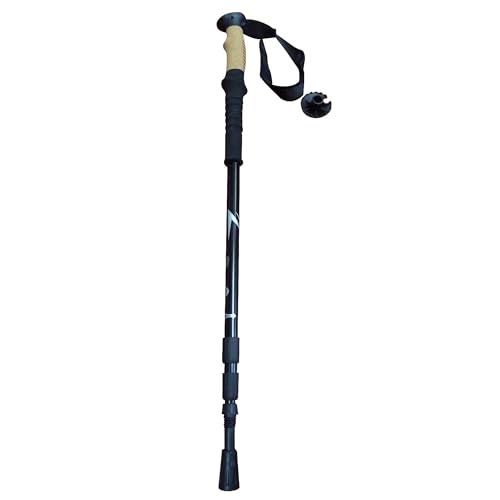
Hardened aluminum alloys provide exceptional structural resilience for backpackers who prioritize rugged durability over featherweight specs. Options like the Yard Tuff Adjustable Walking Sticks for Hiking utilize lightweight aluminum shafts capable of absorbing heavy vertical loads on rugged mountain trails. Unlike carbon fiber, aluminum tends to bend rather than snap when subjected to severe lateral stress, often allowing hikers to carefully straighten a bent section in the field. Aluminum shafts remain the dependable standard for rough four-season routes, winter snowshoeing, and heavy load-hauling expeditions.
Traditional hardwood walking staffs offer a solid, unyielding alternative favored by day hikers, foragers, and woodland walkers. Handcrafted models like the Hickory Hollow, Rustick Style Handcrafted Wood stick and the Vive Wooden Walking Stick – (55″) willow cane deliver sturdy single-point support with natural rustic character. While rigid wood lacks the telescoping packability and dual-pole propulsion of composite models, its solid mass provides dependable balance and weight-bearing confidence. A classic hardwood staff excels on rolling trails, nature walks, and gentle gravel paths where simple, reliable upright stability is the primary objective.
Locking Mechanisms and Secure Height Adjustability
Telescoping poles rely on secure locking mechanisms to prevent shaft sections from collapsing under sudden downward force. External lever locks clamp tightly around overlapping shaft collars, allowing smooth height adjustments from compact collapsed lengths around 25.5 inches up to 53 or 54 inches. External cam levers are easy to operate in cold weather while wearing thick gloves, making them superior to internal twist expanders that can jam from trail dust. A reliable locking system ensures your poles maintain fixed height throughout long trail descents without slipping.
Maintaining proper clamping tension is essential to prevent unexpected slippage when placing full weight on your poles. If a cam lever feels loose, the shaft can slide downward under load, causing a sudden loss of balance. Most modern cam assemblies feature a knurled thumb dial that lets you fine-tune clamping pressure without requiring tools. To set optimal tension, open the lever clamp, turn the thumb dial clockwise slightly, and close the lever until moderate resistance is felt against your palm. Always press downward firmly on both poles before descending to verify the locks hold securely.
Mechanical anti-shock systems provide an additional layer of impact reduction for hikers with chronic joint pain. Telescoping designs like the Yard Tuff walking sticks incorporate internal spring mechanisms that compress slightly upon ground strike, dampening harsh shocks on rocky trails. While internal springs add a small amount of weight, many hikers appreciate the mechanical suspension when carrying loaded packs downhill. Keeping internal spring assemblies clean and dry prevents trail grit from causing unwanted friction, squeaking, or reduced travel over extended use.
Grip Ergonomics, Extended Choke Sleeves, and Wrist Straps
The grip material of a trekking pole directly influences hand comfort, friction management, and blister prevention. Natural cork handles, featured on the Outsura and Yard Tuff models, excel in warm weather by wicking palm perspiration and molding to your hand over time. Cork stays comfortable in summer heat, reducing the slickness that causes friction hot spots during long afternoon treks. Meanwhile, high-density EVA foam grips offer soft cushioning, and textured rubber handles provide insulating grip in cold alpine conditions.
Extended grip sleeves positioned beneath the main handle provide immediate ergonomic versatility when hiking across steep switchbacks. When contouring across a slope, the uphill trail sits higher than the downhill side, creating an awkward stance if both poles remain the same length. Instead of stopping to adjust telescoping clamps, you can simply choke up on the lower EVA foam sleeve of the uphill pole. This quick grip change keeps your shoulders level and your posture upright, saving energy without interrupting your hiking cadence.
Proper wrist strap technique is equally important for maximizing energy transfer and preventing forearm strain. Many hikers mistakenly hold the handle without utilizing the strap, forcing their fingers to maintain a continuous grip all day. The correct approach requires passing your hand up through the bottom of the strap loop before gripping the handle. This allows the padded strap to support your wrist, letting you push downward through the strap webbing rather than overworking your hand with a tiring death grip.
Modular Trail Hardware: Tips, Baskets, and Protective Caps
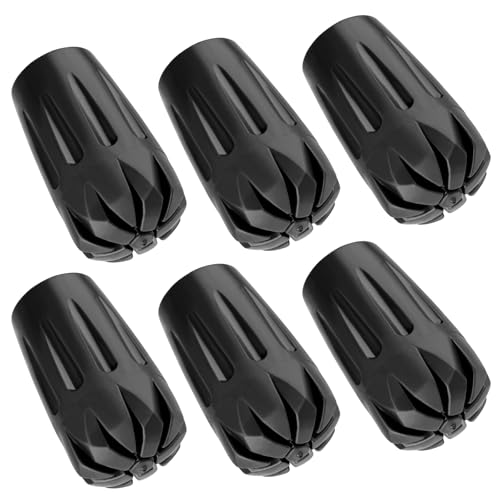
The ground interface of a hiking stick utilizes specialized hardware tailored for specific trail conditions. Pointed tungsten carbide tips provide biting traction on hard-packed dirt, wet granite, and icy trail patches. The hardness of carbide ensures long-lasting grip where rubber soles might slide. When walking on paved road connectors or sensitive rocky areas where carbide could leave scratches or make loud clicking sounds, hikers attach slip-resistant rubber boot tips to muffle noise and improve surface grip.
Interchangeable baskets prevent pole tips from sinking excessively into soft trail terrain. Compact mud discs stop shafts from burying themselves in soggy soil without catching on low shrubs or trail debris. Wide powder snow baskets, on the other hand, provide flotation when snowshoeing through deep winter drifts. Selecting the correct basket size prevents pole tips from wedging between narrow rock fissures, protecting composite and aluminum shafts from damaging lateral stress.
Protective accessory caps also serve useful secondary roles during camp pitching and equipment transport. Universal end covers, such as the BESPORTBLE 8 Pcs Tent Pole Cap Tent Pole End Cover, fit over sharp tips to shield delicate pack fabrics and car trunks from accidental punctures. These durable rubber caps also allow poles to support lightweight tarp canopies without tearing thin silnylon fabric, making them handy multi-use accessories for backcountry shelters and gear protection.
Shelter Pitching and Multipurpose Backcountry Utility
In ultralight backpacking, trekking poles frequently double as primary structural supports for non-freestanding tents and tarps. Modern shelters eliminate heavy aluminum tent poles by using inverted trekking poles set to specific peak heights between 115 and 135 centimeters. This dual-purpose setup cuts noticeable base weight from your pack because daytime hiking poles become nighttime shelter framing. Reliable lever locks ensure the poles hold their adjusted height overnight, keeping tent walls taut against gusting winds and rainfall.
Beyond pitching shelters, hiking poles provide practical utility for camp chores and emergency gear fixes. Hikers often use rigid poles to prop up washing lines, hoist food bags out of animal reach, or splint injured limbs in wilderness first-aid scenarios. When repairing structural components or fabricating custom lightweight camp projects, materials like M METERXITY 12-Pack Carbon Fiber Rods illustrate the high specific strength of composite shafts in outdoor crafting. Having rigid, durable poles on hand expands your problem-solving options across remote backcountry environments.
Pack Stowing, Travel Rules, and Routine Maintenance
Transporting your poles efficiently is essential when transitioning from walking paths to hands-on rock scrambles. Collapsing your poles down to their compact 25.5-inch profile allows you to lash them securely to pack side straps or tool loops. This method is similar to the care taken when securing gear to pack straps, keeping equipment close to your center of gravity so it does not snag on low branches. Note that commercial airline rules generally forbid sharp carbide tips in carry-on bags, so always stow poles inside checked luggage when flying to trail destinations.
Simple post-hike maintenance keeps your locking collars and telescoping shafts operating smoothly over many seasons. After wet or muddy outings, pull the shaft sections apart completely and wipe away grit and moisture with a clean cloth. Storing damp aluminum poles while fully assembled can lead to internal oxidation that seizes the sections together. Never apply grease, oil, or WD-40 inside the shaft tubes, because lubricants eliminate the surface friction required for external lever clamps to hold vertical weight securely.
Matching your pole configuration to your specific trail goals ensures you gain the greatest biomechanical and stability advantages on the trail. Whether you prefer ultralight carbon fiber poles for long-distance backpacking, durable aluminum sticks with anti-shock springs for rocky descents, or a classic wooden walking staff for local nature paths, these tools provide measurable support. By cushioning knee joints, stabilizing footing across slick terrain, and sharing exertion across your upper body, trekking poles help you hike longer with enhanced confidence and reduced fatigue.






Write Your Review
No reviews yet. Be the first to share your experience!