


Steep descents with a heavy load can punish knee joints, ankles, and lower back muscles within just a few trail miles. Navigating uneven terrain requires thoughtful preparation and gear selection so you remain balanced, comfortable, and self-sufficient in remote wilderness areas. Understanding what equipment is needed for trekking allows outdoor enthusiasts to distinguish between non-negotiable wilderness essentials and unnecessary dead weight. Carrying durable trekking poles, dependable footwear, and a well-fitted frame hiking backpack transforms grueling alpine elevation gains into controlled, sustainable miles.
Long-distance wilderness trekking introduces shifting alpine weather, unexpected route detours, and rigorous physical demands that standard day hikes rarely present. A well-curated backcountry kit combines structural load support, reliable sleep insulation, modular weatherproofing, and purposeful hydration systems. Dialing in your loadout protects against sudden hypothermia, blisters, and joint fatigue while keeping overall pack weight manageable. When each piece of gear serves a vital purpose on the trail, you can focus on navigation and remote scenery with total confidence.

Pros
- Tensioned AirSpeed backpanel allows cooling airflow across the back and adjusts easily across torso sizes.
- LightWire frame effectively routes heavy trail gear weight down into the hipbelt.
- Includes a removable raincover, saving money and hassle on aftermarket weather gear.
- Dedicated bottom sleeping bag compartment keeps bulky camp bedding accessible.
- Straightforward design achieves a low 3.7-pound empty weight for a high-capacity 65L pack.
Cons
- Streamlined pocket layout offers fewer exterior zippered organization pouches than heavier multi-pocket packs.
- The 65-liter volume may be larger than necessary for minimalist summer weekend overnighters.
- Exact numerical torso and hipbelt circumference ranges are not listed in the standard specs, requiring careful fitting.
The Osprey Rook 65 is an internal-frame backpacking pack built for multi-day trekkers, weekend backpackers, and campers who need substantial volume without complicated bells and whistles. Designed around a lightweight frame and a ventilated backpanel, this pack suits hikers who prioritize reliable load transfer, straightforward organization, and built-in weather protection. Its 65-liter capacity provides ample room for carrying standard tents, sleeping bags, and multiple days of food on backcountry routes.
Trail comfort depends heavily on proper weight distribution, and the Rook 65 manages gear weight through its LightWire frame and adjustable AirSpeed suspension. The tensioned mesh backpanel creates a ventilated gap between the user and the main pack body to help reduce sweat buildup on warm trail days. Because the backpanel can be adjusted to accommodate a variety of torso lengths, users can position the shoulder harness and hipbelt properly so the frame can transfer heavy cargo loads off the shoulders and directly onto the hips.
The build emphasizes practical durability with a focused feature set that keeps the empty pack weight down to 3.7 pounds. The pack structure is supported by the perimeter LightWire alloy frame, while the exterior incorporates an integrated, removable raincover stored in a dedicated pocket for unexpected storms. A lower zippered sleeping bag compartment with a floating divider allows hikers to isolate their sleep system from damp trail items, and Daylite accessory integration gives users the option to attach a compatible smaller daypack to the exterior.
Adjusting the Rook 65 is intuitive thanks to its sliding backpanel harness mechanism, allowing quick fine-tuning before setting out on the trail. Packing the 29.5 x 15 x 16.1-inch chassis is simple due to the spacious main cavity, while the lower zip entrance provides quick access to a sleeping bag when pitching camp in the dark. For regular upkeep, the pack is best cleaned by wiping down the fabric with mild soap and lukewarm water, followed by air drying away from direct sunlight before long-term storage.
Hikers considering this pack should keep a few design trade-offs in mind. While the 65-liter volume handles bulky gear effortlessly, minimalists heading out for fast-and-light overnight trips may find the pack body too cavernous. Additionally, the Rook lineup opts for a simplified exterior pocket layout, meaning hikers who prefer numerous external zippered organizer sleeves may need to utilize accessory packing cubes or pouches to sort small essentials.
For backpackers who want a reputable, well-ventilated, 65-liter trail pack that balances load support with a reasonable 3.7-pound weight, the Osprey Rook 65 represents a dependable, high-value investment. Its combination of adjustable suspension, LightWire load transfer, and an included raincover delivers the essentials needed for reliable multi-day backcountry travel.
The Osprey Rook 65 utilizes an AirSpeed suspension system designed around a perimeter LightWire frame. This internal frame effectively routes the carried weight from the shoulders down to the padded hipbelt, which helps stabilize heavy trail loads during long ascents.
The tensioned backpanel provides a suspended mesh surface that keeps the pack body separated from the hiker's back. This design encourages open airflow to reduce perspiration during warm-weather hikes, while the adjustable torso setup allows hikers to modify the harness height to match their spine length.
With 65 liters of total capacity and overall dimensions of 29.5 x 15 x 16.1 inches, the Rook 65 provides a generous interior volume suitable for multi-day backcountry trips. It easily holds a multi-piece shelter, warm insulation layers, cooking gear, and a bear canister or food bag.
Organization is streamlined via a dedicated lower sleeping bag compartment equipped with a floating divider. This divider can be adjusted or loosened depending on how gear is arranged inside the main compartment, while external attachment points offer Daylite pack compatibility for modular day-trip expansion.
The Osprey Rook 65 comes equipped with an integrated, removable raincover that stows away inside its own dedicated zippered pocket. This feature ensures immediate weather protection without requiring the separate purchase of an aftermarket pack cover.
When rain sets in on the trail, the cover deploys quickly around the pack perimeter to shield the main fabric and contents from sudden downpours. While raincovers help shed direct precipitation, sensitive electronics and sleeping gear should still be sealed in dry bags during prolonged torrential rain.
A Practical Framework for Trekking Gear and Trail Systems
Determining what equipment is needed for trekking requires looking at wilderness travel through integrated systems rather than an unorganized checklist of individual items. Backcountry routes place continuous physical demands on your body, demanding gear that provides reliable thermal protection, efficient load carriage, and predictable durability. Every piece of equipment you pack must justify its weight while supporting critical functions like joint preservation, hydration, shelter, and bodily safety. Approaching your gear selection as a cohesive unit ensures you carry everything necessary without burdening your joints under excessive pack volume.
The Core Wilderness Systems Architecture
Wilderness trekking differs from casual day walking because you must carry complete self-sufficiency across multiple days. The traditional framework organizes equipment into functional pillars, including load carriage, shelter, sleep insulation, route navigation, hydration, trail nutrition, and active apparel. When any single system fails, the physical strain and safety risks compound rapidly across remote miles. Approaching your loadout through these structured pillars allows you to identify critical equipment dependencies and eliminate redundant items before starting.
Balancing gear weight against structural durability represents the central design challenge for any remote mountain trek. Ultra-minimalist gear can significantly reduce trail fatigue, but excessively fragile components risk sudden mechanical failure against abrasive granite. Selecting robust hardware with serviceable parts ensures you can execute field repairs instead of facing an emergency evacuation miles from the nearest road. A successful backcountry gear plan prioritizes dependable function, ergonomic fit, and weather versatility across every single item.
Structural Load Transfer: Backpack Suspension and Sizing
A multi-day trek requires a dedicated load-hauling pack engineered to shift heavy gear weight away from your shoulders and onto the pelvic girdle. The Osprey Rook 65L Men’s Backpacking Backpack accomplishes this by utilizing an integrated LightWire peripheral frame that efficiently transfers pack weight directly down to a wide hipbelt. At an item weight of 3.7 pounds with dimensions of 29.5 inches high by 15 inches wide and 16.1 inches deep, this pack provides ample volume for extended itineraries. A floating divider inside the dedicated sleeping bag compartment allows hikers to separate bulky evening insulation from denser trail items.
Backpack ventilation plays a major role in thermal regulation and endurance over long, warm trail segments. The adjustable AirSpeed suspension system on the Osprey Rook 65L Men’s Backpacking Backpack creates an open airspace between your back and the pack body to promote convective airflow. Torso length adjustability allows backpackers to align the harness precisely with their spine measurements, preventing painful pressure points across the shoulders. Compatibility with the Daylite series offers modular flexibility, while an integrated raincover stored in its own pocket provides instant defense against sudden alpine rain.
Trekking Poles: Biomechanical Joint Preservation and Stability
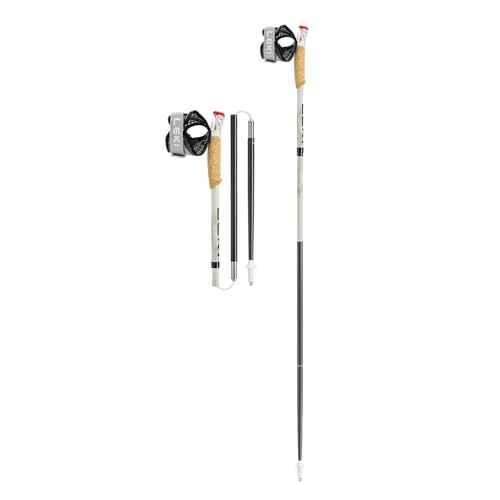
Trekking poles alter trail biomechanics by distributing downhill impact force away from the lower body. Planting poles on steep descents offloads substantial cumulative pressure from the patellofemoral knee joints, quadriceps, and lumbar vertebrae. In addition to joint relief, poles establish third and fourth points of ground contact, improving balance across slippery river stones and loose scree. Setting proper pole height requires adjusting each shaft until your elbow forms a clean 90-degree angle when standing on flat ground.
Shaft metallurgy represents a crucial choice between fracture resistance and minimal swing weight during long backcountry days. Shafts manufactured from 7075-T6 aircraft-grade aluminum bend under heavy lateral stress rather than shattering suddenly, allowing hikers to gently straighten the metal in the field. High-modulus carbon fiber shafts offer superior vibration dampening and noticeably lighter swing weight, reducing forearm fatigue over high-mileage days. However, carbon fiber exhibits brittle failure characteristics when wedged into deep rock crevices under sudden lateral loads, demanding vigilance in technical boulder fields.
Locking mechanisms secure the telescoping shaft sections and prevent slippage when you place full upper-body weight onto the poles during a steep drop. External cam lever locks constructed from aluminum or composite provide reliable clamping power that can be easily calibrated in the field with a knurled thumb screw. Internal twist expander locks provide a sleek profile, but they are vulnerable to slipping when trail silt or freezing condensation coats the internal threads. Prioritizing durable lever locks ensures you can operate the clamps with heavy gloves and confirm the mechanism is closed before descending.
Grip material directly influences long-term comfort, hand blistering, and perspiration management across grueling elevation profiles. Natural cork grips gradually mold to the user’s hand while naturally wicking away palm sweat, lowering the incidence of friction hot spots. Closed-cell EVA foam grips provide soft comfort and perform exceptionally well in freezing conditions because the material resists water saturation. Extended choke-up foam sleeves positioned directly below the handle allow hikers to shorten their hand position instantly when traversing steep sidehills without readjusting the locks.
Backcountry Sleep Systems and Thermal Management
Restorative sleep in the backcountry is essential for physical recovery and sustaining daily trail mileage. A complete sleep system pairs a thermally rated sleeping bag with an insulated sleeping pad that stops conductive heat loss into the ground. Sleeping pads utilize standardized ASTM R-values to quantify thermal resistance, where values between 3.0 and 4.5 are ideal for three-season trekking. Relying on an uninsulated summer air mattress in cold mountain environments drains body heat rapidly, regardless of how warm your sleeping bag insulation may be.
Choosing between down and synthetic insulation depends heavily on your typical trail humidity and expected weather patterns. High-fill-power down offers an exceptional warmth-to-weight ratio and compresses into a remarkably small package inside your pack’s bottom compartment. Synthetic insulation remains heavier, yet it retains crucial thermal loft and continues trapping warmth even when damp from continuous condensation. Storing your sleeping bag inside a waterproof roll-top dry bag guarantees that your critical nighttime insulation stays completely dry through torrential downpours.
Weather Protection, Layering, and Trail Apparel
Effective backcountry clothing relies on a dynamic three-part layering system designed to manage body heat, moisture vapor, and external weather. The next-to-skin baselayer must feature synthetic polyester or merino wool fibers that rapidly pull perspiration away from the skin to prevent chilling. Cotton apparel must never be taken on a remote trek because cellulose fibers absorb water, cling to skin, and elevate hypothermia risks. Selecting durable lightweight hiking pants provides necessary abrasion resistance against sharp brush while maintaining breathability across strenuous uphill climbs.
Mid-layers supply passive thermal insulation by trapping warm air within high-loft fleece fibers, breathable synthetic batting, or lightweight down jackets. Your exterior shell layer serves as an impenetrable barrier against driving rain, wet snow, and biting alpine wind. High-performance waterproof-breathable membranes feature microscopic pores that block liquid rain while permitting internal moisture vapor to escape during exertion. Mechanical ventilation features like underarm pit zips provide essential temperature dumping on steep ascents, preventing your internal insulating layers from soaking with trapped sweat.
Wilderness Shelter Selection and Dual-Purpose Pitching
A trekking shelter provides life-saving security against severe mountain squalls, insects, and hypothermic moisture accumulation. Freestanding double-wall tents utilize dedicated aluminum pole skeletons that set up rapidly on solid rock surfaces without requiring intricate stake tensioning. Non-freestanding ultralight shelters, by comparison, save substantial pack weight by utilizing your adjustable trekking poles as the primary vertical ridge supports. These dual-purpose pole-supported shelters require rigid shafts set precisely between 115 and 130 centimeters to achieve the correct aerodynamic pitch angle against heavy wind.
Regardless of shelter architecture, staking hardware and seam sealing dictate how well your shelter withstands prolonged mountain storms. Hardened aluminum Y-stakes offer dependable holding power in mixed forest soil and loose gravel compared to fragile wire pegs. Backcountry travelers should always pitch their tent with the lowest aerodynamic profile facing directly into prevailing winds to prevent canopy deformation. Checking that external guyline loops are reinforced and tied off with adjustable friction hitches allows you to re-tension your rainfly as nylon fabrics sag when wet.
Hydration Filtration and Remote Trail Nutrition
Sustaining high physical output across remote trail miles requires continuous hydration and dependable water treatment methods. Natural backcountry water sources frequently harbor microscopic pathogens like Giardia lamblia and Cryptosporidium oocysts that cause debilitating gastrointestinal illness. Hollow-fiber membrane squeeze filters and gravity systems efficiently remove protozoa and bacteria down to 0.1 microns without requiring long chemical wait times. Carrying a secondary backup purification method, such as chlorine dioxide tablets, protects your trip if your primary filter freezes, cracks, or clogs from heavy silt.
Backcountry nutrition must deliver high caloric density, typically aiming for 100 to 130 calories per ounce to keep food weight manageable. A balanced trail diet combines complex carbohydrates for sustained energy, healthy fats for long-burning endurance, and proteins to support muscle repair. Compact canister stoves featuring piezoelectric igniters and lightweight pots allow hikers to rapidly boil water for freeze-dried meals while consuming minimal fuel weight. Packing an odor-resistant storage sack or certified bear canister keeps your food supply secure from opportunistic rodents and large predators.
Wilderness Navigation, Illumination, and Emergency Preparedness
Reliable navigation systems prevent disorienting route deviations that turn an enjoyable backcountry adventure into a hazardous survival scenario. While smartphone GPS mapping applications provide convenient tracking, digital screens remain vulnerable to cold battery drain, moisture damage, and hard drops. Every trekking loadout must include a physical topographic map stored in a waterproof case alongside an oil-filled sighting compass with declination correction. Mastering basic map reading, triangulation, and terrain association ensures you can navigate through heavy fog without relying on fragile battery power.
Modern backcountry safety has also been transformed by two-way satellite communicators that operate entirely independent of terrestrial cellular coverage. These compact devices allow hikers to check in with family, receive real-time weather updates, and trigger emergency SOS transmissions via satellite networks. A reliable rechargeable headlamp producing at least 200 lumens ensures safe route finding during pre-dawn alpine starts or delayed twilight camp setups. Your medical kit should focus heavily on immediate trauma, tick removal, water disinfection backup, and comprehensive blister care supplies like adhesive hydrocolloid bandages.
Pack Volume Optimization, Weight Distribution, and Travel Logistics
Packing your backpack correctly makes a dramatic difference in how heavy gear feels across your hips and shoulders over continuous trail miles. Heavy items like your food cache, cooking fuel, and water bladders must be positioned close to your spine and centered horizontally within the middle of the pack. Placing heavy gear too high makes the load unstable, whereas packing heavy items low down pulls your torso backward and strains the spine. Consulting a carry-on backpack capacity guide helps clarify how volume translates between airline travel limitations and remote trail requirements.
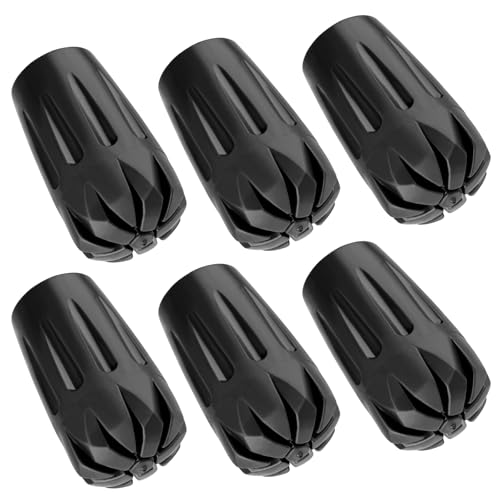
Air travel logistics present specific challenges for outdoor enthusiasts flying to remote trailheads with specialized trekking hardware. Transportation Security Administration regulations and international aviation authorities generally prohibit trekking poles with sharp tungsten carbide tips inside passenger aircraft cabins. Attempting to bring sharp metal hiking poles through security checkpoints often leads to confiscation, requiring travelers to check their equipment inside protective duffels. Packing poles with protective rubber tips installed over the carbide points prevents sharp edges from abrading your pack fabrics or puncturing luggage during transit.
Pre-Trail Equipment Inspection and Load-Testing Verification
Executing a thorough equipment inspection before leaving for the trailhead prevents catastrophic gear failures in remote wilderness areas where replacement parts do not exist. Inspect your trekking pole cam levers to ensure the clamping tension holds firmly when you press down with full upper-body weight onto a bathroom scale. Check the telescoping shaft sections for hairline stress fractures, micro-cracks in carbon fiber weave, or deep aluminum gouges that could cause unexpected buckling under load. Cleaning grit and silt out of lever collars and bare shaft walls restores mechanical friction and guarantees dependable vertical hold across descents.
Similarly, inspect your backpack suspension straps, hipbelt buckles, and shelter seams for fraying threads or mechanical stress before loading full trail weight. Lubricating tent zippers with silicone protectant and testing your canister stove in outdoor temperatures ensures seamless operation once you arrive at your first wilderness camp. Taking the time to dial in your equipment systems before departing ensures safe, comfortable, and self-sufficient trekking through demanding alpine terrain. When your loadout is systematically organized and mechanically sound, you can immerse yourself fully in the transformative beauty of the backcountry.






Write Your Review
No reviews yet. Be the first to share your experience!