


Negotiating steep mountain ascents and technical singletrack demands immense muscular endurance from your lower body. Integrating what is running poles into your trail kit fundamentally shifts the physical equation by distributing physical effort across the upper body while preserving lower-joint integrity on demanding descents. Whether training for an ultramarathon or navigating rugged alpine switchbacks, these purpose-built supports provide reactive points of contact that stabilize your cadence across slick mud, scree, and exposed ridgelines. Runners organizing equipment alongside a multiday backcountry packing guide frequently discover that dedicated running poles offer vastly superior agility compared to traditional heavy trekking staffs.
Modern trail runners prioritize featherweight carbon fiber shafts, rapid-deploy folding designs, and breathable glove systems to sustain uninterrupted momentum. Selecting the right pole architecture prevents forearm fatigue, dampens trail vibrations, and provides reliable downhill braking without adding unnecessary bulk to your hydration vest. By evaluating shaft metallurgy, swing-weight dynamics, and grip ergonomics, you can easily match your gear to the unique demands of technical mountain running.


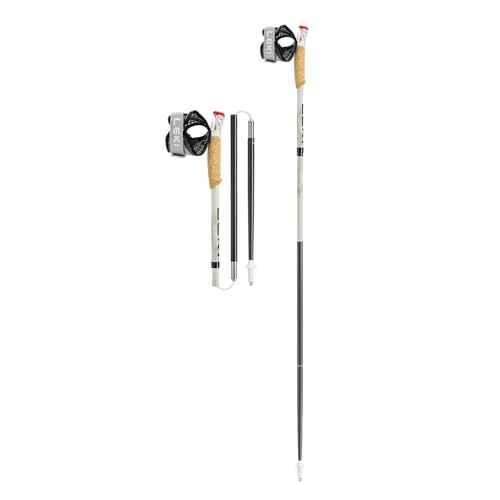


The Engineering and Trail Utility Behind Modern Running Poles
Dedicated running poles are specialized, ultralight mobility tools engineered specifically to meet the high-cadence demands of trail running, skyrunning, and ultramarathon competition. Unlike standard heavy hiking sticks built primarily for slow backpacking under massive pack loads, running poles focus strictly on minimal swing weight, rapid collapse mechanisms, and seamless upper-body power transfer. Understanding how these tools function allows athletes to conserve valuable leg stamina on prolonged climbs and maintain upright postural alignment across technical mountain terrain.
Defining Running Poles: Biomechanics, Uphill Thrust, and Stride Preservation
At their core, running poles operate as mechanical extensions of the upper body that convert arm and shoulder drive into forward propulsion. During steep mountain ascents, a runner’s quadriceps, calves, and Achilles tendons absorb tremendous repetitive strain as they push vertical body weight against gravity. By planting poles in synchrony with leg turnover, athletes offload significant mechanical strain from the lower extremities to the latissimus dorsi, pectorals, and core muscles. This upper-body contribution helps maintain a higher aerobic efficiency and delays the onset of muscular cramping during grueling mountain climbs.
Beyond uphill propulsion, running poles serve as dynamic stabilizers that preserve balance when bounding over technical obstacles like roots, loose shale, and slick mud. Every ground contact delivers sensory feedback that allows runners to adjust their stride before their feet make contact with unstable surfaces. When descending steep switchbacks, poles act as supplementary braking mechanisms that reduce peak impact forces transferred through the patellofemoral joint and hips. This active stabilization prevents ankle rolling and allows athletes to descend technical singletrack with greater speed and control.
Shaft Materials: Carbon Fiber Modulus versus High-Grade Aluminum Alloys
The choice of shaft material defines how a pole responds to physical impact, vibration, and continuous swing cycles. High-end trail models, such as the LEKI Ultratrail FX.One Trekking Poles- Grey Light and the CONTOOSE 100% Carbon Fiber Hiking Pole Collapsible, utilize 100 percent carbon fiber construction to achieve exceptional rigidity while dropping weight down to mere ounces. Carbon composite shafts naturally absorb trail buzz and high-frequency vibrations before the impact reverberates into the runner’s wrists and elbows. However, carbon fiber exhibits brittle failure characteristics when subjected to extreme lateral shear stress, such as when a shaft gets pinned between immovable boulder crevices during a stumble.
In contrast, poles fabricated from heat-treated aluminum alloys, like the LEKI Evotrail FX.One TA Trekking Poles-Black-Dark or the AONIJIE Collapsible Trekking Poles 2-Pack Walking, offer superior ductile strength and impact resilience. Aerospace-grade alloys like 7075 aluminum bend under extreme transverse loads rather than snapping abruptly, allowing runners to potentially bend a warped shaft back into functional alignment to finish an event. Aluminum models typically carry slightly more swing weight than their carbon counterparts, but they deliver dependable durability on jagged scree fields where sharp rock strikes are frequent. Runners balancing pure race-day speed against rough-trail longevity must weigh the dampening benefits of carbon against the forgiving ductility of alloy builds.
Architectural Formats: Fixed-Length Simplicity versus Adjustable Telescoping Sections
Trekking poles traditionally rely on telescoping shaft sections secured by external cam levers or internal twist locks, which allow extensive length customization. While adjustable poles like the ALPIN LOACKER Collapsible Trekking Poles offer useful versatility across changing gradients, dedicated running designs frequently discard adjustability in favor of a fixed-length architecture. Eliminating telescoping clamps and overlap sleeves cuts mechanical hardware, eliminates potential lock slippage under vertical force, and saves vital grams. Models such as the Ultralight Carbon Fiber Trekking Poles highlight how a fixed configuration yields a remarkably solid shaft that eliminates joint wobble during explosive downhill plants.
Fixed-length running poles require precise initial sizing based on user height, because runners cannot shorten them for uphill scrambles or lengthen them for descents. To compensate for this fixed dimension, manufacturers integrate extended handle profiles that allow runners to choke up on steep inclines without stopping. This fixed framework streamlines movement, allowing athletes to focus completely on their running rhythm without worrying about clamp tension loosening midway through a mountain traverse. For athletes who demand uncompromising rigidity and minimum mass, fixed-length poles represent the pinnacle of running-specific gear design.
Folding Mechanics and Rapid-Deployment Systems
Trail running requires frequent transitions between steep climbs where poles are active and flat, runnable sections where holding poles can disrupt arm swing. To facilitate rapid stowage, running poles utilize folding Z-pole architectures where the shaft separates into three or four compact sections connected by an internal tension cord. Designs like the BLACK DIAMOND Distance Z Poles, Aluminum employ a push-button locking collar that tensions the inner cord with a single pull, snapping all sections firmly into place in seconds. Collapsed lengths generally range between 13.5 and 15 inches, permitting runners to slide the bundle seamlessly into a running vest quiver or waistband belt.
Deployment speed during an ultramarathon can mean the difference between maintaining pace with a pack or losing critical minutes at aid station transitions. Some ultralight designs implement continuous drawstring systems that lock with a single tug, eliminating the need to align individual push pins. When moving through technical terrain, securing folded poles tightly to your vest avoids awkward snagging on low brush and branches. Mastering reliable external gear attachment techniques ensures that your poles stay firmly anchored against your back without bouncing against your ribcage during fast descents.
Grip Ergonomics, Moisture Management, and Glove Strap Innovations
Hand comfort becomes paramount when gripping running poles over multiple consecutive hours in hot or rainy mountain environments. High-density EVA foam grips, featured on models like the CONTOOSE 100% Carbon Fiber Hiking Pole Collapsible and the Ultralight Carbon Fiber Trekking Poles, provide a lightweight, non-slip surface that wicks palm sweat and cushions trail shocks. EVA foam resists water saturation during heavy downpours and maintains a dependable grip texture in cold winds. Alternatively, natural cork grips, found on the ALPIN LOACKER Collapsible Trekking Poles, gradually conform to the runner’s hand geometry over time, offering exceptional skin comfort and blister defense on humid summer days.
The wrist attachment interface is where running pole technology diverges most radically from traditional hiking equipment. Traditional loops require users to slide their hands through loose webbing, relying on friction to transmit downward power. Cutting-edge systems like LEKI’s Trigger Shark grip, built into the LEKI Ultratrail FX.One Trekking Poles- Grey Light and the LEKI Ultratrail FX.One Trekking Poles- Grey Light, utilize a breathable mesh harness that wraps securely around the hand and clicks directly into the grip head. This glove-style connection creates immediate, direct power transmission into the shaft without requiring a tight hand grip, significantly reducing forearm strain over long distances.
Detaching from the grip head with a simple push of a button allows runners to grab hydration flasks, check trail maps, or grab food at aid stations without removing the harness. For athletes navigating technical singletrack, quick-release mechanisms also offer a safety benefit by freeing the runner’s hands immediately during a sudden fall. Runners who prefer minimalist open webbing straps still benefit from breathable, wide-profile straps that disperse downward force across the heel of the palm rather than cutting into the wrist joint. Properly calibrated straps ensure that pushing against the pole feels natural, fluid, and mechanically efficient.
Mountain Cadence and Poling Rhythms on Varied Gradients
Mastering running poles requires learning how to coordinate pole plants with your foot strike across changing trail gradients. On steep, continuous mountain ascents, runners commonly adopt a double-poling technique, planting both tips simultaneously ahead of the body and pulling the torso upward with a unified upper-body thrust. This coordinated double plant provides maximum vertical lift, allowing the runner to maintain forward drive on severe inclines where running is impossible. The double-pole rhythm acts like a stair-climbing assist, turning an agonizing slog into a steady, rhythmic climbing cadence.
Conversely, on rolling terrain and moderate slopes, an alternating poling technique mirrors the natural contralateral arm swing of running. As the left foot steps forward, the right pole plants lightly beside the trailing heel, providing a subtle forward push that sustains momentum. This rhythmic cadence requires minimal conscious effort once ingrained, allowing runners to cruise across undulating ridgelines with greater balance and economy. Developing fluid transitions between alternating strides and powerful double plants ensures that poles enhance your natural speed rather than interrupting your running mechanics.
Tip Hardware, Terrain Grip, and Trail Accessories
The tip assembly serves as the direct contact point between the running pole and the varying geological surfaces of the trail. Most mountain running poles incorporate sharp, concave tungsten carbide flex tips, such as the carbide tech tips on the BLACK DIAMOND Distance Z Poles, Aluminum. Carbide possesses extreme hardness, biting securely into granite slabs, packed soil, shale, and frozen mud without dulling prematurely. A flexible tip sleeve cushions against lateral strikes, preventing the lower carbon or aluminum shaft from taking the brunt of sudden impacts when a tip lodges between rocks.
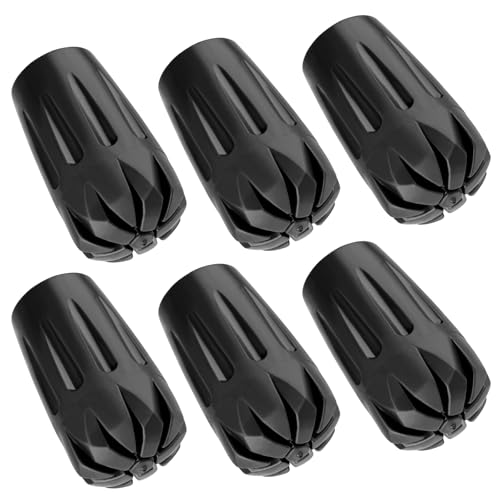
Running poles typically feature minimalist, low-profile trail running baskets designed to prevent the tip from plunging too deep into soft mud or loose gravel without adding noticeable swing weight. Unlike broad winter powder baskets that catch wind and snag on underbrush, compact running discs slip cleanly through brushy vegetation. For mixed-surface races featuring paved road connections, snap-on rubber walking buffers protect the sharp carbide points and prevent harsh metallic vibration on asphalt. Pairing the right tip hardware with smart trail clothing choices keeps you agile, well-protected, and ready to tackle unpredictable alpine conditions.
Sizing Principles for Cadence, Posture, and Elbow Alignment
Selecting the correct running pole length is essential for preserving running economy and preventing shoulder impingement on sustained mountain outings. The general baseline for pole sizing involves standing on level ground in running shoes and holding the grip so that your forearm forms a 90-degree angle with your upper arm. Sizing charts typically map specific height brackets to fixed increments, such as 110, 115, 120, 125, 130, and 135 centimeters, exemplified by the wide sizing run of the LEKI Ultratrail FX.One Trekking Poles-Bright. Choosing a pole that is too long forces your shoulders upward into an unnatural shrug, causing neck strain during prolonged ascents.
Many experienced mountain runners who tackle steep vertical kilometer courses intentionally size down by 5 centimeters compared to standard hiking guidelines. A slightly shorter pole encourages an aggressive forward lean into the slope, allowing the athlete to drive downward through the hands without overextending the elbow joints. On steep descents, a runner using slightly shorter poles simply relies on lower hand placement or relaxes their grip to allow natural foot braking. If you frequently navigate diverse alpine trails featuring equal parts climbing and descending, adhering strictly to the neutral 90-degree elbow benchmark provides the most balanced performance.
Trail Maintenance, Joint Inspection, and Field Reliability
Sustaining the structural integrity and smooth operation of running poles demands regular cleaning and careful inspection after intense backcountry outings. Fine trail grit, silt, and moisture inevitably find their way into the folding joint ferrules and push-button mechanisms during wet races. After completing a muddy outing, disassemble the folding sections, wipe down the internal cord and metal joint sleeves with a dry cloth, and allow the internal components to air dry thoroughly. Never apply oil or aerosol lubricants inside the joints, as wet lubricants attract dust and create an abrasive paste that degrades the inner tension cord.
Periodic physical inspection is critical for runner safety, particularly when running with ultralight carbon fiber shafts. Examine the carbon composite weave carefully under bright light to detect hairline cracks, splintering, or deep gouges caused by rock impacts. While aluminum models clearly reveal structural compromises through noticeable bends, carbon fiber can fail catastrophically if micro-fractures propagate through the resin matrix under heavy downward load. Ensuring that push-button pins engage fully with an audible click before putting full weight on the poles guarantees that your gear remains a dependable asset on technical mountain terrain.
Ultimately, running poles are specialized performance tools that transform how athletes interact with steep gradients and technical mountain terrain. By offloading cumulative joint stress, stabilizing rapid descents, and providing powerful upper-body climbing leverage, these lightweight folding systems allow runners to push their endurance boundaries across remote trails. Choosing between featherweight carbon fiber and durable aluminum, dialed-in glove systems and traditional straps, or fixed and adjustable lengths comes down to your personal racing goals, terrain preferences, and movement style. With proper sizing and regular maintenance, a quality pair of running poles becomes an indispensable extension of your mountain running kit.






Write Your Review
No reviews yet. Be the first to share your experience!