


Tackling overgrown terrain or enduring sudden mountain squalls quickly reveals the shortcomings of traditional everyday apparel like denim or heavy cotton. When stepping onto unpredictable trails, understanding what material are hiking pants made of helps outdoor enthusiasts select clothing that balances stride flexibility, abrasion resistance, and moisture regulation. Everyday fabrics often absorb sweat and hold onto cold rain, creating friction and persistent discomfort during prolonged ascents. Selecting specialized garments like dedicated lightweight hiking pants for men provides the tailored moisture evaporation and unrestricted leg articulation required for demanding terrain.
Modern outdoor apparel relies primarily on engineered synthetic textiles engineered to endure contact with coarse rocks while releasing internal heat. The composition of technical trail pants typically centers on resilient nylon or polyester bases combined with flexible elastane fibers to deliver responsive stretch. Protective additions like surface water repellents and reinforced ripstop weaves shield against abrasive brush and sudden drizzles without adding unnecessary bulk. Evaluating these technical fabric specifications allows hikers to balance protective durability with lightweight breathability for varied seasonal adventures.

Pros
- Generous 35% elastane content offers much more stretch and flex than traditional rigid canvas cargo pants
- Zippered thigh pockets prevent trail essentials from sliding out when sitting or scrambling
- Reinforced knee and crotch sections add practical durability in high-wear zones
- Lightweight synthetic construction dries relatively quickly after moisture exposure
Cons
- Does not include a belt, requiring you to provide your own belt for an adjustable waist fit
- Water-repellent finish handles light rain and splashes but is not a substitute for fully seam-taped technical rain shells in heavy downpours
- Elastic blend may feel less rigid than heavy-duty work canvas for extreme abrasive industrial tasks
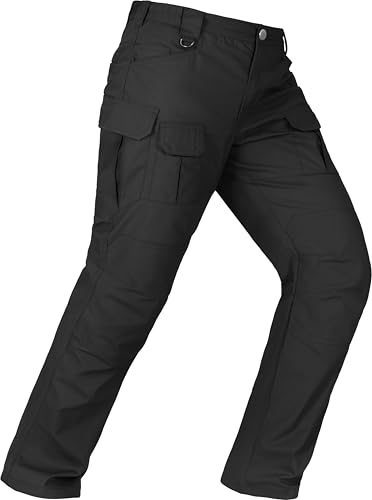
The PIDO YOGA Men's Stretch Tactical Pants are designed for hikers, backpackers, outdoor workers, and travelers who need flexible, durable apparel for active days outside. Traditional utility trousers often rely on heavy, rigid canvas that restricts knee drive on uphill switchbacks. These pants counter that issue by blending 65% polyester with 35% elastane, producing a lightweight, high-stretch feel that moves freely during steep climbs, kneeling around camp, or navigating overgrown trails.
Pocket organization is a major focus of this design. The layout includes six functional pockets positioned for practical utility. The standout features are the dedicated thigh cargo compartments equipped with secure zippered closures. These zippered pockets keep items such as smartphones, pocket knives, trail maps, or car keys safely locked down, preventing accidental loss when scrambling over rocks or stepping over fallen timber.
Durability in the outdoors depends heavily on stress-point engineering. These pants feature reinforced construction across the crotch and knees, helping them withstand brush scrapes, abrasive boulders, and repeated flexing. The ripstop textile weave further limits tearing if you encounter stray thorns or sharp gear edges. Additionally, the outer fabric receives a water-repellent treatment engineered to bead off light drizzle, morning dew, and liquid splashes without suffocating natural airflow.
Regarding fit and day-to-day handling, the pants use an ergonomic cut designed to accommodate tactical movements and active strides. This specific listing arrives in size Large and versatile black. Buyers should note that a belt is not included in the package, so pairing them with a sturdy nylon trail belt is recommended to fine-tune waist tension. Maintenance is simple, as synthetic polyester-elastane blends wash cleanly and air-dry much faster than pure cotton duck or denim.
There are a few realistic limitations to consider before heading into wet backcountry conditions. While the description identifies the fabric as waterproof, it functions as a water-shedding surface barrier rather than a fully seam-sealed hardshell membrane. In prolonged, soaking downpours, water can eventually work its way through the seams, making a dedicated rain shell advisable for severe weather. Furthermore, the high elastane ratio prioritizes flexibility over the extreme armor-like puncture resistance found in heavy, unyielding work pants.
For day hikers, campers, anglers, and outdoor DIYers seeking an affordable pair of multi-pocket pants that will not bind at the knees, the PIDO YOGA Stretch Tactical Pants represent a sensible choice. The combination of secure zippered thigh pockets, reinforced high-friction points, and generous stretch makes them a comfortable companion for active days on and off the trail.
Storage efficiency on the trail requires both accessibility and security. The PIDO YOGA Tactical Pants feature six individual pockets strategically arranged to distribute pocket gear comfortably across the hips and thighs.
The zippered thigh cargo pockets are especially useful for hikers carrying sensitive items like smartphones, compact trail guides, GPS units, or keys. The zip closure ensures contents stay locked inside during vigorous movement, while the standard hip pockets provide rapid access to everyday items when resting at camp or walking easy terrain.
The core material is a blend of 65% polyester and 35% elastane woven into a ripstop pattern. This ratio delivers high stretch and recovery, allowing the pants to expand during deep strides and squatting without losing their shape.
To handle trail wear, the manufacturer incorporates dedicated reinforcements at the knees and crotch, which are the most common failure points in active pants. The surface is treated to resist oil and repel light precipitation, helping keep trail grime and morning moisture from immediately soaking into the fibers.
The ergonomic cut of these pants focuses on mobility, providing sufficient clearance through the seat and thighs to accommodate natural athletic movement without excess bulk flapping in the wind.
This model is supplied in size Large and does not include a belt. Hikers should plan to use a standard webbed outdoor belt or low-profile hiking belt to dial in waist stability, especially when loading the cargo pockets with heavier gear items.

Pros
- Three zippered pockets provide secure storage for car keys, cards, and compact trail necessities.
- Four-way stretch fabric with spandex allows easy mobility on uphills and trail obstacles.
- Elastic waistband with drawcord adjustment offers a comfortable, customizable waist closure.
- Lightweight 0.55-pound garment weight makes it highly packable for hiking trips and travel.
Cons
- Product data does not list a water-repellent DWR coating, waterproof membrane, or certified UPF sun rating.
- Pockets are sized by the manufacturer for up to 5.5-inch devices, which may pinch larger modern smartphones.
- Lacks technical reinforcement patches, belt loops, or heavy-duty ripstop weave for dense brush or abrasive rock scrambling.
TACVASEN Men's Lightweight Quick-Dry Stretch Jogger Pants are designed for hikers, walkers, and travelers seeking a comfortable, budget-friendly trail bottom. Combining an athletic jogger silhouette with outdoor functionality, this model suits day hikers on maintained park paths, travelers needing packable clothing, and fitness enthusiasts moving between workouts and casual trail walks during spring, summer, and fall.
Trail mobility relies primarily on the listed four-way stretch construction. The fabric incorporates spandex to allow give during high steps, forward strides, and bending over trail obstacles. While the manufacturer specifications do not indicate articulated knee seams or a dedicated gusseted crotch, the inherent fabric flex helps prevent restrictive binding during uphill walking and active workouts.
The garment weighs roughly 0.55 pounds, emphasizing breathability and moisture management over heavy weather protection. The manufacturer lists the synthetic fabric as quick-drying, breathable, and moisture-wicking to keep active wearers cool during mild or humid hikes. In terms of storage, the pants feature two zippered hand pockets and one zippered rear pocket, which help secure keys, cards, or a compact device while on the move.
For fit and daily handling, the waist features an elastic band with an adjustable drawstring closure. This low-profile waist design sits comfortably beneath light daypack hip belts without the bulky pinch points often caused by thick leather belts or heavy metal buckles. The jogger-style tapered leg and narrow cuff opening reduce excess flapping fabric around trail runners or low-profile hiking shoes.
Potential buyers should keep several functional limitations in mind. The product data does not list a durable water repellent (DWR) finish, waterproof barrier, or UPF sun-protection rating, making these pants unsuitable for sustained wet weather or exposed alpine conditions without secondary layers. Furthermore, the listed pocket capacity specifies clearance for up to 5.5-inch mobile phones, meaning larger modern smartphones may require separate pack storage, and the lightweight fabric is not reinforced for bushwhacking through dense briars or abrasive rock scrambles.
Overall, TACVASEN delivers a straightforward, highly affordable option for recreational hikers and active travelers who prioritize lightweight comfort, stretch, and secure zippered pockets. If your typical outings consist of maintained local trails, warm-weather day hikes, travel days, or gym-to-trail workouts, these stretch joggers offer practical utility at an accessible entry point.
Storage on the TACVASEN Men's Hiking Jogger Pants consists of three dedicated zippered pockets designed to keep gear secure during active motion. There are two front side hand pockets and a single rear pocket, each secured with tight stitching to prevent loose items from shifting or falling out on the trail.
The manufacturer notes that these pockets are deep enough to accommodate compact items such as credit cards, keys, and mobile phones up to 5.5 inches in display size. Hikers carrying larger flagship smartphones or bulky GPS units should note that zippered closure may be tight or require stowing larger devices in an external pack pocket.
The waistband utilizes a fully elasticized construction paired with an adjustable drawcord. This setup allows wearers to fine-tune the waist tension without relying on a dedicated belt, ensuring that the pants stay in place during dynamic movements like jogging or stepping up steep trail grades.
Because the waistband is soft and lacks rigid hardware, it interacts cleanly with backpack hip belts and daypack straps. The jogger cut also incorporates a tapered lower leg, keeping hems clean and away from muddy trail surfaces or footwear catches.

Pros
- Four-way stretch fabric and ergonomic cutting accommodate high-stepping over logs and steep switchbacks.
- Specialized crotch vent delivers active ventilation to cut down on heat and stuffiness in humid conditions.
- Thoughtful pocket layout includes dedicated inner sleeves for a 6.7-inch smartphone and small essentials.
- Dual snap and hook-and-loop fly closure provides extra security when moving actively on uneven ground.
- Integrated ankle drawcords easily adjust hem width over bulky hiking boots or lighter trail footwear.
Cons
- Water-repellent coating is limited to shedding light moisture and does not replace dedicated waterproof rain pants.
- Manufacturer specifications do not publish exact fabric fiber percentages or a certified UPF rating.
- Elasticized waistband and dual-closure fly setup may create minor bulk underneath padded backpack hip belts.
Moosehill Men's Lightweight Hiking Pants are designed for outdoor enthusiasts who want breathable, functional legwear for warm-weather adventures and casual travel. Built around four-way stretch fabric and an ergonomic pattern, these trousers prioritize mobility for hikers traversing varied trail grades, hopping granite steps, or navigating overgrown paths. The streamlined cut bridges technical trail needs and casual everyday utility, making them well-suited for national park visitors, day hikers, and multi-sport campers alike.
Trail mobility is reinforced by the combination of flexible four-way stretch material and an ergonomic panel design that bends naturally with each stride. A standout feature for warm or humid outings is the dedicated crotch vent, which allows air exchange in high-friction zones where sweat usually accumulates during prolonged climbs. The fabric is treated with a water-repellent coating to shed early-morning vegetation dew and light drizzle, while its quick-drying properties help prevent the prolonged clamminess common with heavier cotton or canvas trail pants.
Storage functionality is exceptionally thorough, organizing gear across seven strategically mapped storage points. Up front, two slash pockets provide quick access, with the right side housing a tailored inner sleeve sized to hold up to a 6.7-inch smartphone securely against the thigh. Two horizontal zippered cargo pockets keep trail maps or wallets protected, and an internal organizer sleeve secures car keys or earbuds so they do not rattle while hiking. A rear hook-and-loop pocket provides a secure spot for additional flat items without creating significant bulk.
The waist and hem configurations offer adaptable fit control across different footwear and body types. The fly uses a dual-closure system with both a traditional snap and a hook-and-loop fastener, preventing unexpected separation when bending, squatting, or wearing a backpack. Belt loops and attached D-rings allow carabiners or traditional hiking belts to be used, while side-elastic sections accommodate natural midsection movement. At the ankles, built-in drawcord locks allow you to cinch the leg openings to keep out gravel and trail debris, or adjust the hem line above your boot collar.
A realistic evaluation reveals several functional boundaries to keep in mind. While the water-repellent finish manages light splashes and damp foliage, it is not a waterproof barrier and will saturate during sustained downpours. In addition, the manufacturer does not specify the precise synthetic fiber breakdown or an official ultraviolet protection rating, leaving buyers to infer base sun coverage. The gathered elastic waist and layered fly mechanism also mean there is extra material at the waistband that some users may notice beneath heavily tightened pack hip belts.
For hikers, travelers, and outdoor workers wanting an affordable, feature-loaded warm-weather pant, the Moosehill Lightweight Hiking Pants deliver strong everyday value. The combination of targeted crotch venting, robust pocket organization, and flexible stretch construction makes them a highly practical addition to any day pack or travel duffel for low-to-moderate precipitation days.
Moosehill equips these trail pants with seven distinct storage spaces configured to keep trail gear from bouncing or shifting. The front slash pockets handle everyday items, with the right pocket featuring an integrated internal sleeve that keeps smartphones up to 6.7 inches upright and stable against your leg.
Two zippered thigh pockets offer safe storage for valuable trail necessities like IDs, permits, or pocket knives without obstructing forward leg swing. Within the right zippered pocket, a dedicated secondary pouch isolates small items like car keys or earbuds to prevent scratches against other carried goods, while the rear hook-and-loop pocket provides a quick-access spot for flat accessories.
The pants utilize an ergonomic cut paired with four-way stretch woven fabric to accommodate active trail movement such as scrambling up rock steps, ducking fallen limbs, and steep uphill pacing. This stretch enables comfortable range of motion without requiring an overly loose, baggy profile that could snag on roadside brush.
Fit versatility is managed through a multi-adjustment waist featuring side elastic bands, standard belt loops, and a dual-retention fly that combines a front snap with hook-and-loop backing. At the bottom cuffs, integrated cord locks let you secure the hem around mid-cut hiking boots or trail runners to block out dirt, pebbles, and damp trailside undergrowth.

Pros
- Built-in stretch and gusseted crotch promote natural range of motion during rugged climbs
- Water-repellent coating and quick-drying synthetic fabric manage moisture effectively on damp trails
- UPF 30 rating offers dependable sun protection for exposed day hikes and summer backpacking
- Reinforced kickplate increases hem durability against boot friction and rough terrain
Cons
- Water-repellent finish resists light moisture but does not replace fully waterproof rain pants
- Sizing on this listing is fixed at 36W x 30L, requiring buyers to verify exact measurements
- Single zip utility pocket limits dedicated secure storage for larger trail accessories
The ATG by Wrangler Men's Cliffside Utility Synthetic Pant is an outdoor trail trouser designed for day hikers, backpackers, and campers who need dependable leg protection without sacrificing mobility. Offered in size 36W x 30L and an earth-toned Morel colorway, this pant combines a regular seat and thigh with a straight leg profile. Hikers navigating overgrown paths, rocky surfaces, or variable weather will find that its synthetic design effectively bridges trail functionality and everyday outdoor utility.
On the trail, freedom of movement is essential when tackling steep switchbacks or rocky scrambles. These pants feature integrated stretch fabric paired with a gusseted crotch, allowing the legs to stride freely and step up without binding at the seams. For warm-weather hikes or high-exposure trails, the UPF 30 rating shields your lower body from prolonged sun exposure, making them a practical choice for summer outings where trail shade is limited.
Managing moisture along wet trails is supported by a fast-drying synthetic construction treated with a water-repellent finish. Light morning dew, muddy splashes, and sudden light drizzles bead up on the exterior rather than saturating the cloth, and the material dries rapidly if wet from an accidental stream dip. To counteract repeated wear against hiking boots and rocky terrain, ATG incorporates a reinforced kickplate at the hem, protecting high-friction cuff zones from premature fraying.
Storage remains streamlined to prevent unnecessary bulk under a backpack hip belt. A dedicated zippered utility pocket provides secure containment for compact gear such as a multi-tool, vehicle keys, or pocket-sized electronics, ensuring items do not slip out while navigating uneven trails. Routine trail maintenance is straightforward, as the synthetic weave washes cleanly, sheds dirt easily, and air-dries quickly between outdoor excursions.
While the water-repellent coating handles damp underbrush and light moisture, it does not provide the complete storm protection of taped, waterproof rain shells in prolonged heavy downpours. In addition, this specific model is tailored to a 36W x 30L fit, meaning prospective buyers should confirm their standard waist and inseam measurements before heading out. Hikers needing extensive compartmentalized storage may also find the single zip pocket limited if carrying multiple large items.
For hikers, campers, and outdoor enthusiasts seeking durable, affordable, and weather-ready lower-body trail wear, the ATG by Wrangler Cliffside Pant offers well-rounded performance. Its combination of active stretch, quick-drying defense, UPF 30 protection, and kickplate reinforcement makes it a reliable staple for day hikes and multi-day trail adventures alike.
Constructed from synthetic fibers, the ATG Cliffside Utility Pant is built to resist routine trail abrasion while maintaining a manageable, lightweight feel. The inclusion of flexible stretch fabric allows the material to flex naturally under tension, reducing strain on major seams during deep lunges and steep ascents.
The lower cuffs feature a specialized reinforced kickplate, strategically placed to withstand continuous rubbing from heavy hiking boot collars, trekking poles, and low trail scrub. This reinforcement helps extend the usable life of the pant cuffs in rugged backcountry environments.
Sun defense on open trails and exposed ridgelines is provided by built-in UPF 30 protection. This barrier reduces ultraviolet light penetration through the fabric during extended daytime hikes, supporting long-term skin protection under direct sun.
Weather management combines quick-drying synthetic fabric with an external water-repellent finish. While not a substitute for waterproof rain gear, this coating effectively sheds light drizzle and morning dew, preventing the fabric from absorbing excess water and speeding up dry times while on the move.

Pros
- Labeled left and right leg zippers make reattaching the zip-off sections fast and straightforward.
- Four-way stretch fabric paired with double-layer knees provides a good balance of mobility and knee protection.
- Five secure pockets, including a flat-profile zippered rear security pocket for valuable trail essentials.
- Adjustable cuff toggles allow hikers to seal out dirt or customize ventilation around various hiking boots.
Cons
- The water-resistant coating is designed for light rain and splashes, not for sustained downpours.
- Specific synthetic fiber blend percentages are not detailed in the manufacturer specifications.
- The horizontal thigh zipper band can feel slightly rigid against bare skin when worn as shorts.
The Moosehill Men's Convertible Hiking Pants are designed as versatile, quick-drying trail bottoms intended for hikers, backpackers, and outdoor travelers who need all-day temperature adaptability. Operating as both full-length trousers and trail shorts, these pants cater directly to hikers facing unpredictable weather shifts, chilly morning trailheads, and warmer afternoon ascents. With a listed garment weight of 0.91 pounds, this pair offers a functional balance of lightweight packability and practical coverage for day hikes, national park excursions, and weekend camping trips.
On active trails, stride freedom and temperature management dictate comfort, and the Moosehill pants address both through four-way stretch fabric and a quick-converting zip-off system. The four-way stretch construction assists with climbing mobility, allowing hikers to step over fallen logs, ascend steep switchbacks, and maneuver across rocky scrambles without restrictive fabric tension. If midday temperatures rise, the lower leg sections zip off quickly, assisted by labeled left and right zippers that eliminate reattachment confusion. The fabric is described by the manufacturer as quick-drying with a water-resistant coating, which helps shed morning dew and light spray, though it does not replace a dedicated waterproof rain shell during steady storms.
Construction details emphasize trail durability in critical high-wear areas, most notably through reinforced double-layer knees that offer added resistance against abrasion when kneeling on gravel or setting up camp. The waist is engineered with an elastic band, a snap and zipper closure, and reinforced belt loops, accommodating standard hiking belts when carrying heavier belt-mounted gear. Hem toggles at the leg openings give hikers the ability to cinch the cuffs tightly over hiking boots to help block out loose trail debris, or loosen the hem for increased ventilation during hot, dry trekking.
Storage is distributed across five dedicated pockets, providing organized space for essential gear without demanding an external pack pocket for every small item. The layout features two standard front hand pockets, two side storage pockets, and a single zippered rear security pocket designed to sit flat against the body, holding items up to a 6.5-inch smartphone securely against trail movement or casual travel transit. In practical handling, the flat-sitting rear pocket and streamlined waistband help reduce pressure points when worn under a backpacking hip belt, though users should ensure heavy pocket items do not rub against the hip-belt padding.
Prospective buyers should evaluate a few realistic limitations before purchasing. While the manufacturer highlights a water-resistant coating, this treatment is only suitable for light mist or brief splashes and will saturate under sustained rainfall, meaning wet-weather hikers will still require dedicated rain pants. Additionally, the product specifications list this specific offering in 36W by 32L without providing precise fiber percentages for the synthetic stretch weave, leaving exact fabric density open to user interpretation. As with most convertible pants, some hikers may also feel the circumference of the thigh zippers when converted into shorts, especially during repetitive high-stepping movements.
For hikers, campers, and travel enthusiasts looking for an adaptable, budget-conscious pair of convertible pants, the Moosehill Men's Convertible Pants present strong utility. The combination of double-layer knees, labeled zip-off hardware, five-pocket utility, and flexible stretch fabric makes them a solid choice for multi-climate day hikes and minimalist packing lists. Buyers needing guaranteed stormproofing or technical mountaineering durability should look toward specialized hardshell or heavy softshell alternatives, but for moderate three-season hiking, this pair delivers reliable versatility.
The standout feature of the Moosehill Men's Hiking Pants is the instant zip-off capability, allowing rapid conversion from full pants into trail shorts. Labeled left and right zippers help eliminate guesswork when reattaching the lower leg panels during sudden weather shifts or evening cool-downs.
The snag-free zipper design ensures fluid adjustments along the trail. While zip-off mechanisms add convenience, hikers should note that the horizontal thigh zipper tracks can feel slightly structured against bare skin when worn in shorts mode.
This specific listing features a 36-inch waist with a 32-inch inseam, tailored with an elastic waistband and reinforced belt loops to provide a secure, adaptable fit. The integrated elastic allows for moderate waist expansion during extended days on the trail or when layering over lightweight baselayers.
Adjustable hem toggles at the cuffs permit fine-tuning around various footwear, from low-profile trail runners to mid-cut hiking boots. Hikers should verify their exact waist and inseam dimensions against the manufacturer sizing chart, as body shape and thigh circumference can influence comfort around the convertible zipper rings.
The pants feature a five-pocket configuration designed for functional trail organization. The layout includes two front hand pockets, two side storage pockets, and one zippered rear pocket engineered to hold smartphones up to 6.5 inches.
The rear pocket is built to lie flat against the seat, minimizing bulk and keeping valuables discreetly secure during both transit and backcountry hiking. Distributing heavier items across the side pockets helps maintain balance and minimizes interference with a backpack hip belt.
The Science and Engineering Behind Hiking Pant Materials
Hiking pants are almost universally constructed from engineered synthetic fibers, most notably nylon, polyester, and elastane blends, rather than natural fibers like cotton. Manufacturers choose these synthetic polymers because they resist tearing against abrasive rock, dry rapidly after water exposure, and wick perspiration away from the skin. In modern trail garments, technical fabrics are often woven into specialized ripstop patterns and treated with durable water repellent coatings to enhance exterior defense. Understanding how these distinct fibers and chemical finishes function together helps hikers select the exact fabric construction needed for their specific terrain and climate.
Primary Base Fibers: Nylon Versus Polyester in Trail Construction
Nylon serves as the foundation for heavy-duty trail trousers due to its exceptional tensile strength and superior resistance to friction. When scrambling over granite ledges or pushing through thorny bramble, nylon filaments resist surface fraying far better than soft natural staples. This rugged fiber also features high tear strength relative to its overall yarn weight, which allows manufacturers to produce remarkably thin garments that withstand harsh off-trail conditions. The primary drawback of pure nylon is its tendency to absorb slight amounts of moisture over time, which can marginally slow drying times in sustained downpours.
Polyester represents the other major pillar of technical outdoor clothing, prized specifically for its hydrophobic nature and natural moisture management. Because polyester filaments absorb almost no water, sweat and environmental moisture are drawn outward to evaporate rapidly into the surrounding air. Garments like the PIDO YOGA stretch tactical pants highlight this performance by using a sixty-five percent polyester base to ensure quick drying during wet outings. Polyester also provides inherent resistance against ultraviolet degradation, ensuring that prolonged exposure to high-altitude sun will not rapidly weaken the underlying textile weave.
Selecting between nylon-dominant and polyester-dominant hiking apparel usually comes down to the balance between rugged brush protection and rapid evaporation. Rugged utility pants such as the ATG by Wrangler Cliffside trousers prioritize tough synthetic fibers to handle heavy rock abrasion and thorny paths. Meanwhile, fast-paced trekkers operating in humid environments often lean toward polyester blends because they maintain a dry feel against sweaty skin. Many advanced outdoor trousers now combine both materials or fine-tune thread densities to capture the durability of nylon alongside the thermal efficiency of polyester.
The Role of Elastane and Spandex in 4-Way Stretch Mobility
Pure synthetic weaves provide high durability, but woven nylon or polyester alone lacks the elasticity needed for steep climbs and high-stepping over fallen logs. To solve this limitation, outdoor brands integrate elastane, commonly known as spandex, directly into the yarn structure. Adding even a small percentage of elastane introduces multi-directional stretch, allowing the pant legs to expand with knee flexion and return cleanly to their original shape. This elastic recovery prevents the fabric from binding at the thighs or pulling uncomfortably across the hips during technical scrambles.
The specific amount of stretch fiber fundamentally changes how a trail pant feels and moves across varied environments. The TACVASEN lightweight hiking pants incorporate a flexible spandex mixed fabric that delivers four-way stretch, creating an athletic, unrestricted jogger profile ideal for active trekking. In more rugged utility designs, high elastane content can dramatically improve movement, as seen in the thirty-five percent elastane blend used in the PIDO YOGA tactical pants. However, higher concentrations of stretch fiber can slightly increase garment weight and retain moisture longer than stiff, low-elastane weaves.
Fabric engineers balance flexibility and structural stability by carefully calibrating two-way versus four-way stretch mechanics. Two-way stretch materials typically flex across the horizontal axis, providing hip and seat comfort while preserving the vertical integrity of the leg seams. Four-way stretch fabrics, featured in both Moosehill lightweight designs, expand horizontally and vertically, adapting seamlessly to deep lunges, rock scrambling, and awkward foot placements. For hikers navigating steep ascents or boulder fields, four-way elasticity drastically cuts down on inner-thigh friction and joint resistance.
Reinforcement Weaves: Ripstop Grids and High-Wear Reinforcements
Weave architecture plays just as critical a role in pant longevity as the base chemical composition of the yarn. Ripstop construction is the most widely adopted structural technique for preventing trail tears from ruining an entire outing. In a ripstop weave, heavier reinforcing yarns are interlaced at regular cross-hatch intervals, typically creating a visible miniature grid pattern across the surface. If a sharp twig or jagged outcrop punctures the garment, the tear is halted at the nearest reinforced grid line instead of expanding down the entire leg.
Beyond overall ripstop patterns, dedicated hiking trousers frequently incorporate zoned structural reinforcements in areas that endure constant friction. Garments such as the Moosehill convertible pants utilize double-layer knee construction to withstand kneeling on coarse gravel, scree, or wet campsite soil. Similarly, the ATG by Wrangler Cliffside utility pant integrates a reinforced kickplate at the interior hem to protect the fabric against abrasion from heavy boot cuffs. Adding targeted secondary layers in these specific contact zones extends garment life without burdening the rest of the pant with stiff, heavy fabric.
Crotch gussets represent another vital structural reinforcement that relies on specialized patterning rather than brute fabric thickness. Instead of joining four standard seams at a single high-stress junction, a gusset inserts a diamond-shaped panel of flexible fabric between the legs. The ATG Cliffside pant and Moosehill designs utilize gusseted patterning to disperse stress evenly across the groin area during wide strides. This targeted construction eliminates premature seam blowout while removing irritating central ridges that can cause chafing during long miles.
Weather-Resistant Finishes and Water-Repellent Coatings
Most technical hiking bottoms are treated with a Durable Water Repellent, commonly referred to as a DWR finish, applied directly to the exterior textile surface. Rather than forming a continuous impermeable barrier, a DWR coating increases the surface tension of the individual fibers. When rain drops, morning dew, or light trail splashes contact the fabric, the moisture forms tight beads that roll off harmlessly instead of soaking into the weave. This surface-level defense preserves garment breathability by keeping the spaces between the woven threads open for internal vapor release.
Hikers must understand the functional distinction between water-repellent treatments and fully waterproof membrane laminates. The Moosehill lightweight pants and ATG synthetic trousers feature water-repellent finishes that handle passing drizzles and wet underbrush effortlessly. On the other hand, the PIDO YOGA tactical pants highlight an advanced waterproof treatment engineered to repel heavier rainfall alongside oil and liquid splashes. For extended treks through damp climates, selecting balanced trail comfort hiking pants ensures your lower body remains shielded against wet foliage without trapping excessive sweat inside.
Water-repellent coatings eventually experience degradation over time due to trail dust, body oils, and routine abrasive contact against undergrowth. When water stops beading and begins soaking into the surface, the phenomenon is known as wetting out. Wetting out does not necessarily mean water has soaked through to the skin, but it creates a cold, clammy barrier that halts moisture vapor transfer. Fortunately, modern water-repellent finishes can be revived through proper laundering and occasional treatment with spray-on or wash-in fabric restorers.
Breathability, Ventilation Features, and Thermal Regulation
Fabric breathability depends heavily on yarn tightness, thread diameter, and air permeability. Synthetic fibers do not absorb moisture within their crystalline core, allowing sweat vapor to pass outward through the microscopic openings between threads. If a fabric is woven too tightly to boost wind resistance, it can inadvertently trap humid air against the hiker’s legs during strenuous climbs. To counteract this natural limitation, technical designers frequently incorporate mechanical ventilation features into the garment’s blueprint to boost airflow.
Mechanical airflow solutions allow hikers to regulate internal heat without sacrificing protective lower-leg coverage on brushy trails. The Moosehill lightweight hiking pant integrates a dedicated crotch vent to facilitate continuous air circulation through high-friction zones during prolonged treks. For maximum climate adaptability, the Moosehill convertible pants feature smooth zip-off leg sections that instantly transform long trousers into trail shorts. Hikers seeking versatile options often browse trail mobility hiking pants to find garments that support wide temperature swings between chilly morning trailheads and scorching afternoon ridges.
Ankle cuff adjustments also play an important role in managing lower-leg ventilation and debris exclusion. Built-in ankle drawcords and toggle locks, found on both Moosehill models, allow hikers to cinch the hem securely over boot collars or loosen the cuff for increased upward draft. Tightening the cuff creates a physical seal against ticks, sand, and loose gravel on overgrown trails. Conversely, loosening the toggle promotes passive chimney-effect airflow, drawing cool air up along the calves during hot summer ascents.
Sun Protection and UV Defense Ratings in Outdoor Fabrics
Sun protection in hiking apparel is governed primarily by fabric density, fiber type, and specialized weave construction rather than chemical additives. The Ultraviolet Protection Factor, or UPF rating, measures how much ultraviolet radiation a specific textile blocks from reaching the skin. The ATG by Wrangler Cliffside utility pant features an integrated UPF 30 rating, which blocks approximately ninety-six percent of harmful UV rays during sunny trail days. Unlike thin white cotton shirts that offer minimal protection when stretched or damp, dense synthetic weaves maintain stable ultraviolet defense across all trail conditions.
Polyester fibers naturally excel at absorbing ultraviolet light due to the presence of benzene rings within their molecular structure. Nylon provides solid solar defense as well, though it requires slightly denser weaving or specialized dulling agents to achieve equivalent UPF scores. Hikers trekking through exposed alpine meadows or arid desert canyons benefit immensely from choosing pants with verified UPF protection. Relying on sun-protective fabric reduces the need for greasy sunscreens on the lower legs, which often attract trail dust and clog garment pores.
Hardware, Seams, and Accessory Integration
A trail pant’s performance depends heavily on the auxiliary materials used for closures, pockets, and waistbands alongside the main leg fabric. Storage zones must balance quick accessibility with security, which is why designs like the TACVASEN sweatpants and Moosehill trousers utilize tightly stitched zippered pockets. Zippered closures prevent smartphones, GPS units, and keys from sliding out when scrambling over boulders or negotiating steep descents. The pocket bags themselves are often crafted from lightweight synthetic mesh to reduce bulk and serve as secondary passive ventilation ports when unzipped.
Waistband hardware must withstand continuous tension from backpacks with heavy hip belts without creating pressure points. The Moosehill lightweight pants solve this challenge with a dual fixation system combining a sturdy snap with hook-and-loop reinforcement to prevent accidental opening. Elasticated waistbands paired with internal drawstrings, as featured on the TACVASEN joggers, offer adaptable tension that accommodates mid-hike layering adjustments. Durable belt loops and integrated D-rings provide secure anchor points for clip-on gear without placing excess strain on the primary waist stitching.
Caring for Synthetic Hiking Fabrics to Preserve Performance
Maintaining the technical integrity of synthetic hiking apparel requires specific laundering practices that differ from routine cotton care. High heat from conventional clothes dryers can permanently damage elastane fibers, causing trail pants to lose their stretch recovery and sag around the knees. Synthetic pants should ideally be washed in cool or warm water using gentle liquid detergents that rinse clean without leaving residue. Hikers should avoid fabric softeners entirely because the waxy conditioning agents coat synthetic fibers, clogging the breathable micro-pores and destroying natural moisture wicking.
Proper drying and periodic heat reactivation help maintain the effectiveness of surface water-repellent treatments. Line drying or tumble drying on low heat preserves the elasticity of spandex blends while helping reset durable water-repellent polymers. When water stops beading after a cycle of gentle washing and low-temperature drying, applying a dedicated outdoor textile spray restores original repellency. Taking consistent care of your trail trousers preserves seam strength, pocket zipper functionality, and water shedding for seasons of continuous backcountry exploration.
Choosing the right trail pant ultimately requires matching specific fabric blends and structural features to your expected climate and terrain difficulty. Hikers tackling rough scramble routes should lean toward nylon-rich or reinforced ripstop builds, while fast-paced summer trekkers will benefit most from lightweight polyester garments with generous four-way stretch. Pay close attention to functional details like gusseted crotches, water-repellent coatings, and targeted ventilation when evaluating technical apparel. Selecting a thoughtfully engineered synthetic weave ensures you stay dry, agile, and comfortable through every backcountry mile.


Write Your Review
No reviews yet. Be the first to share your experience!