


Balancing trail gear, food, extra clothing layers, and hydration without lugging unnecessary bulk often comes down to one fundamental decision before you leave the trailhead. Knowing exactly what size daypack for hiking you need prevents the frustration of cramming puffy jackets into tiny crevices or suffering through a floppy, half-empty bag that shifts across your spine. While heavy wilderness treks require structured internal frame hiking packs, casual afternoons and aggressive ridge climbs call for agile storage that lets your body breathe. Choosing the right volume ensures that weather protection, safety items, and snacks stay accessible throughout shifting conditions.
Daypack capacities typically range from ultralight 10-liter pouches to full-featured 35-liter haulers capable of supporting unpredictable mountain weather. Hikers navigating warm summer loops require far less internal volume than those packing bulky midlayers, heavy hard shells, and trekking poles during late autumn cold snaps. Many hikers exploring accessible trails find that nimble, packable bags or budget daypack options provide plenty of utility without burdening their shoulders. Matching your pack volume directly to trip duration, regional climate swings, and required gear prevents both exhaustion and gear failure miles away from civilization.

Pros
- Extremely light at 0.68 lbs and packs down into its own compact self-contained pouch
- Dual shoulder strap pockets keep a phone (up to 7 inches) and trail snacks within arm's reach
- Compatible with hydration bladders up to 2 liters with integrated tube routing
- Breathable mesh shoulder straps paired with an adjustable chest strap and built-in safety whistle
Cons
- Frameless ultralight design lacks a padded hip belt and rigid suspension for carrying heavier loads
- Fabric provides water splash resistance but is not fully waterproof and does not include a rain cover
- Hydration reservoir is not included and must be purchased separately
The AiryLeben 14L Small Hiking Backpack is an ultralight, frameless daypack engineered for hikers and travelers who prioritize compact portability. Weighing only 0.68 pounds, it functions primarily as a packable summit pack, secondary travel daypack, or short-distance trail bag. It is well suited for day hikers carrying the ten essentials, travelers seeking an extra bag for side excursions, and commuters needing a minimalist, low-profile carry system.
In practical trail scenarios, the 14-liter capacity provides enough volume for a light midlayer, compact rain jacket, snacks, and small accessories. The pack measures 5.2 by 9.65 by 15.9 inches when fully unfolded, keeping the profile narrow and close to the body. An internal sleeve accommodates hydration bladders up to 2 liters (sold separately), supported by an exit port on the shoulder strap for hands-free hose routing. Dual side pockets hold standard water bottles, while an exterior elastic cord secures an extra layer or a damp towel on the outside of the bag.
The build quality centers around a lightweight nylon fabric that provides resistance against common trail abrasions, branch snags, and light water splashes. Construction includes reinforced stitching at primary stress points and SBS zippers designed for smooth pull action. The shoulder harness uses breathable open mesh to improve airflow over the shoulders, and the adjustable chest strap includes an integrated survival whistle built into the buckle for trail signaling.
User handling and gear access stand out due to the harness pocket layout. Unlike many minimalist daypacks that require removing the pack for phone or snack access, this pack features a zippered pocket on the right shoulder strap fitting phones up to 7 inches, alongside a drawstring pouch on the left strap for food or a small bottle. For transit and storage, the entire daypack collapses into an integrated 6.3 by 6.7 inch pocket, fitting easily inside carry-on luggage or a larger backpacking pack.
Potential buyers should keep realistic performance boundaries in mind. The pack is completely frameless and lacks a structured back panel or load-bearing hip belt, meaning it is not designed to support heavy gear loads or distribute weight off the shoulders. Additionally, while the nylon resists light splashes, it is not seam-sealed or waterproof, so sensitive electronics or clothing should be protected with internal dry bags during steady rain.
For hikers, travelers, and theme-park visitors seeking an inexpensive, sub-pound packable daypack with smart front-access storage and hydration compatibility, the AiryLeben 14L delivers dependable utility and exceptional convenience for short outings.
The AiryLeben 14L pack integrates versatile hydration options rarely found on packable daypacks. The main compartment contains an internal divider specifically measured to support hydration bladders up to 2 liters in volume. A dedicated hose pass-through port on the shoulder strap allows clean routing of drinking tubes directly to the chest area. A hydration bladder is not included with the pack and must be acquired separately.
Beyond reservoir support, the pack provides multiple exterior access options. Dual side pockets accommodate slim water bottles, while the left shoulder strap features an elastic drawstring pocket suitable for quick-grab items or small soft flasks. The right shoulder strap includes a dedicated zippered sleeve that fits smartphones up to 7 inches. Exterior bungee cords on the front panel allow hikers to lash a fleece, windbreaker, or wet towel without opening the main compartment.
Portability is a defining feature of the AiryLeben 14L daypack, which weighs a minimal 0.68 pounds. When deployed, the pack spans 5.2 inches deep, 9.65 inches wide, and 15.9 inches tall, creating a small footprint that sits comfortably against the upper back. When not in use, the entire bag folds down into its own built-in internal storage pocket, reducing its dimensions to just 6.3 by 6.7 inches.
Because the pack features an ultralight frameless build, it does not rely on a fixed torso frame sheet. Fit adjustment is achieved through adjustable shoulder straps and an adjustable chest sternum strap to secure the bag across different body frames. The minimalist profile makes it an effortless addition to luggage for travelers who need a dedicated hiking daypack once they arrive at their destination.

Pros
- Weighs only 0.75 lbs and stows into an integrated pocket for seamless packing inside luggage or larger trekking bags
- Dedicated shoulder-strap pockets provide rapid access to a smartphone and trail snacks while walking
- Taslan nylon construction provides dependable defense against trail scuffs and light moisture
- Vertically adjustable sternum strap allows users to dial in upper-body positioning without slipping
Cons
- Frameless packable build lacks rigid internal support or a padded hip belt for carrying heavy loads
- Water-repellent fabric handles light rain but is not fully waterproof or seam-sealed for heavy downpours
- Does not include an integrated hydration reservoir sleeve or dedicated water-bladder hose routing
The G4Free 20L Packable Hiking Backpack is a frameless, ultralight daypack designed specifically for hikers, travelers, and outdoor enthusiasts who prioritize minimal carry weight and space-saving packability. Operating as a secondary trail pack or a stand-alone daypack for short outings, it serves day hikers, campers heading away from a basecamp, and travelers needing an excursion pack that stows flat in luggage. Its balanced 20-liter volume provides enough capacity for daily trail essentials without adding bulk.
On the trail, the pack relies on an ultralight footprint, measuring 11.4 by 5.1 by 18.5 inches while weighing only 0.75 pounds. Because it is a frameless design without a rigid back panel or heavy suspension system, the load stays close to the body. Breathable mesh shoulder straps help promote airflow against the chest and shoulders, while an adjustable chest strap slides up or down to keep the harness centered across your torso. The capacity is well suited for carrying an extra fleece, trail snacks, a compact first-aid kit, and personal accessories on half-day or full-day outings.
Build quality centers on water-repellent Taslan nylon, a lightweight woven material chosen to withstand everyday trail abrasion, branches, and light moisture. The pocket organization is particularly thoughtful for an ultralight packable model. On the harness, a zippered pocket on the left shoulder strap secures a smartphone, while an elastic sleeve on the right holds nutrition bars or small trail tools. Additional storage consists of a front zippered compartment, two side pockets for water bottles, an interior zippered pocket, an internal slip pocket, and a front elastic bungee system for external jacket storage.
Operating and packing the daypack is straightforward. When not in use, the entire bag folds into its own 6.3 by 7.1-inch inner zippered pocket, making it effortless to stow in a glove box, carry-on suitcase, or multi-day backpacking pack. Unfolding takes only seconds, after which gear can be packed directly into the zippered main compartment. For maintenance, the nylon fabric is easy to wipe clean with a damp cloth, and the bag should be air-dried thoroughly before being compressed back into its integrated storage pouch.
Prospective buyers should keep realistic design limitations in mind. As an ultralight, packable backpack, it lacks rigid frame stays, load-lifter straps, and a padded hip belt, meaning it is not intended for heavy multi-day gear or dense, sharp equipment that could poke through the back panel. Furthermore, while the Taslan nylon fabric sheds light drizzles and trail spray, it lacks taped seams and a dedicated rain cover, so it should not be relied upon to keep contents dry in severe weather. The pack also does not advertise a dedicated hydration bladder hanger or hose port.
For day hikers, campers, and travelers seeking an inexpensive, functional, and exceptionally lightweight daypack, the G4Free 20L Packable Backpack is an easy recommendation. It provides practical trail access via its unique shoulder-strap pockets and versatile exterior bungee system while remaining compact enough to pack along on any journey.
The G4Free 20L Packable Backpack offers an intuitive storage configuration that rivals many full-sized daypacks despite its collapsible nature. The primary storage consists of a spacious zippered main compartment that easily accommodates insulating layers, trail lunch, and bulkier gear. Inside this space, one zippered security pocket holds keys or a wallet, while an additional slip pocket helps keep flatter items separated from the main interior cavity.
External organization focuses on immediate trail utility. The front panel features a zippered accessory compartment for maps, headlamps, or sun protection, supplemented by two elastic side pockets sized for water bottles. A front bungee cord setup provides fast external stowage for a rain shell or damp layer. Uniquely, the shoulder harness includes a zippered phone sleeve on the left strap and an elastic pocket on the right, allowing quick access to electronics and snacks without having to take the pack off.
Constructed from water-repellent Taslan nylon, this backpack provides a practical balance between tear resistance and minimal carry weight. The fabric offers reliable defense against light precipitation, trail dust, and light abrasions while keeping the complete empty pack weight at just 0.75 pounds. This lightweight exterior allows the pack to fold down into a compact 6.3 by 7.1-inch bundle using its built-in inner pocket.
Portability makes this daypack an ideal backup option for multi-day backpackers who want a summit pack for side trips from basecamp, as well as vacationers who want a secondary bag for day excursions. Maintenance is simple, requiring only spot cleaning with mild soap and cold water. It should always be completely dried before being zipped into its compact storage pouch to preserve the fabric and zipper integrity over time.

Pros
- Lightweight 1.11-pound design minimizes carrying fatigue on shorter adventures
- AirScape backpanel delivers close-to-body stability paired with molded airflow channels
- Integrated trekking-pole attachments securely stow poles without occupying main compartment space
- Eco-conscious bluesign product made from 100% recycled, ocean-sourced ripstop nylon
Cons
- Compact 15-liter volume will not accommodate bulky cold-weather layers or extensive gear
- Hydration reservoir is not included and must be purchased separately
- One-size unisex fit lacks an adjustable torso length harness
The Osprey Sportlite 15L is a minimalist technical daypack engineered specifically for short hikes, quick trail excursions, and fast-moving outdoor outings. Designed with a one-size unisex fit, this pack suits day hikers, travelers, and casual outdoor enthusiasts who want an agile carrying system without the added bulk of larger weekend packs. Weighing in at approximately 1.11 pounds (505 grams), it directly addresses the needs of hikers who prioritize minimal base weight, functional stability, and streamlined trail performance.
With a 15-liter volume and exterior dimensions measuring 17.3 by 11 by 7.9 inches, this daypack is designed for the essentials. It comfortably holds a windbreaker or light layer, trail nutrition, a small first-aid kit, and your hydration setup. The carrying comfort is centered around Osprey's AirScape backpanel, which combines mesh-covered foam with cut-out airflow channels. This configuration creates a cushioned, close-to-body carry that helps stabilize the pack against your back while encouraging air movement during warmer hiking conditions.
Construction quality is highlighted by a 100% recycled, ocean-sourced nylon ripstop main body that meets rigorous bluesign product environmental standards. The suspension and harness system includes padded shoulder straps, an adjustable sternum strap with an integrated safety whistle, and a minimalist webbing hipbelt stabilized by padded hipwings. For external gear management, upper side compression straps stabilize the load while simultaneously anchoring trekking-pole handles, while front lower loops capture pole tips to keep your hands free on steep trail sections.
On-trail functionality and daily handling are refreshingly simple. An internal hydration sleeve accommodates standard water reservoirs (sold separately), allowing you to route a drinking hose directly to the shoulder harness. Quick-grab items fit neatly into the zippered front stash pocket with an interior key clip, and side stretch pockets offer convenient exterior storage for compact water bottles. Routine care is straightforward: the pack can be wiped down or gently hand washed with mild soap and hung to air dry away from direct heat.
Potential buyers should take note of a few practical limitations inherent to a minimalist 15-liter design. Because it lacks a multi-position adjustable torso harness, hikers with exceptionally short or long torsos cannot tailor the back length beyond standard strap adjustments. The 15-liter volume is strictly built for minimalist outings, meaning it will not fit cold-weather mountaineering clothing or overnight gear. Additionally, the pack does not include a rain cover, so users facing heavy downpours will want to use dry sacks or an external cover.
Overall, the Osprey Sportlite 15L delivers exceptional value for hikers looking for a lightweight, well-engineered technical daypack from a reputable brand. Its blend of sustainable materials, ventilated backpanel structure, and secure pole attachments makes it a dependable companion for warm-weather day hikes, national park excursions, and active daily use.
The Osprey Sportlite 15L features a one-size unisex fit designed to accommodate a broad range of adult body shapes. Because it is a compact technical daypack, it does not feature an adjustable torso plate, relying instead on flexible shoulder straps and an adjustable sternum strap to dial in upper-body positioning.
Load stabilization is aided by a removable or stowable webbing hipbelt complemented by padded hipwings. These wings help wrap the pack comfortably around the iliac crest, keeping the pack from bouncing during brisk ascents while keeping the overall harness weight to a minimum.
Hydration management on the Sportlite 15 is built around an internal hydration sleeve compatible with most standard hydration bladders, though the reservoir must be purchased separately. This keeps water weight positioned close to the spine for balanced carrying.
External organization includes dual stretch side pockets for compact water bottles or trekking accessories, a dedicated front zippered pocket with an interior key clip for valuables, and dual compression straps that double as trekking-pole anchors.

Pros
- Folds down into a self-contained 7.9 by 6.7-inch footprint, making it exceptionally easy to store and transport
- Weighs only around 0.75 pounds, adding practically no baseline burden to your shoulders on casual outings
- Excellent pocket selection for a compact bag, including a secure hidden rear pocket and tall 7.5-inch bottle sleeves
- Chest strap includes a built-in whistle, a thoughtful safety feature rarely found on basic packable bags
Cons
- Frameless collapsible construction lacks a rigid back panel or padded hip belt for carrying heavy loads
- 15-liter interior volume is strictly suited for short outings and cannot accommodate bulky cold-weather gear
- Lacks an included rain cover or verified waterproof rating for severe storm protection
The SKYSPER 15L Foldable Hiking Backpack is a frameless, collapsible daypack built specifically for day hikers, travelers, and outdoor recreationists who want a secondary pack without added bulk. Tipping the scales at roughly 0.75 pounds, this bag is engineered to fold down into its own compact pouch when not in use. It best suits short trail loops, national park excursions, city sightseeing, and quick summit pushes from a basecamp where carrying a standard internal-frame pack would be unnecessary.
With a 15-liter listed capacity and unfolded dimensions of roughly 16.9 by 10.8 by 4.7 inches, the pack accommodates core trail essentials such as a lightweight windbreaker, snacks, trail map, and compact first-aid kit. The main compartment features a wide opening that simplifies loading and unloading at trailside rest stops. Organization is further supported by three exterior zippered pockets, a concealed back pocket resting against your body for valuables, and two 7.5-inch tall side mesh pockets designed to hold water bottles securely.
Build quality centers on everyday trail durability without sacrificing lightweight packability. The exterior is crafted from a tear- and abrasion-resistant polyester fabric supported by reinforced stitching at critical seams and carry points. SKYSPER incorporates reliable SBS zippers that operate smoothly across the pockets, reducing the frustration of snagging thin fabrics. While not a heavy-duty expedition pack, the materials are well matched to the demands of light recreational use and casual travel.
The harness system features standard shoulder straps complemented by an upgraded adjustable chest strap. This sternum strap stabilizes the pack across your upper body, keeping the straps from shifting off your shoulders as you walk. As an added trail safety feature, the chest buckle includes an integrated safety whistle for signaling. When your outing concludes, the entire bag easily folds down to 7.9 by 6.7 inches, allowing you to slip it into a suitcase, glove box, or main backpacking pack without taking up valuable space.
Hikers should keep realistic gear boundaries in mind with this packable design. Because the bag is completely frameless and does not include a load-bearing hip belt, carrying heavy or dense hardware can cause the fabric to sag and place all weight directly onto your shoulders. Additionally, sharp items may poke through the unpadded back panel, and the fabric does not claim full waterproof protection, meaning vulnerable electronics or dry layers should be protected in plastic bags during rain.
For outdoor enthusiasts and travelers looking for an affordable, highly portable daypack with reliable organization, the SKYSPER 15L Collapsible Daypack is a dependable utility choice. It delivers functional storage, convenient bottle pockets, and an ergonomic chest strap in a package that takes up almost zero space when stowed away.
The standout attribute of the SKYSPER 15L daypack is its ability to collapse into a pocket measuring just 7.9 by 6.7 inches. This minimal footprint makes it an effortless addition to travel luggage, camping bins, or vehicle consoles.
Weighing approximately 0.75 pounds, it serves as an ideal secondary pack for multi-day trips where you want to leave your primary multi-day pack at camp and take only basic hydration and snacks on day loops.
Despite its lightweight packable design, this backpack provides five distinct storage areas to keep small gear sorted. The wide main compartment handles larger layers, while three separate zippered pockets keep items like sunglasses, sunscreen, and headlamps readily accessible.
A hidden back zippered pocket sits flush against your back to safeguard travel documents, wallets, or phones. On the exterior, two 7.5-inch tall mesh side pockets provide external storage for beverage bottles and quick-access trail items.


Pros
- Extremely lightweight at just 2.3 ounces, minimizing carried pack weight
- Folds down into a compact package measuring 8.6 x 3.1 x 1.06 inches for simple storage
- Polyester fabric features a water-repellent coating to fend off light mist and trail splashes
- Breathable mesh shoulder straps help promote air circulation over the shoulders
Cons
- Frameless and unpadded back panel offers no structural load support for dense or heavy gear
- Lacks a dedicated hip belt or sternum strap for stabilizing shifting contents on steep trails
- Water-repellent coating will not protect contents in sustained heavy rain or downpours
The SUIKIHUM Ultra Lightweight Foldable Daypack is an ultra-minimalist, 20-liter packable backpack tailored for travelers, casual day hikers, and cyclists who prioritize low pack weight and extreme portability. Weighing only 2.3 ounces, this frameless bag folds down into an integrated storage format measuring 8.6 x 3.1 x 1.06 inches. It serves primarily as a compact secondary pack that can be stashed inside larger luggage, a vehicle glove box, or a multi-day backpacking pack for quick side trips.
With an unfolded profile of 11.79 x 4.32 x 16.11 inches, the pack provides 20 liters of open internal volume. This space accommodates light hiking essentials such as a spare layer of clothes, water bottles, a compact umbrella, and smaller personal necessities. Because the pack lacks an internal frame, hip belt, or load lifters, it relies entirely on careful user packing to maintain comfort and structure. Keeping gear loads light and positioning soft clothing against the back panel helps maintain a stable carry on gentle paths and cycling routes.
Construction centers on a scratch-resistant polyester fabric treated with a water-repellent exterior coating. This surface finish helps resist trail abrasion from light brush while repelling mild moisture and splashes. The shoulder straps feature a breathable open-mesh design paired with standard adjustment buckles, allowing users to alter strap tension while encouraging airflow across the shoulders. A zippered opening secures the main compartment, providing straightforward top access to stored contents.
The primary operational advantage of this daypack is its packability. When not in use, the entire bag compresses and tucks into a pocket or inner pouch, occupying minimal room in a travel duffel or camping kit. Maintenance is similarly straightforward; wiping down the polyester shell with a damp cloth and letting it air dry preserves the water-repellent surface without complex cleaning procedures.
Hikers should recognize that this ultralight pack is intentionally minimalist. It does not include padded back panels, hydration reservoir ports, sternum straps, or heavy-duty load suspension. As a result, carrying dense, hard-edged, or sharp items can cause uncomfortable contact against the back. Furthermore, while the fabric has a water-repellent coating, it is not completely waterproof, meaning sustained rainfall will eventually penetrate the zippers and fabric seams.
For budget-conscious hikers, vacationers, and commuters needing a backup daypack or a quick-deploy summit bag, the SUIKIHUM 20L Daypack delivers practical utility at almost zero weight penalty. Those planning rugged multi-day treks or carrying substantial loads should opt for a structured internal-frame pack, but casual day trippers will appreciate the simplicity and compact footprint of this packable option.
The SUIKIHUM Daypack weighs an exceptionally low 2.3 ounces, making it one of the lightest packable 20-liter bags available for travel and short hikes. When collapsed, its storage footprint shrinks to 8.6 x 3.1 x 1.06 inches, allowing it to slip easily into jacket pockets, carry-on bags, or larger backpacks.
Once deployed, the bag expands to 11.79 x 4.32 x 16.11 inches, providing full access to its 20-liter volume without adding noticeable base weight to your overall gear setup.
This pack is built from a polyester fabric that resists everyday surface abrasions, minor scuffs, and light snags along easy trail paths. The exterior features a water-repellent coating designed to bead away light moisture, road spray, and brief drizzles.
Because the zippers and seams are not sealed, users should not treat this backpack as fully waterproof. Packing sensitive electronics and dry clothing inside separate dry sacks or plastic pouches is recommended during wet weather.
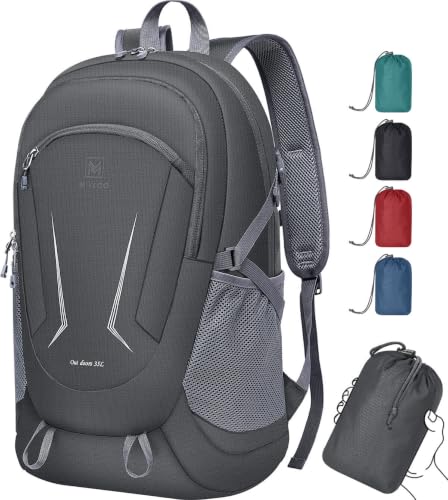
Pros
- Compresses down to 4.5 x 3.9 x 7.8 inches inside its own pocket for easy storage
- Extremely lightweight at 0.8 pounds, making it an easy addition to luggage or larger packs
- Features a dedicated wet compartment to keep damp and dry items separated
- Built-in safety whistle on the strap adds trail-readiness for emergencies
Cons
- Frameless, ultralight design lacks a rigid back panel or padded hip belt for heavy loads
- IPX4 rating protects against light rain and splashes but is not fully waterproof in prolonged downpours
- Thin packable fabric provides minimal structure or protection against sharp, bulky gear
The MIYCOO 35L Ultralight Packable Backpack is a collapsible daypack designed primarily for day hikers, travelers, and campers who need functional gear storage without carrying extra base bulk. Weighing just 0.8 pounds, it serves effectively as a secondary daypack that can stow inside a larger multi-day pack or travel suitcase until needed at the trailhead or destination. It suits budget-minded day hikers, vacationers, and lightweight enthusiasts who prioritize high packability over heavy load-bearing support.
With an unfolded profile measuring 12.5 x 8.5 x 20.9 inches and a listed capacity of 35 liters, this daypack provides generous volume for lightweight layers, trail food, and daily essentials. Because it is an ultralight, frameless packable bag, it does not feature an internal frame, rigid back-panel suspension, or a padded weight-distributing hip belt. Carried weight rests on the shoulder straps, which means packing soft items along the back panel is essential for maintaining trail comfort during moderate outings.
The pack construction utilizes water-resistant fabric with an IPX4 rating, which is designed to withstand light rain and water splashes encountered on the trail. The manufacturer incorporates reinforced major stress points and upgraded zippers with interlocking anti-theft clips to secure compartments against accidental opening. For organization, the bag provides three primary compartments, highlighted by a dedicated wet pocket that isolates damp towels, wet shells, or sweaty clothing from the rest of your dry gear. An integrated survival whistle is molded directly into the strap buckle for emergency signaling.
Packing and storing the daypack is straightforward, as the entire bag folds into its own internal pocket to a compact size of 4.5 x 3.9 x 7.8 inches. When deployed, hikers can organize trail items across the three compartments, keeping quick-grab gear accessible and heavier items centered. To clean the pack, spot cleaning with a damp cloth and mild soap followed by thorough air drying is recommended to maintain fabric integrity and zipper functionality before refolding it for long-term storage.
Buyers should be aware of clear physical limitations inherent to collapsible daypacks. The IPX4 rating offers splash protection and light-weather resistance, but it is not completely waterproof and will not safeguard electronics during sustained heavy downpours or immersion. Furthermore, the absence of structural frame stays or ergonomic suspension means carrying dense, heavy gear like climbing hardware or large amounts of water can cause strap strain and discomfort over long trail miles.
For casual day hikes, side trips from a base camp, or carry-on travel where packing space is at a premium, the MIYCOO 35L Packable Daypack offers practical, lightweight utility. Hikers looking for an inexpensive, secondary summit pack or an everyday excursion bag will appreciate its low weight and wet-gear separation, provided their gear list stays within reasonable lightweight limits.
The MIYCOO daypack delivers a stated 35-liter capacity distributed across three separate zippered compartments. This layout allows hikers to segregate trail snacks, emergency supplies, and spare layers rather than dumping everything into a single main cavity.
A standout organizational feature is the built-in wet compartment, which creates a physical barrier to separate damp jackets, sweaty clothing, or wet swimwear from sensitive dry items. The anti-theft zipper clips allow pulls to be fastened together, reducing the likelihood of zippers sliding open under motion.
At an unloaded weight of 0.8 pounds, this pack is designed to fold away into an integrated inner pocket measuring 4.5 x 3.9 x 7.8 inches. This compact folded profile makes it easy to slip into travel luggage, a car glove box, or the bottom of an expedition pack for summit bids.
The exterior material holds an IPX4 splash-resistance rating, helping shield contents from light drizzle, road spray, or damp ground. Upgraded zippers and reinforced stitching at major stress points help support everyday light-duty trail and travel demands.
Mastering Daypack Capacity: How to Choose the Right Liter Volume for the Trail
Determining what size daypack for hiking matches your trail itinerary depends on three intertwined factors: total trail time, expected weather volatility, and the physical bulk of your safety gear. For quick summer excursions lasting two to three hours, a compact 10-liter to 15-liter daypack comfortably holds water, high-energy snacks, and a compact wind shell. When you step into full-day mountain routes where afternoon thunderstorms or chilly summit winds threaten, stepping up to an 18-liter to 25-liter pack provides room for fleece midlayers, rain gear, and a first-aid kit. High-elevation shoulder seasons and winter treks demand 30-liter to 35-liter daypacks capable of housing heavy active insulation, thermal gloves, and extra emergency equipment.
Understanding Pack Volume: How Liters Measure Trail Capacity
Outdoor gear manufacturers measure backpack storage in liters, which refers to the total volume of internal compartments and enclosed pockets. A 15-liter pack does not merely represent a weight rating, but rather a fixed physical space of roughly 900 cubic inches. Beginners frequently mistake liter capacity for weight-bearing capacity, yet these two engineering concepts behave very differently once loaded with water and heavy gear. Packing dense items such as water bladders and trail tools requires careful weight distribution rather than simply maximizing internal space.
The physical structure of the bag also influences how efficiently those liters can be utilized during an outing. A frameless, collapsible nylon bag offers flexible interior space that molds around bulky, irregularly shaped clothing layers. Conversely, a technical daypack with an internal perimeter frame or a contoured backpanel maintains a rigid boundary that protects your spine from sharp gear edges. Understanding this geometric distinction helps you visualize whether your packed layers will slide smoothly into the main compartment or require tedious compression before every departure.
If you also plan to use your hiking gear for travel or flight connections, reviewing our carry-on backpack capacity guide can help you see how outdoor liter sizing translates to commercial airline baggage limits. A well-designed 20-liter to 35-liter daypack often crosses over seamlessly between backcountry single-track paths and overhead storage bins. However, technical trail features such as hydration ports, trekking pole loops, and external bungee cords set true hiking packs apart from generic urban commuter bags. Selecting the right volume ensures that your bag remains functional across both environments without feeling cumbersome.
The 10 to 15-Liter Range: Minimalist Outings and Warm-Weather Day Hikes
Minimalist packs in the 10-liter to 15-liter tier cater directly to fast-and-light trail adventures where foul weather is unlikely. In warm conditions, your body requires continuous hydration and sun protection rather than heavy insulation. Bags such as the AiryLeben 14L Small Hiking Backpack and the SKYSPER 15L Foldable Hiking Backpack Lightweight provide just enough capacity for a two-liter hydration bladder, sun protection, a headlamp, and energy bars. These smaller designs minimize overall trail weight, allowing you to move briskly across steep terrain without accumulating excess back sweat.
When selecting a 15-liter bag, examining the suspension and material build helps determine its trail capabilities. Technical options like the Osprey Sportlite 15L Lightweight Hiking Backpack incorporate dedicated airflow channels and structured harness webbing designed to stabilize your load over technical rock scrambles. Lightweight collapsible models like the BAGSMART 15L Packable Hiking Backpack for Women prioritize packability, weighing roughly half a pound so you can stow them inside luggage until you reach the park entrance. Both approaches deliver nimble mobility, though structured models offer better load distribution when carrying dense water bladders.
The primary constraint of the 10-liter to 15-liter capacity is its limited tolerance for bulky emergency clothing. While you can easily slip an ultralight wind shell or a compact packable rain jacket inside, adding a lofty fleece or a thick synthetic midlayer will quickly exhaust the remaining volume. Hikers who venture into high-altitude areas where temperatures plummet without warning may find 15 liters restrictive. For predictable low-elevation loops and maintained county park trails, however, this size class remains unmatched for light, unencumbered speed.
The 18 to 25-Liter Range: The Sweet Spot for Variable Trail Conditions
Most experienced day hikers consider the 18-liter to 25-liter bracket to be the most practical and versatile choice for three-season trekking. This capacity grants sufficient space to carry the Ten Essentials alongside a complete foul-weather layering kit without stretching zipper seams. Bags such as the G4Free 20L Lightweight Packable Hiking Backpack and the SUIKIHUM Ultra Lightweight Hiking-Daypack,Foldable demonstrate how 20 liters accommodates extra food, a water filtration kit, a compact medical kit, and a dry change of clothes. You can comfortably embark on a seven-hour ridge loop knowing that sudden temperature shifts will not catch you unprepared.
Having 20 liters of space also allows you to layer and delayer continuously as your metabolic output shifts on steep ascents. During brisk morning departures, you might wear an active insulation layer alongside your base layer, only to shed it within twenty minutes of steady climbing. A 20-liter main compartment accepts that discarded fleece or softshell jacket without forcing you to repack your entire bag on the side of the trail. The extra internal breathing room keeps your trail pace steady because you can access snacks, maps, and layers without dumping gear onto muddy ground.
Furthermore, this capacity category pairs exceptionally well with technical apparel strategies that protect against abrasions, wind exposure, and sudden trail chills. Packing backup items like trail hats, neck gaiters, and spare socks ensures dry skin when moisture builds up during heavy exertion. Hikers sporting breathable lightweight trail apparel can stow their outer wind shells or zip-off pant components directly into the main cavity as temperatures warm up. The 18-liter to 25-liter volume gives you the margin of safety needed for alpine terrain where weather forecasts cannot always predict localized storms.
The 30 to 35-Liter Range: Shoulder Seasons, Cold Weather, and Family Hikes
When autumn turns to early winter or when your trail responsibilities include carrying gear for children, a 30-liter to 35-liter daypack becomes an indispensable asset. Cold-weather hiking demands significant apparel bulk, including high-loft down jackets, heavy waterproof-breathable hard shells, thermal gloves, and insulated seat pads. A high-capacity option like the MIYCOO Ultralight Packable Backpack offers a generous 35-liter layout with dedicated multi-compartment storage. This expanded volume prevents dangerous compression of down feathers, preserving the loft necessary to trap body heat during summit rest stops.
In addition to clothing volume, extended shoulder-season hikes often necessitate specialized safety hardware that takes up substantial interior space. Carrying microspikes for icy switchbacks, an insulated thermos of hot tea, and extra emergency food quickly fills smaller packs to capacity. Having 35 liters of storage provides the flexibility to separate damp items from dry spare garments, preventing cross-contamination inside your pack. Dedicated wet compartments keep rain-soaked jackets or muddy trail accessories separated from dry base layers, preserving your warmth when you need to change at the summit.
The tradeoff with larger daypacks lies in load discipline and pack stability on technical trails. When carrying a 35-liter bag, hikers often feel tempted to pack non-essential gear simply because the physical space exists. An overloaded 35-liter daypack without rigid internal frame stays can sag against the lumbar region, creating neck and shoulder fatigue after several miles. Hikers utilizing large-capacity daypacks should focus on light, compressible layers and maintain a disciplined packing list to keep total trail weight manageable.
Layering System Synergy: Matching Daypack Size to Your Clothing Kit
Your hiking wardrobe directly determines the minimum daypack size required for safe wilderness travel across varying elevations. Technical layering relies on a moisture-wicking next-to-skin synthetic or merino base layer, an insulating midlayer such as grid fleece, and a protective weather shell. In temperate conditions, these garments compress down into modest bundles that slip effortlessly into a 15-liter or 20-liter bag. However, opting for heavy cotton sweaters or non-compressible gym sweatshirts consumes excessive volume while creating hypothermia risks once soaked with sweat.
Compressibility varies dramatically between technical fabrics and traditional casual garments. A packable down jacket or a high-denier ripstop wind shell compresses into the size of an apple, whereas a traditional heavy fleece jacket can consume six to eight liters of pack volume alone. When choosing your daypack capacity, evaluate the compressed bulk of your insulating layers rather than their uncompressed hanging size. Upgrading to packable, trail-specific garments often allows you to downsize your pack volume, saving energy on demanding ridge climbs.
Managing moisture transitions during active hiking also requires thoughtful spatial planning inside the pack. When ascending steep switchbacks in cool weather, high metabolic heat output causes rapid perspiration that can overwhelm your waterproof jacket’s breathability. Removing your outer shell proactively before you start sweating out preserves dry base layers and prevents dangerous post-climb chills. Having enough pack capacity to quickly stash that damp shell without compressing your dry spare layers represents a vital trail comfort and safety protocol.
Harness Architecture and Suspension: Comfort Under Variable Pack Loads
Liter capacity only tells half the story of trail comfort; the suspension system determines how that volume feels across your shoulders and spine. Ultralight packable daypacks, such as the SUIKIHUM 20L or BAGSMART 15L, utilize soft mesh shoulder straps without internal stiffeners to minimize pack weight and maximize folding convenience. These frameless designs excel when carrying loads under eight pounds, making them wonderful options for casual afternoon strolls. However, when loaded with two liters of water, heavy tools, and dense food, unpadded straps can begin digging into your collarbones.
More technical daypacks, like the Osprey Sportlite 15L, introduce structured foam backpanels and contoured hipwings that transfer weight away from the shoulders. The AirScape backpanel incorporates airflow channels that facilitate continuous ventilation between your back and the pack body, reducing heat buildup on hot ascents. A supportive webbing hipbelt stabilizes the load during dynamic movement, preventing the pack from swaying aggressively across technical scrambles. If your typical trail gear includes heavy hydration reservoirs or camera gear, investing in structured suspension provides noticeable fatigue relief.
Sternum straps represent another critical harness feature that enhances stability across all capacity brackets. Many modern daypacks across both budget and premium tiers include sternum buckles equipped with integrated emergency whistles for backcountry safety. Adjusting the sternum strap inward pulls the shoulder straps closer to the chest center, relieving pressure from the outer shoulder joints and preventing friction chafing. Proper harness adjustment ensures that whether you carry 14 liters or 35 liters, the bag moves naturally with your torso on steep climbs.
External Storage Solutions: Expanding Functional Daypack Capacity
External pockets and lash points significantly expand the functional utility of any daypack without requiring an upgrade to a larger internal liter size. Stretch mesh side pockets, such as those found on the SKYSPER 15L and G4Free 20L, keep water bottles immediately accessible without forcing you to unzip the main compartment. Front bungee cord systems allow you to strap a damp rain shell or a travel towel to the outside of the bag, allowing airflow to dry the fabric while preserving clean internal space. These exterior features ensure that wet gear never compromises dry insulating layers packed inside.
Shoulder strap pockets have also become an indispensable innovation for modern hikers who value continuous on-trail efficiency. Models like the AiryLeben 14L and BAGSMART 15L incorporate zippered smartphone pouches and elastic snack holsters directly onto the chest straps. This ergonomic configuration allows you to check navigation apps, capture landscape photos, or grab electrolyte chews on the go without breaking stride. By moving high-frequency essentials to the front of your body, you maintain balanced weight distribution and eliminate frequent pack removal stops.
Specialized external attachments like trekking pole loops and upper compression straps further enhance technical agility in mountainous terrain. The Osprey Sportlite 15L features dedicated loops that secure pole tips while upper straps stabilize the handles against the pack body. When navigating rocky hand scrambles or overgrown brush, stowing your poles externally frees up your hands for balance and safety. External lash points effectively transform a modest 15-liter technical daypack into a versatile multi-sport gear carrier capable of handling demanding day hikes.
Fabric Durability and Weather Protection Across Daypack Sizes
The textiles used in daypack construction dictate how well the bag withstands abrasive granite scrambles, dense thorn bushes, and sudden mountain downpours. Manufacturers frequently deploy ripstop nylon or Taslan nylon blends to achieve high tensile strength while keeping bare pack weight under one pound. The G4Free 20L utilizes water-repellent Taslan nylon to shed light trail mist, while the MIYCOO 35L carries an IPX4 splash-resistance rating to shield gear from roadside puddles and sudden sprinkles. Understanding these fabric barriers prevents unexpected water penetration when storms roll in over exposed ridges.
However, it is critical to distinguish water-resistant fabrics from completely waterproof submersible packs. Most daypacks rely on water-repellent surface coatings and reinforced stitching, but sustained mountain downpours can eventually seep through zipper seams and needle perforations. Heavy-duty SBS zippers and anti-theft zipper clips help maintain mechanical closure integrity, but packing sensitive electronics inside sealed dry bags remains standard backcountry best practice. For sustained wet-weather hiking, pairing your chosen daypack with an ultralight external rain cover provides complete protection against saturated face fabrics.
Abrasion resistance also plays an essential role in how many seasons your daypack survives on rugged backcountry trails. Ultra-thin fabrics that fold down to pocket size deliver unmatched convenience for travel, yet they require cautious handling around sharp rock outcrops. Thicker ripstop weaves and reinforced stress points handle repeated abrasion against rough granite and pack-strap friction far better over years of use. Matching fabric durability to your intended hiking terrain ensures your investment holds up without suffering premature tears miles from the trailhead.
How to Determine Your Perfect Daypack Capacity at Home
Before committing to a specific liter capacity, conducting a quick packing audit in your living room eliminates guesswork and prevents trail discomfort. Gather the Ten Essentials, including your first-aid kit, navigation tools, headlamp, multi-tool, and sun protection, into a single pile. Next, add your anticipated water containers, full day snack supply, and the seasonal clothing layers required for your target elevation. Measuring the physical volume of this combined gear pile quickly reveals whether a compact 14-liter pouch or a spacious 25-liter hauler is necessary.
Pay careful attention to seasonal transitions when assessing your year-round gear requirements. If you hike exclusively during warm summer mornings, a 14-liter to 18-liter bag provides ample room while discouraging unnecessary pack weight. Conversely, if you enjoy autumn foliage hikes where temperatures can plummet twenty degrees by late afternoon, an 18-liter to 25-liter pack represents the safer, more modular investment. Choosing a daypack that accommodates your thickest anticipated midlayer ensures you will never have to leave essential foul-weather protection behind to save space.
Ultimately, selecting the right daypack size for hiking balances freedom of movement with responsible wilderness safety. A bag that fits your gear securely without sagging or bursting at the seams allows you to focus on the trail rather than your shoulders. Whether you choose an ultralight packable model for spontaneous local strolls or a structured technical daypack for alpine ascents, aligning volume with trail conditions guarantees an enjoyable, well-prepared journey.


Write Your Review
No reviews yet. Be the first to share your experience!