


Maintaining forward momentum across rugged singletrack requires balanced posture, efficient arm drive, and dependable cadence. When mountain runners tackle steep climbs and technical descents, selecting the proper equipment directly affects energy expenditure and stability. Understanding what size trail running poles to carry ensures that your upper body works in harmony with your stride rather than fighting awkward leverage. Runners who pair their pole setup with specialized hiking apparel designed for knee support often notice a significant reduction in cumulative joint stress over long mountain outings.
Unlike traditional telescoping trekking sticks designed for heavy load hauling, trail running poles emphasize minimal swing weight and rapid deployment. Most modern ultralight options feature fixed-length Z-folding designs constructed from carbon fiber or 7075 aluminum alloy, which means you cannot simply tweak an external cam lever midway through a run. Choosing the correct pole height from the start keeps your elbows positioned properly and prevents premature forearm fatigue. This guide breaks down anatomical sizing baselines, terrain adaptations, and folding designs so you can select the right pair for your trail goals.



Anatomical Sizing and Selection for Trail Running Poles
Selecting the right pole length determines how efficiently you transfer energy from your upper body into forward propulsion on the trail. A pole that sits too high forces your shoulders into an uncomfortable shrug, while a pole that sits too low causes you to hunch forward and compromise your running posture. Finding your ideal fit requires analyzing anatomical measurements alongside terrain demands, shaft geometry, and folding mechanisms.
The 90-Degree Elbow Angle Baseline
The fundamental standard for sizing running poles begins with an unweighted anatomical measurement on level ground. Stand naturally while wearing your typical trail running shoes, as outsole lug height and cushioned midsole stacks add measurable height. Bend your elbow at a 90-degree right angle with your forearm parallel to the floor, keeping your upper arm relaxed. The distance from the top of your hand down to the floor represents your baseline pole height in centimeters.
This right-angle posture creates an optimal biomechanical lever for propelling your body upward during steep climbs. When your elbow rests at 90 degrees, your arm muscles engage smoothly without excessive shoulder elevation. A grip position that sits higher than your elbow forces constant tension across the trapezius muscles. Conversely, dropping your hands lower forces your lumbar spine forward, which quickly strains your lower back during high-mileage runs.
Trail runners verify this neutral position by holding their poles with the tips planted perpendicular to the ground. If you choose a fixed-length pole, this static measurement serves as your primary reference point before purchasing. Testing this arm angle indoors while wearing trail shoes prevents sizing miscalculations before committing to non-adjustable folding gear. Taking a few moments to confirm this baseline geometry ensures your arms provide genuine propulsion rather than carrying dead weight.
Standard Height to Pole Length Sizing Guidelines
Pole manufacturers offer standardized sizing tiers that correlate runner height with specific pole lengths. For individuals standing between 160 and 170 centimeters (roughly 5 feet 3 inches to 5 feet 7 inches), a 110-centimeter (43-inch) pole length offers natural arm articulation. Options like the AONIJIE Trail Running Poles 2 Pcs Outdoor Trekking and the Ultralight 7075 Aluminum Trail Running Poles designate 110 centimeters as their entry sizing standard for runners in this height bracket. This compact size preserves a light swing weight while maintaining positive ground contact on rolling terrain.
Runners measuring between 170 and 180 centimeters (approximately 5 feet 7 inches to 5 feet 11 inches) typically require a 120-centimeter (47-inch) pole. This median dimension represents the most widely utilized specification across ultra marathons and fastpacking events. Models such as the BLACK DIAMOND Distance Z Poles, Aluminum and the Ultralight Carbon Fiber Trekking Poles highlight 120 centimeters as a balanced configuration for diverse terrain. Selecting this mid-range length gives average-height athletes solid leverage when pushing off granite steps and loose trail scree.
Taller athletes measuring between 180 and 190 centimeters (approximately 5 feet 11 inches to 6 feet 3 inches) need a 130-centimeter (51-inch) pole to avoid excessive forward leaning. Options like the LEKI Ultratrail FX.One Trekking Poles-Bright also offer sizing across five-centimeter increments from 105 up to 135 centimeters, allowing runners to fine-tune their fit. If your height places you directly between standard sizes, your upper-body proportions and primary trail gradient should guide your choice. A runner with longer arms often prefers the shorter option, whereas an athlete with long legs may benefit from rounding up.
Why Fixed-Length Folding Z-Poles Require Precise Sizing
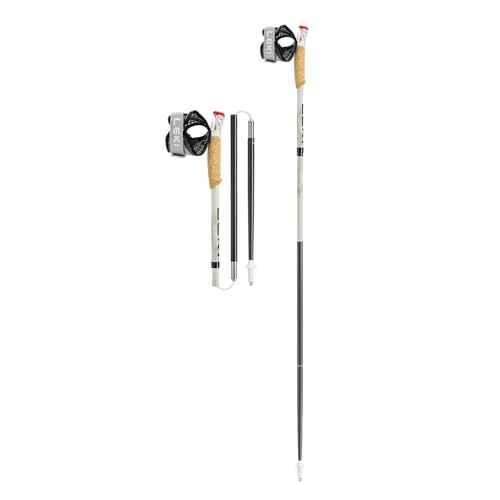
Traditional trekking poles utilize telescoping sections equipped with external cam levers or twist locks that allow continuous length adjustments on the trail. Trail running models, however, prioritize rapid deployment and featherweight construction by adopting fixed-length Z-pole folding systems. Options such as the Colorful Trail Running Poles 2 Pack Ultralight eliminate moving adjustment hardware entirely to maximize shaft stiffness and cut rotational mass. Because these fixed shafts cannot be shortened or extended in the field, selecting the correct size before purchase becomes crucial.
Eliminating telescoping clamps and sliding collars removes common mechanical failure points that can slip under sudden vertical impact. When an athlete plants a pole forcefully on a steep drop, fixed joints maintain solid structural integrity without unexpected joint collapse. Furthermore, the absence of heavy clamp mechanisms dramatically lowers the swing weight of each pole section. This weight reduction allows runners to maintain a fast, natural arm cadence without expending excess shoulder energy over high-mileage mountain runs.
The main tradeoff of a fixed folding design is the absence of on-trail length versatility across changing trail gradients. You cannot extend the shafts for prolonged descents or shorten them for steep scrambling pitches. Runners must therefore ensure their chosen length functions reliably across both uphill grunts and flat transitional terrain. Taking the time to measure your height and forearm position accurately prevents the frustration of being locked into an awkward setup on race day.
Adjusting Grip Position on Variable Mountain Gradients
Even with fixed-length poles, mountain athletes utilize smart grip techniques to adapt to aggressive uphill pitches and steep downhills. Many modern running poles feature extended handles with a secondary lower foam sleeve positioned below the primary grip. Designs like the Ultralight 7075 Aluminum Trail Running Poles integrate non-slip lower ridge sleeves that allow runners to choke up on the shaft during steep climbs. Grasping this lower foam section effectively shortens the functional pole length without requiring hardware adjustments.
Choking up on the grip keeps your hands lower, which prevents shoulder strain when driving upward into severe mountain inclines. Instead of pushing against a grip that sits at chest height, you maintain powerful leverage with your elbows tucked close to your ribs. This mechanical advantage helps offload intense quadriceps burn during continuous alpine ascents. When the trail levels out, you simply shift your hands back to the ergonomic upper handle to regain your natural baseline stride.
On steep technical descents, runners reverse this technique by cupping the smooth rounded top of the grip in the palm of each hand. This grip style extends your effective reach, allowing the carbide tips to contact the ground slightly ahead of your descending footsteps. Using this forward placement provides extra braking assistance and stabilizes your center of gravity across loose scree. Mastering these versatile hand transitions allows a single fixed-length pole to perform remarkably well across undulating alpine profiles.
Shaft Materials and Structural Durability: Carbon Fiber Versus 7075 Aluminum
Shaft metallurgy directly influences how a pole handles high-speed trail impacts, rotational swing weight, and accidental rock wedging. High-density carbon fiber construction, featured in models like the LEKI Ultratrail FX.One Trekking Poles- Grey Light and the Ultralight Carbon Fiber Trekking Poles, offers an exceptional strength-to-weight ratio. These composite shafts weigh as little as 3.5 to 5.9 ounces per pole while absorbing high-frequency trail vibrations before they reach your wrists. For endurance athletes covering ultramarathon distances, that vibration damping significantly reduces cumulative forearm fatigue.
The structural vulnerability of carbon fiber lies in its susceptibility to sudden brittle failure under lateral shear force. If a composite shaft becomes wedged between granite boulders while your forward momentum continues, the rigid carbon weave can snap abruptly. In contrast, aircraft-grade 7075 aluminum alloy provides superior impact resistance and ductile flexibility on rocky alpine terrain. Poles like the AONIJIE Collapsible Trekking Poles 2-Pack Walking can withstand heavy scrapes, accidental kicks, and severe lateral loads without shattering.
Aluminum shafts may bend under extreme loads, but a bent metal section can often be carefully straightened in the field to finish a mountain loop. Carbon shafts that experience micro-cracking or structural splintering, however, cannot be safely repaired on trail and must be decommissioned immediately. Runners traversing smooth dirt singletrack often prioritize featherweight carbon fiber for pure race efficiency. Conversely, athletes tackling rugged scree fields, boulder fields, and talus slopes often select 7075 aluminum for peace of mind.
Grip Architecture, Detachable Straps, and Hand Fatigue
Grip comfort becomes increasingly critical as running duration extends past several hours in warm mountain conditions. Most trail running poles utilize closed-cell EVA foam handles because the material wicks sweat effectively, resists water absorption, and remains pliable in cold mountain air. Models like the BLACK DIAMOND Distance Z Poles, Aluminum pair textured EVA foam handles with breathable, moisture-wicking wrist straps to prevent friction hot spots. EVA foam delivers a firm, reassuring hold even when your palms become slick with perspiration during intense climbs.
Wrist strap architecture plays an equally vital role in distributing vertical load across the back of the hand. Advanced race designs, such as the Trail Trigger Shark system on the LEKI Ultratrail FX.One Trekking Poles- Grey Light, use a dedicated mesh glove strap that clicks directly into the grip handle. This glove-style interface transfers arm drive straight into the pole shaft without requiring the athlete to squeeze the grip with a tight fist. Runners can quickly detach the mesh strap via a top push-button when approaching hydration aid stations or scrambling over boulders.
Standard webbing straps also provide solid weight distribution when adjusted correctly, allowing your skeleton to bear load during powerful pole plants. Pairing your upper body kit with breathable lightweight hiking pants ensures your entire running setup remains cool and unrestricted on long backcountry trails. Ensuring your wrist straps remain comfortable without chafing preserves grip strength and keeps hand fatigue from becoming a limiting factor. An ergonomic grip connection allows you to maintain consistent arm propulsion through every mile of your race.
Packability, Collapsed Length, and Running Vest Storage
Trail running requires frequent transitions between running freely on flat sections and using poles on steep technical pitches. Collapsible Z-poles separate into three or four interlocking sections joined by an internal tension cord, shrinking down to remarkably compact dimensions. For example, the AONIJIE Trail Running Poles 2 Pcs Outdoor Trekking collapses to just 12.99 inches (33 centimeters), while four-section models like the Ultralight Carbon Fiber Trekking Poles fold to 14.7 inches. These compact folded lengths allow runners to slide poles quickly into running vest sleeves, custom quiver bags, or waist belt holsters.
Quick pull-cord tension systems, such as those found on the Ultralight 7075 Aluminum Trail Running Poles, let athletes deploy their poles in seconds without breaking stride. Runners simply pull the top shaft section until the internal cord seats firmly into a handle slot or lock button pops out. This swift transition capability prevents time loss during competitive races when terrain changes abruptly from flat meadows to steep switchbacks. When the climb ends, pressing the release button allows the sections to collapse instantly for streamlined stowage.
Compact folded dimensions also benefit mountain athletes who travel frequently by air to destination races. If you are packing gear into small travel luggage, consulting our carry-on backpack size guide helps you organize your kit efficiently while respecting airline volume limitations. Keep in mind that sharp metal pole tips must generally travel in checked luggage under standard airport security regulations. Having poles that fold down below 15 inches makes packing your complete racing kit simple and stress-free.
Traction Hardware: Carbide Tips and Removable Trail Baskets
The tip hardware at the base of your poles dictates traction across wet roots, loose gravel, and polished rock slabs. Trail running poles rely on heavy-duty tungsten carbide tips to bite aggressively into slick dirt and rocky surfaces without wearing down prematurely. The Ultralight 7075 Aluminum Trail Running Poles and the Colorful Trail Running Poles 2 Pack Ultralight incorporate durable carbide alloy tips that provide consistent friction under high-tempo strides. Reliable tip bite gives runners total confidence when applying heavy downward force on exposed ridge trails.
Removable mud baskets prevent pole tips from sinking too deep into soft alpine mud, damp forest duff, or lingering spring snowbanks. Trail running poles utilize minimalist, low-profile baskets to minimize brush snagging while running through dense undergrowth. Unlike wide winter powder baskets, these streamlined discs add practically zero drag or swing weight to your stride. Keeping your baskets intact ensures your poles provide stable braking support rather than plunging unexpectedly into soft trail soil.
Common Sizing Mistakes and Pre-Trail Verification Checks
One of the most frequent mistakes trail runners make is sizing their poles purely based on casual street height without considering footwear. Running shoes with thick, responsive foam midsoles can lift your stance by more than an inch compared to barefoot measurements. Always measure your elbow angle while wearing your actual trail running shoes on a hard, level surface. Overlooking this footwear offset can lead to choosing poles that feel slightly too short on the trail, causing excessive neck and shoulder strain.
Another common sizing pitfall involves choosing an overly long pole under the mistaken assumption that extra reach aids mountain ascents. While longer poles can assist hikers on leisurely descents, an oversized pole forces your hands too high during steep climbs, rapidly fatiguing your shoulders. If your calculated measurement lands squarely between two fixed sizes, mountain runners usually perform better by selecting the shorter size. A slightly shorter pole keeps your arm turnover nimble and makes it easier to navigate narrow switchbacks without dragging the tips.
Before heading out on technical mountain runs, always inspect your folding poles to ensure all joints seat flush and the locking pins lock securely into place. Apply firm downward body weight onto the handles on level ground to verify the internal cord maintains proper tension without rattling or flexing. Check the tungsten tips for chips or rounding, and ensure your wrist straps are adjusted snugly without cutting off circulation. Conducting these quick mechanical verification checks guarantees that your poles deliver reliable stability, balance, and propulsion from the first climb to the finish line.
Matching your height to the correct fixed-length running pole creates an efficient partnership between your upper body and lower legs. By anchoring your selection around a 90-degree elbow bend, selecting durable shaft materials, and practicing grip adjustments, you can tackle demanding mountain terrain with speed and confidence. Take the time to confirm your measurements accurately, and your poles will provide dependable balance and drive across every rugged mile ahead.






Write Your Review
No reviews yet. Be the first to share your experience!