


Regulating core temperature on exposed ascents requires more than grabbing random gym clothes from a closet. Experienced hikers rely on a coordinated apparel system that moves perspiration away from skin, buffers sudden wind chill, and prevents painful friction under pack straps. Knowing what to wear hiking women starts with understanding how specialized synthetic knits and natural wool yarns work together to keep you comfortable across shifting terrain. Relying on everyday streetwear or moisture-retentive cotton invites rapid chilling, internal clamminess, and debilitating skin irritation miles away from the trailhead.
Building an adaptable trail wardrobe involves pairing moisture-wicking base layers with protective bottoms and dense cushion socks that absorb trail impact. Purpose-built apparel like trail mobility hiking pants shields your legs from brush and solar radiation while maintaining active breathability during steep climbs. Quality technical clothing also simplifies packing by offering quick drying times and compact roll-up designs for fluctuating weather. Focusing on verified fabric blends, ergonomic seam placement, and mechanical venting helps you assemble a dependable kit that performs reliably on day treks and multi-day backpacking trips alike.

Pros
- Generous 70% merino wool composition provides dependable warmth and natural moisture control
- Seamless toe construction and targeted heel cushioning reduce pressure points and trail blister risks
- Comes as a convenient five-pair pack, offering great value for multi-day hikers and weekend backpackers
- Wide compression zone across the arch provides noticeable foot support during extended trail miles
Cons
- High wool content requires gentle washing and air drying to avoid premature shrinkage
- Cushioned build may feel slightly snug inside tight or performance-fit hiking shoes
- Sizing is organized into broad ranges (5.5-10 and 10-13), which may leave a little slack on smaller feet
The SAVALOS Merino Wool Hiking Socks for Women are crew-cut trail socks designed to provide thermal warmth, moisture management, and foot protection. Offered in a five-pair pack with an earthy, assorted color palette, these socks are well suited for female day hikers, weekend backpackers, winter campers, and outdoor travelers who need dependable trail comfort without buying expensive single pairs.
On the trail, proper foot management is just as critical as your pack suspension. These socks feature a wide elastic compression band across the midfoot that delivers direct arch support, helping stabilize your feet through uneven terrain and reducing foot strain during high-mileage days. The underfoot cushioning, reinforced heel, and flat seamless toe design work together inside hiking boots to absorb footfall impacts and prevent hot spots before blisters can develop.
The fabric composition relies on 70% merino wool blended with 23% polyester, 5% spandex, and 2% nylon. Merino wool delivers natural thermal regulation and odor resistance, keeping feet warm in chilly morning conditions while breathing as temperatures rise. The synthetic components ensure elastic recovery and durability, while integrated mesh ventilation zones along the upper foot speed up vapor evaporation during strenuous climbs.
In terms of sizing, SAVALOS offers Medium (designed to fit US women's shoe sizes 5.5 to 10) and Large (accommodating sizes 10 to 13). The elastic crew design hugs the calf comfortably to keep debris out without sliding down into boots. For trail maintenance and long-term care, washing these socks on a gentle cycle in cold water and allowing them to air dry will help preserve the merino wool fibers and avoid accidental heat shrinkage.
A realistic consideration is that high-merino blends require gentler laundering than pure synthetics, making quick tumble-drying on high heat ill-advised. In addition, the medium size spans shoe sizes 5.5 through 10, meaning hikers at the smaller end of that spectrum might notice slight excess fabric around the heel or toe box if their footwear has a tight, low-volume fit.
Overall, the SAVALOS 5-Pack Merino Wool Hiking Socks offer an accessible, value-driven trail solution for hikers seeking reliable foot support and thermal comfort. Whether packed as extra pairs in your multi-day backpack or worn daily during cold-weather outings, this set provides the cushioning and temperature control needed for enjoyable days on trail.
SAVALOS hiking socks are structured in two women's size brackets: Medium covers US women's shoe sizes 5.5 through 10, while Large covers sizes 10 through 13. The crew-height design provides ample coverage above standard hiking boot collars to prevent chafing from boot tongues and ankle padding.
Because the knit incorporates 5% spandex and 2% nylon alongside 23% polyester, the socks offer dynamic elasticity across the forefoot and instep. Hikers with narrower or low-volume feet near size 5.5 should note that broad sizing brackets can occasionally result in subtle bunching, while those between sizes 8 and 10 will likely experience a snug, contoured fit.
The fabric utilizes a high-percentage blend of 70% merino wool, 23% polyester, 5% spandex, and 2% nylon. Merino wool provides natural thermoregulation, wicking perspiration away from the skin and resisting trail odors, while the polyester and nylon enhance overall fabric tenacity in high-friction heel and toe zones.
To maintain elasticity and prevent fiber damage, machine wash these socks inside out in cold water using a mild detergent. Avoid fabric softeners and high-heat drying, as excessive heat can degrade the spandex and cause wool fibers to shrink. Air drying flat or on a line is recommended to maximize durability between hiking trips.

Pros
- Built-in UPF 50+ sun protection safeguards legs on exposed, sun-drenched trails
- Five dedicated zipper pockets prevent smartphones, pocket tools, and snacks from sliding out
- Convertible roll-up cuffs offer instant cooling and capri styling without removing your shoes
- Four-way stretch material combined with an elastic waistband provides flexible mobility on rugged terrain
Cons
- Lightweight three-season fabric is not insulated for freezing winter hiking conditions
- Roll-up tabs create a capri length rather than a completely detachable zip-off lower leg
- Manufacturer does not specify exact inseam length measurements
The Toomett Women's Hiking Pants (Model 6608) are lightweight, quick-drying trail cargo pants engineered for hikers, campers, and outdoor travelers who need flexible, sun-protective coverage. Designed with a four-way stretch fabric and an elastic waistband, these pants cater to day hikers navigating overgrown paths, backpackers seeking dependable camp wear, and active travelers needing wrinkle-resistant outdoor apparel. For anyone moving under open skies, the built-in UPF 50+ rating provides essential protection against harmful ultraviolet rays throughout extended trail days.
On the trail, thermal regulation and freedom of movement are critical factors for hiking performance. The lightweight stretch-woven fabric incorporates moisture-wicking and quick-drying capabilities to help keep skin dry and cool during strenuous ascents. When midday heat builds up, the convertible roll-up design at the knees allows the pants to be secured into capris, providing instant lower-leg airflow without requiring a complete change of clothes. The breathable construction makes them well matched for warm spring, summer, and early autumn outings.
Trail organization is handled through five dedicated zippered compartments, solving the common problem of gear sliding out of open pockets while scrambling or sitting down. The layout includes two front slant zipper pockets, one rear zipper pocket, and two thigh-mounted cargo zipper pockets. These secure compartments provide ample room for smaller trail essentials such as a smartphone, compact compass, energy bars, or basic first-aid supplies. Because every pocket uses a zipper closure, trail accessories remain protected even when moving through brush or rough switchbacks.
Fitting and integration with hiking backpacks are simplified by the smooth elastic waistband. Unlike stiff, bulky waists that pinch underneath a loaded daypack or backpacking pack hip belt, this flexible band sits comfortably against the torso without excessive friction. When packing for multi-day trips, the lightweight, wrinkle-free material packs down compactly inside a backpack or duffel. Between hikes, the quick-drying properties allow for quick hand washing and rapid air drying at camp.
While these pants excel in warm and temperate conditions, several practical limitations should be considered before buying. The lightweight fabric is targeted strictly for three-season use and lacks thermal insulation for sub-freezing winter treks. In addition, the roll-up knee design converts the pants to capris using tabs rather than offering fully detachable zip-off lower legs. Hikers needing complete leg detachment or heavy abrasion-resistant knee overlays for technical mountaineering may need heavier specialty trousers.
For budget-conscious hikers, weekend campers, and adventure travelers seeking versatile outdoor clothing, the Toomett Women's Hiking Pants offer a practical balance of UV defense, comfortable stretch, and secure pocketing. Their combination of UPF 50+ fabric, convertible roll-up legs, and five zippered storage spots makes them a solid, functional addition to any warm-weather hiking wardrobe.
The Toomett Women's Hiking Pants provide five secure zippered storage compartments designed to keep essential trail items organized and accessible. The layout features two front slant zipper pockets, one rear zipper pocket, and two spacious thigh cargo zipper pockets.
Having zipper closures across all five pockets prevents items such as smartphones, keys, lip balm, and trail snacks from falling out while walking or traversing uneven ground. The cargo pockets on the thighs offer convenient access to items even when wearing a backpack with a buckled hip belt, keeping smaller navigation tools and quick snacks within easy reach.
These outdoor pants feature stretch-woven fabric with integrated UPF 50+ sun protection to shield your legs from harmful ultraviolet radiation. This level of defense is particularly beneficial for hikers spending hours exposed on alpine ridges, desert trails, or open savannahs where shade is minimal.
The material also emphasizes quick-dry and breathable performance to manage sweat and humidity during warmer conditions. While the fabric is tailored for spring, summer, and autumn weather, it is not waterproof or thermal-lined, so pairing them with rain gear or thermal base layers is necessary in wet or freezing climates.
Pros
- Four zipper-secured pockets offer dependable storage for trail essentials without items slipping out
- UPF 50+ rating provides reliable sun defense during exposed daytime hikes
- Elastic waist with interior drawstring and articulated knees offer flexible trail movement
- Adjustable ankle cinch cords help block trail debris, insects, and drafty air
Cons
- Water-resistant fabric is designed for light moisture and will not replace dedicated waterproof rain pants in downpours
- Jogger-style cut and ankle cuffs may not suit hikers who prefer a traditional straight-leg or boot-cut fit
- Packaged sizing reflects a specific 29-inch regular inseam in Medium, requiring careful inseam selection for petite or tall users
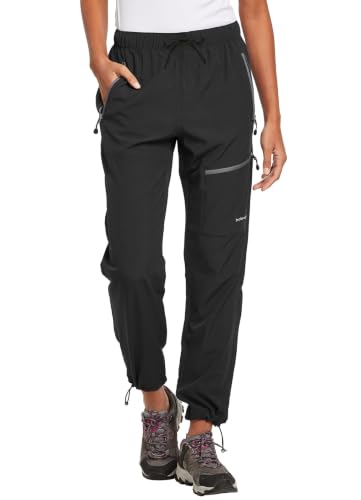
The baleaf Women's Hiking Pants are lightweight, quick-drying trail joggers engineered for women seeking functional comfort across day hikes, travel adventures, and campsite wear. Combining active jogger styling with outdoor-specific utility, these pants cater to day hikers, weekend campers, and backpackers who need breathable apparel that moves freely on the trail. With built-in UPF 50+ sun protection and a water-resistant finish, they serve as a practical lower-body layer for mild to warm conditions as well as transitional shoulder-season weather.
Trail movement is supported through functional tailoring, highlighted by articulated knees and an elastic waistband equipped with an adjustable drawstring. This design allows hikers to step over fallen logs, scramble over rocky inclines, or sit comfortably around camp without feeling restricted by rigid fabric. The lightweight and breathable construction helps manage body heat during steep ascents, while the quick-dry properties ensure that sweat or damp brush exposure dries out relatively quickly during steady movement.
Storage and trail protection are central to the build quality of these joggers. The pants feature four separate zip-closure security pockets, giving outdoor enthusiasts reliable spaces to store pocket knives, trail passes, identification, or small snacks without worrying about items tumbling out on uneven ground. At the ankle cuffs, integrated adjustable cord locks allow hikers to cinch the leg openings snugly around trail shoes or hiking boots, which helps deter dirt, gravel, and insects from crawling up the legs.
Maintenance and packing for trips remain straightforward thanks to the lightweight fabric construction and machine-washable care requirements. For backpackers and travelers packing clothing into compression sacks or backpack compartments, the compressible material takes up minimal pack volume and shakes out easily at the trailhead. The combination of an elastic waist and drawstring cord makes daily adjustments quick, accommodating fluctuating base layers or personal fit preferences throughout a multi-day trip.
While these joggers offer strong everyday utility, buyers should note specific functional limitations before setting out into harsh environments. The water-resistant finish is intended to shed light moisture, damp foliage, or brief drizzles, but it does not make the garment waterproof during sustained downpours or heavy mountain storms. Additionally, hikers who prefer loose boot-cut hems over cuffed jogger silhouettes may find the tapered ankle styling less compatible with bulky mountaineering footwear.
For hikers, campers, and travelers seeking dependable sun protection, agile mobility, and secure zippered storage at an accessible value, the baleaf Women's Hiking Pants represent a sensible wardrobe addition. They provide the necessary lightweight breathability and functional pocket configuration needed for warm-weather day hikes, state park explorations, and casual backpacking itineraries.
Finding the right fit in the baleaf Women's Hiking Joggers relies on evaluating both waist sizing and inseam measurements. This specific pair comes in a size Medium with a 29-inch regular inseam, while the product line also offers 27-inch petite and 31-inch tall options to accommodate varying heights. The elastic waistband pairs with an interior drawstring to ensure a secure, slip-free fit that adapts easily across different body shapes.
Mobility is further enhanced by articulated knees, which provide dedicated pre-shaping so the fabric does not pull tight across the kneecaps when stepping up steep terrain. At the hem, adjustable cord locks let you fine-tune the ankle circumference, allowing you to wear them loose for increased airflow or cinched tight against boots for debris protection.
The baleaf Women's Hiking Joggers feature a lightweight synthetic fabric designed specifically for active outdoor performance. Built-in UPF 50+ sun defense helps block harmful ultraviolet rays during long stretches on exposed alpine ridges or sunny valley paths, reducing the need for constant sunscreen reapplication on the legs.
Organization is managed through four zip-closure security pockets that prevent critical trail gear from falling out during active movement. While the water-resistant coating helps shed light moisture and morning dew from brushy paths, it remains breathable enough to prevent overheating on warm summer ascents.
The Practical System for What to Wear Hiking Women
Understanding what to wear hiking women begins with abandoning the idea that a single magical garment handles every wilderness scenario. Mountain weather shifts rapidly between trailhead departures, shaded switchbacks, and wind-scoured ridgelines. True trail comfort comes from a modular clothing system designed to manage moisture transfer, insulate against thermal loss, and defend against environmental abrasions. Each layer serves a precise physiological role that works in harmony with your metabolic output.
The Fundamental Layering Principle: Moisture Management and Thermoregulation
Physical output during uphill hiking generates significant body heat and perspiration that must escape before condensing into chilling liquid. A three-part layering framework controls this process by creating microclimates between your skin and the ambient outdoor environment. The next-to-skin base layer pulls liquid sweat outward through capillary action, while a middle insulating layer traps warm air without restricting vapor escape. An exterior weather shell deflects precipitation and wind, completing an adaptable barrier that keeps your core temperature balanced.
Cotton garments represent a serious hazard on backcountry trails due to their hydrophilic cellulose fiber structure. When cotton gets wet from sweat or rain, it absorbs up to twenty-seven times its dry weight in moisture and loses all insulating loft. Wet cotton pulls heat away from your skin roughly twenty-five times faster than air, dramatically accelerating the risk of hypothermia even in mild forty-degree weather. Technical synthetic fibers and fine animal wools remain hydrophobic, allowing them to retain structural integrity and body heat when damp.
Base Layer Fiber Mechanics: Merino Wool Versus Synthetic Knits
Merino wool tops provide outstanding natural thermoregulation and odor resistance, making them ideal for multi-day trips and fluctuating temperatures. Merino fibers feature microscopic crimps that trap dead air for warmth while absorbing vapor into their protein core before releasing it outward. This internal absorption keeps the surface of the fiber dry against your skin, preventing cold clamminess during post-climb rest breaks. However, pure wool knits dry more slowly than pure synthetics and require careful laundering to prevent premature thinning or fiber breakage.
Polyester and nylon base layers excel at pure wicking speed and mechanical durability under heavy backpack straps. These synthetic yarns do not absorb moisture internally; instead, they spread liquid droplets across a wide surface area where body heat accelerates evaporation. Blended garments combine the strengths of both textile families to improve stretch and dimensional stability. Looking for flatlock seam construction is critical, as flat seams eliminate raised ridges that chafe painfully against sensitive skin under loaded shoulder harnesses.
Technical Hiking Bottoms Versus Standard Athletic Tights
Many beginners reach for standard gym leggings, but dedicated hiking bottoms offer distinct structural advantages across rugged terrain. Traditional workout tights feature knit constructions that snag easily on thorny brush, granitic boulders, and overgrown trail spurs. Woven trail bottoms like dedicated trail pants utilize tightly woven fibers that deflect abrasive trail hazards and protect skin from biting insects. Furthermore, lightweight woven textiles resist wind penetration far better than open-knit activewear tights, keeping your lower body significantly warmer in breezy conditions.
Pocket architecture is another critical functional difference between yoga leggings and genuine trail trousers. Standard athletic tights often lack secure storage or feature shallow hip pockets that dump phones and gear when scrambling over logs. Purpose-built hiking pants incorporate multiple zippered pockets across the thighs and hips, allowing safe transport of snacks, lip balm, and navigation devices. These cargo and slant pockets sit clear of backpack hip belts, preventing painful pressure points where buckles press tightly against personal gear.
Ergonomic Features in Hiking Pants: Articulation, Rise, and Sun Protection
Unrestricted mobility makes a massive difference when stepping over tall boulders or ascending steep alpine switchbacks. Hiking pants engineered with articulated knees and four-way stretch fabric mimic natural joint movement without pulling or binding across the thighs. Garments such as knee-articulated hiking trousers incorporate ergonomic fabric shaping that prevents the waistband from sliding downward during high-stepping maneuvers. Wide elastic waistbands with adjustable drawstrings provide a customized fit that prevents uncomfortable gap openings while resting flat beneath heavy load-bearing pack belts.
Sun defense across exposed ridgelines requires deliberate garment design rather than casual fabric selection. Quality hiking bottoms offer certified UPF 50+ ultraviolet protection woven directly into the stretch-woven synthetic fabric. This dense physical weave blocks harmful ultraviolet rays without requiring sticky sunblock applications across your legs. Many modern pants also feature convertible capri roll-up tabs or hem cord locks, granting instant cooling during intense midday heat while allowing you to cinch cuffs tightly against ticks and scree.
Inseam length directly impacts trail safety, as overly long trouser hems create tripping hazards on rocky descents. Selecting apparel brands that provide specialized petite and tall inseam profiles ensures the leg opening falls precisely at the top of your hiking footwear. The baleaf Women’s Hiking Pants Quick Dry Water addresses this need by offering dedicated twenty-seven-inch petite and thirty-one-inch tall inseams alongside a water-resistant quick-drying finish. Having an exact hem length prevents mud accumulation around the ankles while maintaining a streamlined silhouette through dense brush.
Footwear Interface: Sock Cushioning, Fiber Blends, and Blister Prevention
Foot comfort dictates whether an outdoor adventure is enjoyable or cut short by agonizing hot spots and friction blisters. Trail socks must manage intense foot perspiration while cushioning high-impact zones under the heel and metatarsal pads. Low-grade cotton athletic socks saturate quickly, bunching up inside trail runners or boots and causing catastrophic skin maceration. A high-density merino wool blend creates an ideal interface, buffering moisture within the yarn while providing resilient elasticity that keeps the sock firmly in place.
Technical socks feature engineered compression zones that support the plantar fascia and enhance venous return during sustained ascents. The SAVALOS Merino Wool Hiking Socks for Women Thermal exemplifies this design with a seventy percent merino wool blend reinforced by polyester, spandex, and nylon. These socks incorporate dedicated arch support bands, breathable mesh instep panels, and seamless toe closures that eliminate blister-causing friction points. Targeted heel and forefoot cushioning absorbs continuous downward shock over uneven rocky tread, preserving foot comfort over high-mileage days.
Mid-Layers and Active Insulation: Trapping Warmth on the Move
When ambient temperatures drop or wind picks up along exposed ridges, an active mid-layer traps essential metabolic warmth. Fleece jackets crafted from polyester grid fleece remain a gold standard for moving comfortably in chilly conditions. The open channels between fleece grids vent excess moisture during strenuous ascents while the raised loft fibers trap warm air beneath a windshell. Unlike down insulation, synthetic fleece retains a significant portion of its thermal efficiency if exposed to light rain or heavy perspiration.
For stationary rest stops and summit lunches, lightweight packable down jackets or high-loft synthetic puffy jackets provide superior warmth-to-weight efficiency. Down clusters offer unmatched compressibility inside a daypack, allowing you to deploy substantial loft the moment your body stops generating movement heat. However, down clusters collapse and lose all insulation when soaked with moisture, requiring protective handling in rainy climates. Pairing a breathable grid fleece during active climbing with a packable puffy for stationary pauses creates a versatile thermal balance.
Outer Shells: Balancing Weather Defense and Vapor Transmission
A waterproof and breathable rain jacket serves as your ultimate backcountry defense against torrential storms, sleet, and gale-force winds. Quality rain jackets employ specialized microporous or monolithic membranes laminated between protective textile layers to stop liquid water from penetrating inward. At the same time, microscopic pores allow high-energy water vapor from perspiration to diffuse outward toward drier ambient air. Understanding that waterproof shells have physical breathability limits helps hikers manage their exertion levels to avoid sweating out inside their own gear.
Mechanical venting features like underarm pit zips are vital for maintaining interior comfort when climbing in foul weather. Even top-tier membrane laminates cannot expel moisture as fast as a working hiker sweats on a steep grade. Opening pit zips creates immediate convective airflow that vents warm, humid air before it condenses against the cool inner jacket wall. For dry, breezy conditions where heavy rain is unlikely, a lightweight nylon wind shell provides exceptional breathability and wind chill protection at a fraction of the weight.
Seasonal Layering Adaptations: From Desert Heat to Alpine Chills
Hot-weather summer hiking requires apparel that maximizes active evaporative cooling while shielding skin from intense solar radiation. A long-sleeve ultralight sun hoodie paired with ventilated cargo pants provides far better thermal relief than bare skin exposed to direct baking sunlight. Convertible pants like the Toomett Women’s Hiking Pants Quick Dry UPF 50 allow rapid temperature adjustments with roll-up capri snap systems that vent the lower legs during blistering climbs. Choosing loose-fitting, light-colored synthetic garments promotes cooling air circulation and reflects radiant heat across open desert landscapes.
Shoulder-season and autumn outings introduce volatile weather where sunny valley trailheads can turn into freezing, wind-whipped mountain summits within hours. Layering flexibility becomes critical, requiring hikers to carry lightweight thermal tights, midweight merino tops, and packable windproof outer shells. Wearing adaptable convertible trousers over synthetic base layer tights allows you to regulate leg warmth as elevation and ambient temperatures change. Always stash dry spare socks and an insulated beanie in your pack to counter rapid temperature drops during late afternoon descents.
Trail Apparel Maintenance: Protecting Water Resistance and Fiber Elasticity
Proper maintenance extends the functional life of technical trail clothes and preserves their protective weather coatings. Standard household laundry detergents leave hydrophilic chemical residues on synthetic yarns that attract moisture and inhibit natural wicking performance. Always wash technical activewear and waterproof shells in specialized residue-free sport detergents using gentle, cold-water machine cycles. Never use fabric softeners or dryer sheets, as their silicone conditioning agents coat fibers, destroy elastane elasticity, and permanently clog breathable membrane pores.
Merino wool layers and waterproof garments require specific post-wash care to maintain their high-performance attributes on the trail. Wool garments should always be air-dried flat to prevent stretching out of shape and preserve their natural crimped fiber structure. For water-resistant pants and rain jackets, a short cycle in a low-heat clothes dryer helps reactivate durable water repellent coatings. If water stops beading on face fabrics, applying a wash-in or spray-on reproofing treatment restores surface tension so outer fabrics shed rain without wetting out.
Selecting the ideal trail clothing setup requires balancing expected mountain weather conditions, personal exertion rates, and durable fabric engineering. Investing in moisture-wicking base layers, protective stretch-woven trousers, and cushioned merino wool socks eliminates the discomfort of chafing, chilling, and painful foot blisters. Assembling a modular wardrobe from versatile, quick-drying pieces empowers you to adapt seamlessly as terrain, wind, and elevation shift throughout the day. Review the current trail forecast, stage your layering system thoughtfully, and step onto the path equipped for complete comfort in the great outdoors.


Write Your Review
No reviews yet. Be the first to share your experience!