


Selecting the proper trail accessories transforms how hiking poles interact with uneven terrain, asphalt, and fragile mountain pathways. Understanding what trekking pole tips to use allows backpackers to maintain solid traction, prevent joint-jarring vibrations, and minimize irreversible trail erosion. While factory configurations typically feature bare tungsten carbide ends, different backcountry surfaces demand modular adaptations to preserve equipment longevity and ensure reliable footholds. Pairing the correct tip style with trail gear designed for knee support helps distribute downward forces evenly during steep, demanding descents.
Trail surfaces vary dramatically from slick granite slabs and loose alpine scree to paved access roads and muddy forest paths. Deploying an incorrect tip can cause sudden slippage on hard pavement or chew deep scars into soft wilderness rocks. Modular slip-on caps and specialized baskets give outdoor enthusiasts the flexibility to match their hardware to specific trail conditions. Making the proper choice protects vulnerable carbon fiber or aluminum shafts while offering steady, confidence-inspiring contact on every stride.
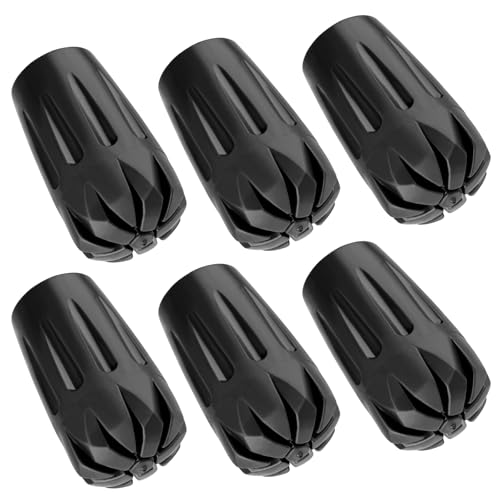
Pros
- Budget-friendly 6-piece bundle provides ample backup tips for long-distance hikes or multiple pairs of poles
- Universal 11mm inner diameter fits standard trekking poles and walking sticks
- Shock-absorbing rubber dampens impact and significantly reduces noise on paved or rocky terrain
- Simple push-on installation requires no tools or hardware
Cons
- Friction-fit rubber caps can be pulled off when wedged into thick mud, wet clay, or tight rock crevices
- The product specifications do not list an embedded metal washer, which may allow sharp metal pole tips to wear through over extended use
- Sized specifically for standard 11mm shafts and will not fit non-standard or oversized pole tips
The AISUNOUTDOOR Trekking Pole Rubber Tips are replacement traction caps designed to fit standard 11mm hiking sticks, trekking poles, and walking canes. Sold as a convenient 6-pack, this accessory caters to day hikers, backpackers, thru-hikers, and trail walkers who need to replace missing or worn-down pole feet. Rather than replacing entire trekking poles when factory tips degrade, these push-on rubber caps provide an affordable way to maintain traction and extend pole lifespan across paved walkways, rocky switchbacks, and hardpacked forest trails.
Trail performance with rubber tips centers on surface traction and impact dampening. The manufacturer highlights an anti-slip textured bottom designed to give stability on slick surfaces such as wet pavement, smooth granite, concrete paths, and wooden boardwalks. By substituting bare carbide or tungsten pole points with rubber, these tips also reduce the sharp, repetitive jarring transmitted to the user's wrists, elbows, and shoulders. Furthermore, using rubber caps on popular trails helps prevent the loud metallic clicking sound of hiking poles while reducing surface scarring on sensitive rocks in national parks.
The tips are molded from black rubber engineered to withstand everyday abrasion on mixed terrain. According to the product specifications, the entire set weighs approximately 0.032 pounds, making individual caps virtually unnoticeable when stashed inside a backpack hip-belt pocket, top lid, or first-aid kit. The interior sleeve is sized for standard 11mm pole tips, using a snug friction fit that slides securely over the bottom shaft. While the rubber body offers shock absorption and road grip, the product listing does not state whether these caps contain an embedded metal washer to prevent sharp metal tips from puncturing through over long distances.
Installing and carrying these replacement tips is straightforward for any outdoor activity. Hikers can simply press the rubber caps onto clean pole ends until fully seated, requiring no tools, adhesives, or mechanical fasteners. Because rubber tips can occasionally loosen or pull free when stuck in sticky mud, wet soil, or deep gravel, carrying multiple spares from this 6-pack ensures uninterrupted support during multi-day backpacking trips. For routine care, rinsing dirt and grit from inside the sleeve after muddy outings will help maintain a tight friction grip against the pole shaft.
Despite their practical utility, these replacement tips have clear limitations that buyers should understand before heading into the backcountry. The push-on friction fit is susceptible to pulling off if a pole tip gets wedged between boulders, caught in tree roots, or buried in heavy clay. Additionally, because rubber is inherently softer than tungsten carbide, regular use on coarse asphalt and abrasive rock will eventually wear down the tread. Hikers with specialized, ultra-slim, or oversized trekking poles should also verify tip diameter, as an 11mm opening will not fit non-standard pole designs.
The AISUNOUTDOOR 11mm Trekking Pole Rubber Tips offer solid practical value for hikers seeking an economical way to maintain grip, dampen vibration, and protect trails. While aggressive backpackers navigating deep mud or technical talus will want to monitor their pole tips closely, this 6-pack provides ample backup caps for routine trail walking, road walking, and day hiking. If your current trekking pole tips are worn down to the metal or you need dependable spares for your gear closet, this set is a practical and budget-friendly upgrade.
The AISUNOUTDOOR replacement tips feature an interior sleeve designed specifically for standard 11mm trekking pole and walking cane tips. This 11mm inner diameter matches the industry-standard sizing used on the majority of telescoping and folding hiking poles available in the outdoor market.
Before purchasing, hikers should verify the tip diameter of their current poles, as non-standard ultra-light shafts or heavy-duty walking sticks may require different dimensions. The push-on friction fit allows users to swap worn tips in seconds without needing extra tools, glue, or clamps.
Rubber pole tips excel on hard, solid surfaces where bare metal carbide spikes tend to slip, vibrate, or make excessive noise. These tips provide dependable friction on paved paths, concrete steps, exposed rock slabs, and bridge decking, making them ideal for road walking, urban trails, and maintained park switchbacks.
To maintain a tight friction fit, remove the tips periodically to clear out trapped moisture, fine sand, and mud from the interior socket. Storing the spare caps in a dry pocket of your daypack or gear bag ensures you are always prepared if a tip is pulled off in wet soil or deep gravel.
Matching Trekking Pole Tips to Trail Terrain and Surface Conditions
Determining what trekking pole tips to use comes down to evaluating ground hardness, environmental sensitivity, and the need for shock absorption. Bare metal carbide flex tips excel on natural backcountry soil, loose gravel, and steep mud where digging into the ground provides primary traction. Conversely, protective rubber caps and specialized road tips are essential for paved asphalt, indoor storage, rocky granite slabs, and fragile historical paths. Choosing between these options prevents dangerous slips, quiets irritating metallic clicking, and extends the structural life of your hiking poles.
Bare Carbide Flex Tips for Dirt, Rock, and Alpine Scree
Bare tungsten carbide tips serve as the standard factory hardware on modern trekking poles for good reason. Carbide is an extraordinarily dense metal alloy capable of biting directly into packed dirt, decomposed granite, frozen soil, and weathered rock. Because the point is narrow and textured, it anchors firmly without skidding on loose topsoil or gravel. This aggressive mechanical purchase makes carbide the undisputed choice for backcountry trails, steep scree climbs, and rugged mountain traverses.
Carbide tips are mounted into flexible plastic housings called flex tips to prevent catastrophic gear damage. When a pole tip wedges between two rocks while the hiker moves forward, the flexible housing bends slightly before the shaft can snap. This built-in mechanical flex reduces lateral shear stress on lightweight carbon fiber and thin-walled aluminum lower sections. However, using bare carbide on flat pavement or smooth river boulders produces the opposite effect, causing poles to skid unpredictably.
Standard Rubber Caps for Pavement, Packed Slabs, and Travel
Smooth or textured rubber caps slip directly over bare metal tips to provide friction-based grip on hard surfaces. These accessories are indispensable when trekking transitions from backcountry dirt trails onto paved greenways, asphalt access roads, or extensive slickrock slabs. Hard carbide tips merely scrape and slide against smooth granite or concrete, creating a serious fall hazard under downward pressure. Rubber caps generate high surface friction against smooth stone, allowing hikers to maintain steady forward propulsion and reliable balance.
Options such as the Durable Replacement Rubber Tips for Trekking Poles by AISUNOUTDOOR offer universal friction-fit dimensions suited for standard 11mm pole diameters. Quality replacement caps incorporate durable rubber compounds designed to absorb concussive impact on hard urban streets or rocky paths. The dampening characteristics of thick rubber cushion the shock waves traveling up through the pole shaft into wrists, elbows, and shoulders. Furthermore, keeping rubber caps installed during transit protects car interiors and pack fabrics.
Internal construction plays a vital role in rubber tip longevity across rough terrain. When downward force is applied repeatedly, a sharp carbide tip can punch straight through soft rubber unless a metal reinforcement washer is molded inside the base. Budget accessories that lack internal steel washers degrade quickly, leaving the metal point exposed after only a few miles on asphalt. Inspecting the interior base of replacement caps before setting out guarantees that the metal tip stays contained.
Fitness Walking Rubber Boots for Flat Roads and Hard Asphalt
Angled rubber walking feet, often referred to as Nordic boots or fitness tips, provide an alternative geometry designed specifically for flat roadways. Unlike cylindrical rubber caps that strike the ground at right angles, boot-style tips feature an angled sole with directional tread patterns. This angled profile matches the rearward propulsion angle common in fitness walking and road trekking. As the user plants the pole behind their body, the wide rubber surface maintains full contact with the pavement.
Boot-style tips offer superior surface contact on level macadam and asphalt pathways, delivering dependable propulsion and reduced trail chatter. However, these directional tips are less effective on rugged backcountry trails where poles strike uneven ground at unpredictable angles. An angled boot tip landing on a jagged rock can twist off the pole end or cause awkward rotational torque on the lower shaft. For general hiking across mixed terrain, standard cylindrical rubber caps remain far more versatile.
Mud Baskets and Powder Snow Baskets for Soft Substrates
Trekking pole tips rely on modular baskets mounted just above the tip housing to regulate penetration depth in soft ground. Small mud baskets, which typically measure around two inches in diameter, prevent poles from sinking too deeply into marshy bog soil, wet sand, and thick forest loam. When poles plunge past their tips into deep muck, recovering them requires substantial upward pull that disrupts hiking cadence. Mud baskets create enough surface area to catch the soil line without adding noticeable swing weight.
Deep winter snow and springtime slush require wide powder snow baskets measuring three to four inches across. Without wide baskets, poles plunge through snowpack down to the handle, forcing hikers to waste massive amounts of upper-body energy. Snow baskets provide the necessary flotation to establish firm planting platforms for snowshoeing, winter backpacking, and alpine mountaineering. Most modern hiking poles utilize threaded or press-fit basket mounts, allowing rapid seasonal swaps between low-profile dirt rings and wide winter discs.
Using wide snow baskets on dry summer trails introduces unnecessary frustration and mechanical risk. Broad baskets easily catch on brush, root snags, and narrow rock gaps, increasing the risk of tripping or bending lower pole sections. Hikers should store winter baskets during warmer months and run either minimal mud baskets or bare flex tips depending on local trail conditions. Balancing basket diameter against terrain density prevents excessive swing weight while maintaining optimal flotation.
Environmental Impact and Trail Etiquette on Sensitive Slickrock
Trail ethics represent an important factor when deciding which pole tips to use in fragile environments. Bare carbide tips leave permanent white scars, chips, and scratches across sensitive slickrock formations in desert parks and popular alpine basins. Over time, millions of repetitive metal strikes pulverize fragile rock surfaces, disfiguring natural landmarks and damaging ancient cultural sites. In heavily trafficked national parks and designated wilderness areas, land managers frequently encourage or mandate rubber caps to preserve rock integrity.
Rubber caps also eliminate the sharp, repetitive clicking sound that bare carbide makes against rock and pavement. This auditory dampening improves the wilderness experience for fellow hikers seeking quiet outdoor solitude. Furthermore, capping metal points prevents accidental gouging of wooden boardwalks, footbridges, and trail staircases maintained by conservation trail crews. Carrying a compact set of replacement rubber caps in your hipbelt pocket makes it easy to switch tips whenever passing through sensitive ecological zones.
Sizing and Fitment Considerations for 11mm Standard Pole Ends
Selecting aftermarket rubber tips requires careful attention to the diameter and taper of your pole ends. The outdoor industry widely utilizes an 11mm base diameter for the cylindrical plastic flex tip housing, making products like the Durable Replacement Rubber Tips for Trekking Poles universally compatible across many popular brands. A snug friction fit is essential to keep rubber tips secured during active hiking. If an aftermarket cap is even slightly oversized, the suction of wet mud will pull the cap off.
Installing replacement tips properly involves cleaning all dried dirt, trail grit, and moisture from the plastic flex tip housing. Pushing the rubber cap firmly onto the tip while giving it a slight quarter-turn twist ensures a seated mechanical seal against the 11mm sleeve. Avoiding lubricants, oils, or soapy water during installation is crucial because slippery films cause caps to twist and slide off under load. Warming cold rubber gently with your hands softens the compound for easier installation.
Hikers carrying heavy packs should verify that their pole hardware remains properly integrated with their overall backpacking gear. Just as matching pack suspension matters when evaluating carry on backpack volume requirements, matching tip dimensions ensures zero play at the ground interface. A properly seated 11mm tip stays locked in place through mud, rain, and boulder hopping without spinning or wobbling. Keeping spare rubber caps inside your repair kit ensures that unexpected trail loss never compromises traction.
Wear Indicators and Field Maintenance for Pole Hardware
Rubber tips and metal points are wear items that require periodic inspection before and during backcountry trips. Rubber caps naturally wear down through abrasive friction against rock and asphalt, gradually thinning out along their tread base. Hikers should inspect the bottom of their rubber caps regularly to ensure the internal steel washer has not begun poking through the outer rubber layer. Once the metal core breaks through the exterior, the cap loses its traction benefits and can split.
Carbide tips also exhibit wear, although at a much slower rate than soft rubber accessories. After hundreds of trail miles across abrasive granite and quartz, the concave bite of a carbide tip rounds into a smooth, blunt nub. A rounded carbide tip cannot bite securely into hard dirt or angled rock faces, increasing the likelihood of slipping during technical ascents. Most quality pole designs allow users to replace worn flex tip assemblies entirely by pulling the old collar from the shaft.
Carrying replacement tips on multi-day treks is an inexpensive insurance policy against unexpected gear failure. Because rubber caps rely solely on friction fit, deep mud bogs and tightly spaced boulder cracks can pull caps from poles without immediate notice. Having a multipack of 11mm replacement caps stored in a gear ditty bag allows immediate trailside swaps without interrupting your journey. Periodic washing with clear water removes accumulated grit from inside the caps, preserving both the rubber and the underlying housing.
Transporting Poles Safely in Luggage and Airline Carry On
Managing trekking pole tips becomes critical during air travel and long-distance transit. Transportation Security Administration regulations and international aviation authorities generally prohibit bare, sharp trekking pole tips in aircraft passenger cabins. Sharp carbide points are classified as potential puncture hazards, meaning poles typically must be stowed inside checked luggage. Placing thick rubber caps over the ends protects other gear, pack fabrics, and duffel bags from puncture damage while in transit.
When packing collapsible or folding poles inside duffels alongside delicate outdoor equipment, exposed metal tips pose a constant hazard. A sharp tip rubbing against an ultralight nylon tent canopy or inflatable sleeping pad during baggage handling can easily create small pinhole leaks. Sliding protective rubber caps over the tips provides a secure physical buffer against accidental gear tears. Once you arrive at your destination, you can quickly remove the caps or leave them installed depending on trail conditions.
Choosing the right trekking pole tips ultimately balances traction requirements, environmental ethics, and gear protection across varying surfaces. Deploying bare carbide tips on rugged wilderness trails provides the sharp mechanical bite needed for loose dirt and rocky climbs. Meanwhile, sliding durable 11mm rubber caps over the ends delivers essential friction, joint-cushioning shock absorption, and quiet operation on paved roads and sensitive slickrock slabs. Carrying both options in your pack gives you complete adaptability, ensuring reliable footing and long-lasting performance on every journey.






Write Your Review
No reviews yet. Be the first to share your experience!