


Starting a long hike often means crossing paved trailheads, hard tarmac access roads, or concrete bike paths before reaching soft forest soil. During these road transitions, bare tungsten carbide tips clatter loudly against the ground and can vibrate uncomfortably up through the pole shafts into your hands. Understanding when to use rubber tips on trekking poles allows hikers to preserve their metal hardware, dampen joint shock, and gain dependable friction across unforgiving, solid terrain. Pairing stable pole technique with reliable knee joint support gear provides consistent stability during steep approaches and abrupt descents.
While sharp carbide tips excel at biting into organic trail tread, loose dirt, and slick mud, they behave poorly on hard artificial surfaces. Placing durable rubber caps over the carbide points prevents skidding on asphalt, eliminates irritating rhythmic tapping, and stops trail hardware from gouging delicate rock surfaces. Equipping your trekking poles with the right accessories keeps your gear functional whether you walk neighborhood greenways or rugged mountain approaches. Knowing when to swap between bare metal and rubber protection ensures confident footing across every mile.

Pros
- Durable vulcanized rubber construction designed for mixed hard-surface use.
- Fits standard 0.4-inch (1 cm) pole ends across most major trekking pole brands.
- Extremely light at 0.0875 pounds for all four tips, making spares easy to pack.
- Cost-effective solution to refresh traction without replacing entire poles.
Cons
- Not compatible with Black Diamond Z Poles due to non-standard tip dimensions.
- Friction-fit tips can occasionally dislodge if caught between rocks or in heavy mud.
- Naturally wears down over time on rough pavement and coarse asphalt.
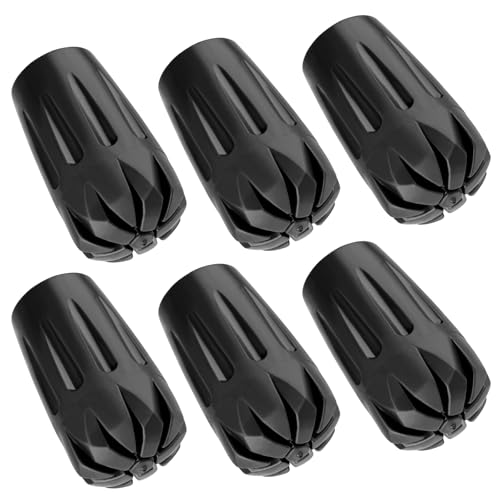
The York Nordic VTread Tapered Four Pack is a dedicated trekking pole accessory designed for hikers, fitness walkers, and backpackers who frequently encounter paved sections, rock slabs, or concrete walkways. Metal carbide tips perform well on loose soil, but hard surfaces can cause them to slip, vibrate excessively, and wear out prematurely. These vulcanized rubber replacement caps slide directly over standard pole ferrules to provide a quieter, more secure contact point while preserving the underlying hardware.
On the trail, adaptability matters when a route transitions from forest floor to paved greenways, rocky summits, or road connectors. The VTread tips feature a tapered profile made from vulcanized rubber that helps absorb repeated impacts and provides solid grip on unforgiving terrain. With a total weight of roughly 0.0875 pounds for all four units, carrying two spares in a backpack hip-belt pocket, shoulder strap pouch, or top lid compartment adds virtually no noticeable base weight to your hiking setup.
Build quality centers on resilient vulcanized rubber, which offers better density and abrasion resistance than standard soft plastic caps. The interior sleeve relies on a firm friction fit around the pole ferrule, seating tightly against the metal end to keep dirt and debris from packing into the tip cavity. Because trekking pole feet endure friction and pressure with every stride, having a four-pack ensures you have backup traction available when tips naturally wear thin after extensive mileage.
Installing and managing the VTread tips is completely tool-free. To install, simply align the 1-centimeter (0.4-inch) opening with the clean tip of your pole and push firmly against a firm surface until fully seated. When moving into deep mud, snow, or loose scree where exposed carbide points are required, you can twist and pull the caps off, storing them securely inside a pack pocket until hard pavement or smooth rock returns.
There are a few practical limitations to keep in mind regarding fit and retention. While the 0.4-inch diameter fits the vast majority of standard hiking and Nordic walking poles, the manufacturer explicitly notes these tips do not work with Black Diamond Z Poles. Additionally, like any push-on rubber tip, they can occasionally pull free if wedged tightly between roots, boulders, or deep clay, making occasional visual checks good practice on rough trails.
For hikers, commuters, and fitness walkers looking to extend the life of their trekking poles and reduce joint jarring on hard surfaces, the York Nordic VTread 4-Pack is an affordable, sensible addition to any gear bag. It provides dependable grip where metal tips struggle, fits standard pole shafts easily, and offers immediate backup security on long journeys.
The York Nordic VTread tips feature an internal diameter opening of 1 centimeter (approximately 0.4 inches). This measurement matches the standard ferrule taper found across most major hiking, trekking, and Nordic walking pole brands.
Compatibility is not entirely universal across specialty hardware. York Nordic explicitly states that these tips do not work with Black Diamond Z Poles, which feature a distinct tip geometry. Before purchasing, verify your pole tip diameter to ensure a secure friction fit.
Carrying replacement tips requires minimal organization. At 0.0875 pounds and compact exterior dimensions, a pair of spare tips can stay permanently inside a pack zipper pocket, ditty bag, or first-aid kit without crowding your primary gear space.
Beyond traction on asphalt and concrete, rubber tips serve a valuable role in low-impact hiking. They eliminate the repetitive clicking noise of metal tips on stone pathways and help prevent scratch marks on delicate sandstone, granite slabs, and historical trail features.
Surface Demands and Mechanical Reasons to Use Rubber Tips
Deciding when to use rubber tips on trekking poles comes down to evaluating surface hardness, traction mechanics, environmental impact, and equipment transport. Tungsten carbide flex tips are engineered to penetrate soft surfaces like dirt, turf, and decomposed granite. When you encounter hard, non-porous surfaces, that penetrative design backfires, causing the pole to slide uncontrollably across the ground. Installing quality rubber tips provides the necessary grip and prevents premature equipment damage across varied walking surfaces.
Paved Roads, Asphalt Approaches, and Concrete Paths
Asphalt and concrete present the most common scenario where rubber tips become essential hiking accessories. Metal tips cannot dig into dense pavement, which causes the base of your pole to skate forward or sideways under downward body weight. This sudden slippage reduces your balance and can lead to unexpected joint jarring or painful falls during road walks. Adding a vulcanized rubber cap creates a broad contact patch with high friction that grips concrete firmly with every stride.
Walking on pavement without protective rubber covers also accelerates physical tip wear. The abrasive aggregate within asphalt acts like an industrial grinding wheel against bare tungsten carbide points and plastic flex tip housings. Within a few miles of road trekking, sharp carbide edges can round off completely, rendering them far less effective once you finally reach dirt trails. Rubber caps absorb that surface abrasion, keeping your primary carbide points sharp for backcountry terrain where you genuinely need penetrating traction.
Hard artificial surfaces also transmit significant shock through the pole shafts into your upper body. Each strike of bare metal against concrete sends high-frequency vibrations through aluminum or carbon fiber tubes into your wrists, elbows, and shoulders. Over high-mileage road sections, this repetitive impact can cause forearm fatigue, joint stiffness, and wrist irritation. Dense rubber tips act as effective mechanical shock absorbers, deadening impact chatter before it travels up the pole.
Hard Bedrock, Granite Slabs, and Slick Sandstone
Natural rock environments present unique traction challenges that require careful gear evaluation. When hiking across broad granite domes, polished river boulders, or slick sandstone shelves, sharp carbide points struggle to gain purchase. The tiny point of a metal tip can easily skate across smooth stone under steep downward pressure, making descents feel unpredictable. High-friction rubber compounds grip dry, smooth rock faces much like the sticky rubber on climbing shoes or hiking boots.
Hikers managing heavy multi-day backpacks need steady ground contact when traversing expansive slabs. A sudden slip on a sloping rock shelf can throw off your center of gravity and cause severe ankle or knee twisting. Rubber feet conform slightly under your body weight, spreading friction over several square centimeters rather than concentrating force on a needle-thin metal pin. This expanded surface area delivers predictable purchase that helps maintain your forward momentum and steady balance.
Dry rock conditions generally favor rubber attachments, but wet stone requires extra vigilance. While textured rubber adheres well to clean, dry granite, wet algae-covered boulders can remain treacherous regardless of tip type. Inspecting rock conditions ahead of each plant allows you to judge whether rubber or metal offers better security. When scrambling over dry, expansive slickrock, rubber caps remain the preferred choice for maintaining confident footing.
Leave No Trace Ethics and Fragile Surface Preservation
Preserving delicate natural environments is another major reason when to use rubber tips on trekking poles. Thousands of hikers planting sharp metal tips into soft rock can cause severe long-term resource degradation over popular trail corridors. In sensitive areas like desert sandstone canyons, metal tips scratch permanent white scars into historic stone surfaces and fragile petroglyphs. Rubber tips protect these irreplaceable geological and cultural features by eliminating the sharp abrasive impact of bare carbide.
Many historic sites, national parks, and international trekking routes now actively encourage or mandate rubber tip use. Popular routes across delicate alpine limestone or ancient stone pathways suffer significant gouging when hundreds of sharp tips strike them daily. Using rubber ferrules demonstrates responsible trail stewardship and minimizes visible scars on natural landscapes. Slipping rubber caps onto your poles ensures that fragile trail infrastructure remains undamaged for future generations of hikers.
Noise Reduction and Acoustic Courtesy on Shared Trails
The repetitive clicking sound of metal pole tips against hard ground can quickly become irritating on quiet backcountry walks. When you travel along rocky pathways or paved urban greenways, each step produces a sharp metallic strike that echoes across the landscape. This continuous acoustic disturbance can detract from the peaceful natural ambiance that many outdoor enthusiasts seek. Rubber caps effectively muffle every ground strike, allowing you to walk quietly and enjoy the tranquil environment.
Noise reduction is equally beneficial for hikers who enjoy observing local wildlife along the trail. Sharp metallic sounds carry far through dense timber and open valleys, often alerting deer, birds, and other animals long before you come into view. Soft rubber tips allow a much stealthier approach, making spontaneous wildlife sightings far more common. In addition, your trail companions will appreciate the absence of constant rhythmic tapping on long multi-hour treks.
Transit, Travel, and Gear Storage Protection
Rubber caps serve an indispensable protective role even when you are not actively walking. Sharp carbide tips can easily puncture lightweight tent fabrics, tear expensive sleeping pads, or rip through backpack nylon when strapped to your gear. Placing protective rubber caps over the tips prevents sharp points from snagging clothing or cutting mesh side pockets. Keeping rubber covers securely mounted during transit safeguards your valuable camping gear against accidental punctures.
Air travel presents another crucial scenario where rubber tip protection matters. Airport security personnel inspect trekking poles closely, and exposed, sharp carbide points can occasionally raise concerns at security checkpoints. Placing blunt rubber covers over the ends makes poles safer to handle and helps prevent them from puncturing luggage walls. If you are packing your poles for travel, reviewing a carry on backpack sizing guide ensures your collapsed poles fit comfortably within airline luggage dimensions.
When to Remove Rubber Tips and Rely on Bare Carbide
Knowing when to use rubber tips on trekking poles also requires understanding exactly when to take them off and pack them away. As soon as you transition from pavement or bedrock onto soft dirt, forest loam, or mud, rubber tips become a distinct liability. Rubber feet float on top of slippery mud rather than penetrating it, which can cause your pole to slide out from under you. Bare tungsten carbide tips are designed to puncture deep into soft soil, anchoring each plant firmly in loose ground.
Muddy and swampy trails also pose a serious risk of pulling rubber tips clean off your poles. Deep, sticky mud creates strong suction that grips the exterior of the rubber ferrule as you lift your pole forward. When you pull upward, the friction between the rubber cap and the mud often exceeds the press-fit hold on the pole tip. This suction leaves the rubber tip buried invisibly in the mud while your bare pole emerges without it. Removing rubber caps before entering boggy terrain saves your accessories from being lost on the trail.
Steep scree, loose gravel, and packed snow also demand bare carbide points. On loose gravel trails, the small profile of a metal point easily slips between shifting pebbles to contact solid subsoil below. In contrast, a broad rubber cap balances on top of loose gravel, causing your pole to roll sideways under downward pressure. In freezing conditions, metal points bite directly into hard crust and icy patches, whereas cold rubber hardens and slides dangerously across slick winter surfaces.
Rubber Tip Profiles: Round Caps, Narrow Ferrules, and Angled Nordic Paws
Replacement rubber tips are engineered in several distinct geometries to match specific walking styles and terrain types. Standard round rubber caps feature a flat or slightly rounded bottom with concentric tread rings, making them ideal for vertical pole plants during general day hiking. Narrow trek ferrules provide a more compact footprint that maneuvers easily between close rocks while still protecting metal points. Selecting the proper shape ensures your poles deliver optimal stability and natural swing dynamics across your chosen route.
Angled walking paws, often called fitness boots, cater to fitness walkers who plant their poles at an angle behind their stride. Products like the VTread Tapered Four Pack of Extra Durable Rubber from York Nordic feature specialized angled profiles crafted from vulcanized rubber. The manufacturer offers options including medium density for enhanced grip and extra firm rubber for extended abrasion resistance across pavement. Angled boots provide an extended contact patch when propelling yourself forward during brisk fitness walking on paved trails.
Different tip shapes also alter how your poles feel over high-mileage outings. Bulkier angled boot tips add slight swing weight to the bottom of the shaft, which can make pole turnover feel marginally heavier. Compact round caps maintain a lighter swing weight, making them preferable for backpackers focused on minimizing arm fatigue. Choosing between round caps and angled boots depends largely on whether your walking technique involves upright balance plants or angled propulsion drives.
Internal Washers and Preventing Metal Tip Punch-Through
A critical mechanical element inside high quality rubber tips is an integrated internal steel washer. Without an internal metal washer, the sharp point of a tungsten carbide tip acts like a punch against soft rubber. Under the repeated force of downward body weight, the metal tip will eventually bore through the bottom of the rubber cap, rendering it useless. Durable replacement packs incorporate a reinforced metal base washer that prevents the carbide tip from piercing through the rubber shell.
Regularly inspecting the inside and bottom of your rubber tips ensures you catch internal wear before the metal tip emerges. If you see a tiny white carbide pin poking through the tread pattern, the internal washer has failed or shifted. Continuing to hike on punctured rubber tips can cause sudden slipping on slick surfaces and gouge floorboards during indoor transit. Replacing worn rubber tips as soon as the tread wears thin preserves your traction and protects your primary hardware.
Compatibility, Shaft Sizing, and Proper Installation
Most standard trekking and walking poles utilize a universal tapered flex tip with an opening diameter around one centimeter, or roughly 0.4 inches. The York Nordic VTread replacements are designed to fit most standard walking and hiking poles with this standard taper dimension. However, hikers should note that certain ultralight folding models, such as Black Diamond Z-Poles, use proprietary tip geometry and are not compatible with universal ferrules. Checking your pole manufacturer specifications prevents buying replacement tips that fail to seat securely.
Installing rubber tips correctly ensures they remain firmly attached throughout your hike. Before pushing a new rubber tip onto the pole, clean any dirt, dried mud, or trail grit off the plastic flex tip housing. Push the rubber cap firmly onto the tip using a twisting motion until it seats completely against the internal stop. Verifying that the tip is pressed fully into place prevents it from working loose and dropping off during your initial miles on the trail.
Trail Biomechanics and Adapting Your Stride to Rubber Tips
Walking with rubber tips attached requires minor biomechanical adjustments compared to trekking with bare carbide points. Because rubber tips grip surface friction rather than piercing the earth, you should plant your poles with deliberate vertical alignment. Striking the ground at an excessively acute angle on smooth surfaces can cause the rubber edge to roll slightly before catching traction. Maintaining an elbow angle close to ninety degrees keeps your downward force centered directly over the rubber contact patch.
When navigating steep paved descents, rubber tips allow you to transfer substantial body weight safely through your upper arms to offload your knees. By placing the poles slightly ahead of your feet and leaning firmly onto the handles, the high-friction rubber cushions the impact on your lower joints. Inspecting your tips before demanding descents gives you the confidence that your gear will hold firm under downward body pressure. Mastering these practical adjustments ensures your trekking poles provide maximum comfort, joint relief, and trail longevity across every surface you encounter.






Write Your Review
No reviews yet. Be the first to share your experience!