


Steep mountain descents and rocky switchbacks can place punishing stress on knees, hips, and lower back joints over high-mileage days. Hikers seeking relief frequently look to specialized trekking gear to redistribute trail braking forces and maintain steady balance across uneven scree and slippery river stones. In exploring outdoor gear setups, many hikers ask: are leki poles good enough to withstand demanding backcountry terrain? The German manufacturer has built an enduring reputation across the trekking community for precision engineering, durable shaft materials, and intuitive locking mechanisms.
Evaluating whether these walking aids match your hiking goals requires examining how different designs perform under axial downward pressure and variable trail conditions. Pairing robust trekking poles with trail apparel designed for knee support can help minimize physical fatigue during multiday expeditions. LEKI offers a broad lineup ranging from ultralight carbon trail running poles to robust aircraft-grade aluminum walking canes. Understanding how their specific shafts, ergonomic grips, and external clamp locks function provides clear insight into whether investing in this brand suits your outdoor adventures.




Evaluating LEKI Trekking Poles: Materials, Locking Systems, and Trail Function
Evaluating whether LEKI trekking poles are worth adding to your backcountry kit comes down to how their engineering holds up under real trail conditions. The brand has spent decades refining shaft metallurgy, cam lever clamps, and handhold ergonomics across diverse outdoor disciplines. From high-altitude mountain trails to paved walking paths, their gear is built to provide structural balance and alleviate joint fatigue. Understanding the specific components across their product range helps hikers determine if these poles justify their reputation.
Shaft Metallurgy and Composite Layups: Aluminum HTS versus High-Modulus Carbon Fiber
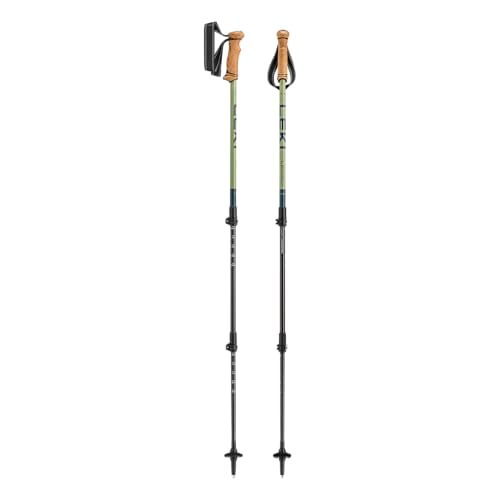
Shaft composition determines how a trekking pole handles downward weight, trail vibration, and accidental leverage against obstacles. LEKI relies heavily on two primary materials across its trekking lineup: heat-treated aluminum alloys and engineered carbon fiber composites. Aluminum models like the LEKI Legacy Lite and LEKI Voyager utilize high-tensile strength HTS 6.0 aluminum, which balances structural rigidity with forgiving flex. Premium single staffs such as the LEKI Wanderfreund High Fives step up to HTS 6.5 aluminum to deliver enhanced strength for travelers needing dependable balance support.
Aluminum shafts excel when subjected to lateral shear forces on technical backcountry terrain. When a pole tip gets wedged between granite boulders or submerged tree roots, aluminum tends to bend rather than fracture suddenly. This ductile deformation allows hikers to limp a bent pole back to the trailhead or gently straighten it in the field. The slight weight increase compared to composite materials is often an acceptable tradeoff for backpackers carrying heavy loads who prioritize durability over absolute gram counting.
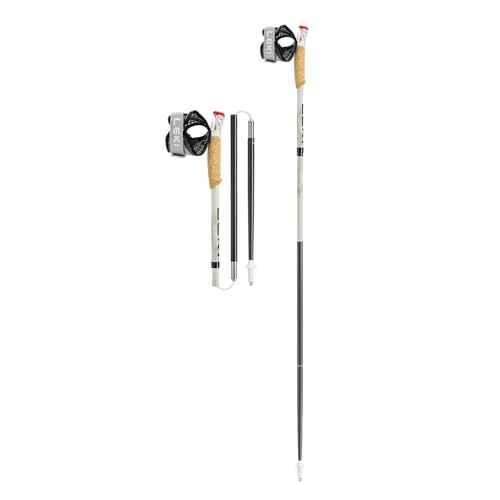
Carbon fiber models, such as the LEKI Ultratrail FX.One and LEKI Legend Black Carbon, target a completely different performance objective. The Ultratrail FX.One utilizes high-modulus HRC max carbon to achieve an ultralight weight of less than a quarter-pound per pole, while the Legend uses PRC 1000 carbon to keep swing weight minimal. Carbon naturally dampens trail vibrations before they reach your wrists and elbows, reducing repetitive strain over twenty-mile days. However, carbon shafts have lower tolerance for direct lateral impacts against sharp rock edges, making them best suited for trail running, fastpacking, and disciplined hiking.
Locking Mechanism Engineering: Speed Lock Plus versus SLS Twist Expanders
A trekking pole is only as reliable as the mechanism holding its telescoping segments together under full body weight. LEKI pioneered external lever cam locks with its proprietary Speed Lock Plus and Speed Lock 2 Plus assemblies, found on poles like the LEKI Legacy Lite and LEKI Wanderfreund. These external clamps utilize an integrated lever that compresses the outer shaft collar around the inner tube. Hikers can easily adjust the holding tension using an external thumb dial without needing specialized tools at camp.
External lever clamps offer significant advantages over older locking technologies when weather conditions deteriorate. Operating a Speed Lock lever requires minimal finger dexterity, making it simple to adjust while wearing thick winter gloves or dealing with freezing rain. The visual check is immediate, as an open lever clearly signals an unlocked section before you place downward weight on a descent. Furthermore, the external mechanism resists binding from internal moisture, preventing the common frustration of stuck shafts during multi-day excursions.
In contrast, traditional models like the LEKI Voyager and LEKI Super Micro utilize the internal Super Lock system, often abbreviated as SLS. This internal expansion mechanism works by twisting the shaft sections in opposite directions to expand an internal wedge against the inner tube walls. While SLS creates a sleek outer profile with no snag points to catch on dense trail brush, it requires proper tension verification before heading downhill. Hikers using twist-lock poles must also keep internal shafts clean and dry, as fine trail silt or trapped moisture can cause internal expander plugs to slip under sudden axial loads.
Grip Materials and Ergonomic Geometry: Cor-Tec, Aergomed, and Trail Trigger Shark
Hand grip comfort directly affects whether you finish a grueling day on the trail with smooth palms or painful hot spots. LEKI equips its core trekking models, including the LEKI Legacy Lite, with the EVOCON Cor-Tec grip. This composite material blends natural cork with durable synthetic polymers to deliver excellent moisture absorption and natural molding characteristics. As you hike in humid summer conditions, the Cor-Tec surface draws sweat away from your skin, reducing friction and preventing blisters far better than dense non-breathable rubber handles.
For hikers who require dedicated balance assistance rather than rhythmic trekking cadence, LEKI developed specialized cane-shaped handles. Models like the LEKI Wanderfreund High Fives, LEKI Super Micro, and LEKI Legend Black Carbon incorporate the Multimed and Aergomed grip systems. These broad, rounded tops allow hikers to rest their entire palm directly over the pole shaft, distributing body weight comfortably across the hand. The ergonomic foam and cork surfaces cushion downward pressure during flat road walking, urban travel, or moderate trail ascents.
Trail runners and fastpackers encounter a specialized solution in the Trail Trigger Shark grip found on the LEKI Ultratrail FX.One. This system pairs a slim foam grip with an integrated mesh strap harness that wraps securely around the hand and clips directly into the handle. Runners can click into the pole to maximize power transfer during steep climbs and release instantly with the push of a thumb button at aid stations. The snug harness design eliminates the need to grip the shaft tightly, reducing forearm fatigue over ultra-distance endurance events.
Biomechanical Advantages and Downhill Joint Impact Mitigation
The primary reason many backpackers adopt trekking poles is to protect knees and hips from the pounding forces of steep mountain descents. When stepping down high rocky water-bars or steep gravel switchbacks, gravity accelerates body mass and pack weight onto the leading knee joint. Planted trekking poles transfer a meaningful portion of this braking impact through the upper body musculature, engaging the lats, shoulders, and chest. Hikers wearing flexible lightweight hiking pants often find that combining full leg mobility with active pole placement helps maintain a fluid, protective descent cadence.
Achieving optimal biomechanical joint offloading depends on establishing correct pole height for the surrounding terrain. On flat ground, adjust the telescoping sections until your elbow forms a ninety-degree angle when holding the grip with the pole tip resting on the dirt. When ascending long, steep grades, shortening both poles by five to ten centimeters allows you to plant securely without overextending your shoulder joints. Conversely, lengthening your poles by five to ten centimeters on sustained descents lets you plant further ahead, keeping your torso upright and reducing forward knee shear.
Proper wrist strap technique is equally critical for efficient skeletal load transfer. Insert your hand upward through the bottom opening of the strap loop before grasping the handle, resting the webbing flat across the back of your wrist. This technique allows your skeleton to bear downward weight directly through the strap rather than forcing your fingers to squeeze the grip constantly. Releasing your grip tension during the forward swing prevents forearm pump and keeps your hands relaxed across high-mileage backcountry traverses.
Single Walking Canes versus Dual Trekking Pole Configurations
Choosing between a single walking staff and a synchronized pair of trekking poles depends entirely on your trail objectives and physical needs. Single cane-style poles like the LEKI Wanderfreund High Fives and LEKI Legend Black Carbon cater to day walkers, travelers, and hikers managing mild stability challenges. Having one free hand makes it simple to check guidebooks, operate a camera, or grab handrails while navigating paved tourist trails or packed gravel paths. The rounded cane grip provides vertical downward support whenever you need to pause and steady your balance.
Dual trekking pole setups like the LEKI Legacy Lite and LEKI Voyager become essential once you venture onto rugged, uneven backcountry terrain. Using two poles establishes a rhythmic four-point contact system that dramatically enhances stability across slick river crossings, loose scree fields, and muddy bogs. Synchronized pole plants actively propel your body forward on flat sections and assist leg drive on steep ascents. Dual poles also balance muscular engagement between both sides of the body, preventing asymmetric hip and lower back strain over long distances.
Backpackers carrying substantial loads derive the greatest benefit from dual pole configurations. Balancing a heavy load while hiking with internal frame hiking backpacks requires constant minor postural adjustments that can quickly fatigue core and leg muscles. Two trekking poles act as outriggers, catching sudden slips before they turn into dangerous falls and stabilizing your center of gravity on off-camber paths. For multiday wilderness adventures with significant elevation change, a matched pair of poles remains the superior choice.
Packability and Deployment: Folding Push-Button Poles versus Telescoping Shafts
Packability defines how easily a pole stows away when you transition from walking trails to technical rock scrambles. Telescoping poles, including the LEKI Voyager and LEKI Legacy Lite, slide down into three nesting sections that measure roughly twenty-five inches when fully collapsed. This collapsed length lashes easily to the side compression straps of standard multi-day packs without extending awkwardly above your shoulders. Shorter telescoping models like the LEKI Super Micro pack down to an impressive eighteen inches, catering directly to compact storage needs.
Folding poles like the LEKI Ultratrail FX.One take packability to a different level using a collapsible three-section cord system. At the press of a push-button release, the shaft separates into three fourteen-and-a-half-inch sections that fold parallel to one another. This ultra-compact profile allows trail runners to stow the poles directly into running vest quivers or waist belts without breaking stride. Fastpackers can quickly pull the top section until the push-button clicks into place, deploying the full pole in a matter of seconds.
The choice between folding and telescoping architectures involves a clear functional tradeoff. Telescoping poles offer extensive height adjustability to adapt to steep uphill grades, descents, and varying hiker heights. Folding models like the Ultratrail FX.One are often fixed-length designs optimized for weight savings and rapid packability rather than vertical adjustability. Hikers must carefully weigh whether they value continuous length adaptability or rapid, pocket-sized stowing efficiency before selecting their pole structure.
Ground Contact and Modular Attachments: Carbide Tips, Rubber Paws, and Baskets
The point where your pole meets the trail dictates traction, sound, and long-term durability. LEKI builds its trekking shafts with the Flex Tip Short, featuring a pressed-in tungsten carbide tip housed in a flexible synthetic sheath. Carbide provides extreme hardness, biting securely into hard-packed dirt, slick granite slabs, and submerged riverbed rocks. The flexible sheath allows the tip to bend up to thirty degrees without damaging the main aluminum or carbon shaft if the tip catches in a rock crevice.
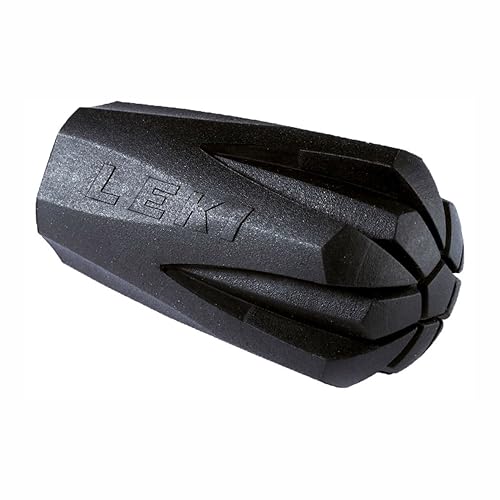
Hard metal tips are noisy and prone to skittering when walking on paved roads, sidewalks, or slick limestone surfaces. To solve this problem, LEKI manufactures the Walking Rubber Tip, constructed from vulcanized material that slides directly over the carbide point. These durable rubber caps dampen impact noise, prevent trail scarring on sensitive bedrock, and deliver confident grip across asphalt and boardwalks. Single walking staffs like the Wanderfreund and Super Micro frequently include rubber pads in the box to facilitate smooth transitions between town and trail.
Modularity extends to the basket systems located just above the tip assembly. LEKI poles utilize tool-free interchangeable baskets that thread securely onto the lower shaft housing. Low-profile trekking and racing baskets prevent the pole from sinking too deeply into mud, loose gravel, or scree without snagging on low trail brush. For four-season adventurers traversing winter snowpacks, swapping small trail baskets for wide powder snow baskets provides necessary flotation on snowshoe trails.
Field Maintenance, Cleaning, and Air Travel Regulations
Proper routine maintenance ensures that trekking poles continue locking securely across thousands of trail miles. After hiking through heavy rain, wet stream crossings, or fine silt, separate all telescoping shaft sections completely and wipe them clean with a dry towel. Allow the individual aluminum sections to air-dry thoroughly before reassembling to prevent galvanic oxidation and internal corrosion. Never apply grease, WD-40, or petroleum lubricants to the shafts or locking mechanisms, as oils eliminate the friction required for clamps to hold under weight.
Maintaining external Speed Lock clamps requires occasional calibration as plastic hardware naturally settles over time. If a telescoping section begins creeping downward under downward body weight, open the cam lever and turn the textured thumb screw clockwise by a quarter turn. Close the lever firmly and verify that it requires positive palm pressure to snap shut. Test the hold by leaning your full upper-body weight onto the pole on flat ground before committing your balance on steep mountain switchbacks.
Travel logistics present an important consideration for backpackers flying to distant trail destinations. Transportation Security Administration guidelines strictly prohibit hiking poles with sharp metal carbide tips from carry-on luggage on commercial domestic flights. Attempting to bring trekking poles through airport security checkpoints frequently results in confiscation. Hikers must plan ahead by stowing their collapsed poles inside durable checked baggage or shipping them ahead to their destination hotel or trail outfitter.
Practical Selection Guide: Matching LEKI Models to Trail Demands
Choosing the best LEKI model depends directly on the terrain you navigate and the weight you carry. Hikers tackling all-around backpacking trips and rugged day hikes will find an exceptional balance in the LEKI Legacy Lite. Its durable HTS 6.0 aluminum tubing, reliable Speed Lock Plus external clamps, and sweat-wicking EVOCON Cor-Tec grips handle heavy pack loads and rocky trails with confidence. For budget-conscious hikers seeking straightforward support on moderate paths, the LEKI Voyager provides dependable aluminum construction and basic adjustability.
Fastpackers and competitive trail runners will benefit most from dedicated ultralight models like the LEKI Ultratrail FX.One. Its high-modulus carbon build, rapid push-button folding architecture, and Trail Trigger Shark harness system optimize uphill cadence and instant stowability. Meanwhile, travelers and day walkers requiring focused balance support should look toward single cane designs like the aluminum Wanderfreund High Fives or the carbon LEKI Legend. Both provide ergonomic palmar support without requiring the coordinated cadence of dual poles.
Ultimately, answering whether LEKI poles are good comes down to their proven track record of trail dependability and thoughtful mechanical engineering. The brand consistently delivers rigid shaft construction, intuitive locking mechanisms, and ergonomic grips tailored to specific trail activities. By matching the right shaft material, locking style, and grip shape to your personal hiking habits, investing in a LEKI setup can provide reliable joint relief and balance across many seasons of backcountry adventure.






Write Your Review
No reviews yet. Be the first to share your experience!