


Winter trail enthusiasts often wonder whether three-season gear can pull double duty once snow blankets the backcountry. Adapting summer equipment for snowy trails saves storage space and gear costs, but dynamic snow sports place unique physical demands on your hardware. Many outdoor enthusiasts specifically ask, can trekking poles be used for skiing safely, or do they risk sudden shaft failure on steep descents? The short answer is yes for backcountry ski touring, splitboarding, and cross-country cruising, but inbounds resort downhill skiing introduces severe lateral forces that can buckle standard telescoping shafts. Understanding where standard hiking hardware succeeds and where it fails protects both your gear investment and your physical safety.
Transitioning hiking gear into cold weather requires evaluating shaft metallurgy, locking mechanisms, and basket surface area against frozen snowpack. While assembling your winter kit or planning what to pack for extended trips into sub-freezing terrain, swapping small mud discs for wide powder baskets becomes an immediate necessity. At the same time, lightweight three-season telescoping poles may bend under aggressive downhill pole plants, whereas hybrid alpine poles bridge the gap between summer trails and winter ascents. Evaluating clamp tension and grip ergonomics ensures your poles remain dependable contact points across icy crust and deep powder.



Evaluating Trekking Poles for Winter Skiing and Snow Touring
Using standard hiking sticks on snow-covered slopes offers an appealing way to maximize outdoor gear across all four seasons. Many outdoor enthusiasts regularly question whether can trekking poles be used for skiing without risking catastrophic gear failure or personal injury. While both tools share a similar visual profile, their structural engineering addresses fundamentally different biomechanical tasks and impact forces. Determining whether your hiking poles can handle winter snow depends heavily on the specific discipline, terrain gradient, and hardware configurations you choose.
Recreational ski touring, backcountry skinning, and cross-country cruising align well with the design parameters of sturdy telescoping poles. Conversely, aggressive downhill resort skiing subjects equipment to severe lateral torque and violent pole plants that easily buckle standard three-season hiking shafts. Selecting the right setup requires examining shaft metallurgy, locking mechanisms, basket diameters, and grip designs under winter operating conditions.
The Fundamental Difference Between Ski Poles and Trekking Poles
Traditional alpine ski poles prioritize high lateral stiffness and structural simplicity over compact packability. Most resort downhill poles feature single-piece, fixed-length aluminum shafts with wider diameters designed to withstand sharp, repetitive downward plants on hardpack snow. These shafts lack telescoping joints, eliminating any risk of mechanical slippage or joint collapse when bearing sudden downhill forces. Their grips are molded to accommodate bulky winter gloves, and their straps often feature breakaway mechanisms to protect skier wrists during high-speed falls.
Trekking poles, on the other hand, emphasize vertical weight distribution, ergonomic cadence, and compact packability for mountain travel. Most models rely on two or three telescoping sections secured by external cam levers or internal twist plugs to collapse easily onto a backpack. While hiking shafts effectively offload knee and ankle strain on downhill dirt trails, their thinner wall profiles cannot absorb intense lateral impacts. Applying substantial sideways torque against a locked three-season telescoping shaft will frequently result in bent tubing or compromised locking collars.
Why Inbounds Resort Skiing Threatens Telescoping Trekking Poles
Inbounds downhill skiing generates dynamic loading patterns that differ radically from steady backpacking cadences. Carving turns at high speeds across icy groomers or moguls requires forceful pole plants that drive the tip into frozen terrain at sharp angles. Standard three-section hiking poles, even those crafted from quality aircraft aluminum, possess multiple friction joints along the shaft. A sudden vertical or angled impact can exceed the clamping friction of an external lever lock, triggering sudden shaft collapse and causing an unexpected forward fall.
Lateral shear stress presents an even greater hazard on groomed slopes or icy bumps. When a pole tip momentarily catches a firm snow rut or gets trapped under a ski edge, the skier’s forward momentum levers the shaft sideways with tremendous force. Fixed-length downhill poles will flex elastically or bend slightly under this stress, but thin-walled telescoping poles frequently snap or crease permanently. Because replacement shaft sections can be difficult to source quickly, risking your summer trekking gear on resort chairlifts is rarely worth the temporary convenience.
Backcountry Touring and Splitboarding: The Ideal Crossover Scenario
Backcountry ski touring, ski mountaineering, and splitboarding represent the ideal environments where trekking poles excel in winter. When ascending steep skin tracks, backcountry travellers require adjustable pole lengths to maintain balanced posture across changing slope angles. Lengthening the downhill pole while shortening the uphill pole keeps your shoulders level during long sidehill traverses. Splitboarders also need to collapse their poles and stow them securely against their backpacks once they transition into downhill riding mode.
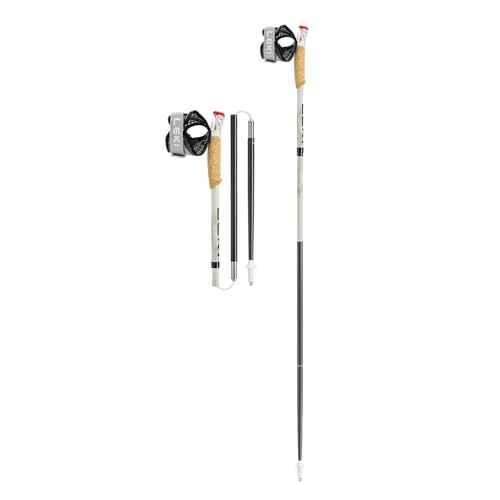
Adjustable models like the LEKI Sherpa Lite Ski Poles – Neonorange – Black highlight how manufacturers bridge this backcountry crossover demand. With an adjustable range spanning 100 to 135 centimeters, these poles allow ski tourers to adapt shaft height rapidly between steep climbs and rolling ascents. In soft backcountry snow, pole plants serve primarily as rhythmic balance aids rather than aggressive downhill pivots, drastically reducing the catastrophic lateral forces typical of resort skiing. When touring off-piste, matching your pole length to the gradient protects your energy reserves and stabilizes your skinning cadence.
Snow Basket Flotation: Why Summer Mud Baskets Fail in Winter
Taking standard trekking poles into snow without hardware modifications creates immediate frustration. Summer hiking sticks typically arrive equipped with compact mud baskets measuring roughly 40 to 50 millimeters in diameter. On packed dirt or gravel, these small discs prevent the pole tip from lodging between rocks or sinking into wet topsoil. However, soft winter snow offers negligible surface resistance, causing small mud discs to plunge completely beneath the snowpack with every single step.
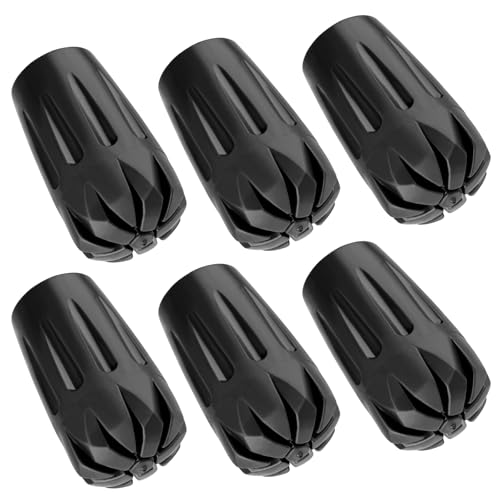
Deep basket penetration forces the user to drag the pole upward through heavy snow on every recovery stroke, rapidly fatiguing arm and shoulder muscles. Installing wide powder baskets, such as the Qiutdisn(4Pcs ) Trekking Poles Snow Powder Sand accessories measuring 85 millimeters in diameter, provides the essential surface area required for true snow flotation. Specialized ski touring baskets, such as the Big Mountain Binding baskets on LEKI poles or the concave hex baskets on the Backcountry Access Scepter Aluminum, also incorporate stiffened plastic edges. These edges allow users to flip binding heel risers up or scrape accumulated ice off climbing skins without bending over.
Locking Mechanisms Under Cold-Weather Stress: Lever Locks vs. Twist Locks
Cold winter temperatures dramatically alter the mechanical performance of adjustable trekking pole locking systems. External cam lever locks perform substantially better in winter environments than internal expander twist mechanisms. Internal twist locks rely on expanding plastic wedges that easily jam when airborne moisture freezes inside the hollow aluminum shaft. Once ice coats the internal tube walls, twist mechanisms spin freely without catching, leaving the hiker with an unusable, collapsed pole in sub-freezing weather.
External lever locks, including the Speed Lock 2 Plus system found on LEKI models, compress the outer aluminum sleeve directly around the inner shaft. This mechanical clamping action remains reliable even when frost settles on the metal components. External lever locks also feature knurled thumbscrews that allow tourers to adjust clamping tension quickly without taking off thick winter mittens. Just as wearing protective trail pants shields your legs from abrasive crust, using reliable cam locks prevents jarring collapses when applying full body weight.
Shaft Metallurgy: Aluminum Resilience Versus Carbon Fiber Cold Brittleness
Material composition plays a decisive role in whether a trekking pole survives winter mountain conditions. Premium aircraft-grade aluminum alloys, such as 7075-T6 or specialized HTS 6.5 aluminum, offer the ductile toughness required for winter exploration. Aluminum withstands freezing temperatures without losing impact resistance, and it exhibits high tolerance for accidental strikes against sharp ski edges. If an aluminum shaft encounters excessive lateral load, it typically bends rather than snapping instantly, allowing the user to gently straighten the tube to limp back to the trailhead.
Carbon fiber construction provides exceptional vibration damping and ultralight swing weight during warm-weather thru-hikes, but it demands caution in winter environments. Sub-freezing temperatures can make composite resin systems slightly more brittle under sudden high-velocity impacts. Striking a carbon fiber pole sharply with a steel ski edge or wedging the lower shaft into a buried boulder crevice can cause catastrophic shear failure. While hybrid models combining carbon upper shafts with aluminum lower sections exist, all-aluminum construction remains the safest choice for rugged ski touring and winter mountaineering.
Grip Architecture, Choke-Up Sleeves, and Cold-Weather Glove Fit
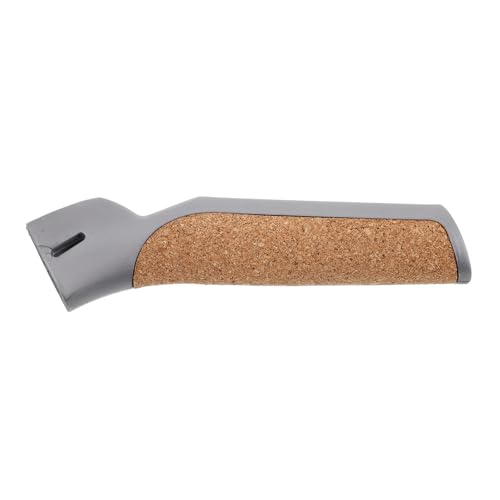
Handle design and ergonomic features significantly impact hand comfort and warmth when navigating snowy terrain. Standard summer trekking poles often utilize natural cork grips, such as replacement grips from Replacement Cork Handle for Trekking Poles or Replacement Cork Handle Grip for Trekking Poles, which excel at absorbing sweat during warm afternoons. In winter, however, damp cork can freeze into an icy block after resting against the snow. Closed-cell EVA foam and textured rubber overmolds provide superior thermal insulation, preventing cold aluminum shafts from transferring sub-zero temperatures directly into your palms.
Extended foam grip sleeves represent another vital feature for backcountry snow travel. When traversing steep wind-scoured ridges, stopping repeatedly to readjust telescoping cam locks is inefficient and exposes hands to frostbite. An extended choke-up grip allows you to slide your lower hand down the shaft instantly to gain leverage on the uphill side. Wrist strap sizing is equally critical; winter touring requires wide, micro-adjustable webbing that easily accommodates bulky polar fleece gloves or mountaineering mittens without restricting blood circulation.
Calibrating Cam Lock Clamp Force and Field Maintenance in Freezing Conditions
Thermal contraction poses a hidden threat to adjustable poles transitioned from warm indoor storage to freezing mountain air. Metal tubing contracts as the mercury plunges, which can loosen the factory clamp tension on external lever locks. If you do not adjust clamp tightness before setting out, your poles may hold firmly indoors but slip unexpectedly when bearing weight on a snowy climb. Verifying that the lever arm snaps shut with firm thumb resistance ensures adequate friction across the anodized aluminum tubing.
Field maintenance requires keeping bare shaft sections clean and completely free of artificial lubricants. Never apply silicone spray, WD-40, or grease to telescoping pole sections, as lubricants destroy the friction interface and cause immediate slippage under load. If snow or trail silt enters the joint collars, disassemble the poles entirely at the end of the day to let the interior moisture evaporate. Knowing how to strap bulky gear to a backpack also ensures that disassembled pole shafts remain secure and protected when moving through dense timber.
Purpose-Built Hybrid Mountain Poles: Bridging Summer and Winter
Outdoor gear manufacturers increasingly recognize the demand for four-season equipment capable of handling both summer backpacking and winter ski mountaineering. Products such as the Backcountry Access Scepter Aluminum showcase purpose-built crossover engineering. Featuring heavy-duty aluminum tubing, a scraper grip designed to clear snow buildup from top sheets, and concave hex powder baskets, these poles deliver high-impact reliability for winter touring while remaining perfectly functional on rocky summer trails.
Similarly, budget-friendly versatile options like the Hiking Poles, Trekking Poles for Hiking from Croosseoutdoors provide all-season adaptability right out of the box. Constructed from aircraft-grade aluminum with integrated shock-absorbing technology, this model includes both mud baskets and snow baskets to facilitate seamless seasonal transitions. The combination of external flip locks and internal adjustment mechanisms provides an adjustable height range from 23 inches collapsed to 53 inches extended. For general snowshoeing, gentle cross-country touring, and alpine hiking, these multi-accessory packages deliver exceptional utility across diverse winter landscapes.
Crucial Pre-Snow Inspection Checklist and Final Trail Verification
Before stepping onto snow-covered terrain with trekking poles, executing a systematic hardware inspection prevents trailside emergencies. Begin by examining each aluminum shaft section for dents, bends, or deep gouges that could act as stress risers under heavy vertical loading. Confirm that all section stop lines remain strictly inside the clamp collars, as over-extending a telescoping pole drastically multiplies leverage and bends the thinnest lower segments. Inspect tungsten carbide flex tips to ensure they seat firmly in the plastic housing, as loose tips can pull out when planted in hard crust.
Once your powder baskets are threaded securely above the tips, perform a decisive vertical load test on level ground. Adjust the poles to your standard walking height, lock the levers firmly, and lean your full upper-body weight directly onto the handles. If the shafts show any sign of creeping or slipping, open the cam levers and turn the knurled tension dials clockwise by a quarter turn before re-testing. Taking a few moments to calibrate clamping force guarantees that your trekking poles provide reliable stability, whether ascending frozen bootpacks or cruising across rolling winter plateaus.






Write Your Review
No reviews yet. Be the first to share your experience!