


Navigating steep descents and rolling terrain often forces outdoor enthusiasts to rethink their gear setup to protect tired knees and hips. While traditional backpacking wisdom promotes using a matched pair of trekking poles, many hikers wonder: can you use just one hiking pole effectively on the trail? Relying on a single trekking stick offers distinct tactical advantages, including keeping one hand completely free for scramble holds, map checks, or managing trail equipment. When paired with supportive trail apparel like knee support hiking pants, a single pole provides a responsive pivot point that stabilizes steps across uneven ground without weighing you down.
Choosing a single walking stick shifts how your body manages momentum, braking forces, and lateral balance on uneven surfaces. Although dual poles distribute body weight evenly across both arms, a solitary pole serves as an agile third contact point across muddy sections and moderate switchbacks. Single-pole setups also appeal to fastpackers and day hikers looking to shed weight while maintaining essential downhill balance. Whether you purchase a standalone collapsible stick or split a durable pair between friends, understanding the biomechanical tradeoffs ensures you stay confident and upright on every backcountry adventure.


Complete Guide to Hiking With a Single Trekking Pole
Hiking with a single pole transforms your trekking rhythm into a dynamic tripod gait, providing dependable stability without monopolizing both hands. Many backpackers discover that one staff offers plenty of support for crossing shallow creeks, steadying downhill steps, and pushing through muddy hollows. The strategy works exceptionally well once you grasp how asymmetrical loading influences your muscles over long distances. Deciding between a solitary staff and a matched pair comes down to terrain complexity, total pack weight, and personal joint needs.
Biomechanics of Single-Pole Trekking: Joint Offloading and Asymmetry
Using a matched pair of trekking poles allows hikers to distribute impact forces evenly across both shoulders, elbows, and wrists. When you transition to a single hiking stick, your upper body absorbs trail impact unilaterally on whichever side holds the shaft. This asymmetrical loading can create uneven tension across your lower back and latissimus dorsi during extended high-mileage hikes. To prevent one-sided muscular fatigue, experienced hikers periodically switch the pole between hands every mile or at scheduled trail rests.
Downhill braking mechanics also change noticeably when you rely on a single point of arm support. With two poles, you plant both tips simultaneously to decelerate forward momentum and cushion knee flexion on steep steps. A single pole still offloads substantial downward pressure from the leading patellofemoral joint, but it does so in alternation with your unassisted leg. Hikers with chronic discomfort in one specific knee often favor a single pole, planting the shaft opposite the weaker leg to absorb impact precisely where it is needed most.
Uphill propulsion operates on a slightly different kinetic pattern with one pole in hand. Rather than engaging both arms in a synchronized bilateral push, you establish a rhythmic pivot that powers your climb every two strides. This movement engages core stabilizers and oblique muscles more actively than walking with dual poles. Hikers tackling moderate grade ascents often find this rhythmic cadence natural, as it leaves the free arm free to swing loosely and regulate body temperature.
Key Trail Scenarios Where One Pole Outperforms a Pair
Certain trail conditions make operating two trekking poles cumbersome or even restrictive. On narrow singletrack hemmed in by dense brush, managing two flailing shafts can lead to tangled straps and snagged baskets. A solitary hiking stick remains easy to tuck close to your body while your free hand shields your face from overhanging branches. Hikers navigating Class 2 or easy Class 3 scrambling routes also benefit from keeping one palm open to grip granite outcroppings directly.
Hikers who share trail time with their pets frequently prefer a single pole over a dual-stick setup. Holding two poles while trying to manage a leash quickly leads to tangled lines and awkward balance disruptions. Utilizing a solitary walking stick gives you an agile support point while your free hand securely manages your hiking gear for dogs across unpredictable trail encounters. This combination keeps you prepared for sudden leash pulls without forfeiting essential downhill knee protection.
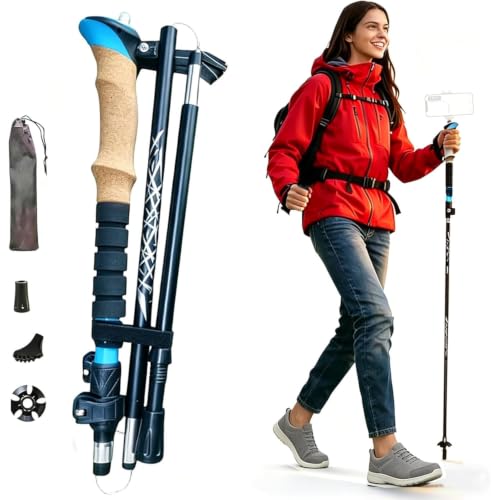
Outdoor photography and content creation represent another practical reason to carry a single walking stick. Models like the 1 Pack Trekking Pole 1/4″ Camera Screw Foldable feature an integrated 1/4-inch screw thread beneath the grip cap, allowing hikers to attach action cameras or phone mounts directly. This turns a functional walking stick into a trail monopod or camera handle in seconds. Consolidating your stabilization gear and photography mounts into a single shaft saves substantial pack space on fast-and-light day trips.
Managing Downhill Braking and Stability Tradeoffs
Descending steep, loose scree requires careful footwork when you rely on only one pole for balance. Because you lack a secondary pole to catch off-balance slips on the opposite side, your foot placement must remain disciplined and deliberate. Hikers should focus on shortening their downhill stride length and maintaining a low center of gravity. Keeping the pole planted slightly ahead of the downhill foot provides an anchor point that prevents uncontrolled forward tumbling.
Sidehill traverses and steep contour lines present specific ergonomic challenges for single-pole users. When crossing a steep slope, placing your single pole on the downhill side gives you maximum leverage and prevents feeling pitched toward the drop-off. Switching the pole to the downhill side whenever a switchback turns ensures your arm works at a comfortable, natural angle. Many collapsible poles feature extended lower grip sleeves that let you choke down on the handle without readjusting mechanical locks.
Crossing slick streams and wet logs highlights the primary limitation of carrying a solitary hiking stick. Dual poles establish four distinct points of contact with the ground, creating a very stable rectangular stance across moving water. A single pole provides three points of contact, which requires you to move only one limb at a time to maintain stability. While three points remain far safer than crossing with zero poles, hikers tackling swift mountain currents should proceed cautiously and probe depths before committing full body weight.
Shaft Metallurgy and Structural Demands: 7075 Aluminum vs. Carbon Fiber
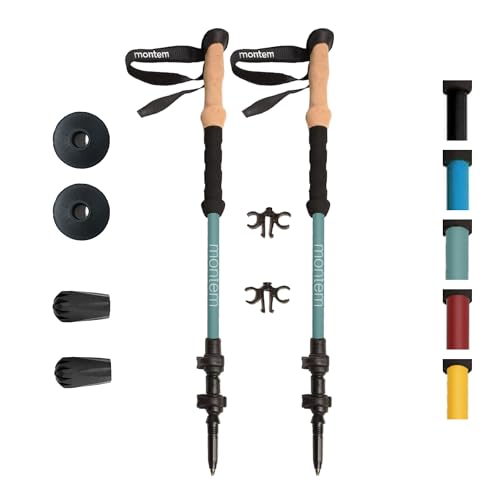
A single hiking pole absorbs concentrated axial force whenever you stumble or catch your weight during an unexpected drop. Shaft composition determines how well the pole withstands those sudden downward loads without bending or snapping. Aircraft-grade 7075 aluminum alloy, utilized in the Montem Ultra Strong Trekking, Walking and A ALAFEN 7075 Aluminum Collapsible Ultralight, offers high tensile yield strength and dependable ductility. If an aluminum shaft encounters excessive lateral bending between granite boulders, it typically bends rather than snapping instantly, allowing you to carefully bend it back for trail exit.
Carbon fiber construction offers exceptional lightness and natural vibration damping for hikers seeking minimum arm fatigue. The Montem Ultra Light 100% Carbon Fiber Trekking pole pair showcases how 100 percent carbon fiber construction reduces carry weight to just 7.6 ounces per pole. This featherweight build allows rapid, effortless swing cadences over long trail miles. However, carbon fiber exhibits lower tolerance for sharp lateral shear impacts, meaning a carbon shaft jammed in a deep rock crevice can fracture under heavy sideways torque.
Total pack weight should heavily inform your choice between resilient aluminum and ultralight carbon shafts. Hikers carrying heavy multi-day loads inside a supportive frame hiking backpack exert substantial downward force whenever they lean on a pole. Under those demanding load conditions, the bend resistance of 7075 aluminum provides a dependable safety cushion against mechanical failure. For light day hikes, trail running, or fastpacking, carbon fiber provides plenty of downward strength while keeping your hands feeling fresh.
Telescoping Adjustability vs. Compact Folding Construction
Telescoping three-section shafts remain the most versatile design for single-pole hikers traversing varying trail gradients. Products such as the Montem Ultra Strong Trekking, Walking and Montem Ultra Strong Trekking, Walking feature sturdy quick-lock levers that adjust seamlessly between 24 and 53 inches. This broad adjustment range lets you lengthen the pole for steep descents and shorten it for high-angle ascents. The telescoping sections nest securely within one another, providing continuous structural rigidity under heavy downward body weight.
Folding Z-pole designs, exemplified by the A ALAFEN Aluminum Collapsible Ultralight Trekking pole, prioritize packed brevity over broad extension ranges. These poles collapse into three or four interlocking segments held together by an internal tension cord, folding down to just 13.4 to 14.1 inches. This tiny packed profile fits neatly inside carry-on luggage, commuter daypacks, or side water bottle pockets. When you encounter flat, non-technical trail sections where you prefer walking hands-free, folding poles stow away rapidly without sticking out above your pack.
Locking mechanisms require basic periodic maintenance to guarantee slip-free performance when you load your full weight on a single staff. External lever cam locks use metal thumb screws to dial in clamping tension against the telescoping tubes. If trail dust accumulates or temperatures drop, the clamp tension can loosen slightly and cause gradual section creeping. Giving the thumb screw a quarter-turn tightening before starting steep descents ensures your pole stays locked securely at your desired length.
Pitching Ultralight Shelters With a Single Trekking Pole
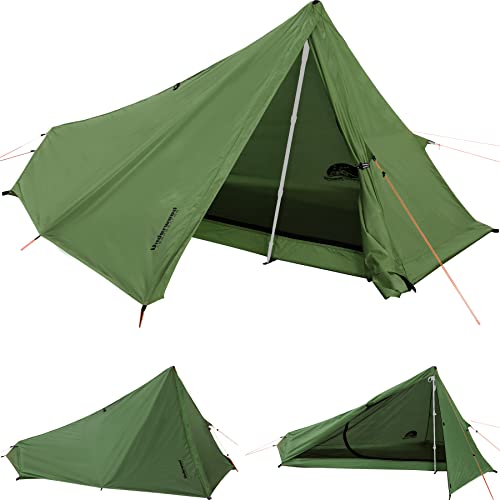
Backpackers looking to trim pack weight frequently utilize non-freestanding ultralight shelters that pitch using hiking poles instead of heavy tent frames. Solitary shelters like the 1 Person Trekking Pole Tent from Underwood Aggregator are specifically engineered to pitch using a single trekking pole or any sturdy stick longer than 46 inches. This design eliminates dedicated tent poles from your pack, dropping total shelter weight down to around 2.5 pounds. Setting up this solo shelter takes only a couple of minutes once corner stakes are anchored firmly into the ground.
Achieving a taut, weather-resistant pitch with a single-pole tent depends heavily on the vertical stability of your hiking stick. The solitary pole acts as the central structural mast, holding canopy ridgeline tension against shifting winds and rainfall. Ensuring your pole locking mechanism is clamped tightly prevents the pole from slipping downward overnight under the tension of taut guy lines. Placing a flat rock or protective boot beneath the carbide tip also prevents the pole from sinking into soft forest soil during heavy downpours.
Checking apex compatibility ensures your pole integrates cleanly with your chosen ultralight shelter. Some solo tents require the handle to seat upward into a reinforced fabric pocket at the peak, while others insert the pointed tip into an apex grommet. Telescoping poles make micro-adjusting pitch height effortless, allowing you to elevate the rainfly slightly on warm nights to maximize ventilation and minimize condensation buildup along interior walls.
Ergonomic Grip Selection and Wrist Strap Mechanics
Carrying a solitary walking stick concentrates repetitive friction on one palm, making grip material and shape critical for comfort. High-density EVA foam handles, featured on Montem and A ALAFEN models, provide soft, shock-absorbing cushioning that wicks away moisture on warm afternoons. EVA foam remains comfortable across wide temperature swings and resists stiffening in cold weather. Ergonomic grooves molded into the foam cradle your fingers and reduce grip fatigue on long mileage days.
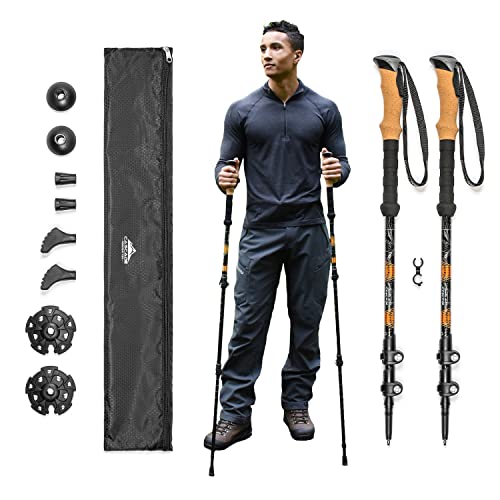
Natural cork and cork-blend grips, found on models like the QIYUANCHUANG folding stick, conform over time to the unique contours of your hand. Cork excels at absorbing palm sweat and dampening minor trail chatter before it travels up your forearm. This material also resists hot spots and blisters during humid summer climbs when sweaty skin is vulnerable to chafing. For hikers who prefer a firm, natural texture, cork grips deliver dependable all-day comfort.
Mastering correct wrist strap technique relieves substantial hand strain when using a single hiking pole. You should always insert your hand upward from underneath the strap loop before grasping the handle, resting the webbing across the base of your palm. This alignment allows your body weight to transfer directly onto the strap webbing rather than requiring a tight, white-knuckled squeeze on the grip. Relaxing your fingers on flat ground lets the pole swing naturally with your stride, saving forearm energy for technical ascents.
Practical Tips for Maximizing Single-Pole Performance
Setting your pole to the correct height establishes optimal mechanical efficiency across variable backcountry terrain. On flat ground, adjust the shaft length so your elbow rests at a comfortable 90-degree angle when holding the grip with the tip on the ground. Shortening the pole by two to three inches on steep climbs allows you to plant the tip forward without overextending your shoulder. Lengthening the pole by two to three inches on descents gives you early ground contact without forcing your torso into an awkward forward lean.
Alternating hands on a consistent schedule prevents uneven shoulder fatigue and maintains balanced posture throughout the day. Switching hands at major trail markers, stream crossings, or hourly snack breaks helps keep your torso aligned and engages both sides of your core evenly. If you encounter sidehill trails, keep the pole in your downhill hand to maximize stability and prevent feeling pulled down the slope. Practicing this hand-switching habit early ensures your single pole feels completely natural on long backcountry treks.
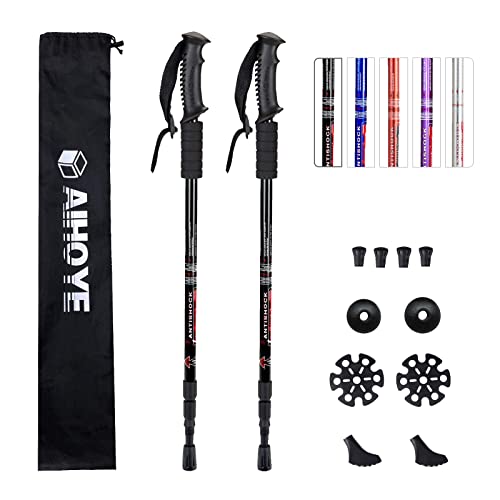
Selecting appropriate tip hardware and modular baskets ensures positive traction across changing trail surfaces. Hardened tungsten carbide tips bite firmly into rocky granite slabs, packed soil, and muddy forest paths to provide dependable slip resistance. When traversing paved roads, hard sidewalks, or slick river stones, slipping on rubber tip protectors quiets noise and prevents the carbide from skittering. Swapping on wider mud baskets prevents your single pole from sinking too deep into soggy alpine meadows and soft sand.
Hiking with just one trekking pole offers an exceptional balance of mobility, joint support, and convenience for day hikers and backpackers alike. Whether you need an open hand for navigating rocky scrambles, managing a pet leash, or pitching a solo shelter, a single pole proves that less gear can still deliver plenty of trail confidence. Choosing a sturdy 7075 aluminum or ultralight carbon fiber model ensures your solitary walking stick remains a dependable backcountry companion for seasons to come.






Write Your Review
No reviews yet. Be the first to share your experience!