


Heading into steep mountain descents with tight footwear often results in bruised toenails, painful hot spots, and aching arches before the day even ends. Hikers frequently ask do columbia hiking shoes run small when searching for reliable footwear that balances trail protection with everyday walking ease. Finding the right internal volume and length ensures your feet have adequate room to expand under pack weight without allowing your heel to lift on steep ascents. Whether you plan day hikes on packed soil or technical outings across rocky switchbacks, matching your foot anatomy to the correct shoe profile makes an immediate difference.
Columbia builds a diverse lineup of trail footwear ranging from lightweight breathable hikers to rugged, weather-resistant boots featuring Omni-Grip traction rubber and TechLite cushioning. Pairing protective footwear with dependable gear, including breathable trail pant options for outdoor hikes, gives you the confidence to navigate varied terrain in changing weather. Understanding how these shoes fit right out of the box will save you the frustration of returns and ensure your toes remain safe during long downhill miles.



Columbia Hiking Footwear Sizing, Fit Profiles, and Trail Clearance
The Direct Verdict: How Columbia Footwear Tends to Fit
Determining whether Columbia hiking shoes run small depends heavily on foot shape, volume, and intended trail conditions. Generally, Columbia trail shoes and boots are manufactured to standard length specifications that align closely with typical Brannock measuring standards for everyday sneakers. Many hikers discover that the forefoot and midfoot areas feel noticeably snug, particularly when wearing thicker cushioned socks. Because hiking demands extra forward space to absorb downhill foot slide, this snug sensation often leads hikers with standard or wider feet to order a half size larger than their casual shoe size.
The overall shape of Columbia footwear often leans toward a classic, slightly tapered contour rather than an anatomical wide-toe-box design. Hikers with low-volume or exceptionally narrow feet usually find that their standard street size delivers a secure, locked-in fit without unwanted excess volume. Those with medium to high insteps or wider forefoot profiles frequently report pressure across the metatarsal heads when staying true to size. Taking the time to evaluate both foot length and midfoot volume helps clarify whether sizing up is the safest path for your hiking style.
Foot dimensions are not static throughout an active day on the trail. Walking for multiple hours over varied terrain causes blood flow to increase, which inevitably produces natural foot expansion and swelling. A shoe that feels snug while standing stationary in your living room can quickly become painfully constricting after several miles of steady walking. Leaning toward a slightly more generous fit remains a dependable strategy for trail footwear in this category.
Comparing Fit Profiles Across Core Columbia Models
Different models within the Columbia catalog feature unique upper materials and structural lasts that directly impact internal space. For example, the Columbia Men’s Crestwood Hiking Shoe and the Columbia Womens Crestwood Hiking Shoe use a combination of breathable suede leather, mesh, and webbing. This low-cut construction provides an adaptable feel right out of the box without requiring an extensive break-in period. Hikers often observe that the suede and mesh upper yields slightly to the foot, but the toe box retains a structured perimeter that limits forward room.
Mid-cut options present a different structural profile that changes how the upper wraps around the ankle and instep. The Columbia Women’s Newton Ridge Lightweight and the Columbia Womens Newton Ridge Plus Waterproof utilize supportive full-grain leather, suede, and seam-sealed construction. Leather uppers naturally have less immediate elasticity than open synthetic mesh, creating a firmer hold around the midfoot that can feel compact on initial wear. Hikers who prefer a more relaxed forefoot feel in these traditional-style hikers commonly choose a half size larger to accommodate the stiffer perimeter.
For hikers seeking a streamlined, agile design, the Columbia Mens Fairbanks Low combines a flexible mesh upper with integrated webbing eyelets for everyday versatility. This design conforms readily around the foot, giving a closer, glove-like sensation that works well for fast-paced walking. Conversely, the Columbia Womens Vertisol Trail, Black/Salmon Rose incorporates the Omni-Max cushioning platform featuring deflection domes and flex grooves to reduce load impact. The engineered cushioning cradles the heel securely while allowing natural forefoot flexion, though the interior still maintains a precise, athletic fit.
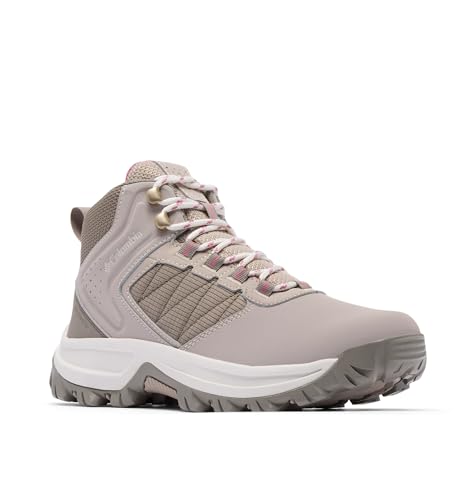
Rugged boots like the Columbia Women’s Transverse Waterproof Hiking Boot and Columbia Women’s Transverse Waterproof Hiking feature durable leather and mesh uppers with metal hardware and padded collars. These components add structural thickness around the ankle collar and tongue, slightly reducing the usable interior space. Hikers planning to tackle rough, uneven trails with these boots often benefit from going up a half size to ensure their toes never strike the reinforced front bumper during steep descents.
The Impact of Waterproof Bootie Liners on Internal Volume
Waterproof technology plays a substantial role in determining how roomy a hiking shoe feels on your foot. Models equipped with Omni-Tech, such as the Columbia Mens Crestwood Waterproof, Mud/Squash and the Columbia Womens Crestwood Waterproof, incorporate a multilayered, seam-sealed bootie construction beneath the exterior upper. While this membrane effectively keeps exterior moisture from rain and slush out, the internal barrier takes up measurable space inside the shoe. This extra physical layer reduces the interior perimeter, making waterproof versions feel noticeably tighter than their non-waterproof counterparts.
Non-waterproof variations, like the standard breathable Crestwood, utilize open mesh paneling that lacks an internal barrier membrane. Without that extra lining, the interior feels slightly more pliable and accommodates foot width with less resistance. Non-waterproof shoes also promote steady airflow, which helps dissipate heat and prevents excessive moisture accumulation during hot summer hikes. When your feet stay cooler, they experience less severe heat-induced swelling, which preserves internal volume over longer distances.
Hikers selecting waterproof footwear must balance weather defense against this tighter internal fit. A waterproof bootie does not stretch or relax over time like standard leather or textile uppers. If a waterproof shoe feels restrictive across the widest part of your foot upon your first fitting, it will almost certainly remain tight throughout its lifespan. Factoring in the thickness of the Omni-Tech bootie is one of the most reliable reasons to choose a half size larger when buying weather-resistant trail shoes.
Foot Swelling, Downhill Impact, and the Thumb-Width Guideline
Trail walking introduces physical forces that differ dramatically from walking on level pavement or working at a desk. Over the course of several hours, gravity, warm temperatures, and continuous impact cause fluid to collect in the lower extremities, increasing overall foot volume. Hikers who size their shoes exactly to their standing foot length often suffer discomfort once their feet expand on the trail. A shoe that feels snug in the morning can create intense friction and constrict blood flow by mid-afternoon.
Downhill walking poses the greatest risk for discomfort when trail footwear lacks adequate forward length. As you descend a steep slope, your foot naturally slides forward inside the shoe with every step you take. If your toes contact the front of the shoe box, repetitive collisions can lead to bruised toenails, painful blisters, or subungual hematoma. This painful condition occurs when blood pools under the nail plate, often forcing hikers to cut their trail outings short.
The standard method for preventing downhill toe collisions is the thumb-width clearance test. When standing upright with your heel resting firmly against the back of the heel counter, you should have approximately a thumb’s width of empty space between your longest toe and the front of the shoe. This empty buffer accommodates forward slide on descents without restricting natural toe movement. If your toes touch the front edge or feel crowded against the sides when standing, moving up a half size is essential.
Understanding Width, Instep Volume, and Outsole Platform Dynamics
Footwear sizing involves much more than linear length from heel to toe, as three-dimensional volume is equally critical for lasting trail comfort. Columbia constructs most of its core styles on a standard medium width last. While this profile fits average-volume feet comfortably, hikers with wider metatarsal spans often experience pinching across the ball of the foot. When the upper constricts the forefoot, the toes cannot splay naturally, which reduces stability and accelerates arch fatigue.
Midsole construction also influences how foot volume interacts with the upper over long trail miles. Columbia utilizes its proprietary TechLite midsole foam across models like the Crestwood, Newton Ridge, and Fairbanks Low to deliver lightweight cushioning and high energy return. TechLite provides resilient impact absorption without collapsing prematurely under pack weight, maintaining a stable underfoot platform. Because the midsole does not sag, any excess downward pressure from a tight upper remains concentrated directly against the top of the foot.
Outsole construction further defines how securely your foot rests within the shoe platform during lateral movements. Columbia equips its trail footwear with Omni-Grip non-marking traction rubber outsoles, engineered with multi-terrain lug patterns for stability on rock, gravel, and dirt. On models like the Crestwood and Newton Ridge, the rubber outsole wraps slightly upward around the toe and heel barriers to guard against abrasive trail strikes. If your shoe is sized too small, this rigid protective wrap will press directly against your toes instead of shielding them from trail debris.
Dialing in Fit With Lacing Adjustments and Trail Sock Selection
Lacing adjustments offer a practical way to customize the internal volume of your Columbia hiking footwear without altering shoe size. If you notice slight heel slippage after sizing up to protect your toes, the heel-lock knot can secure your ankle firmly in place. By threading the lace ends back through the top eyelets to create loops, you can pull the laces horizontally to lock the heel into the rear cup. This technique stops forward slide on steep descents while keeping the toe box open and relaxed.
For hikers experiencing pressure across the top of the foot, window lacing provides targeted pressure relief. By skipping an eyelet crossing directly over a sensitive instep bone, you eliminate painful hotspots without loosening the rest of the shoe. Flexible webbing eyelets, such as those found on the Fairbanks Low, adapt smoothly with your foot motion to distribute tension evenly. Experimenting with different lacing tensions ensures that your foot remains stable on uneven singletrack.
Sock selection is another major variable that directly alters the effective fit and internal volume of your shoes. Dense merino wool socks can easily add half a shoe size of bulk compared to thin synthetic liner socks. Hikers who prefer thick, cushioned wool socks for cold weather or long-distance shock absorption should almost always select a half size larger in Columbia footwear. If you are preparing your gear load for extended trips, integrating proper footwear sizing alongside a comprehensive gear checklist for multi-day treks ensures you stay comfortable from trailhead to campsite.
Indoor Testing, Break-In Protocols, and Ramp Assessments
Before taking any new pair of Columbia hiking shoes or boots out onto dusty trails, a thorough indoor fit test is vital. Wear the exact sock combination you plan to use on the trail, and lace the shoes completely while walking around your home on clean surfaces. Pay close attention to how your heel sits in the back pocket when taking normal steps, ensuring there is no aggressive rubbing or slippage. Testing your footwear late in the afternoon replicates the natural foot swelling that occurs during daytime outdoor excursions.
Simulating downhill walking is the most critical part of an indoor evaluation. You can walk down a flight of stairs or stand on an inclined ramp to see if your toes slam forward. If your toes immediately jam against the front bumper, the shoe is too short, and sizing up by a half size is necessary. If your heel rises noticeably out of the shoe during upward steps, you may have excess length or volume that requires a smaller size or a supportive aftermarket insole.
Break-in expectations vary across different upper materials within the Columbia collection. Suede and textile shoes like the Crestwood typically deliver great out-of-the-box comfort with minimal break-in required, making them trail-ready almost immediately. In contrast, full-grain leather options like the Newton Ridge benefit from a few short neighborhood walks to allow the leather collar and tongue to soften. Taking these gradual preparatory steps guarantees that your shoes conform comfortably to your stride before you face challenging backcountry terrain.
Practical Sizing Takeaways for Trail Footwear Selection
Making the right sizing decision ultimately comes down to matching your foot characteristics with your hiking goals. If you have average or narrow feet, plan on wearing thin socks, and stick mostly to easy, flat nature paths, ordering your standard street size often works well. The structured TechLite platform and secure Omni-Grip sole will provide dependable comfort across straightforward terrain. You will enjoy a snug, responsive feel that keeps your footing precise on packed soil and urban trails.
If you plan to hike rugged, mountainous trails, wear thick cushioned socks, carry a loaded daypack, or have wider feet, choosing a half size larger is the smarter, more comfortable route. The extra half size provides essential breathing room for afternoon foot swelling, accommodates waterproof Omni-Tech bootie liners, and protects your toes from downhill collisions. Giving your toes ample space to splay naturally keeps you energized, prevents painful blisters, and ensures an enjoyable hiking experience across every season.


Write Your Review
No reviews yet. Be the first to share your experience!