


Finding trail footwear that balances out-of-the-box comfort, dependable weather protection, and sensible pricing often leads hikers to ask: does columbia make good hiking boots? When tackling rugged paths with uneven root networks or loose gravel, footwear must protect arches, absorb heel strike, and prevent painful downhill toe collisions. Hikers often debate whether established outdoor apparel brands can compete with specialized alpine bootmakers when navigating varied terrain. Proper foot support also works hand-in-hand with smart trail gear choices, such as wearing long pants on trail to protect legs from thorny underbrush and trail debris.
Columbia has built an enormous following among day hikers and weekend adventurers by offering accessible, trail-ready boots that require very little initial break-in time. Exploring whether does columbia make good hiking boots requires examining how their proprietary cushioning, waterproof membranes, and rubber outsoles perform across realistic trail mileage. While heavy backpacking expeditions demand exceptionally stiff shanks and thick leather uppers, many casual hikers simply need a reliable, comfortable boot for five to ten miles of woodland exploration. Examining the engineering details behind popular lines like the Newton Ridge, Transverse, and Crestwood helps clarify exactly where these boots shine and where their structural limitations begin.


Evaluating Columbia Hiking Boots for Trail Performance and Durability
Columbia has established a massive footprint across outdoor footwear by prioritizing accessible designs, out-of-the-box comfort, and practical trail performance. When evaluating whether does columbia make good hiking boots, the answer depends on your trail terrain, pack weight, and personal comfort priorities. For day hikers seeking dependable weather protection and forgiving cushioning without a painful break-in period, Columbia boots offer an attractive balance of features. Understanding how their specific construction choices align with trail demands ensures you invest in footwear that matches your hiking style.
The Direct Answer: Where Columbia Footwear Excels and Where It Faces Limits
Columbia builds boots that excel in general recreational hiking, moderate woodland trails, and wet shoulder-season conditions. The brand focuses on accessible entry-level to mid-tier footwear rather than rigid alpine boots. Hikers tackling maintained dirt paths, rolling forest loops, and casual weekend outings will find that models like the Newton Ridge or Crestwood provide solid value. These boots emphasize immediate cushioning, flexible uppers, and dependable traction on dirt, gravel, and damp earth.
Limitations emerge when hikers push these boots into severe alpine environments or heavy multi-day expeditions. Columbia boots generally feature flexible midsoles and lightweight chassis structures that lack the torsional rigidity required for carrying pack weights over forty pounds. Hikers navigating sharp scree fields or off-trail boulder fields may find that softer outsoles and lighter uppers wear down faster than heavy-duty backpacking boots. Knowing these design boundaries ensures you select footwear suited to your intended trail profile.
Proprietary Footwear Technologies: Techlite, Omni-Tech, and Omni-Grip
Columbia relies on a trio of in-house technologies across its trail footwear lineup. The first pillar is Techlite, a proprietary ethylene-vinyl acetate formulation used in the midsole. Techlite foam delivers lightweight impact absorption and noticeable energy return across uneven surfaces. Because this foam is tuned for immediate softness, it cushions joints effectively on hard-packed trails, though like most EVA compounds, it compresses gradually over seasons of heavy use.
Weather protection is handled by Omni-Tech, a proprietary multilayered waterproof and breathable membrane system. In models such as the Transverse Suede Waterproof and Bugaboot III, Omni-Tech combines a seam-sealed bootie construction with water-shedding upper treatments. This barrier blocks moisture from rain, wet snow, and shallow puddles while allowing internal sweat vapor to escape through microscopic pores. While high exertion in warm climates can challenge any waterproof liner, Omni-Tech provides solid performance in moderate rain.
Traction comes from Omni-Grip non-marking rubber outsoles, engineered with multi-terrain lug patterns. These compounds provide cross-terrain stability across dirt, loose gravel, and damp rocks. Several models, including variations of the Newton Ridge II, incorporate dual-zone tread patterns designed to maintain footing on slick surfaces like packed mud and winter slush. The lug depths provide good bite on forest trails, though they are somewhat softer than industrial rubber compounds to maintain surface adhesion.
Upper Materials and Construction: Full-Grain Leather, Suede, and Mesh
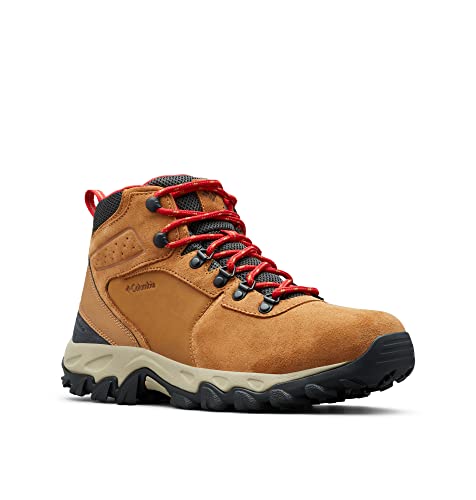
The upper construction of Columbia boots varies across leather, suede, and synthetic mesh combinations. Classics like the Newton Ridge Plus II feature waterproof full-grain leather and suede uppers that resist trail scuffs while forming to the natural shape of the foot. Leather uppers provide natural wind resistance and abrasion protection against low brush on cooler autumn and spring hikes. The natural grain also accepts aftermarket conditioning waxes to preserve water repellency over time.
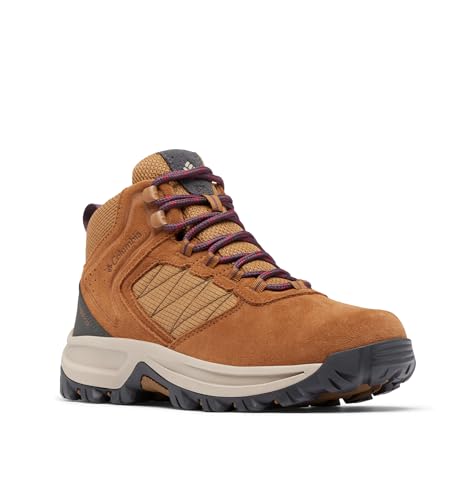
Models like the Crestwood and Transverse incorporate breathable mesh windows and webbing inserts alongside suede overlays. This hybrid construction reduces overall boot weight, allowing hikers to maintain a brisk trail cadence with less lower-leg fatigue. Mesh panels enhance interior ventilation, helping perspiration evaporate more readily during warm summer ascents. However, exposed mesh stitching requires sensible trail care to avoid fraying when brushing against sharp granite edges or dense briars.
Hardware and structural reinforcements also play a key role in upper longevity. Columbia typically integrates sturdy metal speed hooks and reinforced eyelets that allow hikers to achieve a snug, customized lace lockdown. Extended outsole toe overwraps and reinforced heel barriers protect high-wear zones from direct impact on rocky descents. These reinforced perimeters prevent premature separation between the cemented upper and the outsole, extending overall boot life on typical trail outings.
Break-In Expectations and Immediate Out-of-the-Box Comfort
One of the strongest arguments in favor of Columbia footwear is minimal break-in difficulty. Traditional heavy backpacking boots constructed from thick, rigid leather often demand dozens of conditioning miles before the uppers soften and flex naturally. In contrast, Columbia pairs pre-softened leathers and supple suede with cushioned collars and flexible EVA midsoles. Most hikers can wear these boots on moderate day hikes straight out of the box without enduring painful heel hot spots or stiff collar bite.
This forgiving flexibility stems from lightweight internal chassis construction. The boot flexes readily at the ball of the foot, mirroring natural biomechanical stride mechanics. For beginners or occasional hikers who do not want to endure weeks of painful preparation, this forgiving fit profile is a massive advantage. You can lace up for a Saturday morning trek without worrying about blister-inducing collar stiffness rubbing against your Achilles tendon.
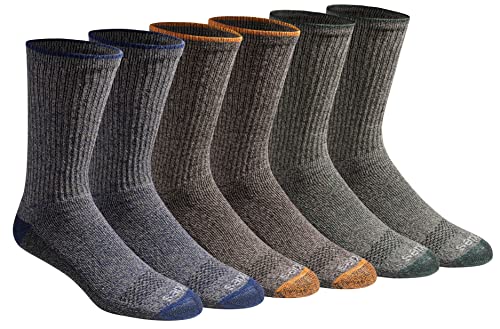
Despite this easy initial fit, completing a short trial walk before committing to a long wilderness route remains good practice. Walking on level pavement allows the footbed to compress slightly under your body weight and highlights any localized pressure points. Testing your boots with the exact wool-blend hiking socks you intend to wear on trail ensures that the internal volume feels secure. Making minor adjustments to lacing tension early prevents unexpected friction when trail inclines increase.
Chassis Stability, Ankle Collar Cut, and Torsional Rigidity
Support in hiking footwear is often misunderstood as merely having high material wrapped around the ankle. While mid-cut boots like the Newton Ridge Plus Amped offer padded ankle collars that shield against trail debris, true stability comes from underfoot torsional rigidity. A boot that resists twisting along its longitudinal axis keeps your foot planted securely when stepping across uneven stones and off-camber roots.
Columbia designs its midsoles with moderate torsional stiffness suitable for groomed and semi-technical trails. These boots provide noticeably more rollover protection and structural support than low-top trail running shoes, making them reassuring for hikers seeking ankle stability. However, they do not feature full-length steel or rigid composite shanks found in heavy alpine boots. As a result, the soles flex more when edging across narrow rock ledges or kicking steps into firm snowpack.
For casual day hikers and weekend wanderers, this moderate balance between flexibility and support is ideal. Stiff, unyielding boots can cause foot fatigue on flat, easy paths because they force an unnatural gait. Columbia strikes a middle ground that accommodates natural foot roll while offering sufficient lateral stability to prevent common trail wobbles. As long as trail conditions remain within standard recreational parameters, the internal chassis provides reliable support.
Pack Load Capacities: Day Hikes Versus Heavy Backpacking
Your total pack weight is one of the most critical factors when assessing whether Columbia boots match your trail objectives. When carrying a light daypack weighing under twenty pounds, Techlite EVA foam delivers outstanding shock absorption, cushioning every heel strike on hard soil. The lightweight construction prevents your legs from feeling weighed down over six to ten miles of active exploration.
The equation changes significantly when preparing for extended wilderness adventures. When packing for multi-day backpacking trips where gear, food, and water push your total pack weight past thirty-five or forty pounds, footwear requirements change drastically. Heavy loads place immense downward pressure on EVA midsoles, causing softer foam to compress and lose its rebound capability prematurely. Under heavy loads, hikers benefit from rigid polyurethane midsoles and stiff shank reinforcement to prevent arch collapse.
If your hiking routine revolves around weekend state park trails, local nature preserves, and overnight hut trips with moderate pack weights, Columbia footwear performs admirably. Pairing capable footwear with thoughtful trail apparel, such as investing in dedicated hiking pants, creates a comfortable, functional system for full days on the trail. Just be realistic about your load carriage before attempting multi-week wilderness traverses in lightweight trail boots.
Fit Profiles, Sizing Accuracy, and Managing Internal Foot Volume
Columbia hiking boots are typically built on standard medium-width lasts that accommodate average foot shapes quite comfortably. The toe boxes provide adequate room for natural metatarsal splay without feeling excessively loose or sloppy. For hikers with wider forefeet, Columbia frequently manufactures dedicated wide sizing across popular models like the Newton Ridge, providing welcome relief from lateral pinch points.
When sizing hiking footwear, accounting for late-day foot swelling is essential. Feet naturally swell after several miles of continuous trail movement, especially in warm temperatures or during sustained uphill climbs. A reliable fitting method is the finger-width heel check: unlace the boot, slide your toes forward until they lightly touch the front of the toe box, and verify that roughly one finger width fits behind your heel. This internal clearance prevents painful downhill toe bang when descending steep grades.
Internal volume can also be customized by swapping factory insoles or modifying lacing techniques. Columbia factory footbeds are relatively thin and lightweight, making them easy to replace with structured aftermarket orthotics if you require enhanced arch support. If you experience heel slip on steep ascents, utilizing a surgeon knot or heel-lock lacing configuration around the upper metal hooks secures the calcaneus firmly in the rear pocket without pinching your instep.
Weather Protection, Water Entry Thresholds, and Breathability
Waterproof boots are indispensable when morning dew coats tall grass or shallow puddles cross the path. Omni-Tech seam-sealed bootie construction effectively keeps external moisture from soaking through the uppers during rainstorms and marshy trail crossings. In dedicated winter models like the Bugaboot III, Columbia pairs this waterproofing with an injection-molded shell and two hundred grams of insulation to retain warmth in freezing slush and snow.
Every waterproof boot has an absolute physical limit determined by its tongue bellows height. The gusseted tongue folds along the eyelet line to block water, but if you step into water deeper than the base of the bellows, water will spill directly over the collar. Once water enters the interior of a waterproof boot, the membrane traps that liquid inside, making field drying a slow process. Hikers should always gauge stream depths before wading into murky crossings.
Breathability represents the other side of the weather protection coin. While Omni-Tech membranes permit microscopic moisture vapor to pass outward, high ambient humidity and vigorous uphill hiking will always generate internal sweat. In arid, high-temperature climates, unlined mesh shoes may dry faster and breathe better than any waterproof membrane. For cool, damp, and temperate environments, however, Columbia waterproof models strike a dependable balance between weather protection and foot climate.
Maintenance Routines, Durability Realities, and Long-Term Value
Maximizing the lifespan of Columbia hiking footwear requires simple, consistent maintenance habits. After muddy hikes, rinse caked soil from the uppers using cool water and a soft nylon brush before the mud dries and pulls natural oils out of the leather. Never dry wet boots near high-heat sources like campfires, wood stoves, or forced-air radiators. Extreme radiant heat can embrittle leather uppers, shrink waterproof linings, and compromise the cemented glue bonds securing the outsoles.
Periodic reapplication of water-based durable water repellent sprays will revive the surface tension on suede and synthetic mesh uppers. When factory treatments wear off, the exterior fabric wets out, saturating the outer layer and hindering the breathability of the underlying Omni-Tech membrane. Conditioning full-grain leather models with specialized nubuck or leather balms keeps the fibers supple and prevents premature flex-point cracking across the forefoot.
When weighing overall performance against cost, Columbia hiking boots represent outstanding value for recreational outdoor enthusiasts. While they do not feature resoleable Goodyear welts or high-mileage alpine chassis components, they provide accessible, dependable, and comfortable trail service across hundreds of recreational trail miles. For the vast majority of day hikers exploring nature trails and mountain paths, Columbia produces reliable footwear that gets the job done without breaking the bank.



Write Your Review
No reviews yet. Be the first to share your experience!