


Maintaining an active, upright walking posture often becomes challenging when knee stiffness, hip discomfort, or minor balance hesitation sets in. Mastering how to nordic walking technique transforms an ordinary neighborhood stroll into a coordinated, full-body exercise that actively distributes body weight across both the upper and lower extremities. By integrating specialized poles with angled backward thrusts, walkers can offload up to twenty percent of downward impact from vulnerable joints while encouraging a natural, upright spinal alignment. This rhythmic movement promotes cardiovascular endurance and postural stability without requiring jarring, high-impact workouts.
Proper execution depends heavily on learning the natural contralateral swing and using equipment engineered specifically for rhythmic propulsion rather than static bracing. When planning outdoor fitness sessions on dirt paths or brushy park trails, reviewing protective trail walking pants helps keep your lower legs guarded against scratches while maintaining full stride mobility. Authoritative guidebooks from publishers such as Bloomsbury, DK, and Hatherleigh Press emphasize that establishing the correct pole angle and strap tension early prevents shoulder fatigue and wrist strain. Understanding the core biomechanics allows walkers of all ages to move forward smoothly, safely, and with total stability.


The Complete Technical Guide to Nordic Walking Form and Biomechanics
Learning the foundational mechanics of Nordic walking requires viewing the poles as instruments of dynamic forward propulsion rather than static crutches. Unlike traditional hiking sticks or medical mobility aids that absorb downward weight in front of the body, Nordic walking poles are planted behind the body at an angle to drive you forward with each stride. This fundamental difference activates the upper body muscles while simultaneously easing mechanical strain across the lower joints. When executed with correct cadence, the technique encourages an energetic, rhythmic gait that builds stability and core strength.
Understanding the Foundational Biomechanics of Nordic Walking
The core movement pattern relies on a continuous diagonal stride where the opposite arm and leg move forward in unison. As your left foot steps forward, your right arm swings forward from the shoulder joint to initiate the pole plant behind your lead heel. This reciprocal rhythm mirrors natural walking mechanics but amplifies the propulsion through intentional ground contact. Biomechanical studies highlighted in publications from Bloomsbury and DK show that this upper-body engagement recruits up to ninety percent of skeletal muscles across the torso, back, and arms.
A major benefit of this diagonal movement pattern is the offloading of lower-extremity joint stress. By transferring a portion of each downward step into the pole shaft and across the shoulder girdle, users can offload between fifteen and twenty percent of peak ground forces from their knees, hips, and ankles. This reduction in joint impact makes the activity highly appealing for older adults seeking low-impact cardiovascular conditioning or individuals managing joint discomfort. Rather than bracing against the ground, the poles maintain continuous forward momentum that keeps the center of mass balanced and stable.
Determining Proper Pole Sizing and Elbow Geometry
Accurate pole length serves as the structural foundation for achieving proper technique and preventing upper-body discomfort. To find your ideal fixed pole height, stand tall in your everyday walking shoes on a flat, level surface with your shoulders relaxed. Bend your elbow to a ninety-degree angle so your forearm extends parallel to the ground. A properly sized pole should allow your hand to grasp the grip comfortably while keeping the elbow right at that right angle, or slightly wider at approximately ninety-five to one hundred degrees for gentle recreational walking.
A standard mathematical formula can also verify this anatomical measurement by multiplying your total height in centimeters by 0.68. For example, adjustable telescoping models such as York Nordic aluminum poles adjust from thirty-two inches up to fifty-four inches to accommodate user heights between five feet four inches and six feet two inches. Utilizing external lever flip locks rather than internal twist locks provides superior tactile security and prevents shaft slippage during vigorous backward propulsion. Setting the pole too tall forces the shoulder into an awkward elevated shrug, while setting it too short causes excessive forward hunching that strains the lower lumbar spine.
Harnessing the Glove Strap and the Open-Hand Release
The defining engineering feature of dedicated Nordic walking poles is the specialized glove-style strap harness. Unlike simple loop straps found on trekking poles, a Nordic strap wraps securely around the palm and wrist with a thumb hole, often featuring a quick-release mechanism. This snug harness transfers propulsion forces directly through the base of the palm rather than demanding a tight finger grip on the handle. Ergonomic cork or rubberized grips provide pleasant tactile contact, but the strap itself does the heavy mechanical work during each stride.
Mastering the open-hand release past the hip is what truly distinguishes Nordic walking from ordinary walking with sticks. As your hand drives the pole backward past your hip line, you must completely open your fingers and release your grip on the handle. The pole stays securely attached to your wrist via the glove strap, allowing your arm to extend fully backward in a straight line behind your body. Squeezing the handle continuously throughout the stride is a common error that causes forearm cramping, wrist fatigue, and elevated blood pressure. Releasing the fingers at the finish of the push allows your hand to relax momentarily before swinging forward for the next plant.
Step-by-Step Execution of the Diagonal Stride Technique
Beginners should always start learning the motion without holding the grips, allowing the poles to drag along the ground behind them. Stand tall with your hands inside the glove straps, drop your arms loosely at your sides, and simply walk at a comfortable, natural cadence. As you walk, observe how your arms swing forward and backward naturally from the shoulder joints in opposition to your leg movements. Allow the poles to drag passively on their rubber tips until you feel relaxed, rhythmic, and completely coordinated.
Once your natural reciprocal arm swing feels fluid, begin lightly closing your fingers around the grips as each hand swings forward. Plant the pole tip firmly into the ground at an angle of roughly forty-five degrees, with the tip striking the earth directly opposite your back foot or level with your front heel. Never reach forward to plant the pole tip ahead of your lead foot, as that acts as a brake and interrupts your momentum. Instead, maintain the backward angle of the shaft so that pressing downward immediately translates into forward body propulsion.
Complete each stride by pushing firmly down and back into the strap while rolling your feet through a complete heel-to-toe gait cycle. Drive off your back toe while your trailing arm finishes its rearward extension, opening your fingers just as the hand clears the hip. Practicing the extended backward arm swing and lower-body stride across outdoor paths is often more comfortable in durable walking trousers that stretch with every hip extension without binding at the knees. The trailing pole then swings smoothly forward through the air as your shoulder swings forward to initiate the opposite side.
Coordinating Posture, Core Engagement, and Trunk Rotation
Maintaining an erect, balanced posture maximizes biomechanical efficiency and prevents neck and shoulder tightness. Imagine a gentle upward pull through the crown of your head, keeping your chest open, your ribcage lifted, and your shoulders dropped away from your ears. Rather than bending forward at the waist, maintain a very subtle forward tilt originating from your ankles. This slight forward lean naturally positions your center of mass over the ground contact point, facilitating smooth forward acceleration without placing stress on the lumbar region.
Dynamic core engagement occurs naturally when you allow your upper torso to counter-rotate with every arm swing. As your right arm drives backward and your left foot strides ahead, your upper torso gently rotates toward the left side. This reciprocal twisting action engages the internal and external oblique muscles, strengthening the deep core stabilizers that protect your spine. Walkers who lock their torsos into a rigid, square position lose much of the rotational energy and cardiovascular benefit that makes Nordic walking so effective.
Selecting Surface Attachments: Rubber Paws Versus Carbide Tips
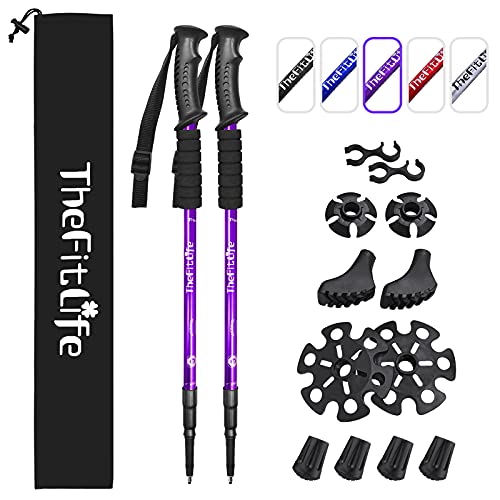
Nordic walking poles utilize interchangeable base tips specifically designed to adapt to hard urban pavement or soft natural terrain. For walking on asphalt, concrete sidewalks, or smooth paved park loops, you should always attach angled rubber booties, commonly referred to as paws or feet. These rubber paws feature directional tread patterns that absorb ground impact vibrations and provide dependable friction against hard surfaces. When installing the rubber bootie, ensure the angled toe points backward, allowing the bottom surface to bite into the pavement during your rearward thrust phase.
When transitioning to dirt trails, grass fields, gravel pathways, or packed woodland trails, remove the rubber booties to expose the pointed tungsten steel or carbide tips. The sharp metal tips penetrate loose soil and gravel, providing positive mechanical traction that will not slip backward when you push through the strap. Inspecting your rubber paws regularly for worn-down tread or internal punctures from the metal shaft is essential for maintaining outdoor safety. Replacing worn rubber accessories promptly preserves ground grip and ensures your pushing force transfers smoothly into forward motion.
Diagnosing and Correcting Common Beginner Gait Errors
One of the most frequent technical mistakes among novice walkers is planting the poles vertically or out in front of the body. When a pole tip strikes the ground ahead of the lead toe, the resulting force pushes backward against your body, effectively acting as an unwanted brake. To fix this error, remember that Nordic poles must always point backward at a consistent diagonal angle relative to the ground. Visualizing your hands pushing an imaginary sled or pushing off cross-country ski poles can help reinforce this rearward angle.
Another widespread issue is pacing, which occurs when the arm and leg on the same side move forward simultaneously like a camel walking. Pacing feels awkward, disrupts balance, and usually happens when a walker overthinks their arm coordination. If you catch yourself pacing, immediately release your grip on the poles, let them drag behind you on the ground, and walk naturally until your normal contralateral arm swing returns. Once your natural opposite arm-and-leg rhythm is restored, gently re-engage the grips without breaking stride.
Walkers also frequently struggle with stiff, locked elbows or excessive elbow bending that mimics bicep curls. Your arm should swing primarily from the shoulder joint like a long pendulum, maintaining a gentle, relaxed curve at the elbow rather than a rigid right angle. Pumping your forearms up and down isolates tension into the biceps and neck instead of recruiting the broad latissimus muscles of the back. Keeping the shoulders relaxed and letting the arms swing freely ensures smooth, fluid movement that can be sustained comfortably for miles.
Rehabilitation, Joint Protection, and Mobility Transitions
For individuals recovering from joint procedures or managing chronic balance hesitation, Nordic walking offers a bridge between standard walking and athletic conditioning. The bilateral pole contact provides two additional points of ground stability, widening the effective base of support and reducing fall anxiety. Because the poles offload joint pressure through the upper body, many walkers find they can achieve longer, more symmetrical strides without aggravating knee or hip discomfort. Instructional resources by authors in publications like Walk Yourself Well highlight these therapeutic properties for active rehabilitation.
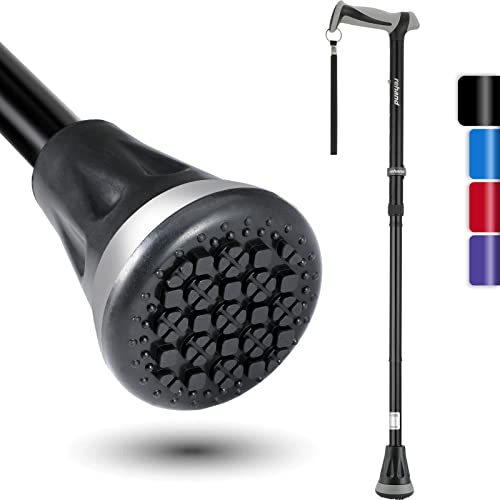
While Nordic walking poles provide wonderful stability for active walkers, they are not a substitute for prescribed medical mobility aids like single-point canes or quad canes in acute clinical situations. If an individual suffers from severe vestibular imbalance, progressive neurological instability, or strict non-weight-bearing restrictions, bilateral fitness poles do not replace a medical walker or rollator. Anyone managing orthopedic rehabilitation or balance disorders should consult a licensed physical therapist or physician for an individualized gait assessment before beginning an intensive pole walking routine.
Developing consistent Nordic walking technique requires patience, relaxed posture, and regular practice with the open-hand release and diagonal stride. By dialing in your pole height, engaging your core through gentle torso rotation, and matching your rubber paws or carbide tips to the walking surface, you unlock a rewarding full-body exercise that protects your joints. Focus on rhythmic propulsion and fluid arm swings from the shoulders to enjoy steady balance, increased endurance, and confident outdoor mobility on every walk.





Write Your Review
No reviews yet. Be the first to share your experience!