


Long downhill switchbacks can hammer your knees and shake your stability if you hit the trail without dependable gear. Deciding to add lightweight trekking poles helps offload substantial impact from your knees, hips, and lower back while maintaining steady rhythm across uneven ground. Hikers shopping for top-tier German engineering frequently ask how to pronounce leki poles before heading to local outfitters or trailheads. The correct pronunciation is “LAY-kee,” honoring both company founder Karl Lenhart and his home village in southern Germany. Pairing reliable walking shafts with supportive hiking apparel creates a balanced setup capable of handling demanding backcountry terrain.
Understanding the label behind your equipment builds confidence in the specialized hardware supporting your strides across steep ascents and loose scree. The company combines proprietary aluminum metallurgy with ergonomic cork handles and rapid cam-lever adjustment clamps to support diverse outdoor pursuits. Whether you prepare for alpine ridgelines, casual gravel paths, or fitness walking sessions, learning how to pronounce leki poles connects you to decades of mountain heritage. These outdoor tools transform steep descents into controlled steps, helping you maintain endurance over long days in the backcountry.


Comprehensive Guide to LEKI Pronunciation, Heritage, and Pole Engineering
Pronouncing outdoor brand names correctly can feel confusing when equipment travels across international borders and languages. Mastering how to pronounce leki poles requires understanding the phonetic structure of the German name and the engineering legacy behind the company. Founded in southern Germany, the brand manufactures specialized trekking, walking, and running poles designed to enhance balance, distribute joint impact, and withstand rugged backcountry terrain. Exploring the origins of the name alongside the technical hardware reveals why these poles remain a standard choice for hikers across the globe.
The Correct Pronunciation and Origins of the LEKI Name
The correct way to pronounce the brand name is “LAY-kee,” using two distinct syllables with the accent placed on the first syllable. English speakers frequently guess that the word sounds like “LECK-ee” with a short vowel, or “LEE-kee” with an extended high vowel. In native German pronunciation, the initial vowel creates a long, clean “ay” sound that flows directly into the brisk second syllable. Saying “LAY-kee poles” aligns your speech with the manufacturer’s official phonetic presentation and European trail parlance. Confident pronunciation allows you to communicate clearly with gear shop staff and fellow backpackers without hesitation.
The origin of the name traces back to mid-century Germany and the personal history of its founder, Karl Lenhart. Lenhart operated a wood-turning and lettering enterprise in Kirchheim unter Teck, a scenic town located in the Baden-Wuerttemberg region. When he began crafting his own lightweight ski grips and metal shafts, he formed an acronym by blending the first two letters of his surname with the first two letters of his hometown. Combining “LE” from Lenhart and “KI” from Kirchheim generated the distinctive brand moniker known across mountain ranges today. This linguistic shorthand reflects a proud tradition of regional German manufacturing and precision toolmaking.
Understanding LEKI Aluminum Metallurgy and Shaft Architecture
Shaft materials dictate how effectively a trekking pole resists bending stresses, dampens vibrations, and endures rocky trails. The manufacturer relies heavily on proprietary heat-treated aluminum alloys designated as HTS, which stands for High Tensile Strength. Models such as the Voyager utilize HTS 6.0 aluminum, which offers a dependable balance of rigidity and resilience for general backcountry exploration. Advanced options like the Makalu Cork Lite, Khumbu Lite, and Evotrail FX.One employ HTS 6.5 aluminum to achieve higher yield strength at lower overall weights. This high-grade alloy maintains exceptional structural integrity across variable temperature swings and challenging alpine environments.
Telescoping poles typically feature stepped shaft diameters, stepping down from an eighteen-millimeter upper section to a sixteen-millimeter midsection and a fourteen-millimeter lower section. This tapered architecture provides substantial axial load-bearing capacity when you drive downward during steep descents. Unlike brittle carbon composite shafts that can shatter catastrophically when pinched between granite boulders, ductile aluminum shafts demonstrate remarkable bending tolerance under lateral shear forces. While an extreme stumble might deform an aluminum segment, the metal rarely snaps cleanly into hazardous shards. Carrying robust aluminum shafts provides valuable peace of mind when supporting backpacks built for heavy loads on remote routes.
Comparing External Speed Lock Plus Levers and Internal Super Lock Systems
Locking mechanisms represent the critical mechanical link that prevents telescoping poles from collapsing under downward body weight. The external Speed Lock Plus system found on poles like the Khumbu Lite and Makalu Cork Lite uses an external cam lever designed for rapid operation. This clamp mechanism features an integrated tension dial that hikers can adjust with their fingers to increase or decrease holding force. The lever design allows users to adjust shaft length quickly while wearing thick winter gloves or navigating rainy mountain passes. Solid clamping power ensures that each shaft section remains firmly positioned when navigating uneven surfaces.
Internal locking mechanisms like the Super Lock SLS system on the Voyager take a different approach by utilizing internal expanding wedges. Twisting the shaft sections in opposing directions drives a threaded expansion plug against the inner aluminum wall, locking the sections through friction. This internal configuration creates an exceptionally sleek outer profile that cannot snag on thick brush or narrow rock chimneys. However, internal locks demand careful dry operation, as moisture or fine trail dust inside the tube can reduce friction and cause section slippage. Testing your lock tension with firm downward body weight before heading down steep switchbacks prevents sudden mechanical surprises.
Ergonomic Handle Designs from Aergon Air Cork to Cane-Style Grips
Grip comfort plays a monumental role in preventing hand fatigue, palmar hot spots, and blisters over high-mileage trail days. The Aergon Air handle featured on the Makalu Cork Lite incorporates natural cork materials that absorb sweat and conform to your unique grip over time. Natural cork stays cool in sweltering summer heat while insulating your hands from cold aluminum shafts during chilly autumn mornings. The hollow core construction of the Aergon Air head minimizes swing weight at the top of the pole, allowing for effortless forward arm motion. Furthermore, the rounded grip head provides an expansive palm rest when you lean down onto the poles during steep step-downs.
Alternative handle designs cater to specific walking styles, running cadences, and mobility preferences across various landscapes. The Cor-Tec grips on the Khumbu Lite blend natural cork with composite polymers, delivering durable grip texture that resists crumbling from trail abrasion. Specialized models like the Wanderfreund High Fives and Wanderfreund Makalu feature Aergomed and Multimed cane-shaped handles made of cork and soft synthetic compounds. These ergonomic cane grips offer broad palm support for travelers and day walkers who prefer a traditional walking stick over dual trekking poles. Meanwhile, the Evotrail FX.One utilizes the Trigger Shark 2.0 system, allowing trail runners to clip a mesh hand strap directly into the cork grip for rapid energy transfer.
Biomechanics of Pole Sizing, Strap Entry, and Terrain Adjustments
Proper pole length setup forms the structural foundation of efficient walking biomechanics and joint protection. Standing on flat ground with your footwear on, adjust the shafts until your elbows rest at a ninety-degree bend with your forearms parallel to the trail. Sizing the poles too long strains your shoulder muscles and upper back, while setting them too short promotes poor posture and hunched shoulders. When tackling prolonged uphill climbs, shortening each pole by five to ten centimeters helps you push off without lifting your arms excessively high. On steep descents, lengthening the poles by five to ten centimeters allows you to plant ahead and brake smoothly without leaning your torso forward.
Executing the correct wrist strap entry technique is essential for transferring your downward body weight through the skeletal system rather than relying on grip strength. Slide your hand upward through the bottom opening of the strap loop before grasping the handle and strap together in your palm. This upward insertion seats the wide strap webbing snugly across your wrist and the ulnar border of your hand. You can maintain a relaxed, open hand grip on flat sections while letting the strap bear your downward momentum. Pairing this efficient upper-body rhythm with flexible, lightweight hiking bottoms ensures unimpeded leg mobility across demanding backcountry elevations.
Tips, Rubber Road Protectors, and Trail Surface Adaptations
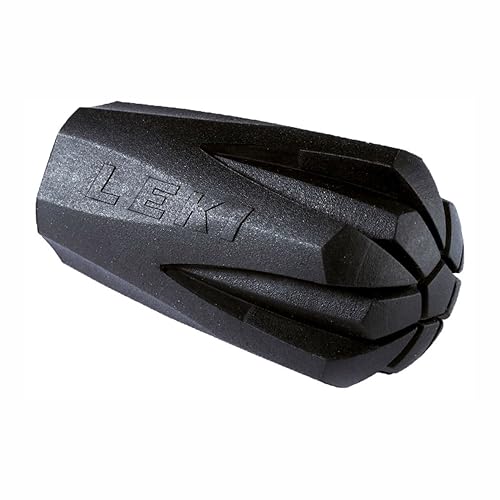
Trail traction depends entirely on the specialized hardware mounted at the very base of the trekking pole shaft. The Flex Tip Short features an ultra-hard tungsten carbide insert housed within a flexible plastic sheath that bends before snapping under severe side loads. The concave carbide point bites aggressively into slick tree roots, loose gravel, mud, and weathered granite slabs. However, using exposed carbide tips on hard paved roads or indoor surfaces creates irritating clicking sounds and causes rapid point wear. Equipping your poles with replacement rubber walking tips provides smooth grip, dampens vibration, and protects finished surfaces during road walks and urban travel.
Baskets mounted above the tip assembly prevent the pole shafts from sinking excessively deep into loose terrain. The compact Nordic and Trekking 2.0 baskets supplied with standard models offer ample surface area to deflect mud, wet leaves, and gravel scree. These low-profile baskets minimize snagging on trailside brush and rocks while keeping the swing weight near the bottom of the pole exceptionally low. In winter environments with deep powder snow, hikers can swap these compact baskets for broader snowflake baskets to maintain reliable flotation. Ensuring your baskets are threaded tightly before every hike prevents them from spinning loose in thick alpine mud bogs.
Packability, Folding Z-Poles, and Airline Travel Logistics
Packability dictates how easily you can transport your poles when traversing technical terrain or transitioning between travel destinations. Collapsible folding poles like the Evotrail FX.One separate into four compact sections linked by an internal tension cord, packing down to just fifteen inches. This ultra-compact profile allows trail runners and fastpackers to lash poles directly to running vests or slip them inside daypacks. Traditional three-section telescoping poles like the Voyager and Khumbu Lite collapse to roughly twenty-five or twenty-six inches. While telescoping models pack slightly longer, they provide continuous length adjustability that fixed-length folding poles cannot match.
Navigating airline security rules requires careful preparation when flying to distant mountain ranges with your trekking gear. Transportation Security Administration regulations strictly prohibit hiking poles with metal carbide tips in domestic passenger carry-on luggage. Airport security screeners classify trekking poles as potential blunt or pointed hazards, resulting in immediate confiscation at security checkpoints. To avoid losing expensive equipment, you must pack your poles securely inside checked luggage before arriving at the airport. Retracting telescoping shafts completely or disassembling individual sections protects the locking collars and shafts from bending damage during baggage handling.
Routine Cleaning, Grit Removal, and Long-Term Pole Maintenance
Regular field maintenance ensures that your locking hardware and aluminum shafts operate reliably across years of demanding use. After hiking through wet river crossings, coastal salt air, or muddy bogs, pull each telescoping section completely apart to inspect the aluminum tubes. Trapped moisture inside closed metal tubes promotes galvanic corrosion, creating white powdery aluminum oxide that can freeze joints permanently. Wipe down each segment with a clean, dry microfiber cloth and allow the parts to dry thoroughly before reassembling. Never apply WD-40, silicone lubricants, or grease to the shafts, as lubricants destroy the friction needed for locks to hold securely.
Periodically inspecting the external cam levers and thumb screws on Speed Lock systems keeps your equipment trail-ready for steep descents. Open the cam lever fully, rotate the tension thumb screw clockwise a quarter-turn, and snap the lever shut to verify solid clamping resistance. The lever should close with firm thumb pressure without requiring excessive force that could crack the plastic housing. If you notice fine silt grinding inside an internal Super Lock system, rinse the expander threads under warm tap water and let them dry completely. Proactive hardware care guarantees that your equipment will continue providing dependable stability, stride after stride.
Mastering how to pronounce leki poles provides more than just accurate pronunciation when discussing gear with fellow outdoor adventurers. Understanding how Karl Lenhart engineered these tools in Kirchheim unter Teck connects you to purposeful design, from responsive HTS aluminum shafts to ergonomic cork handles. Selecting the right locking mechanism and dialing in your elbow angles transforms every backcountry step into an efficient, knee-friendly stride. With well-maintained hardware and dependable technique, you can tackle rugged alpine ridges and winding gravel trails with total footing confidence.






Write Your Review
No reviews yet. Be the first to share your experience!