


Hikers navigating mixed terrain often encounter sharp transitions between soft forest soil, slick granite slabs, and hard paved connectors. While bare metal carbide points offer tenacious bite into dirt, gravel, and packed ice, dragging them across hard pavement or bare rock creates jarring vibrations, loud scraping noises, and rapid hardware degradation. Knowing how to use hiking pole tips correctly allows backcountry travelers to maintain forward momentum, absorb trail shocks, and protect both their gear and the environment. Pairing proper pole technique with supportive trail pants for knee comfort can significantly reduce fatigue on high-mileage descent days.
Most trekking poles come equipped with permanently bonded or press-fit carbide flex points designed for natural earthen surfaces. However, adding removable rubber caps transforms how those poles interact with hard surfaces, asphalt greenways, and slick boulder fields. These slip-on accessories dampen repetitive shock before it travels upward through your wrists and shoulders, while simultaneously preventing the unsightly scarring of pristine rock faces. Understanding when to leave the carbide exposed and when to press on rubber protection is a fundamental skill for efficient and sustainable hiking.
Pros
- Budget-friendly 6-piece bundle provides ample backup tips for long-distance hikes or multiple pairs of poles
- Universal 11mm inner diameter fits standard trekking poles and walking sticks
- Shock-absorbing rubber dampens impact and significantly reduces noise on paved or rocky terrain
- Simple push-on installation requires no tools or hardware
Cons
- Friction-fit rubber caps can be pulled off when wedged into thick mud, wet clay, or tight rock crevices
- The product specifications do not list an embedded metal washer, which may allow sharp metal pole tips to wear through over extended use
- Sized specifically for standard 11mm shafts and will not fit non-standard or oversized pole tips
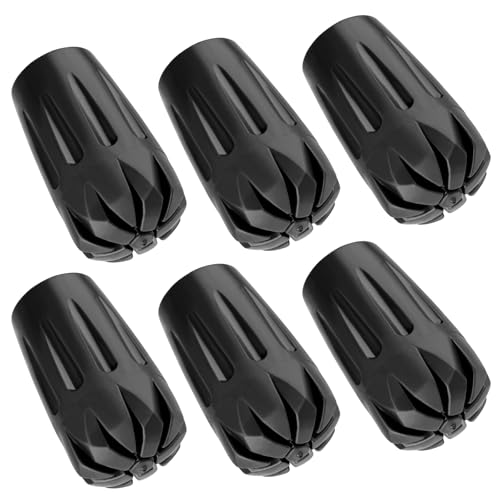
The AISUNOUTDOOR Trekking Pole Rubber Tips are replacement traction caps designed to fit standard 11mm hiking sticks, trekking poles, and walking canes. Sold as a convenient 6-pack, this accessory caters to day hikers, backpackers, thru-hikers, and trail walkers who need to replace missing or worn-down pole feet. Rather than replacing entire trekking poles when factory tips degrade, these push-on rubber caps provide an affordable way to maintain traction and extend pole lifespan across paved walkways, rocky switchbacks, and hardpacked forest trails.
Trail performance with rubber tips centers on surface traction and impact dampening. The manufacturer highlights an anti-slip textured bottom designed to give stability on slick surfaces such as wet pavement, smooth granite, concrete paths, and wooden boardwalks. By substituting bare carbide or tungsten pole points with rubber, these tips also reduce the sharp, repetitive jarring transmitted to the user's wrists, elbows, and shoulders. Furthermore, using rubber caps on popular trails helps prevent the loud metallic clicking sound of hiking poles while reducing surface scarring on sensitive rocks in national parks.
The tips are molded from black rubber engineered to withstand everyday abrasion on mixed terrain. According to the product specifications, the entire set weighs approximately 0.032 pounds, making individual caps virtually unnoticeable when stashed inside a backpack hip-belt pocket, top lid, or first-aid kit. The interior sleeve is sized for standard 11mm pole tips, using a snug friction fit that slides securely over the bottom shaft. While the rubber body offers shock absorption and road grip, the product listing does not state whether these caps contain an embedded metal washer to prevent sharp metal tips from puncturing through over long distances.
Installing and carrying these replacement tips is straightforward for any outdoor activity. Hikers can simply press the rubber caps onto clean pole ends until fully seated, requiring no tools, adhesives, or mechanical fasteners. Because rubber tips can occasionally loosen or pull free when stuck in sticky mud, wet soil, or deep gravel, carrying multiple spares from this 6-pack ensures uninterrupted support during multi-day backpacking trips. For routine care, rinsing dirt and grit from inside the sleeve after muddy outings will help maintain a tight friction grip against the pole shaft.
Despite their practical utility, these replacement tips have clear limitations that buyers should understand before heading into the backcountry. The push-on friction fit is susceptible to pulling off if a pole tip gets wedged between boulders, caught in tree roots, or buried in heavy clay. Additionally, because rubber is inherently softer than tungsten carbide, regular use on coarse asphalt and abrasive rock will eventually wear down the tread. Hikers with specialized, ultra-slim, or oversized trekking poles should also verify tip diameter, as an 11mm opening will not fit non-standard pole designs.
The AISUNOUTDOOR 11mm Trekking Pole Rubber Tips offer solid practical value for hikers seeking an economical way to maintain grip, dampen vibration, and protect trails. While aggressive backpackers navigating deep mud or technical talus will want to monitor their pole tips closely, this 6-pack provides ample backup caps for routine trail walking, road walking, and day hiking. If your current trekking pole tips are worn down to the metal or you need dependable spares for your gear closet, this set is a practical and budget-friendly upgrade.
The AISUNOUTDOOR replacement tips feature an interior sleeve designed specifically for standard 11mm trekking pole and walking cane tips. This 11mm inner diameter matches the industry-standard sizing used on the majority of telescoping and folding hiking poles available in the outdoor market.
Before purchasing, hikers should verify the tip diameter of their current poles, as non-standard ultra-light shafts or heavy-duty walking sticks may require different dimensions. The push-on friction fit allows users to swap worn tips in seconds without needing extra tools, glue, or clamps.
Rubber pole tips excel on hard, solid surfaces where bare metal carbide spikes tend to slip, vibrate, or make excessive noise. These tips provide dependable friction on paved paths, concrete steps, exposed rock slabs, and bridge decking, making them ideal for road walking, urban trails, and maintained park switchbacks.
To maintain a tight friction fit, remove the tips periodically to clear out trapped moisture, fine sand, and mud from the interior socket. Storing the spare caps in a dry pocket of your daypack or gear bag ensures you are always prepared if a tip is pulled off in wet soil or deep gravel.
The Complete Guide to Hiking Pole Tips: Mechanics, Surfaces, and Maintenance
Navigating varying terrain demands an understanding of how your gear contacts the earth beneath your feet. Trekking poles serve as direct extensions of your arms, transferring energy and stabilizing your stride with every plant. Learning how to use hiking pole tips ensures that you generate reliable traction while protecting your pole shafts, joint health, and trail surfaces. The following technical guidance outlines proper tip selection, installation mechanics, and terrain management for every outdoor scenario.
Understanding the Difference Between Carbide and Rubber Tips
Factory trekking poles feature a hard flex tip assembly permanently pressed or bonded onto the bottom of the lower shaft section. At the core of this assembly sits a pointed crown forged from tungsten carbide, a dense composite known for exceptional hardness and abrasion resistance. Carbide tips are engineered to scratch and bite into organic earth, loose scree, wet roots, and icy crust. Because the metal point is small and concave, it concentrates downward axial force into a microscopic surface area, preventing slipping on unstable natural ground.
Removable rubber caps, conversely, function as protective friction boots that slide directly over the carbide points. Constructed from durable vulcanized rubber, these caps provide a broad, textured footprint designed to grip smooth, non-porous surfaces. Rubber compounds deform slightly under load, maximizing friction on flat surfaces where a sharp metal point would otherwise slide or skate uncontrollably. They also encase the sharp carbide crown, preventing accidental punctures to gear, clothing, and carrying cases during transit.
Hikers also encounter specialized Nordic walking paws, which differ from standard cylindrical trekking caps. Nordic paws feature an angled, shoe-like profile oriented backward to facilitate aggressive push-offs on paved sidewalks and fitness paths. Standard round hiking caps, such as those made for general trekking poles, provide symmetrical grip from any angle of plant. Choosing the correct tip style depends entirely on whether your objective involves natural backcountry tread or manufactured hardscape.
When to Leave Bare Carbide Points Exposed
Bare carbide points excel on unpaved backcountry trails where the ground yields to downward pressure. On soft dirt, forest duff, gravel paths, and steep scree slopes, the sharp carbide teeth dig directly into the terrain to create an instantaneous anchor. This mechanical bite proves invaluable when ascending steep grades, allowing your upper body musculature to assist your legs in generating upward propulsion. Without carbide penetration, poles can skate on loose surface pebbles, causing hikers to lose cadence and balance.
Wet, muddy trails and snowy alpine passes also mandate the use of bare carbide tips. Mud quickly coats rubber treads, transforming smooth caps into frictionless skates that slide unpredictably under body weight. Bare carbide cuts through surface slurry to contact firmer substrate beneath, maintaining essential lateral stability. Furthermore, sub-freezing conditions make rubber brittle and slick, whereas sharp tungsten carbide effortlessly pierces frozen topsoil and hard-packed snow.
When to Install Rubber Hiking Pole Caps
Asphalt greenways, concrete walkways, and paved road walk connectors represent the primary environment for rubber trekking pole caps. When metal carbide strikes solid concrete or tarmac, it cannot penetrate the dense material, resulting in an immediate loss of grip. Instead of biting, the small metal tip skitters across the hard surface, which can cause sudden wrist wrenching and potential slips. Rubber caps provide wide contact patches with high friction coefficients, creating dependable traction on paved roadways.
Large granite slabs and smooth river boulders also call for rubber tip installation. While carbide bites well into soft sedimentary rock, hard metamorphic and igneous bedrock resists metal penetration. Planting bare metal on polished granite often causes the pole to slip away under downward force, especially during steep descents. The pliable rubber compound grips dry rock slabs securely, giving hikers the stability needed to descend technical slab sections with confidence.
Boardwalks, suspension footbridges, and wooden trail stairs are another common scenario where rubber caps should be installed. Sharp carbide points easily splinter timber decking, gouging holes into maintained trail infrastructure over time. Slipping rubber caps over your poles before stepping onto historic boardwalks protects the wood while preventing the pole tip from lodging in gaps between planks. Using rubber tips in these areas demonstrates responsible stewardship and preserves shared outdoor structures.
Step-by-Step Installation and Securing Techniques
Installing rubber tips properly prevents them from working loose and getting lost on the trail. Begin by inspecting the plastic ferrule and carbide point of your trekking pole, wiping away all dried mud, sand, and grit with a clean cloth. Debris trapped inside the rubber sleeve acts as a dry lubricant, reducing friction against the shaft and causing the cap to slide off during motion. Ensure both the pole ferrule and the interior of the replacement cap are completely dry before proceeding.
Align the rubber cap with the lower ferrule and push it firmly upward until it seats completely against the base. Reliable aftermarket options like the Durable Replacement Rubber Tips for Trekking Poles from AISUNOUTDOOR are designed to slide onto standard 11mm tapered pole ferrules. Once the cap is positioned, place the pole vertically on level ground and apply moderate downward body weight through the grip. This axial pressure forces the rubber sleeve into a snug friction lock, ensuring the cap stays firmly attached across miles of walking.
Biomechanical Impact and Vibration Reduction in Joints
Carbide tips striking impenetrable rock or hard asphalt send high-frequency shock waves directly up through the pole shaft. This repetitive vibration travels sequentially through the wrist ligaments, forearm tendons, elbow joints, and shoulder girdles. Over a long day of road walking or rocky traversing, these microscopic impacts can aggravate carpal tunnel symptoms and trigger lateral epicondylitis. Rubber caps act as mechanical dampening buffers, dissipating impact energy before it translates into bodily joint fatigue.
Hikers managing joint tenderness often combine vibration-damping rubber tips with ergonomic walking strategies to preserve knee comfort. Downward impact forces during high-mileage descents compound rapidly when bearing heavy backcountry gear. Balancing your load inside a structured hiking backpack while planting shock-absorbing rubber caps creates a stable support system. This harmonious combination distributes braking forces across the upper body, substantially sparing vulnerable knee cartilage and hip joints.
The acoustic benefit of rubber tips also influences mental endurance and trail rhythm. The constant sharp clicking of bare metal points against rock creates noticeable sound pollution that disrupts the peaceful wilderness atmosphere. Installing rubber caps mutes pole strikes to a subtle, rhythmic thud, allowing hikers to focus on steady breathing and cadence. Over thousands of repeated strides, quieter poles contribute to a calmer, more relaxed hiking experience.
Preventing Lost Tips in Mud, Peat, and Root Wedges
One of the most frequent frustrations hikers face is leaving a rubber cap behind in deep mud or boggy peat. When a pole penetrates saturated clay or muck, the surrounding soil creates a powerful vacuum seal around the rubber cap. As you pull the pole upward to initiate your next forward stride, the suction force frequently overcomes the cap friction fit, stripping the rubber cap off the ferrule. Once submerged in dark mud, these small caps are nearly impossible to find.
To prevent losing caps, proactively remove them before entering sections of deep mud, saturated muskeg, or dense root tangles. Stow the rubber caps securely in a hip-belt pocket or pack mesh until you return to firm, hard-packed ground. If you must use caps in wet conditions, periodically inspect your pole ends to verify they remain tight and seated. Carrying spare sets in your repair kit guarantees you will not be left without rubber protection if a suction bog claims a tip.
Environmental Conservation and Leave No Trace Trail Etiquette
Tungsten carbide points can cause noticeable, irreversible mechanical damage to sensitive natural environments. On popular alpine trails, millions of metal pole strikes chip away delicate lichen colonies and scratch bright white scars across dark granite boulders. Over time, heavy pole traffic accelerates rock erosion and degrades the natural aesthetic of fragile mountain wilderness corridors. Many national parks and managed wilderness areas strongly recommend or mandate rubber caps on heavily visited rock routes.
Archaeological and cultural heritage sites present an even stricter requirement for rubber tip usage. Ancient petroglyphs, historic stone steps, and indigenous ruins can suffer permanent degradation from hard metal carbide tips. Slipping soft rubber caps onto your poles before exploring historic stone trails protects irreplaceable cultural artifacts for future generations. Practicing thoughtful trail etiquette by managing your pole tips aligns with the core principles of Leave No Trace ethics.
Inspecting Wear Patterns and Recognizing Replacement Timing
Rubber pole caps are consumable accessories that wear down over time depending on terrain abrasiveness and hiking mileage. As you accumulate trail miles on rough asphalt and coarse sandstone, the bottom tread pattern gradually thins. Regularly inspect the base of each cap to monitor remaining rubber thickness and check for uneven tread wear caused by asymmetrical pole planting. Severely worn treads lose their anti-slip traction properties and should be replaced promptly.
The most critical inspection point is the internal ceiling of the rubber cap where the sharp carbide point rests. Quality replacement tips feature an embedded metal washer designed to stop the sharp carbide crown from punching straight through the rubber base. Over extended use, this washer can shift, deform, or wear through, allowing the metal tip to protrude through the bottom. When you see the carbide tip piercing through the rubber base, immediately swap in a fresh replacement cap to prevent surface scratching.
Transport, Storage, and Airline Travel Considerations
Rubber tips provide essential utility even when you are not actively walking along the trail. Sharp bare carbide points can easily puncture lightweight tent fabric, slice through sleeping pads, or tear elastic mesh exterior backpack pockets during transport. Always slide rubber caps over your pole tips before lashing poles to your pack exterior or stowing them inside a vehicle trunk. This simple habit protects your valuable camping gear and vehicle upholstery from costly puncture damage.
Air travel presents specific security regulations that require careful packing of trekking poles. Transportation Security Administration guidelines strictly prohibit trekking poles with metal points in domestic carry-on baggage, requiring them to travel in checked luggage. Placing thick rubber caps over the carbide tips before packing poles into your checked luggage protects duffel linings from being punctured in transit. Keeping caps installed during transit ensures your gear arrives intact and trail-ready at your destination.
Routine Maintenance and Corrosion Prevention for Lower Shafts
After trekking in rainy weather, stream crossings, or wet snow, moisture often becomes trapped between the rubber cap and the pole ferrule. Leaving damp rubber tips installed on your poles during long-term storage promotes grit accumulation and potential galvanic oxidation on nearby aluminum shaft hardware. Trapped humidity can also weaken the adhesive bonding the carbide ferrule to the lower shaft section. Proper post-hike maintenance prevents premature hardware breakdown and extends the service life of your gear.
Make it a routine habit to pull off rubber caps after completing wet hiking adventures. Wash away accumulated silt, mud, and trail grit from both the pole ferrules and the interior cavities of the rubber caps using plain tap water. Allow all components to air-dry completely in a well-ventilated area before reinstalling the caps or packing the poles away for the season. Never apply oil-based lubricants or grease inside rubber caps, as petroleum products degrade natural rubber and eliminate the necessary friction hold.
Mastering the tactical use of trekking pole tips elevates your stability, joint comfort, and gear longevity across every trail system. By reserving bare carbide points for soft, unyielding backcountry terrain and applying durable rubber caps on paved greenways, bedrock, and fragile historical pathways, you maximize performance while minimizing environmental impact. Keep a set of spare replacement caps stored in your pack, inspect your gear regularly, and enjoy the dependable support of properly configured trekking poles on your next backcountry adventure.






Write Your Review
No reviews yet. Be the first to share your experience!