


Preventing Cold Ground Contact and Fabric Abrasion on Trail
Sitting on frozen rocks or damp moss quickly pulls body heat away and leaves your trail trousers soaked through the seat. Even high-end softshell or nylon hiking trousers can suffer from moisture seepage and coarse dirt friction when you rest on rough trailside boulders. Pairing your trail wardrobe with reliable hiking pants sleeping mats creates an impenetrable physical barrier against ground moisture, sharp gravel, and freezing surface temperatures. Based on our detailed comparison of fabric construction, fit measurements, and user feedback, closed-cell foam pads and compact sit mats provide dependable protection without adding cumbersome pack weight.
Selecting durable gear keeps your lower layers dry while you glass a ridgeline, take a trailside lunch break, or bed down for the night inside a lightweight shelter. Reliable insulation guards against punctures and prevents abrasive soil from grinding into delicate trouser fibers, extending the trail lifespan of your favorite trail pants for mobility. Closed-cell XPE foam and dense padding also block biting ground chill, ensuring your body stays comfortable across unpredictable backcountry terrain.
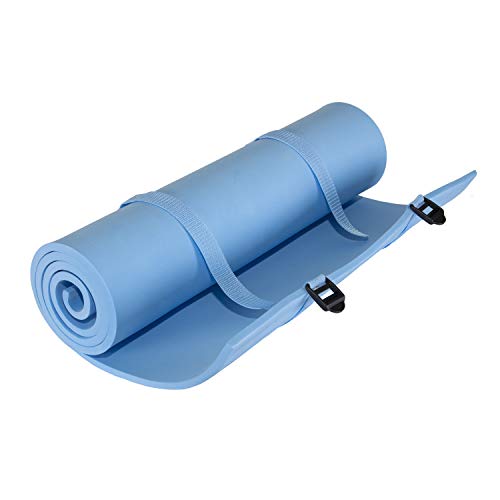
Pros
- Ultralight 0.6-pound weight adds minimal bulk to a backpacking kit
- Puncture-proof closed-cell foam eliminates the risk of leaks or deflation on rough terrain
- Waterproof material keeps ground moisture from soaking through to sleeping gear
- Included straps keep the pad rolled tightly for exterior pack attachment
- Backed by a one-year manufacturer warranty against defects
Cons
- Thin 3/8-inch to 0.5-inch profile provides minimal cushioning on hard or rocky surfaces
- Narrow 19-inch width leaves little room for active or broad-shouldered sleepers
- Rolled foam design is bulkier on pack exteriors compared to compact inflatable pads
The Stansport Pack Lite Camping and Backpacking Sleeping Pad is a minimalist closed-cell foam ground mat designed for backpackers, campers, and day hikers who require an ultralight, fail-safe barrier against the elements. Weighing just 0.6 pounds, this pad is built for outdoor users who prioritize simplicity and dependability over the plush thickness of heavy inflatable mattresses.
For trail use, the primary advantage of closed-cell foam is reliable thermal protection without the risk of punctures or air leaks. The manufacturer highlights waterproof and puncture-proof construction, which helps keep cold and dampness away from the body when sleeping on bare earth, tent floors, or shelter platforms. Unlike inflatable sleeping pads that can fail if punctured by sharp rocks, pine needles, or thorns, this foam mat maintains its protective structure regardless of trail debris.
The build consists of closed-cell foam insulation measuring 72 inches long by 19 inches wide, with thickness listed between 3/8 inches and 0.5 inches in the product specifications. Because closed-cell foam does not absorb water, moisture management is effortless on wet terrain. Condensation, rain, or dew can be wiped or shaken off in seconds before you pack up and hit the trail.
Handling and packability are geared toward straightforward exterior pack carry. At 0.6 pounds, the mat adds minimal weight to your load, and the included straps keep it rolled tightly during transit. Because a roll-up foam mat does not compress down to pocket dimensions, backpackers will typically lash it to the exterior loops or compression straps of a backpack rather than storing it inside a main compartment.
The most significant limitation of this sleeping pad is its lean cushioning and narrow profile. With a thickness under half an inch, side sleepers or hikers on hard, uneven ground will experience firm contact with the terrain. Additionally, the 19-inch width provides limited surface area, meaning restless sleepers may slide off onto the tent floor during the night.
The Stansport Pack Lite is best suited for budget backpackers, thru-hikers seeking an indestructible secondary thermal layer beneath an air pad, and campers needing a lightweight ground shield. Backed by a one-year manufacturer warranty, it offers practical, worry-free ground protection for anyone willing to trade plush cushioning for trail-ready durability.
Closed-cell foam serves as an effective physical barrier against cold earth and damp ground during outdoor sleep. The Stansport Pack Lite uses solid foam cells that resist moisture absorption and prevent cold conduction from reaching your sleeping bag.
This waterproof build makes the mat versatile beyond nighttime sleeping, serving as a clean, dry sit pad during trail breaks, meal prep, or glassing sessions in wet grass or snowy conditions.
At 0.6 pounds, the Stansport Pack Lite is one of the lightest full-length sleep pads available for trail use. The included tie straps secure the pad into a tight roll for transit.
Because rolled foam retains its physical volume, hikers should plan to strap the pad to the top, side, or bottom lash points of a backpack using external straps.
Pros
- Weighs less than seven ounces, making it an ultralight option for budget-conscious backpackers.
- Closed-cell foam construction cannot pop, leak, or absorb water like inflatable pads.
- Includes dedicated tie straps to keep the mat rolled tightly during transport.
- Provides immediate ground insulation without the setup time or breath required by air mats.
Cons
- Slim 0.375-inch thickness provides very firm support with minimal cushioning on hard surfaces.
- The 50-inch length leaves lower legs and feet resting directly off the pad.
- Rolled foam creates external bulk on a backpack compared to packable air mattresses.
The Stansport Pack Lite Camping and Backpacking Sleeping Pad is a minimalist closed-cell foam mat designed for hikers, backpackers, and campers seeking basic ground insulation at a very low pack weight. By utilizing a 3/4 length cut measuring 50 inches long and 19 inches wide, this pad targets the most critical areas of the body-specifically the shoulders, torso, and hips-while trimming away unnecessary ounces from your trail loadout. It is well-suited for warm-weather campers, ultralight section hikers, and day walkers who need a quick sit pad during long stops on rough terrain.
On the trail, the primary advantage of closed-cell foam is reliable thermal and moisture separation. The manufacturer notes that the dense foam cell structure keeps cold and dampness away from the body, preventing the ground from sapping body heat through conduction. Because it is non-inflatable, there is zero danger of waking up on bare dirt due to a slow leak, thorn puncture, or valve failure. In warmer summer conditions, placing this pad directly on forest floors, tent floors, or shelter platforms creates an immediate moisture barrier against wet ground.
The build consists of a uniform 0.375-inch sheet of closed-cell foam finished in blue. At three-eighths of an inch thick, the material provides firm separation from the soil rather than plush mattress cushioning. The pad includes built-in straps that wrap around the rolled mat, keeping it compressed and ready to attach to backpack daisy chains, bottom lash straps, or side compression webbing. Because closed-cell foam does not absorb moisture, it can be shaken off or wiped down quickly after resting on wet grass or muddy campsite dirt.
Handling and packing the Stansport Pack Lite is straightforward thanks to its listed weight of approximately 0.38 pounds (roughly 6.1 ounces). At this weight, it adds virtually no noticeable heft to a hiking pack, making it a viable emergency shelter component or secondary insulator beneath an inflatable air mattress during colder shoulder-season trips. Because foam mats take up exterior pack volume rather than packing down small inside a backpack compartment, users will typically lash the rolled pad to the outside of their pack using the provided retention straps.
Realistic limitations center on cushioning and length. A thickness of 0.375 inches offers minimal padding over hard bedrock, tree roots, or gravel, which side sleepers may find uncomfortable on pressure points like hips and shoulders. Additionally, the 50-inch length means that an average adult user will need to place their pack, extra clothing, or a sit pad beneath their calves and feet to keep their lower extremities off the cold ground.
The Stansport Pack Lite 3/4 Length Pad is a practical, no-fuss purchase for hikers seeking reliable ground insulation without spending high-end outdoor retail prices. It shines as an ultralight sleeping pad for warm summer trails, a lightweight backup insulation layer, or a rugged sit pad for breaks along rocky trails.
The closed-cell foam construction of the Stansport Pack Lite creates a solid thermal and moisture barrier between your sleep system and the trail floor. Unlike open-cell foam or uninsulated air bladders, closed cells trap tiny air pockets that block conductive heat loss and will not soak up dampness from dew, wet ground, or damp shelter boards.
While the manufacturer does not list a specific numeric R-value, a 0.375-inch closed-cell foam profile is typically suited for warm-weather camping, summer backpacking, or as an added thermal layer beneath an inflatable pad to boost overall system warmth during cooler nights.
Weighing approximately 0.38 pounds, the Stansport Pack Lite is one of the lightest sleep accessories available for trail use. The included tie straps allow the pad to be rolled tightly, preventing it from uncoiling inside or outside your pack.
Because the pad measures 19 inches wide when rolled, it fits neatly across the bottom lash straps or under the top lid of most standard overnight hiking backpacks. Cleaning requires nothing more than wiping the non-porous foam surface with a damp cloth after exposure to dirt, sand, or trail debris.

Pros
- Ultralight 1.6-ounce weight per pad adds virtually zero penalty to day packs or backpacking kits
- Closed-cell XPE foam structure blocks moisture from soaking through your hiking trousers or shorts
- Compact folding profile fits easily into backpack side pockets or attaches under exterior compression straps
- Functions as both a seat protector and a knee cushion for camp chores like pitching shelters or lighting stoves
- Included Oxford carry bag prevents trail dirt from transferring to the inside of your pack
Cons
- Colors are shipped randomly by the manufacturer, giving buyers no choice over specific colorways
- Product title refers to a sleeping pad, but the 15.5 x 10.8-inch dimensions are strictly sized for sitting or kneeling
- The 0.4-inch foam thickness provides modest cushioning and will not completely smooth out sharp, jagged rocks
The Xingoaup Folding Foam Sit Pad is an ultralight apparel-protection accessory built for day hikers, backpackers, and campers who want to keep their hiking bottoms clean and dry during outdoor rests. Wet logs, dewy granite, muddy benches, and snowy boulders can quickly saturate technical hiking trousers, leggings, or shorts, causing chilling discomfort and unnecessary fabric wear. This compact sitting mat provides an immediate physical barrier between your clothing and abrasive or damp terrain.
Trail performance centers on effective moisture blocking and basic thermal separation. The manufacturer specifies that the pad is constructed from closed-cell XPE foam, a material known for its water-resistant nature and low water absorption. Placing this mat down before sitting prevents damp ground moisture from soaking through water-resistant or non-waterproof trail pants. In cooler weather, sitting directly on frozen soil or cold stone rapidly pulls body heat through thin hiking fabric, and this 0.4-inch foam layer creates a helpful buffer against conductive heat loss.
The build emphasizes minimal weight and flexible utility over heavy structure. According to the manufacturer data, each individual mat weighs approximately 1.6 ounces and features an accordion-style folding design that opens to 15.5 by 10.8 inches (39 by 29.5 cm). Beyond serving as a seat cushion, the pad functions well as a kneeling surface when pitching tents, blowing up an air mattress, or adjusting stove systems on gravel. Its elasticity offers moderate relief on uneven ground, helping to shield knees and pant knee-panels from rough trail grit.
Packing and daily handling require minimal effort. Folded down, the pad measures roughly 14.5 by 10 by 9 cm, making it compact enough to slide into a backpack side water-bottle pocket, stash behind a front mesh pocket, or slide under an external compression strap. The included Oxford storage bag allows you to stow a damp or dusty pad without transferring dirt to your pack interior, clean clothing, or base layers.
Realistic limitations are straightforward to evaluate before purchasing. While the product title lists this item as a sleeping pad, the manufacturer specifications confirm that the expanded surface is only 15.5 by 10.8 inches, meaning it is strictly a sit pad or kneeling cushion rather than a full-length sleep mat. Additionally, the manufacturer ships colors randomly across blue, red, purple, orange, and green, which may frustrate buyers looking for specific aesthetic pairings with their trail kits. At 0.4 inches in thickness, the foam will dampen rough surfaces, but it cannot completely mask sharp gravel or jagged roots.
This two-pack set is a smart, low-cost purchase for hikers seeking to preserve their outdoor pants and maintain trail comfort without adding noticeable pack bulk. It delivers solid utility for wet-weather hikers, shoulder-season backpackers, and day walkers who regularly stop for trailside lunches on raw outdoor surfaces.
The Xingoaup sit pad is designed specifically for fast, low-profile packing on day hikes and multi-day treks. At a listed weight of 1.6 ounces per pad, it adds negligible mass to any trail loadout.
Its accordion-fold geometry allows the mat to collapse into a compact rectangular brick measuring 14.5 by 10 by 9 cm. This footprint slides easily into external backpack stretch pockets, side water-bottle sleeves, or directly beneath a pack lid, keeping it instantly accessible without requiring you to open your main pack compartment at rest stops.
The included Oxford cloth carry pouch provides clean transit inside a backpack. If the pad collects mud, wet pine needles, or trail dust during a rest break, slipping it back into its bag prevents grime from rubbing off on your spare base layers, rain jacket, or pack interior.
Caring for closed-cell XPE foam is simple due to its non-absorbent, wipe-clean surface. Dirt, pine pitch, and trail grit can generally be rinsed off using fresh tap water or wiped down with a damp cloth after a hike.
Allow the foam pad to air-dry completely before storing it inside its Oxford pouch for extended periods. While the closed-cell foam resists moisture uptake, sealing damp surface residue inside a closed pouch can promote musty odors over time.
Avoid storing the pad compressed under heavy objects for long periods to prevent permanent creasing of the foam hinges. Keep the pad away from open campfire sparks, camp stove burners, and sharp knife blades, as open flame or punctures will damage the foam structure.
Frequently Asked Questions
Can reliable hiking pants sleeping mats protect your clothing from trail moisture?
Yes, closed-cell foam mats create an impervious waterproof barrier that stops dampness from transferring to your trail clothing. When you sit on rain-soaked granite or wet soil, standard pant weaves can absorb moisture under direct body weight, creating cold spots and skin chafing. Placing a dedicated foam pad down first keeps your pant seat completely dry and free from ground grit.
What material works best for durable reliable hiking pants sleeping mats in 2026?
Closed-cell foam and molded XPE material provide the most dependable puncture-proof performance on rugged trails. Inflatable alternatives carry a risk of puncturing on sharp thorns or jagged rock edges, which ruins ground insulation instantly. Solid foam pads cannot leak, lose air, or collapse, making them resilient companions when strapped to the exterior of your pack.
How do foam sleeping mats protect lightweight hiking pants from abrasion?
Foam mats eliminate direct contact friction between rough stone surfaces and lightweight technical fabrics. Course granite, sharp scree, and pine bark quickly pull threads and wear down thin synthetic fibers during trail breaks. Laying out a compact foam mat absorbs surface friction and safeguards your pants against premature wear and tear.
Will carrying a foam pad affect how you pack your hiking gear?
No, ultralight closed-cell foam mats carry virtually no weight penalty and attach easily to external lash points. The Stansport Pack Lite full mat rolls tight with dedicated straps, while folding XPE seat pads weigh a mere 1.6 ounces. If you want to optimize exterior load distribution, knowing how to clean and care for a hiking backpack helps keep attachment loops and compression straps in top condition.
Are 3/4 length mats sufficient for backcountry sleeping and rest stops?
Yes, 3/4 length pads effectively insulate your upper body, hips, and thighs where conductive heat loss is highest. Trimming the lower section cuts down pack bulk while ensuring your seat and vital organs stay insulated from frozen turf. Hikers often support their lower legs with an empty pack and rely on thermal hiking pants options to maintain calf warmth throughout chilly trail evenings.




Write Your Review
No reviews yet. Be the first to share your experience!