


Engaging core musculature and taking compressive shock off knees transforms routine fitness walks into efficient full-body workouts. Dedicated fitness walkers and physical therapy patients often struggle to locate authentic walking sticks designed specifically for backward propulsion rather than vertical mountain climbing. If you are researching where to buy nordic poles, knowing which retail outlets and direct manufacturers stock authentic equipment makes all the difference. Quality gear pairs well with supportive apparel for joint comfort during extended outdoor training routines. Investing in proper equipment ensures that your stride remains natural while keeping your hands comfortable.
Standard sporting goods stores frequently stock basic hiking staffs with loose loop straps that do not allow proper Nordic walking technique. Authentic gear requires specialized quick-release gauntlets, angled asphalt paws, and rigid shafts capable of transferring forward momentum. Brands such as York Nordic, American Nordic Walking System, and FitTrek offer dedicated systems engineered for fitness walking, balance support, and post-surgery rehabilitation. Navigating these options allows you to choose between custom-fit one-piece designs and portable telescoping models tailored to your exact height and stride mechanics.
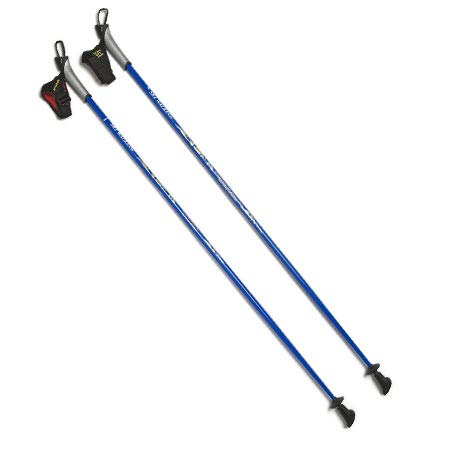


Navigating Where to Buy Nordic Poles and Selecting the Right System
Fitness walkers seeking authentic equipment often face an overwhelming array of generic hiking sticks that lack the specialized ergonomics required for total-body propulsion. Sourcing the right pair requires understanding which distributors stock certified gear and knowing how specific design components separate proper Nordic systems from general backcountry trekking poles. The following analysis breaks down reliable purchasing channels, structural differences between fixed and telescoping shafts, and essential interface mechanics to guide your purchase.
Verified Sourcing Channels: Specialty Distributors, Direct Brands, and Online Marketplaces
Sourcing authentic gear begins with identifying legitimate retail channels that understand the biomechanics of fitness walking. Direct equipment manufacturers and certified distributor websites, such as the American Nordic Walking System, provide custom-sized poles sourced from established ski pole factories like SWIX and EXEL. Major online retail platforms host authorized storefronts for specialized brands like York Nordic and FitTrek, allowing buyers to read real user feedback and access comprehensive accessory bundles. Working with authorized sellers ensures that you receive genuine manufacturer warranties, such as the lifetime breakage guarantee offered on SWIX carbon shafts.
General big-box sporting goods retailers often create confusion by stocking standard telescoping hiking poles under fitness labels. These generic hiking poles usually feature loose webbing loops instead of glove-style straps, preventing users from executing the push-and-release arm swing fundamental to Nordic walking. Specialty physical therapy equipment suppliers represent another reputable channel, especially for walkers recovering from joint surgery or managing neurological conditions. Checking that the retailer specifically mentions Nordic walking grips, asphalt paws, and dedicated straps prevents accidental purchases of ill-suited trail hiking gear.
When ordering through digital storefronts, verify whether the seller offers direct customer sizing support before placing your order. Premium brands often allow purchasers to share their barefoot height and hand dimensions during checkout so the poles arrive properly configured. This level of service is particularly valuable when selecting non-collapsible one-piece shafts that cannot be adjusted after arrival. Direct communication with specialized sellers also simplifies ordering replacement rubber paws and quick-release strap clips when parts wear down after miles of pavement use.
Distinguishing Authentic Nordic Poles from Backcountry Trekking Poles
Recognizing the mechanical differences between traditional trekking equipment and Nordic walking sticks prevents frustrating buying mistakes. Backcountry trekking poles are designed primarily for vertical braking, balance stabilization on rocky ascents, and load support while carrying a structured hiking pack across steep mountain trails. In contrast, Nordic walking poles are built to propel the body forward at an angle on flat or rolling terrain, engaging the triceps, latissimus dorsi, and core muscles with every stride. This distinct forward propulsion requires a glove-like strap that remains tethered to the hand when the palm opens behind the hip.
The handle orientation on genuine Nordic sticks also differs markedly from the downward-angled or ribbed handles found on mountain gear. Nordic grips feature smooth, slender profiles that allow the hand to slide forward and backward naturally during the swing cycle. Many standard hiking poles feature flared tops or extended lower choke sleeves designed for choking down on steep mountain sidehills. These bulkier mountain features get in the way during a rhythmic fitness stride along neighborhood paths or running tracks.
Ground interface tips represent another critical point of differentiation between the two pole categories. Backcountry poles focus primarily on sharp carbide spikes paired with wide baskets designed to stop the tip from sinking into loose mud or mountain scree. Nordic systems prioritize angled rubber booties, commonly called asphalt paws, which grip flat pavement and absorb road shock during forceful rearward pushes. Understanding these fundamental design divergences ensures you invest in gear suited for fitness and rehabilitation rather than alpine mountaineering.
Shaft Architecture: One-Piece Precision Versus Telescoping Portability
One of the primary decisions you will face when shopping is choosing between rigid one-piece shafts and collapsible multi-section poles. Fixed-length one-piece poles, such as the custom-fitted models offered by the American Nordic Walking System, deliver superior energy transfer and zero joint rattle. Because these shafts lack internal expanders or external clamping hardware, they eliminate the risk of unexpected slippage when applying downward body weight. Athletes, fitness purists, and seniors prioritizing maximum stability often gravitate toward one-piece designs for their solid feel and quiet operation on pavement.
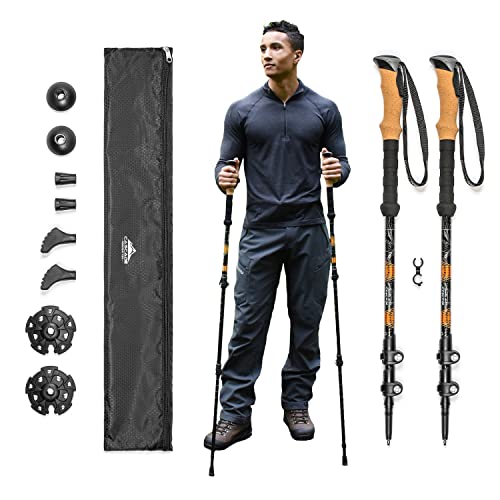
Collapsible two-section and three-section poles offer unmatched convenience for walkers who travel frequently or share equipment among multiple family members. Brands like York Nordic produce two-piece telescoping poles that adjust from 32 inches up to 54 inches, accommodating user heights from under five feet up to six feet two inches. Collapsible models slide neatly into luggage, car trunks, or included travel bags, making them practical for commuters and vacationers. Modern external flip locks have largely replaced old internal twist mechanisms, providing visible clamping tension that holds firm during daily walking routines.
Travel-focused walkers can also consider modular systems, such as the York Nordic Motivator Swift Connect poles, which allow sections to be added or removed to fit heights from four feet up to seven feet. These modular configurations bridge the gap between compact storage and structural rigidity without relying on traditional friction clamps. If packability is your primary objective, choosing an adjustable system with durable lever locks ensures you can stow your gear quickly between workouts. Walkers dedicated strictly to home-based fitness routines, however, may still prefer the unfailing sturdiness of fixed one-piece construction.
Material Engineering: Aircraft-Grade Aluminum Versus High-Modulus Carbon Fiber
Shaft composition directly influences vibration damping, overall swing weight, and long-term durability against impact stress. Aircraft-grade 7075 aluminum is widely utilized across models from York Nordic and FitTrek because it provides an outstanding strength-to-weight balance. Aluminum offers excellent ductile bend resistance, meaning it can absorb accidental torsional strain without snapping catastrophically if caught in sidewalk grates or tree roots. Each 7075 aluminum shaft in models like the Official Nordic Walking Poles weighs roughly eight to nine ounces, keeping arm fatigue minimal during hour-long walking sessions.
High-modulus carbon fiber represents the premium alternative for walkers seeking maximum vibration dampening and featherlight handling. Carbon shafts, such as SWIX carbon poles and VIP carbon models from the American Nordic Walking System, naturally absorb high-frequency road vibrations before they travel into the wrist, elbow, and shoulder joints. This dampening quality proves exceptionally valuable for individuals managing arthritis, tendonitis, or chronic joint sensitivity. Carbon fiber also features a lighter swing weight, allowing walkers to maintain a brisk, rapid cadence over long distances without forearm fatigue.
While carbon fiber excels in vibration management and stiffness, it remains more vulnerable to sharp lateral impacts than ductile aluminum. An accidental drop onto a sharp curb or crushing blow in a car trunk can fracture carbon fibers, whereas aluminum is more forgiving under blunt force. Budget considerations also come into play, as carbon fiber shafts generally sit at a higher tier due to specialized composite manufacturing. Evaluating your typical walking environment and sensitivity to joint vibration will determine whether aluminum resilience or carbon damping best matches your fitness needs.
Hand Interface Mechanics: Glove Straps Versus Contoured Rehabilitation Grips
The wrist attachment system defines how effectively you can translate upper-body effort into forward momentum while walking. Authentic Nordic walking poles feature an asymmetrical glove strap, often called a gauntlet, with separate right- and left-hand designations and an open thumb hole. This snug wrap distributes pushing force across the palm and wrist rather than requiring a tight finger grip on the handle. Models from York Nordic and FitTrek feature quick-release push buttons, allowing walkers to detach instantly from their poles to tie shoelaces or answer a phone.
Walkers managing hand tremors, arthritis, or recovering from surgery may benefit from specialized rehabilitation grips rather than classic glove gauntlets. The York Nordic Motivator series utilizes a patented contoured grip featuring dual support zones and a wide palm cradle that maintains a neutral wrist posture. This grip allows users to position their thumb on top in a pinching posture or along the side, significantly reducing stress on the thumb carpometacarpal joint compared to a standard grasping hold. Physical therapists frequently recommend these contoured platforms for patients recovering from hip replacements, stroke, Parkinson’s disease, or spinal conditions.
Handle materials also impact comfort across varying seasons and temperature conditions. Natural cork handles, found on models from FitTrek and York Nordic, provide natural moisture-wicking properties that keep sweaty palms dry and blister-free during warm summer sessions. Soft EVA foam extensions beneath the primary grip provide secondary grasping areas, while synthetic rubber surfaces offer durability in cold or wet weather. Selecting a grip and strap setup that matches your manual dexterity and physical requirements ensures pain-free training across hundreds of miles.
Sizing Precision and Height Calibration for Optimal Biomechanics
Achieving the correct pole length is essential for maintaining natural posture and maximizing upper-body muscle engagement. For standard fitness walking on level ground, multiply your barefoot height in inches or centimeters by 0.68 to establish your baseline pole length. When standing upright with your elbows bent at roughly a ninety-degree angle and forearms parallel to the ground, the pole tips should rest lightly near your feet. Sizing poles too long forces the shoulders into an awkward shrug, while sizing them too short reduces the pushing arc and upper-body workout benefits.
When purchasing one-piece poles, precise sizing is critical because the shaft length cannot be altered after delivery. Sellers like the American Nordic Walking System provide up to thirty-two distinct fixed lengths, matching user heights in one-inch increments to ensure an accurate fit. Buyers simply submit their barefoot height during checkout, allowing the manufacturer to pair the correct shaft length with the appropriate glove strap size. This tailored fit delivers an exceptionally balanced swing weight that adjustable poles with locking collars struggle to replicate.
Adjustable telescoping poles simplify the sizing process by providing laser-etched height markings along the lower shaft segments. Models like the FitTrek and York Nordic adjustable lines accommodate walkers ranging from four feet one inch up to six feet two inches using quick-adjust flip locks. To set adjustable poles, open the lever clamp, slide the section until your elbow rests at a clean ninety-degree bend, and firmly snap the lever shut. Walkers tackling hilly routes can shorten the shafts slightly when climbing or lengthen them when descending to maintain balanced posture.
Terrain Attachments: Angled Asphalt Paws Versus Carbide Ground Tips
Adapting your poles to different walking surfaces requires understanding the dual-tip configuration included with quality Nordic systems. Beneath the removable rubber coverings sits a sharp, durable tungsten carbide or hardened steel tip designed for off-road traction. These metal spikes bite into dirt paths, packed gravel, grass, snow, and sand dunes, ensuring dependable ground purchase during outdoor trail workouts. Using bare metal tips on paved asphalt, however, produces harsh vibrations, annoying clicking sounds, and accelerated tip wear.
To protect the metal spikes and provide friction on hard surfaces, manufacturers supply specialized rubber fitness tips known as asphalt paws. Unlike rounded hiking cane tips, Nordic walking paws feature a beveled, angled profile resembling a small shoe. The flat, angled base must face backward so that as the pole angles rearward during the push phase, the rubber tread grips the pavement firmly. Pairing these grippy attachments with lightweight trail pants ensures smooth mobility across both urban greenways and neighborhood walking paths.
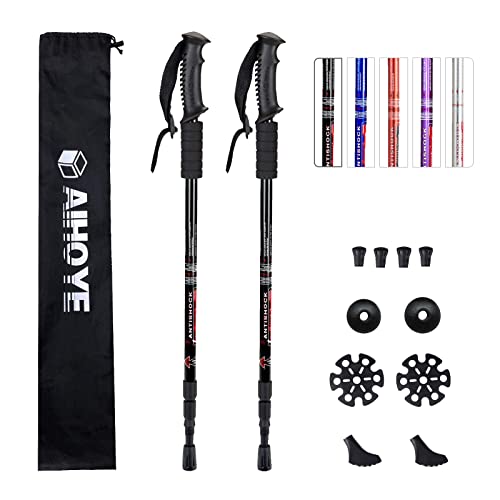
Some specialized balance models, such as the York Nordic Motivator series, include wide, rounded rubber feet rather than directional paws. These broader circular tips provide omnidirectional ground contact, offering superior stability for seniors or individuals managing balance challenges who plant their poles vertically rather than pushing rearward. High-quality kits also include small screw-on mud or snow baskets that prevent the poles from sinking into soft turf, beach sand, or winter paths. Checking that your chosen pole package includes both rubber pavement feet and replacement baskets ensures year-round versatility across any walking terrain.
Pre-Purchase Verification and Durability Inspection Checklist
Before finalizing your order through any retail outlet, running through a mechanical inspection checklist protects you from low-quality knockoffs. Confirm that the locking system uses sturdy external flip levers with adjustable metal thumb screws rather than fragile plastic friction collars. External lever locks allow you to tighten clamping tension with your fingers or a small tool if temperature drops cause hardware contraction. In contrast, cheap internal twist-lock poles often rattle, freeze from internal dust buildup, or slip unexpectedly under downward body pressure.
Examine the strap attachment mechanism to ensure it allows quick, intuitive operation during daily workouts. Quick-release buttons should operate smoothly with a single thumb press, yet hold firmly when bearing your full pushing force during vigorous exercise. Look closely at the glove fabric, verifying that it uses breathable, moisture-wicking mesh with heavy-duty hook-and-loop closures that will not fray over time. High-quality straps should also be available in multiple hand sizes to prevent chafing across the ulnar border of your palm.
Verify the manufacturer’s replacement part availability and customer support channels before making your final investment. Essential consumable components, such as rubber asphalt paws, quick-release strap clips, and lower tip assemblies, will eventually require replacement after several hundred miles of road use. Brands with dedicated US-based customer service, such as York Nordic and American Nordic Walking System, make it simple to purchase factory-compatible replacement feet and accessories. Investing in a supported gear ecosystem guarantees that your Nordic walking poles will deliver reliable fitness and balance support for years of active use.
Selecting the right source for your Nordic walking equipment ultimately comes down to matching your primary fitness goals with the correct mechanical architecture. Whether you choose custom-sized fixed carbon shafts for athletic street walking, adjustable aluminum flip-lock poles for travel convenience, or patented stability grips for balance rehabilitation, authentic engineering ensures safe, efficient movement. By purchasing through authorized distributors and verifying strap ergonomics, shaft materials, and terrain tips beforehand, you can step out onto the pavement with complete confidence.






Write Your Review
No reviews yet. Be the first to share your experience!