


Steep downhill switchbacks and jagged boulder fields place immense physical stress on the human foot. While everyday athletic sneakers provide basic cushioning for flat asphalt, they lack the structural reinforcement necessary to handle rough backcountry terrain. Hikers often find that standard running shoes twist unpredictably underfoot, allowing sharp stones to bruise the soles and loose scree to slip beneath the tread. Knowing why are hiking boots important helps outdoor enthusiasts make informed gear choices that directly prevent trail injuries and severe fatigue. Pairing proper footwear with flexible apparel such as lightweight hiking pants ensures that your entire lower body moves efficiently through changing terrain.
Purpose-built hiking boots incorporate stiff torsional shanks, deep multi-directional outsoles, and durable upper materials that shield the foot from external impact. These specialized components distribute body weight evenly across uneven surfaces, which reduces stress on the arches and plantar fascia during long days outside. Waterproof membranes and gusseted tongue assemblies also work together to keep out mud, moisture, and fine grit that accelerate painful blister formation. Investing in the right trail footwear ultimately transforms difficult mountain treks into manageable, safe excursions by establishing a dependable foundation with every step.



Biomechanical Protection and Structural Support on the Trail
Backcountry trails present dynamic physical obstacles that standard casual sneakers cannot navigate safely. When hiking across wet granite slabs, loose talus, and muddy riverbanks, feet must withstand complex rotational forces and repeated ground impact. Purpose-designed hiking boots provide a dedicated system of structural defenses that preserve joint integrity, maintain footing, and protect delicate bones. Understanding these footwear mechanisms clarifies why dedicated boots remain essential equipment for outdoor explorers.
Underfoot Protection and Puncture Resistance Against Rough Ground
Sharp rocks, exposed tree roots, and jagged gravel constantly strike the sole of the foot during wilderness excursions. Standard road running shoes feature soft, thin midsoles that easily compress, allowing pointed granite or hard roots to transmit direct pressure into the footbed. This repeated direct impact often leads to stone bruises, painful localized contusions on the heel, and plantar fascia inflammation. Hiking boots resolve this hazard through thick outsoles and integrated underfoot rock deflection shields.
Many technical boots utilize dense plates sandwiched between the outsole and midsole, such as the lightweight ESS plates featured in models like the Oboz Katabatic. These stiff inserts disperse sharp ground strikes across a broader surface area, ensuring that a single pointed stone does not pierce or bruise the sole. Dual-density compression-molded EVA midsoles, such as those found on the Oboz Hazel, further dampen repetitive ground impact without packing down prematurely. Hikers can step decisively on technical talus without wincing or worrying about debilitating stone bruises.
Perimeter protection also safeguards the vulnerable margins of the foot from unexpected trail impacts. Rubber toe caps, such as the protective wrap on the XPETI Terra, shield fragile distal phalanges from accidental forward collisions with hidden granite boulders or submerged logs. Stiff heel counters wrap around the calcaneus to prevent lateral bruising when descending through narrow rocky crevasses. These structural buffers keep your feet functional and pain-free across hundreds of demanding trail miles.
Torsional Rigidity and Chassis Stability Under Foot
Torsional rigidity refers to a piece of footwear’s resistance to twisting along its longitudinal axis between the heel and the forefoot. If you grab an everyday running sneaker and twist it like a wet towel, the shoe will easily contort with almost no resistance. While flexible construction feels comfortable on flat gym floors, it creates significant hazards on uneven mountain paths. When a foot lands on the sloped edge of a rock, an unreinforced shoe twists violently, forcing the small stabilizing muscles of the ankle and calf into emergency overwork.
Purpose-built hiking boots solve this mechanical problem by integrating rigid internal shanks made from hardened nylon, composite materials, or lightweight TPU. The XPETI Terra, for example, incorporates a resilient internal Y-shape nylon shank that resists excessive foot twisting on off-camber paths. Similarly, board-lasted designs like the Oboz Hazel provide a firm underfoot foundation that prevents the midsole from bending unnaturally beneath the arch. This mechanical firmness keeps the foot operating on an even, predictable plane regardless of ground angle.
This torsional resistance becomes even more critical when carrying a loaded wilderness pack. Pairing your boots with structured hiking backpacks allows you to transport heavy gear securely, but that concentrated pack weight bears directly down through your footwear. Without torsional support, the foot rolls excessively inward or outward on uneven ground, severely increasing joint fatigue and the likelihood of sudden balance loss. A stiff internal chassis acts as a stable suspension platform that supports your entire skeleton under heavy loads.
Outsole Traction and Directional Lug Engineering
Traction is the primary factor that prevents catastrophic slips and falls across slippery mud, loose scree, and wet bedrock. Casual athletic shoes generally feature shallow, closely spaced tread patterns intended to maximize surface contact on flat, clean asphalt. On a wet mountain trail, these shallow grooves immediately clog with wet mud, transforming the bottom of the shoe into a slick, frictionless ski. Hiking boots eliminate this dangerous hazard through aggressive outsoles engineered specifically for outdoor friction.
High-performance boots feature deep lugs that penetrate soft mud and loose gravel to reach compacted soil beneath. For instance, the XPETI Terra incorporates multi-directional rubber lugs that claw into loose trail debris during steep ascents. Premium models also rely on specialized sticky rubber formulations, such as the Vibram Mega Nuasi outsole found on the Vasque Talus, to maximize friction on wet granite slabs. These specialized compounds balance soft surface adhesion with firm rubber durability so the tread grips wet rock without tearing apart.
The orientation of the tread lugs also serves distinct mechanical functions on ascents and descents. Forefoot lugs face backward to generate forward propulsion when pushing off uphill, while heel lugs feature sharp, undercut braking angles to check downhill momentum. The wide channel spacing between the lugs encourages mud to eject naturally as the boot flexes during normal walking strides. This self-cleaning geometry ensures that the outsole maintains open biting edges instead of accumulating slippery trail soil.
Ankle Collar Mechanics and Joint Stabilization
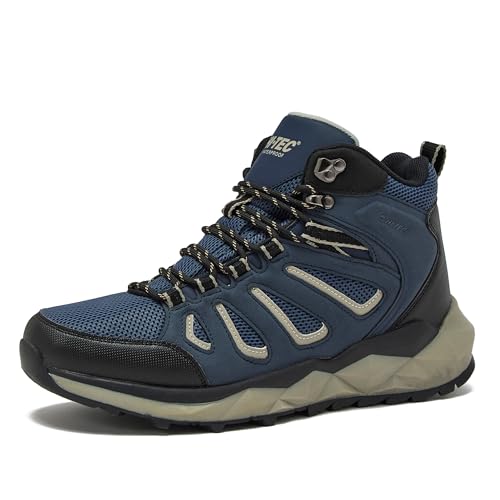
Collar height remains one of the most visible distinctions between casual athletic footwear and mid-cut or high-cut hiking boots. While high collars do not make the ankle joint immune to injury, they provide crucial mechanical resistance against sudden lateral rolling. Mid-cut models like the HI-TEC Valley Geo and high-cut designs like the Foxelli Women’s Hiking Boots cradle the lower leg with cushioned collars and gusseted tongues. This structural cuff restricts sudden lateral over-rotation when a foot unexpectedly slips into a concealed hole.
Beyond physical restriction, an ankle collar provides continuous proprioceptive feedback to your nervous system. The sensation of a snug, padded collar pressing against the lower leg alerts your brain to subtle shifts in balance milliseconds before an actual roll occurs. This sensory awareness allows your stabilizer muscles to contract proactively, self-correcting foot placement before a joint strain occurs. Hikers wearing trail clothing designed for joint support benefit even further from this combined mechanical stability during demanding ascents.
Elevated boot collars also provide physical shielding against rough backcountry elements that quickly damage unprotected ankles. High cuffs prevent sharp scree, briars, thorny desert scrub, and loose trail pebbles from entering the shoe cavity. Keeping foreign debris away from the skin protects the sensitive Achilles tendon from painful chafing and prevents internal abrasions. On overgrown bushwhacking routes, sturdy collar materials also offer a physical defense against biting insects and trailside hazards.
Arch Support and Plantar Fascia Strain Reduction
Hiking across miles of undulating wilderness terrain subjects the human arch to extreme repetitive strain. With every step, the plantar fascia tendon stretches and rebounds to absorb body weight, acting as a natural shock absorber. Over thousands of steps, especially when walking on firm, unyielding rock, the foot’s internal muscles tire and allow the arch to collapse downward. This structural fatigue leads to burning footbeds, localized heel spurs, and debilitating arch cramps that can cut an outdoor excursion short.
Quality hiking footwear combats this breakdown through anatomically sculpted footbeds and dense, supportive midsoles. Oboz footwear incorporates proprietary O FIT insoles molded to deliver structured arch support and deep heel cup retention. Similarly, HI-TEC integrates M.P.A.C.T. contoured insoles designed to support high arches and distribute downward pressure evenly across the plantar surface. Cushioning the heel and holding the arch prevents the plantar tendon from over-stretching under repetitive trail loads.
The composition of the midsole foam also plays a vital role in sustaining foot comfort over prolonged mileage. While standard running shoes rely heavily on soft foams that pack out within a few dozen miles, hiking footwear utilizes durable polyurethane or firm dual-density EVA. For example, the Oboz Sypes utilizes an Adaptive Cushioning Technology polyurethane midsole that retains its rebound profile despite continuous trail compression. This resilient cushioning prevents the foot from bottoming out, preserving joint comfort from the first mile to the last.
Waterproof Protection and Microclimate Regulation
Encountering wet grass, swampy bogs, mountain stream crossings, and sudden alpine downpours is a normal part of hiking. Walking with saturated feet softens the outer layers of the skin, a medical condition known as maceration that drastically increases susceptibility to severe blisters. Standard mesh athletic shoes allow ground water to soak through instantly, leaving the hiker with cold, heavy, friction-prone feet. Dedicated hiking boots incorporate advanced barrier membranes to keep internal linings dry throughout wet trail conditions.
Modern boots utilize specialized waterproof-breathable barrier booties, such as UltraDry in the Vasque Talus, B-DRY in the Oboz Sypes, DRI-TEC in the HI-TEC Valley Geo, and KingTex in the Foxelli boots. These microscopic membranes feature pores that are small enough to block liquid water droplets from penetrating inward while remaining large enough to allow internal perspiration vapor to vent out. Gusseted tongues stitched along the sides of the eyelet rows prevent water from splashing into the boot over the laces.
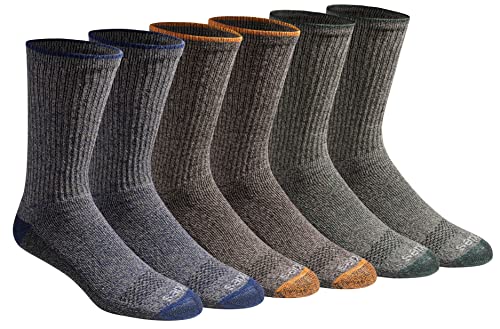
Achieving complete foot comfort also requires pairing your waterproof footwear with moisture-regulating socks. Wearing premium merino wool blends, such as Velice or EBMORE thermal boot socks, creates an ideal internal microclimate by wicking dampness away from the skin. Merino wool fibers naturally pull sweat vapor toward the breathable membrane while cushioning high-friction pressure zones across the toes and heels. This combination ensures that external water stays outside while internal humidity escapes cleanly before it can degrade skin health.
Durable Upper Construction and Abrasion Resistance
Backcountry trails are extraordinarily abrasive environments that quickly destroy delicate lifestyle shoes. Sharp granite edges, coarse scree fields, and stiff underbrush act like sandpaper against footwear uppers, tearing lightweight mesh within hours. Hiking boots are built specifically to endure continuous scraping through tough leather and high-tenacity synthetic textiles. This robust exterior protects both the internal structural integrity of the boot and the delicate bones of your feet.
Many premium boots rely on full-grain or nubuck leather, such as the 1.8mm waterproof nubuck leather found on the Vasque Talus and the tumbled leather on the Oboz Hazel. Leather provides unmatched natural puncture resistance and abrasive durability while gradually conforming to the unique contours of the wearer’s foot. When properly cleaned and treated with protective sprays, genuine leather uppers resist mud saturation, grit infiltration, and fiber cracking over years of rugged use.
Modern designs frequently pair durable leather with abrasion-resistant synthetic fabrics like CORDURA or Kevlon to optimize weight and breathability. The XPETI Terra utilizes high-tenacity Kevlon fabrics that resist snags and tears when scraping past sharp boulders or thorny trail obstacles. Reinforced stitching rows and welded TPU overlays across high-wear flex zones prevent structural seams from unraveling under heavy stress. These rugged materials ensure that your footwear survives punishing multi-day expeditions without catastrophic material failures.
Precision Lacing Systems and Friction Control
Blisters develop on the trail due to an insidious combination of three physical factors: heat, moisture, and mechanical friction. When a shoe fits loosely, the foot slides forward and backward within the interior cabin with every stride. On steep ascents, the heel lifts away from the footbed, rubbing violently against the internal heel counter and creating agonizing friction hot spots. On steep descents, the foot slides forward, causing the toes to jam repeatedly into the front rand and producing bruised, blackened toenails.
Hiking boots feature specialized lacing architectures engineered to anchor the foot securely into the rear heel pocket. Hardware such as Ghillie lacing systems on the HI-TEC Valley Geo and heavy-duty metal lace hooks allow hikers to adjust tension across different zones of the foot independently. Hikers can leave the forefoot slightly relaxed to allow the metatarsals to splay naturally while cranking down tension across the instep to lock the heel in place. This zone-specific lacing prevents the foot from sliding forward on steep downhill descents.
Customizing lace tension also prevents dorsal nerve compression over high insteps, which is a common source of foot numbness during long ascents. Techniques such as surgeon’s knots or window lacing allow you to bypass tender pressure points on top of the foot without sacrificing ankle lockdown. Combined with anatomical heel cups and plush tongue padding, these lacing options eliminate the internal foot translation that causes skin shears and hot spots. Maintaining an immovable, friction-free foot position keeps your skin intact over high-mileage routes.
Long-Distance Energy Efficiency and Load Management
Walking across uneven backcountry terrain requires substantial muscular effort from the calves, quadriceps, and small stabilizing muscles of the lower leg. When wearing unsupportive footwear, your feet constantly make micro-adjustments to maintain balance over every pebble, root, and slope. Over a ten-mile trek, these thousands of minute muscular corrections drain physical energy and accelerate overall systemic fatigue. By providing a stable, rigid platform, hiking boots perform much of this balancing work mechanically.
A structured boot chassis acts like a firm lever under the foot, reducing the degree of muscular flex required to propel your body forward on steep inclines. The firm base absorbs uneven ground contours so your foot muscles do not have to strain to maintain lateral stability. Although dedicated boots carry slightly more physical weight than ultra-light running shoes, their structural support saves substantial energy on technical trails. Hikers arrive at their evening campsites with less muscular soreness, reduced joint ache, and greater physical reserves for the following day.
Selecting proper trail footwear ultimately comes down to matching boot architecture with your intended terrain and pack weight. For casual walks on manicured park paths, lightweight flexible shoes may suffice, but rugged mountain trails demand the specialized protection of genuine hiking boots. Investing in boots with dependable traction, torsional rigidity, waterproof barriers, and supportive arch structures protects your physical health and ensures safe backcountry adventures. Dedicated footwear forms the indispensable bridge between your body and the demanding wilderness terrain beneath your feet.


Write Your Review
No reviews yet. Be the first to share your experience!