


Carrying too little water into remote backcountry terrain invites dangerous dehydration, yet hauling unnecessary liters adds punishing dead weight to your shoulders. Most outdoor enthusiasts eventually ask what is the best size hydration bladder when trying to optimize their load for varying trail conditions and weather forecasts. Water weighs roughly 2.2 pounds per liter, which means your choice of reservoir capacity directly alters your center of gravity and athletic stamina. Pairing the right volume with reliable gear like budget daypacks for hiking ensures that you carry adequate hydration without unnecessary strain.
A compact reservoir suits quick trail runs or mountain bike laps where speed and low bulk matter most. In contrast, multi-hour desert treks and high-altitude ridge traverses require expanded water reserves to span extended stretches between reliable springs. Modern water reservoirs feature durable BPA-free TPU films, high-flow bite valves, and auto-shutoff disconnect valves designed to streamline trail refills. Understanding the functional differences between 1.5-liter, 2-liter, and 3-liter capacities helps you choose the perfect reservoir for your specific outdoor objectives.

Pros
- Complete hydration system included with a 2-liter bladder and insulated sleeve straight from the factory
- Integrated sewn-in rain cover offers dependable weather protection without extra cost or bulk
- External bungee cord webbing and butterfly opening make stowing outer layers and gear simple
- Breathable mesh and high-density foam straps provide comfortable support for light to moderate day loads
Cons
- The 22-liter capacity is strictly designed for day use and cannot accommodate multi-day or overnight camping gear
- Manufacturer specifications do not provide precise torso length or waist measurements for fine-tuned sizing
- Frameless soft-pack construction lacks rigid internal stays for carrying heavy or dense loads
The TETON Sports Oasis 22L Hydration Backpack is an active daypack tailored for hikers, trail runners, and cyclists who need reliable hydration combined with practical gear storage. Designed with an athletic cut, this pack serves single-day adventurers who want to avoid the bulk of traditional multi-day packs while keeping water and personal necessities close at hand. Its balanced 22-liter volume supplies adequate space for packing lunch, navigation gear, emergency essentials, and clothing layers.
On the trail, the Oasis 22L maintains an agile footprint with listed dimensions of 19.5 by 12 by 9.5 inches and a lightweight empty weight of approximately 2.17 pounds. A core advantage is the dedicated, insulated bladder sleeve that shields your water supply from external ambient heat. The included 2-liter reservoir is fitted with a kink-free drinking hose and a push-lock cushioned bite valve, while the 2-inch wide opening allows effortless filling with ice cubes and uncomplicated hand washing after outings.
Construction quality focuses on practical outdoor utility. The main storage areas are secured with weather-guarded zippers designed to keep blowing trail grit and light moisture away from packed gear. For unexpected precipitation, a sewn-in rain cover deploys quickly from its pocket at the base of the pack. Additionally, the exterior bungee cord grid provides rapid exterior attachment for a bike helmet, lightweight shell, or fleece pullover when internal space is full.
Harness comfort relies on high-density foam shoulder straps covered with breathable mesh fabric, configured to accommodate men, women, and youth through multi-point adjustment straps. This low-profile harness holds the pack stable against your torso during continuous movement. However, because this is a frameless hydration pack, users should keep their total load moderate to ensure the shoulder straps remain comfortable across longer trail days.
Hikers should keep realistic design boundaries in mind. While 22 liters easily handles standard day-hiking gear, it does not support overnight camping setups, bulky winter mountaineering equipment, or heavy base weights. Additionally, because TETON Sports does not publish a numeric torso-length measurement range, hikers with unusually long or short torsos may experience a less personalized fit than an adjustable-frame trekking pack provides.
For day hikers, trail commuters, and cyclists seeking an all-in-one hydration pack with zero guesswork, the TETON Sports Oasis 22L delivers outstanding practical value. The combination of an included 2-liter bladder, insulated reservoir storage, weather-guarded zippers, and an integrated rain cover makes it an outdoor-ready solution right out of the box.
The TETON Sports Oasis 22L comes equipped with a 2-liter water bladder paired with an insulated internal sleeve that helps maintain cool liquid temperatures on sun-exposed trails. A kink-free sip tube connects to a cushioned bite valve with a push-lock shutoff mechanism to stop accidental leaks while running or biking.
Refilling and routine cleaning are straightforward thanks to the 2-inch wide bladder opening, which easily fits ice cubes from standard refrigerator dispensers. To extend bladder lifespan, rinse thoroughly with warm water, avoid boiling liquids, and hang the reservoir and hose open to air dry completely between outdoor excursions.
With 22 liters of interior room, the Oasis provides ample capacity to organize trail gear, snacks, and extra layers alongside its dedicated hydration compartment. Weather-guarded zippers help keep dirt, sand, and light moisture from compromising your belongings inside.
External features include a front bungee retention harness suitable for holding bike helmets or bulky jackets, while the butterfly opening allows wide access to packed contents. The integrated sewn-in rain cover remains secured to the pack, ensuring prompt weather defense whenever mountain rain rolls in.

Pros
- Wide top opening makes refilling, adding ice cubes, and scrubbing the interior straightforward
- Includes a bite valve shutoff switch and protective dust cover for cleaner trail use
- Self-locking joint design helps keep water sealed when attaching or detaching the hose
- Weighs approximately 0.42 pounds, minimizing empty base weight in your pack
- Cost-effective solution for replacing leaking or worn-out bladders in standard daypacks
Cons
- Does not include specialized drying clips or cleaning brushes in the single pack
- Specific exterior dimensions are not listed, requiring users to check narrow pack sleeves
- Shutoff switch on the bite valve may feel stiff during initial trail uses
The Mdvora 2L Hydration Bladder is a standalone water reservoir engineered to fit inside hydration-compatible backpacks, daypacks, cycling packs, and running vests. Designed for trail runners, cyclists, day hikers, and campers, this bladder serves as an accessible replacement reservoir or an entry-level hydration upgrade. Carrying 2 liters of fluid, it strikes a practical balance between fluid volume and manageable carry weight for typical short-to-medium outings.
On the trail, managing water supply efficiently without constantly stopping to pull bottles from side pockets is the main reason to carry a bladder. This 2L model holds roughly 67 fluid ounces, which fits standard hydration sleeves in most mid-sized daypacks and backpacking packs. The listed weight of roughly 0.42 pounds ensures you are not adding unnecessary bulk to your pack setup before filling it. Its self-locking joints and pressure-tested sealing are designed to withstand normal jostling during active running, hiking, and biking.
The bladder includes several practical hardware touches that improve everyday usability. A large opening at the top allows users to drop in full-sized ice cubes on warm summer hikes and makes scooping water or filling from standard taps hassle-free. The drinking hose connects via self-locking sealing joints, and the high-flow bite valve is equipped with an integrated on-off switch to guard against slow leaks while hiking. An attached dust cover shields the mouthpiece from dust, mud splashes, and trailhead dirt.
Setting up the reservoir requires threading the hose through your pack hydration port and securing the bladder upright in the internal hydration pocket or hanging loop. Cleaning and drying bladders can often be frustrating, but the wide opening on this Mdvora model allows cleaning kits or a clean towel inside to dry out moisture effectively. Thoroughly air-drying the bladder with the opening propped open prevents moisture buildup between trips, while the detachable parts make rinsing straightforward.
While this reservoir covers core trail hydration needs, buyers should keep a few practical considerations in mind. The manufacturer does not list exact length and width measurements, so owners of ultra-narrow running vests or compact lumbar packs should double-check their pack sleeve clearance. Additionally, this single pack does not come with cleaning brushes or specialized hanging clips, meaning you will need standard household drying methods or separate accessories for long-term reservoir care.
Overall, the Mdvora 2L Hydration Bladder offers a dependable, value-oriented solution for hikers, runners, and campers needing reliable hydration on the move. Its combination of a wide-mouth fill port, leak-resistant connection points, and an on-off bite valve with a dust cap makes it a sensible addition to almost any hydration-ready hiking daypack.
The Mdvora 2L reservoir is designed to sit inside standard internal hydration sleeves found in most daypacks, cycling bags, and backpacking packs. Its 2-liter capacity matches the most common hydration bladder compartment size across major outdoor daypack designs.
The drinking tube utilizes self-locking joints to maintain a reliable seal at the base of the reservoir, allowing for straightforward hose routing through backpack shoulder-strap ports. The bite valve delivers high water flow and features a manual lever switch to stop water from escaping when the pack is compressed or laid down at a campsite.
Routine care for hydration reservoirs is essential for long-term trail use and preventing trapped moisture odor. The standout feature of this bladder is its wide-mouth opening, which allows you to reach inside easily with a sponge, cloth, or standard reservoir cleaning brush.
After washing with mild soap and warm water, prop the bladder open to air-dry completely before storing it flat in a cool, dry place. The detachable bite valve and hose connection also simplify targeted rinsing after long weekend hiking trips.
Pros
- Affordable two-pack delivers dependable primary and spare reservoirs for family or partner hiking setups
- Auto-shutoff connection lets you leave the drinking tube routed through your shoulder harness while refilling the bladder
- Wide 4-inch port allows full hand access inside the bladder for effortless scrub-downs and rapid air drying
- Tethered bite-valve cap keeps the mouthpiece clean when setting backpacks down on dusty or muddy trail terrain
Cons
- Rigid 4-inch screw collar adds localized thickness that may fit tightly in ultra-narrow hydration vest pockets
- Careful alignment is required when threading the cap to ensure a fully watertight seal around the gasket
- Reservoir length of 14.17 inches may be too tall for compact lumbar waist packs or minimalist running vests
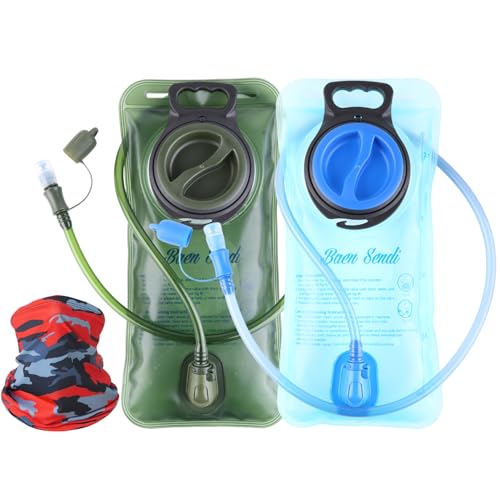
The Baen Sendi 2-Pack Hydration Bladder is a dedicated replacement water reservoir system designed for day hikers, backpackers, cyclists, and trail runners. Each package supplies two separate 2-liter (70-ounce) reservoirs - one finished in blue and one in army green - alongside a multifunctional neck gaiter. For hikers outfitting multiple packs or outdoor partners seeking an economical replacement for worn, leaky reservoirs, this two-piece set provides an accessible, trail-ready hydration solution.
With physical dimensions of 14.17 inches long by 6.69 inches wide, each 2-liter bladder is dimensioned to fit typical hydration sleeves in daypacks, overnight packs, and mid-sized trekking backpacks. Carrying 70 ounces of water offers a dependable supply for moderate day hikes, trail runs, and extended approaches between water sources. Because water weight settles at 0.85 pounds empty for the gear pair, the reservoirs add minimal base weight to your pack while keeping your fluid supply centered along your spine.
Construction quality focuses on utility and trail durability, utilizing a thick, flexible BPA-free material tested under pneumatic pressure to withstand interior pack shifting. The drinking tube interfaces with the bladder via an auto-lock quick-release valve that seals immediately upon separation. This allows you to pull the water reservoir out for refilling at a stream or tap without needing to unthread your hose from pack shoulder loops or chest clips.
Hydration delivery on the trail relies on a soft bite valve with an integrated flow switch. Hikers can push or pull the inline shutoff valve to prevent accidental compression leaks during transit, while the high-flow bite interface delivers steady suction when drinking. An attached plastic dust cover shields the valve from dirt and grime whenever you rest your backpack on dusty ground or rocky ledges.
Cleaning and routine maintenance are made straightforward by the bladder's generous 4-inch opening. Unlike narrow-mouth bladders that trap moisture and encourage mildew, this wide threaded port allows you to reach inside with a sponge, bottle brush, or towel for complete drying before long-term closet storage. The broad mouth also makes it easy to drop in refrigerator ice cubes or powdered electrolyte mixes before heading out on sun-exposed trails.
The primary consideration for prospective buyers centers on pack compartment fit. The rigid collar of the screw cap does not bend, making it better suited for conventional daypacks and backpacking sleeves than for skin-tight ultralight running vests. For hikers and campers who want dependable hydration capacity, quick-disconnect convenience, and an extra reservoir on hand at an economical price point, the Baen Sendi 2-Pack is a thoroughly practical gear addition.
Each Baen Sendi reservoir measures 14.17 inches in length and 6.69 inches in width, fitting standard hydration sleeves found in most modern daypacks, hiking backpacks, and tactical rucksacks. The quick-release mechanism at the reservoir base permits one-click hose detachment, which allows the tube to remain routed through your pack straps while you remove the bladder for refilling.
The 2-liter (70-ounce) volume is widely supported across mid-size packs, ensuring the reservoir sits upright without bunching. Hikers using very narrow race vests or horizontal lumbar packs should verify their compartment dimensions before purchase to confirm clearance for the 14-inch bladder length and the structured 4-inch cap collar.
Routine cleaning is simplified by the 4-inch diameter screw opening, which is wide enough to admit standard bottle brushes, cleaning sponges, or a hand for thorough scrubbing. This wide access helps remove moisture and residue quickly, preventing the buildup of unpleasant odors or mildew after trail use.
To extend reservoir lifespan, rinse the bladder with warm water and mild soap after using drink mixes or electrolyte tablets. Prop the mouth open and hang the unit inverted until completely dry inside before packing it away. The detachable quick-release tube can be disconnected and hung separately to allow complete airflow throughout the hose line.

Pros
- BPA-free TPU material is taste-free and built for leak-resistant trail use
- Insulated hose sleeve helps maintain water temperature in warm or chilly weather
- Quick-disconnect tube makes refilling easy without unthreading the hose from pack straps
- Wide-mouth opening accommodates ice cubes and simplifies thorough hand cleaning
Cons
- This specific package configuration does not include a cleaning kit or drying hanger
- The 2-liter capacity may require frequent refilling or supplemental bottles on dry backpacking routes
- Wide 15-inch profile requires checking pack hydration compartment dimensions before purchase
The Water Buffalo Oasis 2L Hydration Bladder is a dedicated hydration reservoir designed to drop directly into hydration-compatible daypacks, hiking backpacks, and trail vests. Geared toward day hikers, trail runners, weekend adventurers, and outdoor recreationists, this 2-liter (68-ounce) reservoir provides a reliable fluid-carrying setup without the need to stop and unholster separate water bottles. For hikers wanting hands-free hydration on moderate-distance trails, this aftermarket bladder serves as an efficient setup or a direct replacement for worn-out reservoirs.
Out on the trail, the reservoir manages hydration through a combination of a self-sealing, high-flow bite valve and an insulated drinking tube. The bite valve is designed to deliver immediate water intake under light pressure, reducing effort during steep ascents or high-cadence hikes. Furthermore, the insulated hose sleeve acts as a protective barrier against external ambient temperatures, helping keep drinking water cool during exposed summer hikes and slowing down line-freezing during crisp shoulder-season outings.
Durability centers around a BPA-free, taste-free thermoplastic polyurethane (TPU) body designed to handle constant pack compression, trail shifting, and repeated flex cycles. TPU provides flexible puncture and abrasion resistance while avoiding the persistent chemical odor or plastic flavor often associated with low-grade bladders. The reinforced seam construction and secure cap mechanism help guard against leaks inside your pack compartment, keeping spare layers, electronics, and trail snacks protected from unintended moisture.
Refilling and trail-side management are made considerably easier by the integration of a wide-mouth opening and a quick-disconnect hose system. The quick-connect coupling allows you to disconnect the bladder body instantly and leave the drinking hose threaded through your backpack shoulder-strap loops, saving significant time at water stations or trail taps. The wide cap opening provides ample space to insert standard ice cubes and facilitates direct scrubbing or quick rinsing when you return from your hike.
While practical for typical day outings, the 2-liter capacity has natural limitations for long, arid treks or multi-day backpacking trips where natural water sources are scarce and higher fluid capacity or supplemental filtration is required. Additionally, this configuration does not include a dedicated cleaning brush set or drying frame, meaning users must provide their own cleaning tools to ensure complete interior drying between trips. Hikers should also check their backpack dedicated hydration sleeve against the listed 15 by 15-inch exterior dimensions to verify a smooth, unbunched fit.
Based on product specifications and functional trail design, the Water Buffalo Oasis 2L Hydration Bladder delivers solid utility and dependable value for day hikers, cyclists, and fitness walkers. The combination of an insulated hose, quick-connect convenience, and taste-free TPU makes it a practical upgrade over standard basic bladders. If you need an accessible, easy-to-clean 2-liter fluid reservoir that keeps drinking water cooler on sun-exposed paths, this bladder is well worth adding to your hiking pack.
The high-flow bite valve on the Water Buffalo Oasis 2L Hydration Bladder utilizes a self-sealing design that opens with gentle bite pressure and seals immediately when released, preventing unwanted drips onto pack straps. The quick-connect hose assembly features an integrated shut-off mechanism that prevents fluid from draining out when the tube is disconnected, making refills clean and quick.
The included hose insulator covers the length of the drinking tube to buffer water against extreme ambient temperatures. On hot summer trail days, this prevents the water sitting in the tube from turning lukewarm between sips, while in cold weather, it helps resist early line freezing.
The wide-mouth cap design allows easy interior access for hand rinsing, towel drying, or inserting cleaning brushes after a long hike. Because the bladder is crafted from food-grade, BPA-free TPU, regular warm-water rinses and occasional mild soap cleaning are typically sufficient to keep it fresh and odor-free.
Because this specific version comes without a cleaning kit, users should prop the bladder open or hang it upside down in a well-ventilated space to ensure the reservoir and hose dry completely before long-term storage, preventing moisture buildup.
With listed dimensions of 15 by 15 by 1 inches and an empty weight of approximately 0.66 pounds, this 2-liter reservoir fits standard hydration sleeves in most daypacks, commuter bags, and mid-sized hiking backpacks. The upper profile provides a secure grip area for sliding into internal hydration compartments.
Before taking it onto the trail, confirm that your pack hydration sleeve has sufficient vertical and lateral clearance, and ensure the shoulder harness includes a port or elastic loops capable of routing the insulated hose and bite valve comfortably.
Pros
- Generous 3-liter (100 oz) volume suits long trail miles and dry hiking routes
- Bite valve self-seals cleanly to avoid wet gear inside or outside your pack
- Simple one-handed shutoff lever prevents unexpected tube leaks during transport
- Reliable wide-mouth cap design facilitates straightforward refilling and closing
Cons
- 18-inch length requires a full-sized daypack or backpacking pack with an appropriately sized hydration sleeve
- Carrying a full 3-liter load adds over 6.5 pounds of liquid weight to your overall pack base
- Does not include quick-disconnect hose fittings or an insulated tube cover
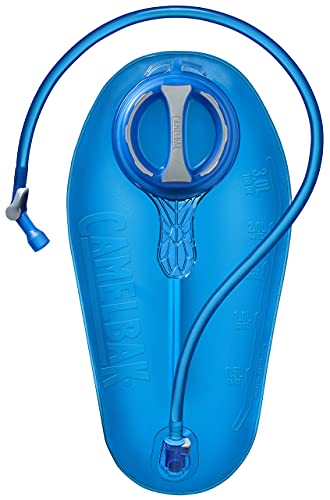
The CamelBak Crux 3L Hydration Reservoir is a high-capacity replacement or upgrade water bladder built for day hikers, backpackers, mountain bikers, and trail enthusiasts. Holding up to 100 fluid ounces (3 liters) of water, this reservoir is tailored for outdoor recreationists who need dependable hydration access on the move without constantly stopping to reach for external water bottles.
On the trail, hydration volume and flow rate directly impact stamina and convenience. The Crux bladder is engineered to deliver 20 percent more water per sip, allowing hikers to drink more efficiently on steep ascents or warm summer trails. Weighing roughly 0.52 pounds when empty and measuring 18 x 9 x 3 inches, the bladder carries a significant volume of fluid while maintaining a profile designed to slide vertically into dedicated pack sleeves.
Construction centers on trail-ready reliability and drip prevention. The reservoir features an ergonomic cap engineered to open and close smoothly without cross-threading, reducing the chances of accidental leaks inside your pack. Down along the drinking tube, an integrated on/off lever allows users to seal the flow with a single hand during transit, while the self-sealing Big Bite valve automatically closes after every sip to keep water from leaking onto your clothing or gear.
Integrating and maintaining the reservoir is straightforward for anyone familiar with hydration-compatible backpacks. The wide-mouth opening simplifies refilling from campground taps, backcountry filters, or trailhead spigots. Once filled, the bladder drops into an internal hydration compartment, and the tube routes through the pack shoulder harness. After hiking, the wide opening makes it easier to flush, wash, and prop open for complete drying between weekend outings.
Despite its solid feature set, prospective buyers should verify pack sizing and loaded weight before purchasing. At 18 inches long, the Crux 3L requires a daypack or backpacking pack with a generously sized internal sleeve; smaller minimalist packs or waist packs will likely find it too long. Additionally, carrying three full liters of water adds more than 6.5 pounds of liquid weight to your load, which may be more capacity than needed for short, casual outings.
For hikers and backpackers preparing for extended miles or warmer conditions, the CamelBak Crux 3L Hydration Reservoir provides a high-capacity, dependable water storage system. Its self-sealing bite valve, leak-resistant cap, and integrated flow shutoff make it a reliable choice for anyone whose backpack is equipped to handle a full 3-liter hydration bladder.
A 3-liter (100 oz) liquid capacity makes this reservoir an ideal choice for sustained backcountry mileage, dry section hikes, and warm-weather outings where frequent water sources are unavailable. This large capacity allows hikers to minimize time spent stopping to pump or treat water along the trail.
Flow delivery is enhanced through the Crux hose and bite valve configuration, which provides 20 percent more fluid per sip compared to older standard valves. The self-sealing Big Bite valve eliminates accidental dripping onto gear, while the inline shutoff lever allows instant, one-handed closure to keep water secure inside the line during travel or transport.
Measuring 18 inches long, 9 inches wide, and 3 inches deep when full, this reservoir is sized to match standard 3-liter internal sleeves in most medium-to-large daypacks and multi-day backpacking packs. Hikers should verify their backpack's internal compartment dimensions prior to purchase, as compact running vests and small lumbar packs generally lack the height required for an 18-inch bladder.
Weighing approximately 0.52 pounds empty, the reservoir adds minimal base weight to your setup. However, filling it to its full 100-ounce capacity adds approximately 6.5 pounds of water weight, so users should adjust water levels to match their specific trip duration and expected resupply points.

Pros
- Includes a ready-to-use 2L hydration reservoir with a fast-flow locking bite valve
- Weighs only 8.5 ounces empty, making it exceptionally lightweight for active sports
- Dual shoulder-strap mesh pockets provide quick-access storage without taking off the pack
- Sliding sternum strap offers 5.5 inches of vertical adjustment for an adaptable chest fit
Cons
- Compact 12-liter volume does not accommodate bulky cold-weather apparel or extensive backcountry kits
- Frameless design and lack of a padded load-bearing hip belt make it unsuitable for heavy cargo approaching the 25-pound rating
The N NEVO RHINO 12L Hydration Backpack is a minimalist, vest-inspired daypack engineered specifically for high-cadence outdoor activities. Built for day hikers, trail runners, mountain bikers, and music festival attendees, this pack centers around self-contained hydration and nimble mobility. Its compact 12-liter footprint provides just enough cargo volume for a light outer layer, emergency essentials, and snacks, making it ideal for those who prefer moving light and fast without the heft of a standard daypack.
On the trail, weight management is the primary highlight. At an empty weight of just 8.5 ounces (0.53 pounds), the pack adds virtually no baseline burden before adding water and gear. The harness system features shoulder straps that adjust from 19 to 34 inches in length, complemented by an integrated sternum strap with 2.4 to 7.9 inches of vertical sliding range. This dual adjustment helps keep the pack planted against the upper back during jogging or descending technical trails. Along the rear surface, a soft air-mesh back panel creates a permeable barrier against your shirt to facilitate passive airflow during warm-weather outings.
In terms of construction, the exterior utilizes a PU-coated nylon fabric specified to resist tearing and shed light surface moisture. The manufacturer rates the overall chassis to bear up to 25 pounds, though typical hydration loads will stay far below that mark. A bidirectional zipper operates the main compartment, which houses the included 2-liter hydration bladder. Crafted from BPA-free, food-grade PEVA material, the reservoir incorporates a designated hose clamp and a locking, leakproof bite valve designed to supply consistent fluid flow without accidental dripping when locked shut.
Organization is geared toward quick trail-side handling. Alongside the primary bladder compartment, the pack includes smaller front zippered storage compartments for maps or personal items, as well as dual exterior side mesh pouches that can hold compact umbrellas, secondary water bottles, or small accessories. For immediate access on the move, N NEVO RHINO integrated two stretch mesh pouches directly onto the shoulder straps, keeping items like a smartphone, keys, or energy gels available without needing to unbuckle the harness.
Despite its convenience, the pack carries clear design limitations inherent to its ultralight category. With a 12-liter maximum capacity, it cannot accommodate bulky insulated layers, extensive first-aid kits, or multi-day backpacking gear. Furthermore, the frameless structure lacks a padded waist belt, meaning all carried weight rests squarely on the shoulders and upper torso. While the PU-coated fabric provides exterior water resistance against light mist, the pack lacks seam sealing and should not be treated as completely waterproof in torrential downpours.
For outdoor enthusiasts seeking an affordable, streamlined hydration carrier for local trail loops, gravel rides, or summer trail runs, the N NEVO RHINO 12L pack offers exceptional practical value. The combination of an included 2-liter bladder, featherweight nylon construction, and convenient shoulder-strap storage makes it a dependable entry-level choice for warm-weather, short-duration adventures.
The pack comes equipped with a dedicated 2-liter hydration reservoir manufactured from BPA-free, food-grade PEVA material. This volume provides ample water capacity for typical half-day hikes, medium-distance trail runs, and bike rides without requiring immediate refills.
To prevent trail leaks, the drinking tube is equipped with a hose clamp and a quick-action bite valve featuring a positive shut-off lock. The main pack compartment utilizes a bidirectional zipper layout that allows easy hose routing over either shoulder, while the bladder sleeve keeps the reservoir positioned vertically against the back panel to prevent shifting.
The harness system is tailored for adult wearers, featuring multi-adjustable shoulder straps that accommodate a range between 19 and 34 inches. This adjustment range allows users to position the 12-liter pack high and tight on the torso to reduce bounce during active movement.
Upper-body stability is maintained via a vertical-sliding sternum strap with an adjustment span of 2.4 to 7.9 inches. This vertical mobility allows both men and women to adjust the cross-chest tension around different torso shapes and clothing layers without pinching.
Storage is divided between a dedicated rear bladder pocket and forward-facing organization slots. The bidirectional main zipper opens smoothly to facilitate bladder installation, drying, and gear retrieval without snagging.
In addition to small front zippered compartments for wallet and keys, two exterior stretch mesh side pockets accommodate extra gear like small bottles or compact gear. Two dedicated mesh pockets on the front of the shoulder straps allow rapid retrieval of a smartphone, energy chews, or trail navigation devices while maintaining your stride.

Pros
- Comes complete with a 2L BPA-free PEVA reservoir and insulated compartment
- Featherlight 1.1 lb total weight minimizes strain during active trail use
- Wide chest strap adjustment range from 22.4 to 61 inches supports versatile fit options
- External clips and reflective detailing provide practical utility for multi-sport use
Cons
- Slim profile and four-pocket layout offer minimal capacity for bulky cold-weather clothing or camping gear
- Lacks a padded load-bearing hip belt, limiting its support to lightweight hydration loads
- Fabric and pocket construction do not include a dedicated rain cover for torrential downpours
The Maelstrom Hydration Backpack is a lightweight hydration pack and running vest hybrid built specifically for fast-paced day hikers, trail runners, cyclists, and fitness enthusiasts who require easy, hands-free water access. Featuring a streamlined profile and an empty weight of just 1.1 lbs, this pack caters directly to outdoor recreationists seeking fluid capacity without the bulk, weight, or complexity of a heavy internal-frame backpack.
Hydration management is central to the design, anchored by an included 2L BPA-free PEVA water bladder. The pack features an aluminum-lined hydration sleeve engineered to provide insulated cooling, helping maintain refreshing fluid temperatures in warmer outdoor conditions. Dedicated shoulder strap ports allow straightforward routing for the hydration hose, keeping the bite valve close at hand for quick sips while maintaining stride on the trail.
Constructed from durable nylon fabric, the pack incorporates four exterior storage pockets that separate keys, snacks, wallets, and phones. For multi-sport versatility, external attachment clips accommodate a bike helmet when transitioning off two wheels, and reflective strips enhance visibility along dawn, dusk, or roadside sections. Against the back, a ventilated panel encourages air movement between the user and the pack to help mitigate sweat build-up during intense climbs.
Achieving a secure fit is managed by an adjustable chest strap system spanning an expansive range of 22.4 to 61 inches, offering compatibility across many body shapes and clothing layers. Daily operation is simple: fill the 2L bladder, seat it in the insulated compartment, route the tube through the harness ports, and secure the chest buckle. Post-trip maintenance involves rinsing the PEVA bladder, allowing it to air-dry thoroughly, and spot cleaning the nylon pack body.
While this pack excels on fast outings, it carries specific volume limitations. With its slim silhouette and four-pocket layout, storage space is strictly intended for small essentials rather than extra insulation layers, cooking gear, or emergency shelters. Additionally, while the chest strap stabilizes the upper body, the pack lacks a padded, load-bearing hip belt, making it unsuitable for heavier loads or multi-day backpacking trips.
For hikers, runners, and active commuters who prioritize hydration access and minimal pack weight over heavy gear volume, the Maelstrom Hydration Backpack delivers straightforward utility. Its combination of an insulated bladder sleeve, included 2L reservoir, wide chest adjustment, and ventilated back panel makes it a solid, dependable option for everyday trail training and short day hikes.
The Maelstrom hydration pack comes ready for trail use with an included 2L water bladder constructed from BPA-free PEVA material. The bladder compartment features an aluminum lining designed to deliver thermal insulation, helping to keep water cool during high-temperature outdoor activities.
Integrated hose ports on the shoulder straps allow for straightforward drink-tube routing on either side, providing reliable hands-free hydration. Hikers should ensure the reservoir is fully rinsed, drained, and dried between trips to prevent moisture retention and keep the PEVA material fresh.
This pack features an adjustable chest strap system with a sizing range spanning from 22.4 inches to 61 inches. This broad adjustability allows the pack to sit comfortably over thin summer running shirts as well as thicker winter layers.
At a total weight of approximately 1.1 lbs, the vest rests lightly against the torso. The rear section is backed by a ventilated panel to encourage airflow, helping active hikers and runners stay comfortable across variable terrain.
Pros
- Large 3-liter capacity minimizes the need for frequent refills on dry trail segments.
- Wide-mouth opening accommodates bottle brushes and ice cubes for straightforward maintenance.
- Auto-shutoff connector enables disconnecting the drinking hose without draining the reservoir.
- Integrated dust cover keeps the bite valve clean when resting packs on dusty ground.
Cons
- Screw-top cap mechanism adds a raised profile compared to flat slide-lock bladders.
- Manufacturer-stated liquid operating range of 20 to 50 degrees Celsius is not intended for boiling liquids.
- Overall length of 16.9 inches may be too tall for compact running vests or smaller lumbar daypacks.
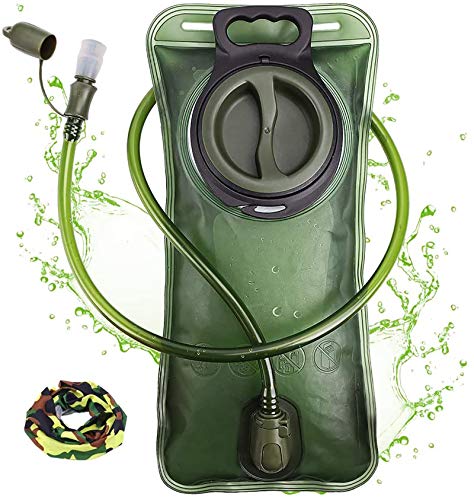
The CHERAINTI 3L Hydration Bladder is an aftermarket water reservoir designed to fit inside the hydration sleeve of hiking daypacks, backpacking packs, cycling bags, and travel rucksacks. Holding three liters of water, it suits day hikers tackling sun-exposed routes, weekend backpackers seeking a central reservoir for camp use, and trail users replacing an old or leaking bladder without spending top-dollar brand premiums.
On the trail, physical dimensions play an essential role in how well a reservoir integrates with your pack. Measuring 16.9 inches long by 7.6 inches wide and weighing approximately 0.62 pounds empty, this bladder drops cleanly into vertical hydration compartments of mid-sized to full-sized hiking backpacks. The 40-inch long drinking hose with a 0.4-inch diameter provides ample length to route through hydration ports and down pack shoulder straps, giving hikers easy drinking access without halting their stride.
In terms of construction and hardware, the reservoir utilizes BPA-free materials assembled with double-sealed edge seams designed to resist pressure inside a fully packed bag. The connection port at the base incorporates a quick-release mechanism with an automatic shut-off valve. This allows you to disconnect the drink tube for packing or cleaning while the bladder remains full of water, preventing leaks inside your pack or refrigerator.
Refilling and cleaning are handled through the large screw-on fill port. The wide diameter accommodates large ice cubes and provides sufficient clearance to fit a hand or cleaning brush into the smooth-walled interior. The drinking end features a soft silicone bite valve with a mechanical on/off lever to prevent accidental dripping during transport, accompanied by a tethered protective dust cap that guards the mouthpiece against grit and trail debris.
Potential buyers should account for a few practical considerations. The circular screw-cap design creates a firmer, bulkier contact point against the pack back panel compared to flat slide-seal reservoirs, which can be noticeable in frameless packs. Additionally, the manufacturer-listed fluid temperature tolerance is 20 to 50 degrees Celsius, meaning the bladder is not rated for hot or boiling liquids. At nearly 17 inches in length, it may also bunch up in shallow running packs or small-capacity hydration vests.
For hikers, campers, and multi-sport outdoor enthusiasts looking for a budget-conscious, high-volume replacement reservoir, the CHERAINTI 3L Bladder provides practical hydration utility. Verify your pack sleeve dimensions before purchasing, but for standard daypacks and multi-day backpacks, it delivers dependable volume and straightforward cleaning.
The CHERAINTI bladder features an exterior footprint of 16.9 inches tall by 7.6 inches wide, requiring a pack hydration sleeve with at least 17 inches of vertical clearance for an unbunched fit. It works well with standard 20L to 65L hiking daypacks and multi-day backpacks that provide dedicated reservoir sleeves and shoulder-strap hose routing loops.
The included 40-inch hose provides plenty of reach from deep internal hydration sleeves out through top or side hose ports. Because the quick-disconnect fitting features an automatic shutoff valve, the bladder can be removed from your backpack for trailside refills while leaving the hose routed through your shoulder harness.
The large screw-cap opening provides direct hand access into the interior, facilitating thorough cleaning with warm water, mild soap, and a standard bottle brush. The smooth inner surface helps deter residue buildup between trail excursions.
To maintain product longevity, adhere to the manufacturer-listed liquid temperature range of 20 to 50 degrees Celsius (68 to 122 degrees Fahrenheit). Avoid using boiling water to sanitize the reservoir. After washing, prop the bladder open and hang it upside down until completely dry before storing it away.
Evaluating Reservoir Capacity for Optimal Trail Performance
Determining what is the best size hydration bladder requires balancing liquid volume against pack weight, trail duration, and local water availability. For the vast majority of day hikers, mountain bikers, and weekend trail runners, a 2-liter hydration bladder offers the ideal compromise between manageable weight and dependable fluid volume. Two liters of water provides roughly seventy fluid ounces, which supplies sufficient hydration for two to four hours of continuous moderate physical output. This middle-tier capacity prevents your backpack from bulging awkwardly while ensuring you do not run dry miles before the trailhead.
However, a single reservoir volume cannot satisfy every outdoor scenario. Minimalist runners tackling short morning loops often find two liters unnecessarily heavy, whereas long-distance backpackers crossing arid mountain passes can easily deplete three liters before reaching their next water source. Selecting the correct bladder requires examining terrain difficulty, ambient temperature, refill accessibility, and your pack frame architecture. Evaluating these core environmental factors allows you to choose a reservoir capacity that matches your trail demands without hauling surplus fluid.
The Two-Liter Standard: Why Seventy Ounces Fits Most Activities
The two-liter reservoir has earned its reputation as the benchmark volume across the outdoor industry for good reason. It provides a generous reserve of water without overwhelming standard backpack hydration compartments or creating excessive downward drag. Models like the Water Buffalo Oasis 2L Hydration Bladder and the Baen Sendi 2 Pack Hydration Bladder 2 Liter/70 oz illustrate how well this capacity integrates into diverse daypacks. Two liters strikes a reliable balance for half-day summit pushes, cross-country mountain bike rides, and extended perimeter hikes.
A filled two-liter bladder adds approximately 4.4 pounds of fluid weight to your harness system, which rests comfortably along the natural curve of your spine. This mass remains stable enough that it will not distort the lumbar support of lightweight packs or pull your shoulders backward during steep ascents. This volume also matches the average human sweat rate during moderate exertion across temperate conditions, meaning you will rarely carry surplus water back to your vehicle. If your typical outings last between three and five hours in mild weather, a two-liter reservoir represents the most reliable baseline.
The 1.5-Liter Reservoir: Streamlined Hydration for Fast Cadence
When moving fast across technical terrain, minimizing bulk and bouncing becomes far more important than carrying surplus water. A 1.5-liter hydration bladder, such as the compact version found in the Mdvora 1.5L/2L/2.5L/3L Hydration Bladder lineup, provides a sleek profile designed specifically for high-tempo movement. This smaller size holds approximately fifty fluid ounces, translating to just over 3.3 pounds of liquid weight. Trail runners, gravel cyclists, and cross-country racers frequently favor this smaller volume because it prevents aggressive torso fatigue over technical switchbacks.
The compact vertical dimensions of a 1.5-liter bladder allow it to fit inside low-profile running vests and minimalist lumbar packs without protruding or folding over. Narrow bladder compartments often pinch larger bladders, but a 1.5-liter reservoir drops cleanly into tight sleeves without restricting your natural arm swing. This volume proves ideal for trail loops under eight miles, organized endurance races with frequent aid stations, and brisk mountain bike commutes. The principal trade-off is limited range, making dependable water sources or personal refill planning essential before leaving civilization.
The Three-Liter Reservoir: Remote Wilderness and Arid Climates
Extended excursions through desert canyons, exposed alpine ridges, or remote backcountry trails demand substantial fluid reserves that smaller bladders cannot provide. A 3-liter hydration reservoir, such as the CamelBak Crux 3L Hydration Reservoir or the Hydration Bladder, 3L Water Bladder for Hiking, provides roughly one hundred fluid ounces of drinking capacity. This expanded volume allows backpackers to navigate long, dry stretches between seasonal springs without falling into severe dehydration. Having three full liters on board gives you peace of mind when venturing into dry backcountry zones.
The challenge of carrying three liters of water centers squarely on mass, as three liters adds roughly 6.6 pounds of liquid load directly against your back. In hot climates where temperatures climb rapidly, that extra weight becomes indispensable insurance against heat exhaustion and cramping. Multi-day backpackers frequently rely on 3-liter reservoirs to carry enough water from a trailside creek to an elevated dry campsite for evening cooking and morning coffee. If your wilderness itineraries routinely include dry trail sections exceeding ten miles, investing in a robust 3-liter reservoir is a practical necessity.
Water Weight Dynamics and Backpack Load Distribution
Every liter of potable water adds exactly one kilogram, or approximately 2.2 pounds, to your total pack weight. When you fill a 3-liter reservoir completely, that 6.6-pound fluid mass sits higher and extends farther out than a compact 1.5-liter reservoir. If your backpack lacks a rigid internal frame or dedicated load-lifter straps, this concentrated weight can pull the harness backward and cause chronic lower-back soreness. Pairing larger fluid loads with structured carriers like internal frame backpacks helps channel that dense fluid mass directly into your hips.
Liquid mass also behaves dynamically inside your pack, shifting subtly with every stride, jump, or pedal stroke. A partially filled large reservoir without internal stabilization will slosh violently, disrupting your natural momentum on steep descents or technical terrain. In contrast, selecting a reservoir size that closely matches your planned fluid volume keeps the bladder pressurized and prevents water from churning aggressively against your spine. Choosing the right capacity is therefore just as much about biomechanical balance as it is about total fluid intake.
Reservoir Geometry, Pack Sleeve Dimensions, and Torso Fit
A common frustration among trail enthusiasts is purchasing a high-capacity reservoir only to find that it will not fit into their backpack hydration sleeve. Hydration sleeves vary widely in height, width, and suspension attachment points, especially between minimalist running vests and multi-day expedition rucksacks. Complete systems like the Teton Oasis Hydration Backpack and the Lightweight Hydration Backpack pair their 2-liter bladders directly with tailor-made internal sleeves. When purchasing an aftermarket replacement bladder, measuring your backpack sleeve length is critical before making a final decision.
Long and narrow three-liter reservoirs often measure sixteen to eighteen inches in length, which can bottom out inside compact daypacks and prevent the main zipper from closing. Forcing an oversized reservoir into a short hydration pocket also bunches the lower seam, creating pressure points that can stress welded joints over time. Conversely, placing an undersized 1.5-liter bladder into a deep backpack compartment can cause it to slide to the bottom, kinking the drink tube near the exit port. Verifying that your reservoir length matches your pack sleeve height ensures a secure hang and unobstructed water flow.
Internal Baffling and Profile Control Across Bladder Sizes
When a cylindrical water bladder is filled to maximum capacity, it tends to expand outward into an awkward barrel shape. This barreling effect pushes directly against the back panel of your pack, transforming a comfortable flat harness into a rounded bulge that digs into your spinal column. Modern premium reservoirs incorporate internal center baffles or dual-chamber welded walls that keep the bladder flat and broad as it fills. This architectural baffle prevents the reservoir from swelling beyond two or three inches in depth, preserving your backpack’s ergonomic back airflow.
Internal baffles become increasingly critical as bladder volume expands from two to three liters. In smaller 1.5-liter bladders, the natural perimeter seam weld is often enough to maintain a reasonably flat profile without internal partitioning. However, a full three-liter unbaffled bladder can easily bulge to five inches in thickness, severely compressing the gear storage space inside your main pack compartment. If you choose a higher-capacity reservoir, selecting a baffled design maintains load stability and prevents the pack harness from shifting off your center of balance.
Closure Architecture and Refill Accessibility by Reservoir Size
The design of a bladder’s filling port substantially influences how easily you can replenish water at backcountry springs, shallow seeps, or campground spigots. Large screw-cap closures, such as the 4-inch port on the Baen Sendi reservoir or the leak-resistant cap on the CamelBak Crux, offer wide openings for pouring and ice scooping. These rigid circular collars provide a sturdy handle that helps you hold a heavy 3-liter bladder steady beneath a rushing stream. However, rigid screw-cap collars add slight weight and can complicate sliding the bladder into tightly packed sleeves.
Slide-top closures, on the other hand, fold over at the top rim and seal shut with a lightweight plastic slider bar. This wide-mouth aperture opens across the entire width of the bladder, making it remarkably easy to scoop water from shallow backcountry pools where circular caps cannot submerge. Slide-top systems also simplify post-trip cleaning and thorough air drying because you can reach all interior corners with a sponge or drying rack. Deciding between a screw-cap collar and a slide-top seal depends largely on whether you prioritize structured one-handed holding or effortless interior cleaning.
Temperature Regulation and Thermal Hose Protection on the Trail
Ambient weather conditions heavily impact both your hydration consumption rate and the physical temperature of your stored drinking water. In hot summer environments, ambient heat warms exposed drink tubes within minutes, leaving you with unpleasant sips of lukewarm water on steep climbs. Gear systems like the Maelstrom Hydration Backpack with 2L Water incorporate aluminum-lined insulated bladder sleeves to reflect radiant heat and keep water refreshingly cool. Bladders equipped with insulated neoprene hose covers, such as the Water Buffalo Oasis, further protect drinking lines from extreme exterior temperatures.
Cold-weather adventures present the opposite challenge, where freezing temperatures can turn exposed hoses and bite valves into solid ice blocks. Smaller 1.5-liter bladders lose thermal energy faster than dense 3-liter reservoirs because smaller fluid volumes possess less total thermal mass. When hiking in near-freezing conditions, carrying a larger reservoir nestled against your back inside trail packs with insulated cooler storage helps shield water from rapid freezing. Remembering to blow residual water back into the insulated reservoir after each sip prevents ice from locking up your bite valve mechanism.
Practical Guidelines for Matching Reservoir Volume to Trail Milestones
A practical rule of thumb used by seasoned outdoor adventurers is to plan for approximately one-half liter of water per hour of moderate exertion in mild weather. When hiking under direct summer sunlight or tackling relentless vertical elevation, fluid consumption can easily double to one full liter per hour. A 1.5-liter bladder therefore provides a safe operating window of roughly two to three hours during mild morning or evening outings. If you know your route offers reliable, verified water sources for filtering, a smaller reservoir refilled frequently keeps your pack exceptionally nimble.
For half-day outings spanning four to six hours, a 2-liter bladder provides the security buffer needed to handle unexpected delays or rising afternoon heat. When embarking on all-day wilderness adventures exceeding seven hours, or when traversing dry arid terrain without natural refill points, a 3-liter bladder becomes the only sensible choice. Carrying water filtration gear allows you to reset your volume whenever you encounter pristine mountain streams, effectively extending the reach of smaller reservoirs. Tailoring your reservoir capacity to known trail milestones prevents both the agony of dehydration and the burden of hauling dead weight.
Final Selection Principles for Long-Term Trail Reliability
Selecting the best size hydration bladder ultimately requires honest assessment of your typical trail pacing, backpack design, and wilderness geography. While a 2-liter reservoir delivers unmatched versatility for day hikers and mountain bikers alike, specialized activities benefit greatly from targeted 1.5-liter or 3-liter designs. Pay close attention to quick-release hose valves, taste-free food-grade materials, and secure bite valve shutoff switches that prevent accidental gear drenching. Choosing a bladder that integrates seamlessly with your backpack harness ensures effortless hydration across every mile of your journey.
Before heading into remote territory, always perform a preliminary leak test at home by filling your bladder and inspecting all quick-connect seals under gentle compression. Ensure that your pack’s hydration hanger securely supports the bladder’s top loop to prevent slumping during active movement. Maintaining clean storage habits, rinsing tubes thoroughly after each excursion, and hanging the reservoir open to dry will preserve the freshness of your water for seasons to come. With the proper capacity resting comfortably against your back, you can focus entirely on enjoying the beauty of the open trail.


Write Your Review
No reviews yet. Be the first to share your experience!