


After a steep descent, sore toes or a slipping heel can make the difference between finishing comfortably and cutting a hike short. Trail runners are usually lighter and more flexible, while hiking boots generally offer more ankle coverage and a structured feel, but the better choice depends on the trail, pack, weather, and your fit. For trail runners vs hiking boots, start by deciding what kind of support and protection your route actually calls for, rather than assuming one style suits every hiker.
On established trails with a light day pack, a well-fitting trail runner may feel easier to move in, especially if you value flexibility and ventilation. Boots may be more appealing on rough routes, in wet conditions, or under a heavier pack, but a higher collar alone can’t guarantee ankle stability or prevent injury. The upper material, sole, fit, and conditions matter too. Our guide to how hiking boots differ explains the construction details behind those tradeoffs.
Think of this as a fit-and-use decision, not a universal rule about footwear. A waterproof boot can trap more warmth and moisture than a breathable non-waterproof shoe, while a low-cut trail runner may let water or trail debris in more easily. Pack weight, foot swelling, socks, and downhill toe clearance can change how either style feels. Checking the product’s listed materials and care guidance, then trying footwear with the socks you plan to hike in, gives a more useful basis for choosing.

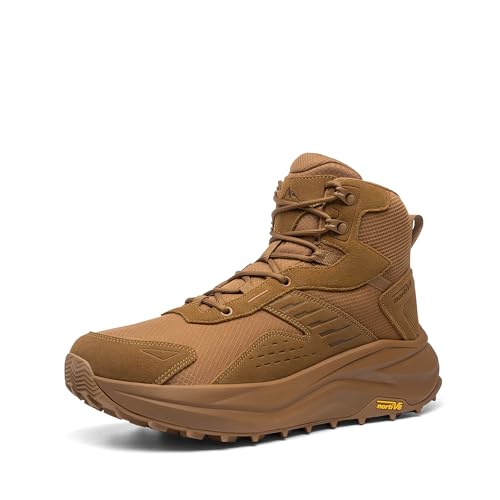

Trail runners and hiking boots solve different trail problems
Choose between the styles by matching footwear to the ground, load, weather, and fit you expect on your route. Trail runners typically prioritize low weight and a flexible feel; hiking boots more often provide a higher upper and a more structured platform. Those are broad design tendencies, not guarantees about every model. Construction details vary, so confirm the specific shoe’s features rather than relying on its category name.
A hiker with a light pack on a maintained path may value freedom of movement and ventilation more than extra upper coverage. Someone carrying a substantial load over uneven terrain may prefer the firmer feel and protective coverage offered by some boots. Neither style automatically prevents blisters, foot fatigue, or ankle injuries. Comfort depends on fit, foot shape, socks, terrain, and how the footwear behaves over the full hike.
Use this short checklist to frame the decision around your actual route and needs.
- Estimate the pack load you’ll carry, including water, food, and overnight equipment.
- Consider whether the route is smooth, rocky, muddy, steep, or likely to include loose scree.
- Decide how much ventilation you need and whether wet conditions make water protection useful.
- Check toe room and heel hold while wearing the socks intended for hiking.
- Factor in foot swelling, downhill travel, and the distance between planned breaks.
Trail surface and pack load change the tradeoff
On established day-hike trails, a flexible trail runner can feel less restrictive, and its lower profile may suit hikers who prefer a closer-to-the-ground feel. That flexibility is not the same as support, though. A shoe that bends easily may feel less composed to someone carrying a heavy pack over jagged rock. Look at the shoe’s stated construction and try it on the type of uneven surface you expect, if practical.
Boots can offer a more substantial upper and a platform that feels steadier to some hikers on rocky or uneven routes. The amount of torsional rigidity and underfoot protection varies by model, so a boot label doesn’t tell you exactly how stiff the sole is. More structure can also mean more weight and less freedom of movement. Consider whether those tradeoffs address a real problem on your route or simply add bulk you don’t need.
Pack weight matters because the feet and lower legs repeat the same motion for every step. A flexible shoe may feel nimble with a light day pack but less reassuring when a pack shifts on uneven ground. A sturdier boot may feel more supportive under load, yet its additional weight can contribute to a tiring feel over long distances. There’s no universal load threshold at which one category becomes correct; comfort, terrain, and the footwear’s construction all influence the experience.
For steep downhill sections, concentrate on how securely the heel stays in place and whether toes have room in front. A boot that is too long, too loose, or poorly laced can still allow forward movement. A snug shoe can also cause trouble if it crowds the toes, particularly as feet swell during a long day. Test the fit on an incline when possible, and don’t assume extra ankle height will resolve a poor fit.
Upper height and protection are not the same as injury prevention
Boot collars cover more of the ankle than low-cut trail runners, which may provide a feeling of containment or help keep some trail debris out. They don’t immobilize the ankle or remove the risk of a twist. A collar that rubs, presses, or restricts your movement can create its own discomfort. The right balance is the one that feels secure without causing pressure during the movements your route requires.
Upper coverage also affects how footwear interacts with mud, vegetation, and water. A taller upper may offer more coverage, but water can still enter from above, and the actual protection depends on the tongue, seams, materials, and water depth. A low-cut shoe has less material around the ankle, so puddles and trail debris may reach the opening more readily. Match the design to likely conditions instead of treating height as a waterproof rating.
For rocky terrain, consider more than the collar. Toe protection, underfoot cushioning, sole stiffness, and the outsole pattern can affect how exposed or stable your foot feels. Product information may identify a protective toe cap, midsole material, or lug pattern, but it may not provide comparable measurements across styles. Don’t infer that a boot has deeper lugs or a stronger sole just because it looks more substantial.
Choose footwear for the difficulty of the route, not for the most dramatic terrain you can imagine. Day-hiking trail runners or ordinary hiking boots should not be treated as technical mountaineering footwear unless the manufacturer specifically lists them for that use. If a route requires specialized traction or protection, check the footwear’s stated intended use and the route’s equipment recommendations. A category name is not a substitute for that verification.
Waterproof membranes and ventilation involve a real compromise
Waterproof versions of either style can help keep water out through the materials covered by their construction, but protection has limits. Water can enter over the opening, through a damaged area, or when conditions exceed what the design can handle. A waterproof membrane can also make a shoe feel warmer or less ventilated than a non-waterproof mesh upper, especially in hot conditions or during strenuous hiking. Check the stated membrane and construction rather than assuming all footwear in one category behaves alike.
A non-waterproof trail runner may be more comfortable in hot, dry conditions for hikers who prioritize airflow. If it gets wet, a breathable upper may release moisture more readily than a lined waterproof shoe, though drying depends on materials and conditions. That is a tradeoff, not a promise that any particular shoe will dry quickly. In persistent rain, snow, or cold mud, the warmth and water protection of a suitable boot may be more useful.
Sweat matters as much as rain for some hikers. Warm, damp feet can raise friction, and an impermeable-feeling combination of membrane, thick socks, and high exertion may be uncomfortable. Choose socks and footwear together, and pay attention to how your feet respond on shorter outings before relying on a setup for a long trip. A waterproof label doesn’t mean the foot stays dry under every condition.
For deeper information about the limits of membranes, see our article on whether hiking boots are waterproof. That distinction is useful because many hiking boots are not waterproof, and waterproof protection can depend on model details. Also consider the route’s water exposure: damp grass is different from crossing deep water. If water can enter above the shoe opening, an internal membrane alone won’t solve the problem.
Fit determines whether either style works for your feet
Fit deserves more attention than the boot-versus-runner label. Brands use different lasts and sizing conventions, so a familiar size in one shoe may not feel the same in another. Check the manufacturer’s sizing information, try footwear with your hiking socks, and make sure the heel feels held without painful pressure. A roomy toe box is useful only if the rest of the shoe also secures your foot.
Toe clearance is especially important on descents. Stand on an incline or carefully simulate downhill movement and check whether the toes strike the front. If they do, consider whether the footwear is too short, the heel is slipping, or the lacing allows forward movement. Don’t solve toe bang by simply choosing a much larger shoe without checking heel hold, because excess volume can create friction and instability.
Persistent heel lift can cause hot spots in either style. Adjust the lacing in a way the manufacturer permits, then walk and check whether the heel remains secure without constricting the top of the foot. If the heel still moves substantially, the shoe’s shape may not suit your foot. Trying another size or last is safer than cutting a lining, altering a membrane, or removing structural components.
Use these checks during a fitting, rather than judging comfort from a quick standing test.
- Try both shoes with the socks you expect to wear on the trail.
- Walk uphill and downhill to assess heel movement and front-of-toe contact.
- Check that toes can spread without the midfoot or heel feeling loose.
- Notice pressure over the arch, instep, bunions, and sides of the forefoot.
- Reassess the fit after walking, since feet may swell over time.
Hikers with wide forefeet, narrow heels, high arches, bunions, or plantar fasciitis may need to pay close attention to volume and shape. Neither trail runners nor boots universally suit a particular foot condition. Removable insoles may provide room for an alternate footbed in some footwear, but compatibility and available space vary by model. Check product information and make sure any insert doesn’t crowd the toes or lift the heel out of its intended position.
Weight, stiffness, and cushioning affect long-day comfort
Trail runners are often chosen for their lighter feel, while many boots use more material in the upper and around the foot. But weight varies by model and size, so avoid relying on broad category averages when weight is important to you. Look for a stated weight that identifies the reference size and whether the figure applies to one shoe or a pair. Without those details, the number may not be useful for a direct comparison.
Stiffness is another individual tradeoff. A flexible sole can feel natural on smoother trails, while a firmer platform may feel more controlled over rough ground or under a load. A stiff shoe can also feel tiring or uncomfortable if it doesn’t match your gait and route. Product descriptions may identify a shank or midsole material, but material names alone don’t establish how the complete shoe will feel underfoot.
Cushioning can soften repeated impacts, but a thick or soft midsole isn’t automatically more stable. Comfort depends on the relationship between cushioning, sole shape, stiffness, and your foot. If arch discomfort develops, check whether the insole is removable and whether another insert fits without altering the boot. Don’t remove a structural shank or modify the shoe to force a different feel.
Consider how the footwear feels after a walk, not only when it is new. Pressure points, numbness, or recurring hot spots deserve attention before a long hike. Stop to check your feet if discomfort develops, and address a developing blister rather than continuing until it worsens. No footwear category can guarantee a pain-free hike.
Break-in and care depend on materials
Many synthetic trail runners feel flexible early, while leather boots can feel firmer and may need gradual wear to become comfortable. The amount of break-in varies by construction and by the shape of your feet. Don’t assume a product claim about immediate comfort means the footwear will suit you on a multi-day trip without a trial walk. Wear new footwear on shorter outings first and watch for rubbing, pressure, or heel movement.
Avoid heating boots in an oven, pouring boiling water into them, or using unapproved chemicals to soften them. Those methods can damage materials, adhesives, membranes, or other components. Follow the manufacturer’s care and break-in guidance instead. If the shoe remains painful after reasonable use, a different size or shape may be a better answer than attempting a risky modification.
Clean footwear according to its materials and the manufacturer’s instructions. Dirt can accumulate around seams and closures, and leather may require care products intended for that type of finish. DWR treatments can wear over time, but the right maintenance product depends on the upper and membrane. Avoid applying a spray or conditioner simply because it is labeled for hiking boots; first confirm it is suitable for that specific material.
Let wet shoes dry naturally in a ventilated place, away from campfires and radiators. Strong heat can damage materials or adhesives, while storing damp footwear may leave it uncomfortable for the next outing. Remove insoles only if the manufacturer’s care guidance allows it. Check the outsole and upper before a hike for visible wear or damage, especially if the route is remote or demanding.
Make the choice from the route, not the category label
For a maintained trail, light pack, and warm conditions, a comfortable, well-fitting trail runner may be a practical choice if its protection suits the terrain. For rougher ground, colder or wetter weather, or a heavier pack, a hiking boot may be preferable if its fit and construction address those needs. Neither conclusion applies automatically to every model. Confirm the listed materials, intended use, and care instructions for the actual footwear you’re considering.
Don’t choose boots solely because you’re worried about ankle injuries, and don’t choose trail runners solely because they’re commonly described as lighter. Match upper coverage, traction, stiffness, weather protection, and fit to the trip. Use hiking socks rather than cotton for a long outing, since socks are part of the friction and moisture equation. If you’re uncertain about boot collar height, our guide to low and mid hiking boots can help clarify that specific tradeoff.
Before committing to a long hike, walk in the footwear with your expected socks and pack conditions, and check it on an incline if possible. Confirm that toes have room, the heel stays secure, and no pressure point develops. Follow the manufacturer’s care guidance and match footwear to the trail’s difficulty. If the fit fails those checks, choose a different size or style rather than trying to modify the shoe.



Write Your Review
No reviews yet. Be the first to share your experience!