


Steep trail descents and uneven gravel paths place significant strain on your knees, hips, and lower back when your body lacks stable leverage. Selecting the correct stick length transforms how your upper body absorbs impact while keeping your torso upright and your stride balanced. Many walkers wonder what is the best height for a walking stick when transitioning between neighborhood strolls and rugged wilderness trails. Having an improperly fitted stick forces your shoulders into unnatural tension or causes you to hunch forward awkwardly. Pairing your setup with comfortable hiking pants designed for knee comfort can further alleviate joint pressure during long afternoon outings.
The ideal measurement depends heavily on whether you are using a standard balance walking stick, an ergonomic walking cane, or a tall traditional hiking staff. For standard walking balance on level ground, your elbow should form a comfortable ninety-degree angle with your forearm parallel to the ground. In contrast, wilderness hiking staffs typically reach higher between your chest and armpit to provide varied hand positions across changing terrain gradients. Exploring the mechanical differences across adjustable aluminum shafts, folding balance sticks, and handcrafted hardwood poles helps you dial in the exact sizing needed for safe footing.



Determining the Best Height for a Walking Stick
Achieving proper balance starts with understanding that no single height measurement fits every walking situation. The optimal height of a walking stick depends primarily on your personal stature, your typical footwear, and the specific terrain you intend to explore. When sized accurately, your stick distributes your weight evenly, relieves strain on your knees, and keeps your spine aligned in a neutral posture. Setting your stick too high or too low leads to shoulder tension, wrist strain, and unstable footing.
The Standard Ninety-Degree Elbow Rule for Daily Walking
For routine walks on paved sidewalks, garden pathways, and level park tracks, the ninety-degree elbow angle serves as the foundational sizing standard. Stand upright with your normal walking shoes on, letting your arms relax naturally at your sides. When you place your hand on the top of the handle, your elbow should bend at roughly ninety degrees, with your forearm resting parallel to the walking surface. This alignment allows your arm muscles to absorb ground feedback smoothly without straining your biceps or trapezius.
Positioning the handle at this height ensures that your shoulder remains relaxed rather than elevated toward your ear. If the stick is set too tall, your shoulder gets pushed upward on every plant, which quickly causes neck stiffness and fatigue over a few miles. Conversely, a stick that rests too low forces you to stoop forward, throwing your center of gravity off and defeating the stabilizing purpose of the aid. Maintaining an upright torso with a gentle elbow bend maximizes stability while walking at a regular cadence.
Sizing Full-Length Hiking Staffs for Trail Elevation
Traditional single-piece hiking staffs and mountain trekking poles require a completely different sizing mindset than urban walking sticks. Out on rugged trails, you rarely encounter flat, predictable ground for extended periods. For general trail hiking, an extended staff typically reaches between your armpit and your shoulder, commonly measuring fifty to fifty-five inches for average adult heights. This extra vertical length allows you to plant the staff far ahead of your body when descending steep drops.
A taller trail staff also gives you the freedom to reposition your grip dynamically without stopping to adjust mechanical hardware. When ascending a steep, rocky hill, you can choke down on the shaft by sliding your hand lower along the grip zone. When you transition to descending loose gravel, you can cup the top knob or palm the highest section of the staff to brace your weight. This versatility makes full-length staffs especially practical for hikers who prefer navigating wilderness routes with a single balance point.
How to Measure Accurate Stick Length at Home
Measuring your required stick height at home takes only a couple of minutes and a standard flexible measuring tape. Put on the specific shoes or hiking boots you wear most often, because thick cushioned soles can easily add an inch or two to your standing height. Stand straight on a level, hard floor with your arms hanging naturally at your sides and your shoulders fully relaxed. Ask a friend or family member to measure the distance from the floor up to the crease of your wrist joint.
The measurement from the floor to your wrist crease corresponds almost exactly to the top surface of the handle on a standard walking cane or balance stick. Manufacturers like supregear specifically recommend this wrist-crease calculation to set their five-level adjustable shafts between thirty-three and thirty-seven inches. If you are ordering a fixed-length wooden walking stick online, this wrist measurement provides the target length to request from the woodcrafter. Trimming a solid wooden stick slightly longer is always safer than cutting it too short, as you can easily remove additional wood later.
Adjusting Grip Posture for Uphill Climbs and Steep Descents
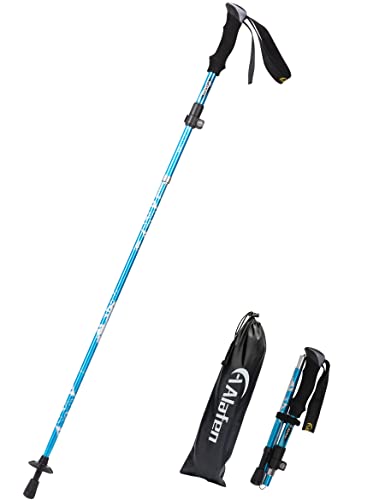
Trail undulations alter the effective distance between your hand and the ground, requiring slight biomechanical compensations. On uphill sections, the ground rises in front of you, which effectively makes a fixed-length stick feel taller than it really is. Hiking poles with telescoping sections, such as the A ALAFEN 7075 aluminum model adjustable from thirty-seven to forty-three inches, allow you to shorten the shaft quickly to maintain optimal leverage. Alternatively, staffs with extended foam grips let you slide your hand down several inches to power through steep climbs without stressing your wrists.
Steep downward slopes present the highest risk of joint fatigue and slipping, demanding a longer reach to brake your forward momentum. When descending steep switchbacks, extending an adjustable shaft like the CLINE collapsible stick up to fifty-one inches lets you plant the tip well ahead of your lead foot. Cupping your palm over the rounded top of the grip allows you to lean downward safely and transfer impact from your patellar tendon into the shaft. Always verify that your footing is secure before placing your full balance on the planted tip during descent maneuvers.
Handle Ergonomics and How Grip Shapes Affect Height Feel
The shape of your handle directly alters how comfortable a specific stick height feels in your hand throughout a long walk. Traditional crook and tourist handles feature a continuous curve that allows you to hook the stick over your forearm when resting, but they concentrate pressure across the center of your palm. In contrast, classic derby handles offer a flatter, gently contoured resting area that spreads downward force across a wider surface. This broader distribution prevents palm cramping and localized nerve numbness during long neighborhood strolls.
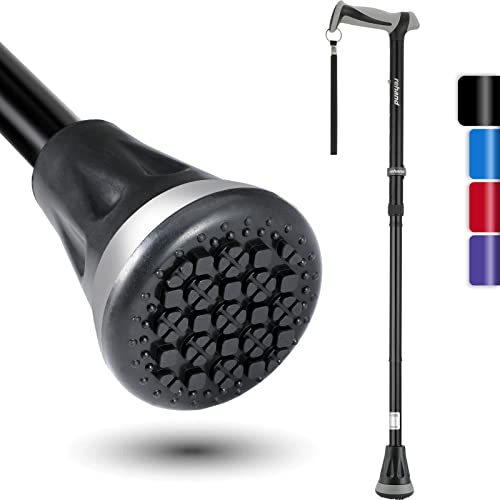
Modern ergonomic designs take palm pressure reduction a step further by using specialized multi-density materials. For example, REHAND canes feature an elongated grip combining rigid polypropylene support with soft thermoplastic rubber to cradle the natural contours of the hand. Medline offset canes position the grip directly over the vertical shaft, directing your downward pressure straight into the ground rather than creating rotational torque on your wrist. Choosing a handle that aligns with your grip style ensures that your chosen height translates into effortless, fatigue-free movement.
Shaft Materials, Weight Distribution, and Structural Rigidity
Shaft composition dictates how a walking stick behaves under load and how much physical vibration reaches your joints. Handcrafted hardwood staffs made from species like hickory, white oak, sweet chestnut, or hazel offer natural shock dampening thanks to their fibrous timber grain. A seasoned hickory staff provides tremendous stiffness and an authentic outdoor feel, yet it absorbs harsh ground shocks naturally. Solid wood shafts carry a pleasing heft that helps plant the tip firmly into leaf litter and loose forest duff.
High-grade aircraft metals offer distinct advantages when weight reduction and compact packing are your top priorities. Poles made from 7075 aluminum alloy deliver exceptional tensile strength while weighing only fractions of a pound, resisting deformation under sudden balance corrections. Aluminum shafts flex slightly under downward force without snapping, providing dependable support on rocky trails. However, unlike organic hardwoods, metal poles require periodic checks on their mechanical push-button pins and lever clamps to prevent internal slipping during use.
Ferrule Traction and Tip Selection Across Different Terrains
The ferrule at the base of your stick is your sole contact point with the earth, making traction selection a critical safety priority. Standard vulcanized rubber ferrules are essential whenever you walk across hard, slick surfaces like asphalt, concrete sidewalks, or polished indoor tile. High-quality rubber feet absorb the strike impact and grip smoothly without skittering across slick stone slabs. Quad-base pivoting tips, like those found on self-standing REHAND models, provide continuous ground contact even as your arm swings through different angles.
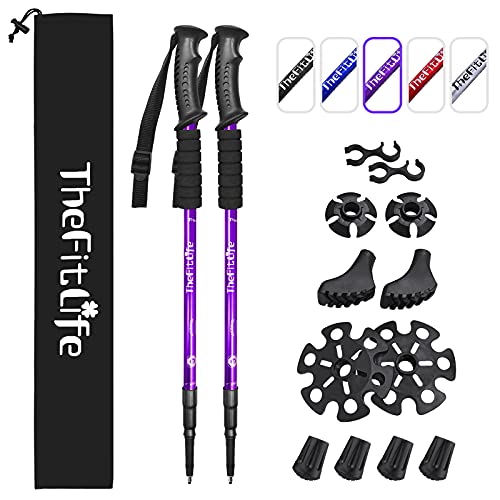
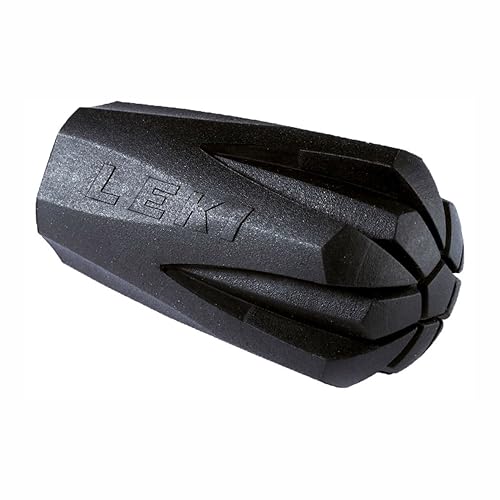
Venturing off paved paths onto muddy tracks, loose gravel, or icy snow patches calls for specialized hardware. Bare tungsten steel or carbide tips bite directly into hard-packed dirt and slick roots, anchoring your stride where rubber would slip. Most trail sticks include removable rubber boots that press snugly over the carbide spike, allowing you to switch between outdoor traction and indoor floor protection in seconds. Always inspect the base of your rubber ferrule periodically, because an internal steel washer prevents the shaft from puncturing through the bottom rubber tread.
Packable Folding Mechanisms and Travel Considerations
For travelers and commuters, a full-length rigid staff can be unwieldy to transport in compact cars, trains, or airplanes. Modern folding walking sticks use internal elastic shock cords or tension cables to break down into four or five compact sections measuring ten to sixteen inches long. When planning your outdoor excursions, packing a collapsible stick into a dedicated carry on travel backpack guide lets you breeze through airport transit without checking bulky luggage. These compact folding sticks snap into a rigid column in seconds whenever you arrive at your trail destination.
When selecting a folding stick, verify that the locking joints fit together with tight tolerances to prevent annoying joint wobble. Telescoping models feature push-button spring pins or exterior cam-lever locks with numbered height markings, making it simple to return to your preferred setting. Models with eight distinct height settings accommodate users ranging from five feet to six feet five inches with one-inch micro-adjustments. A secure locking collar guarantees that the stick maintains its structural integrity without collapsing unexpectedly under your downward weight.
Safety Boundaries Between Balance Aids and Medical Devices
Recreational walking sticks and outdoor hiking poles serve as balance aids rather than clinical, full weight-bearing orthopedic devices. If you are recovering from lower-limb surgery, experiencing severe balance disorders, or requiring non-weight-bearing mobility, consult a physical therapist before heading out. Outdoor sticks are engineered to enhance stability, provide an extra point of ground contact, and offload modest joint pressure during walking. Leaning your entire body weight onto a folding cane or slender hiking pole exceeds its intended balance-assist function.
Heavy-duty options, such as the Medline offset aluminum cane rated to support up to three hundred pounds, offer substantial load capacity for balance stabilization. Even with robust ratings, you should regularly check all connection points, joint collars, and tip ferrules for signs of wear. Wooden staffs should be inspected for deep hairline checks, splits, or moisture rot after wet winter hikes. Treating seasoned wood with boiled linseed oil or exterior urethane seals the timber, maintaining structural strength across years of regular outdoor use.
Verification Checklist Before Taking Your First Stride
Once you have adjusted your stick to the target height, perform a quick physical check before starting your journey. Stand tall with your feet shoulder-width apart, rest your hand firmly on the handle, and take a natural step forward. Observe your shoulder position in a mirror or have a companion check that your shoulder does not rise or drop as you plant the stick. If you notice yourself leaning sideways to reach the handle, your stick is too short and needs immediate adjustment.
Next, apply firm downward pressure on the handle while the tip is planted securely on a non-slip floor. Listen for any clicking sounds and feel for internal movement within the telescoping collars or folding joints. If the shaft yields or slips downward under steady palm force, tighten the locking mechanism before venturing onto uneven ground. Taking a minute to confirm proper sizing and mechanical security ensures confident, balanced strides wherever your trail leads.
Finding the best height for your walking stick ultimately comes down to matching your gear to your body and your walking environment. By adhering to the ninety-degree elbow guideline for flat paths and allowing extra height for dynamic trail gradients, you establish a solid foundation for every outing. Take the time to measure your wrist crease accurately, select an ergonomic grip that supports your palm, and verify tip traction for your specific terrain. With a properly sized walking stick in hand, you can protect your joints, improve your balance, and explore the outdoors with complete peace of mind.





Write Your Review
No reviews yet. Be the first to share your experience!