


Negotiating uneven dirt paths, steep gravel descents, or paved neighborhood greenways demands steady balance and dependable posture. Choosing an improper shaft length can force your shoulders into an unnatural shrug or cause you to stoop forward, quickly increasing lower back and knee fatigue on long trail days. Understanding how to measure yourself for a walking stick ensures that your elbow, wrist, and spine stay aligned, transforming a simple piece of wood or alloy into a reliable balance aid. Hikers often pair a properly fitted staff with supportive knee hiking pants to relieve joint strain when negotiating rocky switchbacks and steep downhill sections.
A recreational walking stick serves a different role than a medical cane or dual trekking poles, giving walkers a single, adaptable point of contact without encumbering both hands. Getting your height measurement correct depends on whether you intend to walk level neighborhood sidewalks with an ergonomic derby handle or traverse mountain slopes with a traditional shoulder-high hiking staff. By taking a few careful measurements in your regular trail footwear, you can select or trim a stick that provides natural trail stability, improves your posture, and cushions joint impacts across every step.


Complete Sizing Guide for Walking Sticks and Hiking Staffs
Finding your ideal stick height begins with understanding how you move across your environment. A properly measured walking stick acts as an extension of your skeletal frame, absorbing ground shock and keeping your upper body relaxed. Sizing errors alter your posture, placing unnecessary tension on your neck and lower back. By matching your stick to your physical height, your specific footwear, and the type of ground you cover, you gain reliable balance across every trail outing.
Distinct Roles of Walking Sticks and Hiking Staffs
Recreational walkers must first distinguish between a standard walking stick and a full-length hiking staff. A standard walking stick operates at waist height, providing steady contact on level sidewalks, packed gravel paths, and light park trails. Sizing this style requires an elbow bend of approximately ninety degrees, keeping your forearm parallel to the walking surface. This compact height encourages an efficient arm swing while offloading repetitive pressure from tired hips and knees.
A traditional hiking staff stands much taller, typically reaching between your chest and your shoulder. Trail walkers prefer this added length because steep outdoor gradients demand variable hand placement. When you climb a steep rocky pitch, you naturally grip lower down the timber shaft to maintain forward momentum. On steep descents, you grasp the upper knob or rest your palm directly over the top to steady your downward footing.
Confusing these two styles often leads buyers to order sticks that fail to serve their intended trail purpose. Trimming a mountain staff down to hip level robs you of the upper gripping zone required for steep terrain. Conversely, using a shoulder-high staff for casual urban fitness walking can cause excessive shoulder lift and arm fatigue. Determining where you plan to walk most frequently forms the essential starting point for any sizing process.
Step-by-Step Measurement for Standard Walking Sticks
Accurate measurement for a standard walking stick requires standing on a level, hard floor in your regular walking footwear. Soles and heel lifts alter your standing height by anywhere from half an inch to over an inch, making bare-foot measurements inaccurate. Stand upright with your shoulders relaxed, allowing your arms to hang naturally at your sides. Avoid locking your knees or tilting your pelvis, as rigid posture skews your working arm position.
The standard benchmark uses the distance from the floor up to the crease of your wrist. Have a partner use a flexible measuring tape to record the distance from the floor directly to the inner fold of your wrist joint. If you measure alone, place a ruler against the wall and back into it, noting the height where your wrist crease meets the scale. This measurement represents the total overall stick height, running from the base of the rubber tip to the highest surface of the handle.
Handle geometry plays a subtle role in your final stick length calculation. Ergonomic handles like the classic derby or tourist crook sit directly above the shaft tenon, providing immediate downward leverage. Orthopedic palm grips feature a wider contoured platform that distributes palm pressure across the entire heel of your hand. When checking your final stick specification, verify whether the manufacturer includes the handle height in the stated overall dimension.
Measuring for Traditional Shoulder-High Hiking Staffs
Sizing a traditional wooden hiking staff relies on upper torso landmarks rather than the wrist crease. Most trail walkers select a staff that stands roughly six inches below the top of the shoulder or aligns directly with the armpit. For hikers under five feet four inches tall, a staff length of forty-eight inches generally provides ample grip clearance. Walkers between five feet four inches and five feet eleven inches typically find optimal balance with a fifty-two to fifty-five-inch staff.
Taller hikers exceeding six feet in height should seek wooden staffs measuring fifty-eight to sixty inches in overall length. This generous height ensures that your hand can move up and down the timber shaft freely across unpredictable wilderness terrain. An adequate length leaves several inches of wood above your grip when you plant the stick on level ground. That extra wood acts as a counterbalance, creating a rhythmic forward swing that reduces arm fatigue over long miles.
Staff thickness also correlates with overall length and structural stability. Taller staffs require thicker timber diameters, typically between one inch and one and a quarter inches, to prevent excessive whipping under downward load. When ordering handcrafted hardwood staffs online, ensure the listed measurement includes the protective ground ferrule. A well-proportioned hiking staff provides substantial timber substance without feeling sluggish or top-heavy in your hand.
Posture Alignment and Trail Biomechanics
Proper stick sizing maintains an open chest and a balanced spine across miles of varied terrain. When a walking stick is trimmed too short, your torso automatically stoops forward to reach the grip. This forward hunch compresses your rib cage, restricts deep breathing, and increases shear stress on your lumbar vertebrae. Over several miles, stooping also strains your neck muscles as your head tilts backward to scan the path ahead.
A stick that is sized too tall introduces the opposite problem by forcing your shoulder upward into an unnatural shrug. This continuous elevation engages the upper trapezius and levator scapulae muscles, causing tight knots and persistent shoulder tension. Furthermore, an excessively tall stick shifts your center of gravity backward, increasing your risk of slipping on loose gravel. Proper sizing allows your shoulder to rest in a neutral position while your arm swings forward smoothly.
Downhill descents highlight the true biomechanical value of a correctly measured stick. Planting the stick ahead of your lead foot allows your upper body to absorb deceleration forces that otherwise punish your patella and hip joints. Walkers who carry framed hiking packs appreciate how this extra point of contact stabilizes shifting cargo. Distributing braking loads across your arm, chest, and staff prevents muscle fatigue and keeps your descents controlled.
Footwear Stack Height and Trail Gradients
Your footwear selection directly affects your working stick height on the trail. Low-profile walking sneakers and minimalist trail runners have stack heights of less than twenty millimeters. In contrast, rigid leather hiking boots with thick lugged outsoles can raise your standing height by more than an inch and a half. Measuring your stick while barefoot or in house slippers will cause you to trim the shaft too short for actual outdoor use.
Backpack weight also alters your working posture and changes how deeply your joints flex. When carrying a loaded pack, your knees and ankles compress slightly under the load, while your stride shortens to maintain stability. A tall hiking staff accommodates these shifts effortlessly because your hand can slide up or down the smooth wood. Fixed-length hip sticks offer less flexibility, making precise initial sizing even more critical for gear-carrying walkers.
Trail gradients demand continuous biomechanical adaptation that influences your perceived stick height. Ascending steep switchbacks brings the terrain closer to your body, requiring you to shorten your reach to avoid overextending your shoulder. Descending pushes the ground further away, meaning a stick that felt ideal on flat pavement can suddenly feel several inches too short. Tall hiking staffs naturally solve this gradient problem by providing variable grip zones along the upper shaft.
Handle Geometry and Palm Comfort
Handle design heavily influences how effectively your downward force transfers through the stick. The traditional derby handle remains a favored choice for walkers who want downward stability without a medical appearance. Its undulating top contour supports the palm heel, allowing your fingers to wrap loosely around the front curve. This horizontal distribution of force minimizes localized pressure on the carpal tunnel and median nerve during extended neighborhood walks.
Tourist crook handles offer a timeless aesthetic and provide versatile hanging convenience when your hands need to be free. The broad curve of a crook allows your palm to rest comfortably across the crest while your thumb stabilizes the neck. Round knobs and spherical ball grips are common on tall hiking staffs, providing a smooth dome for palming on steep descents. These round handles allow full rotation, letting you pivot the stick across rough rocks without twisting your wrist.
Many modern trail staffs incorporate extended grip sleeves crafted from dense EVA foam or natural cork. These extended grips run ten to fifteen inches down the upper shaft, giving you instant choke-up positions for steep uphill climbs. Leather wraps on traditional wood staffs provide a tactile, sweat-absorbing surface that prevents blisters on humid afternoons. Choosing a grip style that matches your hand size prevents cramping and allows you to walk with relaxed finger tension.
Traction Ferrules, Rubber Tips, and Spikes
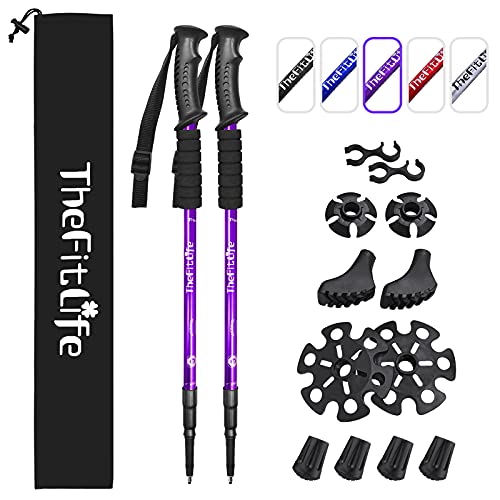
The ground contact point of your walking stick dictates both safety and total working height. Most quality walking sticks terminate in a vulcanized rubber ferrule designed to absorb pavement shock and grip smooth surfaces. A durable rubber tip incorporates an internal steel washer molded into the base to prevent the wood or metal shaft from punching through. When measuring your stick, always account for the extra half-inch to inch that a new rubber ferrule adds to the bottom.
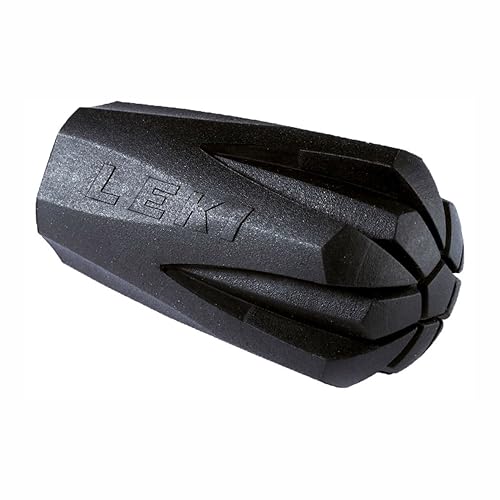
Natural trail surfaces require different traction mechanics than finished indoor floors or paved sidewalks. Hardened steel or carbide spike tips bite aggressively into packed forest dirt, loose shale, wet roots, and winter ice. However, bare metal spikes skitter dangerously across smooth granite slabs, wet river stones, and finished indoor tile. Trail walkers frequently carry slip-on rubber tips that slide over the carbide spike, allowing quick transitions between forest soil and hard pavement.
Mud and snow baskets provide essential surface flotation when you navigate soft ground. Without a basket, a slender walking stick tip can sink several inches into boggy soil or deep winter snow, throwing you off balance. When a stick sinks into the mud, it effectively shortens the shaft and forces your torso to lean awkwardly. Verifying that your stick accommodates interchangeable baskets ensures reliable stability regardless of seasonal trail conditions.
Trimming, Wood Selection, and Timber Preservation
Customizing a fixed-length wooden walking stick requires trimming from the bottom ferrule end rather than modifying the handle. Remove the existing rubber tip, wrap masking tape tightly around the cut line to prevent splintering, and cut cleanly with a fine-tooth saw. Chamfer the outer edge of the newly cut wood with sandpaper so the rubber ferrule slides back on smoothly. Measure twice before making your cut, because removing wood is permanent and cutting too short compromises your posture.
Natural hardwood species exhibit distinct mechanical properties that affect your walking experience. Hickory and white oak are exceptionally dense, providing rigid downward load capacity for heavy-duty support. Sweet chestnut and hazel feature a slightly lighter cellular structure with natural grain flex, offering organic vibration damping over rocky ground. Bamboo provides an ultralight option with remarkable tensile strength, though its hollow nodes require specialized ferrule fittings.
Preserving natural wood shafts requires routine seasonal maintenance to guard against humidity and dry rot. Wipe away dried trail mud with a damp cloth after each hike, allowing the timber to dry completely away from radiators or direct heat. Rubbing pure tung oil or boiled linseed oil into unvarnished wood nourishes the grain and forms a water-resistant protective barrier. Inspecting the shaft periodically for hairline checks or deep grain splits ensures your stick remains safe for backcountry use.
Fit Verification and Safe Boundary Guidelines
Before heading out on a long trek, perform a comprehensive standing check to confirm your stick sizing. Put on your trail shoes, grasp the handle naturally, and verify that your elbow rests at a comfortable angle without shoulder tension. Walk across a flat surface and observe your arm swing to make sure the stick plants cleanly without scuffing the floor prematurely. If you feel your wrist cocking back at an awkward angle, the stick may still be slightly too tall.
Walkers must understand the distinction between recreational balance aids and certified medical mobility devices. A wooden walking stick or hiking staff assists with trail equilibrium, stability across uneven roots, and light joint offloading. However, standard recreational sticks are not intended to serve as full weight-bearing crutches for acute orthotic recovery. Hikers recovering from severe fractures or clinical gait disorders should consult healthcare professionals for prescribed mobility equipment.
Taking the time to measure your stick accurately pays dividends across thousands of trail steps. A stick sized precisely to your body keeps your spine upright, protects your knees on steep descents, and provides steadfast confidence over rough ground. Whether you choose a classic handcrafted hickory staff or a sleek trimmed walking stick, proper fit turns your gear into an indispensable partner for outdoor exploration.




Write Your Review
No reviews yet. Be the first to share your experience!