


Maintaining balance on unpredictable terrain often comes down to matching your gear to your natural body mechanics. When a hiking staff or balance stick sits at an improper level, your shoulders hike upward or your back hunches forward with every stride. Understanding how tall walking stick should be protects your upper body from unnecessary fatigue while stabilizing your lower joints across rocky paths and loose dirt. Pairing a properly sized stick with A ALAFEN 7075 Aluminum Collapsible Ultralight hardware or traditional timber shafts helps hikers maintain an efficient, upright cadence on both level ground and steep inclines.
Joint comfort depends on distributing trail impact away from vulnerable knees and hips during long descents. Walkers often combine balanced stability gear with specialized trail apparel for knee support to stay comfortable across demanding wilderness miles. The ideal stick height differs depending on whether you are using a standard urban balance cane, an adjustable trail pole, or a full-length wooden hiking staff. Taking a few moments to evaluate your standing posture and footwear thickness ensures your staff delivers dependable leverage whenever the trail turns rugged.

Pros
- Compact 13.4-inch folded size packs easily into daypacks, travel luggage, or side bottle sleeves
- Aircraft-grade 7075 aluminum alloy provides reliable strength against bending on rocky trails
- External Quick Lock mechanism allows simple height adjustments from 43.3 to 49.2 inches
- Grooved EVA foam handle absorbs hand sweat while maintaining a comfortable, non-slip grip
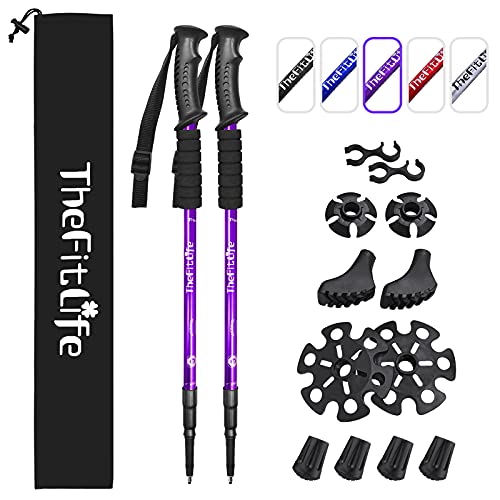
- Includes a durable tungsten steel tip with a protective rubber foot for varied surfaces
Cons
- Sold as a single pole (1 PC), meaning hikers who prefer dual-pole stability must purchase two units
- Maximum extended length of 49.2 inches may not suit taller hikers above 6 feet 2 inches
- Fixed adjustment range (43.3 to 49.2 inches) may be too long for individuals under 5 feet 3 inches
The A ALAFEN 7075 Aluminum Collapsible Trekking Pole is a single, folding walking stick designed for day hikers, backpackers, and travelers who require portable stability on the trail. Unlike standard telescoping poles that can remain awkwardly long when strapped to a backpack, this model folds down to a compact 13.4 inches. That manageable profile makes it especially suitable for hikers carrying mid-sized daypacks, overnight packs with external gear attachments, or travel bags where packing volume is limited.
Real-world trail utility centers on how easily the pole stows and deploys. Weighing approximately 0.6875 pounds (about 11 ounces), the pole adds very little base weight to your hiking pack. When assembled, its Quick Lock mechanism allows you to adjust the functional length between 43.3 inches and 49.2 inches. The pole shaft includes a printed measuring scale, which helps you quickly set your preferred height depending on whether you are climbing uphill or descending steep terrain. According to manufacturer specifications, this adjustment range accommodates hikers between 5 feet 3 inches and 6 feet 2 inches.
Construction quality centers on aircraft-grade 7075 aluminum alloy, a material well-regarded in the outdoor gear space for its resilience against bending and impact deformation. At the handle, an EVA foam grip features a skid-resistant grooved surface and sweat-absorbent texture to help maintain control during warm-weather hikes or strenuous ascents. The attached wrist strap adds stability and helps distribute grip pressure. For ground traction, the bottom houses a rugged tungsten steel tip that bites into packed dirt, mud, and scree, while an included rubber footing covers the metal tip for pavement or slick rock slabs.
Packing and trail-side handling are straightforward thanks to the multi-section folding design. When collapsed to 13.4 inches, the pole easily slips inside standard backpack main compartments, fits into tall side water bottle sleeves, or lashes onto external compression straps and trekking pole loops. Deploying the pole involves extending the connected segments until the internal tension cord locks in place, followed by securing the lever-action Quick Lock clamp at your desired height mark. Maintenance requires minimal effort, mainly consisting of wiping away trail grit, rinsing off mud, and allowing the sections to air dry completely before long-term storage.
Potential buyers should consider a few practical limitations before ordering. This listing includes only a single pole (1 PC), so hikers who rely on a dual-pole setup for knee relief or balance will need to purchase a second unit. Additionally, the adjustment range of 43.3 to 49.2 inches limits proper ergonomic fit for hikers under 5 feet 3 inches or taller than 6 feet 2 inches. While 7075 aluminum is durable and impact-resistant, it does weigh slightly more than high-end carbon fiber options, and the folding mechanism requires careful locking to prevent slippage under heavy downward force.
For hikers, campers, and travel enthusiasts seeking a reliable and budget-friendly single walking stick, the A ALAFEN collapsible pole delivers excellent practical value. Its ability to tuck neatly into or onto almost any hiking backpack makes it a hassle-free addition to your gear lineup. If you fall within the supported height range and want dependable trail support without the bulk of traditional full-length poles, this compact aluminum model is a sensible choice.
When fully collapsed, the A ALAFEN trekking pole measures 13.4 inches, making it short enough to fit inside most daypacks or slide into exterior side pockets without protruding excessively. This makes it far more pack-friendly than conventional three-section telescoping poles that typically collapse to 24 inches or more.
The working length adjusts from 43.3 inches (110 cm) to 49.2 inches (125 cm) using an external Quick Lock lever. The manufacturer lists a recommended user height range of 5 feet 3 inches to 6 feet 2 inches (160 cm to 187 cm). If your height falls outside this window, the pole may not provide an optimal 90-degree elbow angle on flat terrain.
The pole shaft is constructed from aircraft-grade 7075 aluminum alloy, offering solid structural resistance to bending forces common on rocky descents. The handle is shaped from grooved EVA foam designed to absorb hand moisture and reduce slippage during humid trail conditions.
The tip features a tungsten steel point engineered for firm penetration into dirt, gravel, and packed forest trails. A removable rubber foot is included to shield the metal tip and provide traction on asphalt, stone walkways, or slick granite slabs.
The Mechanics of Walking Stick Sizing and Trail Ergonomics
Determining the correct height for a walking aid depends entirely on the type of staff you carry and the terrain you intend to explore. For general fitness walking and neighborhood balance, your stick should allow your forearm to sit roughly parallel to the ground with a comfortable right-angle bend at the elbow. In contrast, traditional wilderness hiking staffs are intentionally sized much taller, often reaching between your armpit and your chin. Finding that sweet spot prevents shoulder cramping, keeps your center of gravity stable, and allows your upper body to absorb shock efficiently.
The Standard 90-Degree Elbow Sizing Protocol
The most common standard for everyday walking sticks and adjustable trekking poles is the ninety-degree elbow rule. When holding the handle while standing naturally, your upper arm should hang straight down at your side while your forearm extends forward horizontally. This neutral biomechanical posture keeps your wrist in a relaxed alignment without forcing your shoulder to elevate. If your elbow angle opens wider than one hundred degrees, the stick is too short and forces you to stoop forward.
Stooping over a short stick creates unnecessary tension along the cervical spine and tightens the lower back muscles over long distances. Conversely, a stick that pushes your elbow into an acute angle forces your shoulder blade upward, quickly fatiguing the trapezius and neck. Maintaining that right angle allows your triceps and latissimus dorsi to engage naturally when you press down for stability. This biomechanical balance provides instantaneous support whenever your lead foot lands on an unstable stone or wet patch of grass.
Testing this angle requires standing on a flat, even surface while wearing the shoes you plan to use outdoors. Running shoes, heavy backpacking boots, and casual walking shoes all feature distinct sole stack heights that alter your overall stature by an inch or more. If you measure your stick barefoot on a hardwood floor, you will likely find the pole uncomfortably short once you lace up thick trail boots. Always test your elbow alignment in realistic conditions to establish a baseline measurement that feels natural from your very first stride.
Hiking Staffs and the Shoulder-to-Chin Measurement
Traditional one-piece wooden hiking staffs follow a completely different sizing philosophy than standard balance canes. These rustic trail staffs typically stand between fifty and fifty-five inches tall, reaching somewhere between the hiker’s armpit and chin. Outdoor enthusiasts value this extra length because natural backcountry terrain rarely remains level for more than a few paces. A taller staff offers a continuous vertical grip area, allowing you to change your hand placement dynamically without stopping to adjust mechanical locks.
When ascending a steep mountain switchback, a shoulder-height staff lets you choke down on the timber shaft to maintain forward momentum without overreaching. On sharp downhill descents, you can cup the top knob or palm the upper grip to brace your body against gravity before your feet step downward. This generous length also turns the staff into a practical multi-purpose trail tool for probing deep mud, testing stream depth, or gently moving brush aside. Sizing a traditional staff to chin height provides the necessary clearance to navigate radical grade changes with poise.
Selecting between an elbow-height stick and a chin-height staff ultimately comes down to your primary walking environment. Urban walkers navigating sidewalks, paved greenways, and manicured park paths gain superior leverage and natural arm swing from a compact ninety-degree walking stick. Backcountry hikers traversing rocky roots, river valleys, and steep elevation gains will appreciate the versatile reach of a full-length hiking staff. Clarifying where you walk most often helps you choose the correct sizing framework before you make a purchase.
Step-by-Step Measurement Procedure at Home
Measuring your ideal stick length at home takes only a couple of minutes and requires just a standard tape measure and a helper if possible. Begin by putting on your favorite walking shoes and standing upright with your shoulders relaxed and your arms hanging loosely at your sides. Have a partner measure the distance from the crease of your wrist down to the floor, keeping the measuring tape completely vertical. This wrist-crease measurement matches the top of the handle for an ergonomic ninety-degree walking stick.
If you must measure without assistance, you can easily establish the height using a broom handle or an adjustable household pole. Grasp the pole so that your forearm rests parallel to the floor with your elbow bent at a clean right angle. Mark the shaft directly above the top edge of your gripping hand using a piece of painter tape or a pencil. Stepping back and measuring from the floor up to that tape mark gives you your target stick dimension in inches or centimeters.
Remember to account for the thickness of the bottom tip assembly when recording your final sizing numbers. A heavy-duty vulcanized rubber ferrule or an add-on rubber boot typically adds between a half-inch and a full inch to the overall length of the shaft. If you are ordering a custom fixed-length wooden walking stick online, confirm whether the maker lists the overall height including or excluding the ferrule. Factoring in tip hardware prevents common sizing errors that leave your stick slightly too tall.
Adjusting Stick Height for Changing Trail Gradients
Outdoor terrain is dynamic, and your stick height strategy should adapt whenever the slope steepens significantly. When climbing uphill, a pole that remains at standard flat-ground height places the handle too high relative to your chest, causing rapid arm fatigue. Shortening an adjustable pole by two to three inches allows you to plant the tip ahead of you and push forward with natural upper-body power. If you carry a fixed staff, simply sliding your hand down the shaft achieves the exact same mechanical benefit.
Descending steep grades presents the opposite biomechanical challenge by placing enormous deceleration forces on your patellar tendons and quadriceps. Lengthening an adjustable pole by two to four inches gives you the forward reach required to plant the tip firmly before stepping down. Planting the stick ahead absorbs substantial downward energy, allowing you to control your descent rather than dropping hard onto your lead leg. Combining proper pole extension with flexible lightweight trail pants ensures full knee articulation when negotiating tall rock steps.
Sidehill traverses along contour trails also require flexible hand positioning to keep your spine properly aligned. The uphill side of your body requires a shorter support reach, while the downhill side demands significantly greater extension to bridge the vertical gap. With a single hiking staff, you can hold the shaft near the top when planting on the downhill side and shift your grip lower when planting uphill. This fluid adaptability keeps your torso balanced over your center of gravity without leaning uncomfortably into the slope.
Fixed Hardwood Staffs Versus Telescoping Alloy Poles
The choice between a fixed-length wooden staff and an adjustable aluminum model heavily influences how precisely you must calculate height beforehand. Traditional timbers such as hickory, oak, sweet chestnut, and hazel offer natural grain beauty and organic shock dampening, but their length is permanent once cut. If a wooden stick arrives too long, you can trim the excess material from the bottom using a fine-tooth saw before reinstalling the ferrule. Trimming from the top is never recommended because it ruins the handcrafted handle contours and balance.
Modern adjustable poles eliminate the risk of sizing errors by offering generous telescoping ranges that fit a wide spectrum of body heights. For example, the A ALAFEN 7075 Aluminum Collapsible Ultralight pole provides an adjustable range spanning from 43.3 inches to 49.2 inches. The manufacturer indicates that this adjustment corridor comfortably accommodates walkers standing between five feet three inches and six feet two inches tall. Having clear printed measurement markings along the shaft makes fine-tuning your elbow height effortless across different shoes and trails.
Adjustable poles also provide distinct structural advantages for travelers who cannot easily transport a rigid fifty-inch wooden staff in everyday vehicles. Telescoping or folding alloy sticks pack down into compact profiles that slip easily inside duffel bags or daypacks between outings. However, users must always ensure that mechanical cam-lever locks or twist collars are tightened securely before placing weight on the pole. A slipping lock mechanism suddenly changes your stick height mid-stride, which can compromise your balance on steep trails.
Handle Ergonomics and Grip Placement
Handle geometry plays a decisive role in how your hand rests upon the stick and how your wrist distributes downward pressure. Classic derby handles and rounded tourist crooks are engineered primarily for downward palm leverage at standard elbow height. These styles allow the broad fleshy base of your palm to rest securely over the center line of the shaft, minimizing localized nerve compression. Walkers managing mild joint stiffness often prefer derby contours because they prevent excessive finger clenching over long distances.
Traditional hiking staffs frequently utilize carved spherical knobs, rounded egg tops, or extended cylindrical grip zones wrapped in leather or foam. Spherical knobs allow you to palm the very top of the staff like a cane during leisurely flat strolls or steep descents. Extended grip sections offer the freedom to shift your hand upward or downward as the grade dictates without adjusting hardware. Materials like natural cork and grooved EVA foam excel at absorbing hand sweat and cushioning vibrations across rugged terrain.
Wrist straps and lanyards provide additional leverage when adjusted properly, but they require cautious handling on technical trails. Slipping your hand upward through the bottom of the loop and resting your palm against the strap allows you to propel yourself forward without gripping tightly. However, on steep or rocky descents, many experienced walkers remove their hands from the straps entirely. If you happen to slip or stumble, having an unencumbered hand prevents the strap from trapping your wrist and causing a sprain.
Traction Ferrules and Trail Hardware
A walking stick is only as dependable as the traction point connecting the bottom of the shaft to the walking surface. Standard wooden staffs and metal poles typically feature a durable tungsten carbide or hardened steel spike tip at their core. These sharp metal tips bite securely into packed forest dirt, loose shale, wet mulch, and winter ice. However, using a bare metal spike on hard asphalt, concrete sidewalks, or slick granite slabs can cause dangerous skittering and slips.
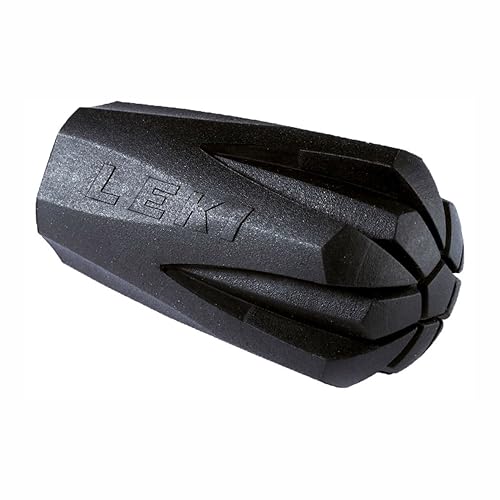
To navigate hard surfaces safely, walkers slip a dense vulcanized rubber ferrule over the metal spike assembly. A quality rubber ferrule features a textured tread pattern that grips paved sidewalks and flat rock surfaces with reliable friction. Furthermore, high-grade rubber ferrules contain an embedded internal steel washer that prevents the sharp spike from punching through the rubber base over time. Inspecting your rubber tips regularly ensures you replace them before the internal metal washer or bare spike becomes exposed.
Mud baskets and snow baskets offer specialized support when venturing into soft, yielding ground conditions like marshy soil or fresh powder. Screwing a wide plastic basket onto the lower shaft above the tip prevents the stick from sinking deeply into the muck with every step. When a pole sinks unexpectedly into soft soil, its effective height instantly drops by several inches, throwing your posture forward. Keeping suitable tip accessories in your pack ensures your stick maintains consistent height support regardless of ground softness.
Packability and Transport Dimensions
Transporting walking sticks presents practical challenges that depend directly on whether you select a solid timber staff or a collapsible pole. A traditional one-piece wooden staff cannot be shortened, requiring dedicated space in a vehicle trunk or lashed to an external roof rack. For airline travelers, rigid walking staffs generally cannot enter passenger cabins as carry-on items due to standard security length limitations. Travelers planning distant hiking holidays must therefore consider how their stability gear will travel from home to the trailhead.
Collapsible folding poles solve this logistical hurdle by breaking down into multiple interconnected segments held by an internal tension cord. The A ALAFEN 7075 Aluminum Collapsible Ultralight staff folds down to an impressively compact 13.4 inches when disassembled. This diminutive footprint allows the entire pole to slip completely inside standard luggage, daypacks, or airplane overhead compartments. Reviewing a detailed carry on backpack capacity guide helps hikers ensure their pack volume accommodates both folding poles and essential trail layers.
While folding sticks offer unbeatable convenience during transit, they require routine inspection to verify that each joint section seats completely flush. Trail dirt, sand, and fine grit can occasionally work into the aluminum joint ferrules, preventing the segments from locking securely into place. Wiping the joint connections clean with a dry cloth after dusty hikes ensures smooth operation and prevents premature wear on the inner cord. Maintaining clean hardware preserves both packability and structural rigidity across seasons of adventure.
Distinguishing Balance Support from Medical Devices
It is vital to recognize the clear boundary between recreational balance aids and certified orthopedic mobility devices. Standard walking sticks, wooden hiking staffs, and single trekking poles are engineered to assist upright balance and offload minor joint strain on trails. They are not medical crutches, quad canes, or clinical mobility devices designed for non-weight-bearing rehabilitation following severe orthopedic surgery. If you experience chronic vestibular balance disorders or significant leg weakness, you should consult a licensed healthcare professional for a clinical evaluation.
Using a recreational walking stick within its intended design scope provides enormous confidence and physical benefits for active walkers. Single-staff balance assistance reduces cumulative knee strain on long downhill walks, stabilizes footing across slippery root networks, and promotes upright posture. Handcrafted hardwood designs also deliver an attractive, outdoorsy aesthetic that avoids the clinical, sterile look of institutional walking canes. Treating your stick as an outdoor stability tool ensures you enjoy safe, dependable support wherever your footsteps lead.
Practical Verification Before Hitting the Trail
Before heading out on your next walk, spend two minutes performing a quick physical check of your stick and your standing posture. Put on your footwear, hold your stick in your dominant hand, and verify that your elbow rests comfortably at that ninety-degree angle on level ground. Lean moderate body weight onto the handle to confirm that all adjustment clamps or timber joints remain rigid and silent under downward pressure. Finally, verify that your rubber ferrule or carbide tip is clean, firmly seated, and matched to the specific terrain ahead.
Dialing in your walking stick height transforms an ordinary piece of equipment into a natural extension of your body on the trail. Whether you prefer the timeless warmth of a hickory staff or the versatile adjustability of aircraft-grade 7075 aluminum, proper sizing unlocks effortless balance. With your shoulders relaxed, your spine aligned, and your footing steady, you can tackle miles of rugged pathways with lasting comfort and absolute poise.





Write Your Review
No reviews yet. Be the first to share your experience!