


Proper body posture and trail balance often depend on whether your support gear matches your physical height. Hiking down steep inclines or traversing slippery tree roots can place significant strain on your lower joints, especially when an ill-fitting pole causes awkward leaning. Learning how to size a walking stick ensures your arm rests at an ideal biomechanical angle, offloading joint fatigue and improving foot placement across uneven terrain. Pairing proper stick geometry with supportive knee hiking pants helps maintain steady trail mobility on demanding outdoor paths.
Finding your exact measurement prevents shoulder tension and back strain whether you rely on traditional handcrafted wood or modern telescoping aluminum shafts. A stick that sits too high forces your trapezius muscles to elevate unnecessarily, while a short shaft encourages slouching. Selecting the right shaft length and handle style provides dependable balance assistance without feeling like an awkward medical cane. By calculating proper height specifications and understanding gradient adjustments, you can navigate neighborhood paths and mountain trails with complete confidence.

Pros
- Compact 15-inch folded size fits easily inside daypacks or stows neatly against backpack compression straps
- Aircraft-grade aluminum construction with reinforced metal joint caps offers reliable trail strength
- Moisture-wicking EVA foam grip and extended shaft sleeve provide secure handling during steep climbs
- External flip-lock mechanism allows quick, tool-free height adjustments between 100 and 120 cm
Cons
- Height range of 100 to 120 cm fits users up to 5'10", requiring taller hikers to select the longer pole size
- TSA regulations require folding trekking poles to be packed in checked luggage rather than airline carry-on bags
The Trekology Trek-Z Folding Trekking Pole set is a compact, tri-fold aluminum walking stick pair engineered for day hikers, backpackers, and active travelers who need dependable trail balance without taking up excessive pack space. Sized with an adjustment range of 100 to 120 cm, this specific model suits hikers between 4'11" and 5'10" who want an adjustable walking aid that easily stows on or inside a hiking backpack.
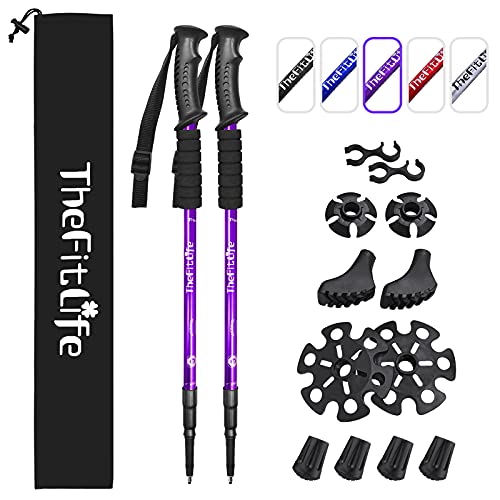
Collapsing down to just 15 inches (38 cm), the Trek-Z poles eliminate the awkward overhang common with traditional telescoping poles when strapped to backpack gear loops or slipped into stretch water bottle pockets. Weighing 10.4 oz (294 g) per pole, they offer solid ground support on ascents and descents while adding minimal base weight to your daypack or multi-day backpacking load. The included mud stops help prevent the tips from sinking into soft ground, making them useful across forest tracks, dirt trails, and wet crossings.
Built with aircraft-grade aluminum alloy tubing and reinforced joints fitted with metal lock caps, these poles are crafted to handle rugged trail conditions and repeated folding cycles. The ergonomic handle features moisture-wicking EVA foam that helps keep your hands dry during sweaty summer hikes. An extended EVA foam section down the upper shaft allows hikers to quickly choke up on the grip when climbing steep switchbacks without pausing to readjust pole height.
Deploying the poles involves snapping the folding sections into place and securing the top flip-lock mechanism, which provides 20 cm of micro-adjustment to dial in the correct 90-degree elbow angle. When you reach the trailhead or take a lunch break, unlocking the system allows the poles to quickly fold back down to 15 inches. Trekology includes a custom holder bag to shield the rest of your backpack contents from dirt and sharp tips during transport.
While the tri-fold aluminum design is versatile, buyers should be aware of a few practical constraints. Hikers taller than 5'10" will need the longer 115 to 135 cm version, as this model caps out at 120 cm. Additionally, for travelers heading to destination hikes via commercial airlines, TSA guidelines require trekking poles to be packed in checked baggage rather than carry-on luggage.
For day hikers, weekend campers, and budget-conscious backpackers seeking reliable walking support that packs down small enough for almost any daypack, the Trekology Trek-Z poles deliver practical utility and straightforward adjustment at an accessible price point.
A key advantage of the Trekology Trek-Z poles is their 15-inch (38 cm) collapsed length, making them significantly easier to carry than standard telescoping poles that often measure 24 inches or more when retracted. This short profile allows them to slide vertically inside a typical 20-liter daypack or tuck securely into the side water-bottle pockets of a backpacking pack without snagging low-hanging branches.
The included carry bag provides a clean barrier between trail mud and your gear, keeping the interior of your backpack dry and organized. Hikers who prefer external storage can easily lash the folded poles to standard pack compression straps, ice-axe loops, or trekking-pole attachments without throwing off the balance of their pack.
This 100 to 120 cm Trek-Z model is specifically tailored for hikers with heights between 4'11" and 5'10". Proper trekking-pole sizing generally requires your elbow to rest at a comfortable 90-degree angle when holding the grip with the pole tip resting on flat ground.
Height adjustment is controlled by an intuitive external flip-lock equipped with a metal stopper, offering 20 cm of variable adjustment. Hikers can shorten the poles slightly for steep uphill pushes or lengthen them for descents to maintain balanced posture on uneven terrain.
Constructed from aircraft-grade aluminum alloy, the Trek-Z poles balance structural rigidity with manageable trail weight. Aluminum is well-suited for rugged terrain because it tends to bend under extreme stress rather than snapping abruptly like ultralight carbon fiber.
Trekology reinforces the connecting joints with metal lock caps, reducing play and wobble across the tri-fold joints during heavy downhill impacts. The moisture-wicking EVA foam handles resist sweat buildup and provide soft, all-day hand comfort in varied weather conditions.

Pros
- Compact 13.4-inch folded size packs easily into daypacks, travel luggage, or side bottle sleeves
- Aircraft-grade 7075 aluminum alloy provides reliable strength against bending on rocky trails
- External Quick Lock mechanism allows simple height adjustments from 43.3 to 49.2 inches
- Grooved EVA foam handle absorbs hand sweat while maintaining a comfortable, non-slip grip
- Includes a durable tungsten steel tip with a protective rubber foot for varied surfaces
Cons
- Sold as a single pole (1 PC), meaning hikers who prefer dual-pole stability must purchase two units
- Maximum extended length of 49.2 inches may not suit taller hikers above 6 feet 2 inches
- Fixed adjustment range (43.3 to 49.2 inches) may be too long for individuals under 5 feet 3 inches
The A ALAFEN 7075 Aluminum Collapsible Trekking Pole is a single, folding walking stick designed for day hikers, backpackers, and travelers who require portable stability on the trail. Unlike standard telescoping poles that can remain awkwardly long when strapped to a backpack, this model folds down to a compact 13.4 inches. That manageable profile makes it especially suitable for hikers carrying mid-sized daypacks, overnight packs with external gear attachments, or travel bags where packing volume is limited.
Real-world trail utility centers on how easily the pole stows and deploys. Weighing approximately 0.6875 pounds (about 11 ounces), the pole adds very little base weight to your hiking pack. When assembled, its Quick Lock mechanism allows you to adjust the functional length between 43.3 inches and 49.2 inches. The pole shaft includes a printed measuring scale, which helps you quickly set your preferred height depending on whether you are climbing uphill or descending steep terrain. According to manufacturer specifications, this adjustment range accommodates hikers between 5 feet 3 inches and 6 feet 2 inches.
Construction quality centers on aircraft-grade 7075 aluminum alloy, a material well-regarded in the outdoor gear space for its resilience against bending and impact deformation. At the handle, an EVA foam grip features a skid-resistant grooved surface and sweat-absorbent texture to help maintain control during warm-weather hikes or strenuous ascents. The attached wrist strap adds stability and helps distribute grip pressure. For ground traction, the bottom houses a rugged tungsten steel tip that bites into packed dirt, mud, and scree, while an included rubber footing covers the metal tip for pavement or slick rock slabs.
Packing and trail-side handling are straightforward thanks to the multi-section folding design. When collapsed to 13.4 inches, the pole easily slips inside standard backpack main compartments, fits into tall side water bottle sleeves, or lashes onto external compression straps and trekking pole loops. Deploying the pole involves extending the connected segments until the internal tension cord locks in place, followed by securing the lever-action Quick Lock clamp at your desired height mark. Maintenance requires minimal effort, mainly consisting of wiping away trail grit, rinsing off mud, and allowing the sections to air dry completely before long-term storage.
Potential buyers should consider a few practical limitations before ordering. This listing includes only a single pole (1 PC), so hikers who rely on a dual-pole setup for knee relief or balance will need to purchase a second unit. Additionally, the adjustment range of 43.3 to 49.2 inches limits proper ergonomic fit for hikers under 5 feet 3 inches or taller than 6 feet 2 inches. While 7075 aluminum is durable and impact-resistant, it does weigh slightly more than high-end carbon fiber options, and the folding mechanism requires careful locking to prevent slippage under heavy downward force.
For hikers, campers, and travel enthusiasts seeking a reliable and budget-friendly single walking stick, the A ALAFEN collapsible pole delivers excellent practical value. Its ability to tuck neatly into or onto almost any hiking backpack makes it a hassle-free addition to your gear lineup. If you fall within the supported height range and want dependable trail support without the bulk of traditional full-length poles, this compact aluminum model is a sensible choice.
When fully collapsed, the A ALAFEN trekking pole measures 13.4 inches, making it short enough to fit inside most daypacks or slide into exterior side pockets without protruding excessively. This makes it far more pack-friendly than conventional three-section telescoping poles that typically collapse to 24 inches or more.
The working length adjusts from 43.3 inches (110 cm) to 49.2 inches (125 cm) using an external Quick Lock lever. The manufacturer lists a recommended user height range of 5 feet 3 inches to 6 feet 2 inches (160 cm to 187 cm). If your height falls outside this window, the pole may not provide an optimal 90-degree elbow angle on flat terrain.
The pole shaft is constructed from aircraft-grade 7075 aluminum alloy, offering solid structural resistance to bending forces common on rocky descents. The handle is shaped from grooved EVA foam designed to absorb hand moisture and reduce slippage during humid trail conditions.
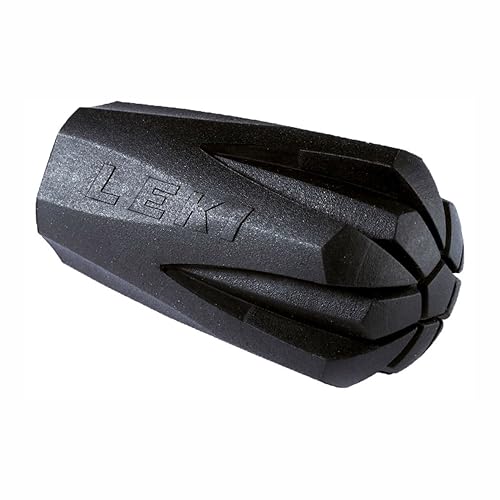
The tip features a tungsten steel point engineered for firm penetration into dirt, gravel, and packed forest trails. A removable rubber foot is included to shield the metal tip and provide traction on asphalt, stone walkways, or slick granite slabs.
Mastering Walking Stick Sizing for Trail Stability and Joint Relief
Standing upright with balanced posture requires a walking aid that meets your hands at a natural, comfortable height. Understanding how to size a walking stick eliminates awkward shoulder shrugging and keeps your core aligned over your center of gravity. Whether you are prepping for rugged mountain switchbacks or gentle park strolls, dialing in shaft length protects your joints from repetitive downhill impact.
The Fundamental 90-Degree Elbow Sizing Method
The standard sizing protocol begins with a simple ninety-degree bend at your elbow joint. Stand upright on a flat surface while wearing the shoes or trail boots you plan to use outdoors. Hold your upper arm relaxed against your side and bend your forearm forward so it rests completely parallel to the floor. The distance from the base of your palm directly down to the ground represents your baseline walking stick height. This measurement gives you the ideal mechanical lever to support forward motion.
This right-angle posture allows your forearm to absorb downward force without stressing your wrist ligaments or shoulder girdle. When your stick plants against the terrain, your arm pushes down naturally to steady your step without forcing you to bend forward. Measuring barefoot creates an inaccurate result because your stick ends up slightly too short once you lace up thick lug-soled trail footwear. Always take this measurement while wearing your typical walking footwear to maintain an accurate contact distance.
Walking Sticks Versus Hiking Staffs: Functional Length Differences
Traditional walking sticks differ markedly from tall hiking staffs in both sizing philosophy and hand positioning. A standard walking stick operates around waist or hip height, designed primarily for rhythmic pacing on level ground and gentle rolling terrain. In contrast, a traditional trail staff typically reaches your chest, shoulder, or even eye level, measuring between fifty and fifty-five inches for most adults. This vertical height allows for varied hand placements depending on trail conditions.
Hiking staffs provide multiple grip locations along their length, allowing you to choke up or shift your grip down as the trail topography shifts. You do not hold a tall hiking staff exclusively at a right angle; instead, you grasp the timber shaft higher to brace against steep descents or lower when climbing steep embankments. Deciding between a standard waist-height stick and a chest-high staff depends heavily on whether you prioritize level-ground balance assistance or variable mountain terrain agility.
Measuring and Cutting Fixed Hardwood Sticks
Handcrafted wooden walking sticks made from hickory, oak, sweet chestnut, or hazel require careful measurement before making a permanent cut. Unlike telescoping aluminum shafts that adjust in seconds, a solid timber stick must be trimmed accurately from the bottom base. Stand in your trail shoes, establish your ninety-degree elbow angle, and hold the uncut timber blank upright with the handle seated comfortably under your palm. A helper can mark the stick where the base touches the ground to ensure exact precision.
Mark the cut line at ground level, but do not trim the wood directly on that line without calculating hardware clearance. Standard slip-on rubber ferrules add approximately a half-inch to three-quarters of an inch of height to the bottom tenon. Trim the wood slightly shorter than your raw measurement so the seated rubber ferrule brings the finished walking aid to the exact calculated level. Always trim in small increments using a fine-tooth handsaw, as you can easily remove additional wood but cannot restore a shaft that was cut too short.
Configuring Telescoping and Folding Aluminum Sticks
Modern adjustable shafts offer flexible height ranges through external lever-locks or folding cord tensioning systems. For example, the Trekology Trek-Z Hiking Trekking Poles feature an intuitive flip-lock system with metal stoppers offering a twenty-centimeter adjustment range. This model provides distinct sizing brackets, featuring a 100-120 centimeter setup for users between 4’11” and 5’10”, alongside a 115-135 centimeter configuration for individuals from 5’5″ to 6’5″. These height brackets ensure the lock collars remain securely clamped along reinforced shaft sections.
Similarly, the A ALAFEN 7075 Aluminum Collapsible Ultralight features a quick-lock mechanism adjusting from 43.3 inches to 49.2 inches to accommodate users between 5’3″ and 6’2″. When configuring adjustable shafts, extend the sections evenly so the printed height markings align on each segment. Ensuring balanced extension across multi-piece shafts prevents localized stress on a single joint collar and maintains uniform shaft rigidity under downward load. Always verify that clamp screws are snug so the telescoping segments do not slip during a steep descent.
Gradient Adjustments for Uphill and Downhill Slopes
Natural trail topography requires dynamic height changes to maintain biomechanical efficiency and joint protection. When climbing steep uphill slopes, a standard-length stick plants too high in front of you, forcing your shoulders upward and creating upper back tension. Shorten an adjustable pole by two to three inches, or slide your hand down the shaft of a rigid wooden staff, to maintain forward momentum without hyper-extending your arms. This shorter reach allows your upper body to assist your legs smoothly.
Downhill switchbacks require the exact opposite adjustment to protect your knees and lower spine from heavy braking impact. Lengthen an adjustable stick by two to four inches, or place your palm over the top knob of a wooden staff, so the tip contacts the ground well ahead of your lead foot. This forward plant allows your arms to absorb deceleration forces before your knees absorb the downhill shock, significantly reducing joint strain over long descents. Keeping the tip planted forward also widens your base of support across slick gravel.
Handle Ergonomics and Grip Geometry
Sizing accuracy relies heavily on how your hand interacts with the handle profile atop your walking stick. Classic tourist crook handles curve smoothly, allowing your fingers to wrap naturally while offering an easy hook over your forearm when resting. Derby handles feature an undulating top bar that distributes downward palm pressure evenly across your hand, making them ideal for walkers managing mild joint stiffness. Knob handles on tall hiking staffs provide a smooth rounded dome for resting your palm on descents.
Outdoor hiking poles often feature contoured EVA foam or natural cork handles designed to wick moisture and prevent blistering during extended outings. The Trekology Trek-Z incorporates ergonomic EVA foam grips that channel perspiration away from your skin, paired with an extended foam grip zone down the shaft for quick choking on steep ascents. The A ALAFEN 7075 Aluminum Collapsible Ultralight employs a skid-resistant grooved EVA handle with an integrated wrist strap to support your wrist without requiring a death grip on the shaft. These textured surfaces maintain grip security even when walking in rainy conditions.
Ground Traction Mechanics: Ferrules and Spike Tips
Ground traction components directly influence both the functional height and stability of your walking stick. Thick vulcanized rubber ferrules are essential when walking across hard pavement, asphalt paths, slick granite slabs, or indoor surfaces. Bare metal spikes can skate unpredictably across rock or polished tile, creating severe slipping hazards for unsuspecting walkers. A solid rubber foot also cushions the shock wave traveling up the shaft into your elbow.
When transitioning onto loose woodland loam, muddy trails, or packed ice, removing the rubber foot exposes a durable metal tip. The A ALAFEN pole incorporates a tungsten steel rod tip designed to bite into dirt and gravel where rubber might spin out. For deep mud or winter crust, adding removable mud stops or snow baskets keeps the pole tip from sinking excessively deep, preserving your proper height leverage on soft ground. Trekology poles include mud stops that screw into place easily when encountering wet marshy sections.
Shaft Materials: Wood Flex Versus Alloy Rigidity
The material composition of your walking stick dictates how well it absorbs trail shock and handles sustained downward weight. Traditional hardwoods such as hickory, white oak, and sweet chestnut provide natural grain flex that subtly cushions downward impacts without collapsing. Seasoned hazel and lightweight bamboo also offer pleasant natural dampening properties that reduce hand vibration during long countryside walks. Solid wood provides an organic warmth and tactile character that many nature lovers appreciate.
In contrast, aircraft-grade aluminum shafts deliver exceptional structural rigidity and corrosion resistance at minimal carry weight. Both the Trekology Trek-Z and the A ALAFEN models utilize high-grade aluminum alloys, such as 7075 aluminum, which resist bending deformation on rocky ground while keeping overall carry weight under eleven ounces per stick. While metal alloys lack the organic warmth of carved timber, their resilience and high strength-to-weight ratio make them dependable companions for rugged trails. Anodized coatings on aluminum poles also prevent oxidation when exposed to stream crossings.
Packability and Travel Transit Considerations
Transporting a walking aid requires balancing extended structural stability with compact storage requirements. A traditional one-piece wooden staff cannot fit inside standard vehicle trunks or airline luggage without sticking out awkwardly. Tri-fold and collapsible designs solve this issue by breaking down into multiple tethered segments held secure by internal tension cables. These folding systems allow outdoor enthusiasts to carry balance support without dedicating massive cargo space.
The Trekology Trek-Z collapses down to just fifteen inches, while the A ALAFEN model folds to a compact 13.4 inches, easily stowing alongside a framed trail pack or inside daypack hydration sleeves. When flying, note that the Transportation Security Administration prohibits hiking sticks with metal spikes in passenger carry-on luggage. Pack collapsible poles securely inside checked baggage, or review a comprehensive carry on travel backpack guide to coordinate your trail gear for flights. Keeping your poles protected in a dedicated carry sack prevents sharp tips from puncturing surrounding pack fabrics.
Common Sizing Pitfalls and Posture Errors
A frequent sizing error is setting the walking stick too tall, which forces the user to raise their elbow and hunch their shoulder upward. Walking with an elevated shoulder causes rapid trapezius fatigue and pinches the cervical spine during long trail days. Conversely, an overly short stick forces the user to stoop forward, compromising spinal alignment and placing undue stress on the lumbar vertebrae. Periodic checks in a mirror or trail reflection can help you verify that your back remains comfortably straight.
Another common mistake involves gripping the handle too tightly instead of letting the wrist strap carry downward balance force. Proper technique involves sliding your hand up through the bottom of the wrist loop and resting your palm downward over the strap. This alignment allows you to transfer body weight directly through the strap webbing without clenching your fingers, preventing hand cramps and forearm exhaustion on lengthy journeys. Relaxing your grip also lets the stick swing forward naturally in cadence with your opposite leg stride.
Balance Assistance Boundaries and Equipment Checks
Recreational walking sticks and hiking staffs provide valuable balance assistance, but they do not serve as certified medical mobility devices. These tools are engineered to steady your footing across uneven ground, probe trail depth, and offload mild joint fatigue. They are not rated to substitute for medical crutches or prescribed quad canes intended for non-weight-bearing rehabilitation. Understanding this distinction prevents hikers from overloading recreational equipment during acute recovery periods.
Before heading out on any trek, always inspect your stick for structural integrity and mechanical security. Verify that flip-lock levers snap firmly shut and do not slip downward when you lean test weight against the handle. Inspect wooden shafts for hairline cracks, check rubber ferrules for metal punch-through, and confirm that wrist lanyards remain free of fraying before starting your next trail adventure. Establishing proper height geometry and maintaining your equipment ensures reliable stability across every mile of trail.




Write Your Review
No reviews yet. Be the first to share your experience!