


Achieving reliable balance on outdoor footpaths begins with measuring your balance gear accurately. When you learn how to get the right height walking stick, you protect your joints against jarring downhill impacts and maintain an upright walking posture across uneven terrain. Ill-fitting staffs force your shoulders into awkward shrugs or cause you to stoop forward, which strains your lower back and diminishes stability. Pairing properly sized support sticks with flexible knee support trail pants helps keep your stride comfortable over rocky switchbacks and rolling meadows.
Recreational walkers often debate whether to choose a traditional fixed-length hardwood staff or an adjustable aluminum trekking pole. Selecting the appropriate length depends on whether you need level-ground balance assistance or variable trail support across steep ascents and descents. Modern multi-section poles fold down quickly, which makes them easy to stow alongside other travel essentials outlined in our carry on backpack volume guide. Taking a few moments to measure your natural elbow angle ensures that your balance aid works with your body rather than against it.

Pros
- Compact 15-inch folded size fits easily inside daypacks or stows neatly against backpack compression straps
- Aircraft-grade aluminum construction with reinforced metal joint caps offers reliable trail strength
- Moisture-wicking EVA foam grip and extended shaft sleeve provide secure handling during steep climbs
- External flip-lock mechanism allows quick, tool-free height adjustments between 100 and 120 cm
Cons
- Height range of 100 to 120 cm fits users up to 5'10", requiring taller hikers to select the longer pole size
- TSA regulations require folding trekking poles to be packed in checked luggage rather than airline carry-on bags
The Trekology Trek-Z Folding Trekking Pole set is a compact, tri-fold aluminum walking stick pair engineered for day hikers, backpackers, and active travelers who need dependable trail balance without taking up excessive pack space. Sized with an adjustment range of 100 to 120 cm, this specific model suits hikers between 4'11" and 5'10" who want an adjustable walking aid that easily stows on or inside a hiking backpack.
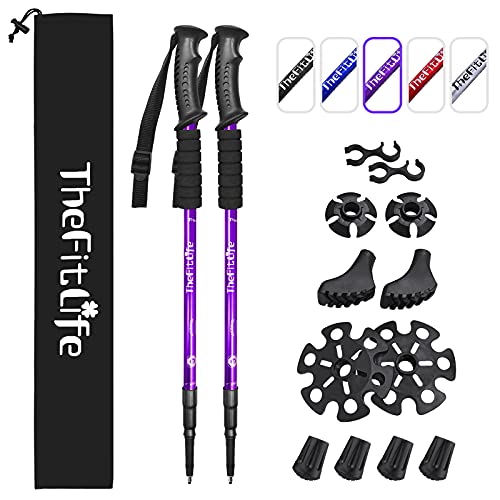
Collapsing down to just 15 inches (38 cm), the Trek-Z poles eliminate the awkward overhang common with traditional telescoping poles when strapped to backpack gear loops or slipped into stretch water bottle pockets. Weighing 10.4 oz (294 g) per pole, they offer solid ground support on ascents and descents while adding minimal base weight to your daypack or multi-day backpacking load. The included mud stops help prevent the tips from sinking into soft ground, making them useful across forest tracks, dirt trails, and wet crossings.
Built with aircraft-grade aluminum alloy tubing and reinforced joints fitted with metal lock caps, these poles are crafted to handle rugged trail conditions and repeated folding cycles. The ergonomic handle features moisture-wicking EVA foam that helps keep your hands dry during sweaty summer hikes. An extended EVA foam section down the upper shaft allows hikers to quickly choke up on the grip when climbing steep switchbacks without pausing to readjust pole height.
Deploying the poles involves snapping the folding sections into place and securing the top flip-lock mechanism, which provides 20 cm of micro-adjustment to dial in the correct 90-degree elbow angle. When you reach the trailhead or take a lunch break, unlocking the system allows the poles to quickly fold back down to 15 inches. Trekology includes a custom holder bag to shield the rest of your backpack contents from dirt and sharp tips during transport.
While the tri-fold aluminum design is versatile, buyers should be aware of a few practical constraints. Hikers taller than 5'10" will need the longer 115 to 135 cm version, as this model caps out at 120 cm. Additionally, for travelers heading to destination hikes via commercial airlines, TSA guidelines require trekking poles to be packed in checked baggage rather than carry-on luggage.
For day hikers, weekend campers, and budget-conscious backpackers seeking reliable walking support that packs down small enough for almost any daypack, the Trekology Trek-Z poles deliver practical utility and straightforward adjustment at an accessible price point.
A key advantage of the Trekology Trek-Z poles is their 15-inch (38 cm) collapsed length, making them significantly easier to carry than standard telescoping poles that often measure 24 inches or more when retracted. This short profile allows them to slide vertically inside a typical 20-liter daypack or tuck securely into the side water-bottle pockets of a backpacking pack without snagging low-hanging branches.
The included carry bag provides a clean barrier between trail mud and your gear, keeping the interior of your backpack dry and organized. Hikers who prefer external storage can easily lash the folded poles to standard pack compression straps, ice-axe loops, or trekking-pole attachments without throwing off the balance of their pack.
This 100 to 120 cm Trek-Z model is specifically tailored for hikers with heights between 4'11" and 5'10". Proper trekking-pole sizing generally requires your elbow to rest at a comfortable 90-degree angle when holding the grip with the pole tip resting on flat ground.
Height adjustment is controlled by an intuitive external flip-lock equipped with a metal stopper, offering 20 cm of variable adjustment. Hikers can shorten the poles slightly for steep uphill pushes or lengthen them for descents to maintain balanced posture on uneven terrain.
Constructed from aircraft-grade aluminum alloy, the Trek-Z poles balance structural rigidity with manageable trail weight. Aluminum is well-suited for rugged terrain because it tends to bend under extreme stress rather than snapping abruptly like ultralight carbon fiber.
Trekology reinforces the connecting joints with metal lock caps, reducing play and wobble across the tri-fold joints during heavy downhill impacts. The moisture-wicking EVA foam handles resist sweat buildup and provide soft, all-day hand comfort in varied weather conditions.
Complete Sizing and Posture Guide for Walking Sticks and Hiking Staffs
Finding the correct height for a walking stick or hiking staff transforms your time on the trail into a fluid, balanced stride. A properly sized staff anchors your body over rugged terrain, relieves stress on aging knees, and supports upright posture. If a stick is cut or adjusted incorrectly, you risk unnecessary joint strain, shoulder fatigue, and diminished balance.
The Core 90-Degree Elbow Sizing Rule for Level Walking
Sizing a walking stick for sidewalks or park paths begins with basic biomechanics. Stand on a flat surface wearing your typical walking shoes. Allow your arm to hang naturally at your side, then bend your elbow so your forearm extends forward parallel to the floor at a 90-degree angle.
The vertical distance from the floor to your palm represents your ideal walking stick height. Grasping the handle at this level keeps your wrist in a neutral position that prevents tendon strain. This neutral alignment allows your upper body to transfer downward force efficiently while your elbow acts as a natural shock absorber.
Most traditional derby, crook, and palm-grip sticks follow this 90-degree measurement strictly. If a stick forces your elbow to bend beyond 90 degrees on flat ground, your arm muscles stay tense. If the stick is too short, you stoop forward and lose balance leverage. This right-angle benchmark ensures smooth, effortless swing mechanics across everyday walking routes.
Sizing Full-Length Hiking Staffs for Mountain Slopes
Traditional hiking staffs follow a distinctly different sizing philosophy than urban balance sticks. Rather than stopping at the elbow line, a classic outdoor hiking staff typically stands between 50 and 55 inches tall, reaching chest or shoulder height. This added length provides physical versatility across wilderness topography without requiring you to adjust mechanical levers.
Chest-high staffs offer multiple grip zones for changing mountain gradients. When ascending an incline, you can grip the shaft several inches lower to maintain momentum without lifting your shoulder. When descending steep slopes, palming the rounded top knob provides exceptional bracing support. This height also lets you probe muddy bogs or clear trail brush easily.
Sizing a tall staff requires matching the wood length to your height and footwear. Hikers between 5 feet 4 inches and 5 feet 8 inches often prefer a 50-inch or 52-inch staff. Taller hikers over 5 feet 10 inches generally choose a 55-inch staff. Selecting a comfortable top contour ensures dependable grip over varied paths.
Adjusting Stick Length for Steep Uphill and Downhill Gradients
Mountain trails rarely offer flat ground, making length adaptation essential for comfortable hiking. When climbing steep inclines, the rising ground effectively shortens the distance to the earth. Keeping a stick at its flat-ground setting forces your arm uncomfortably high. Shortening an adjustable stick by 5 to 10 centimeters maintains forward momentum while keeping your forearm level.
Downhill descents place heavy compressive loads on your knees, quadriceps, and lower back. Lengthening an adjustable stick by 5 to 10 centimeters lets you plant the tip farther ahead without bending forward. Bracing onto the handle helps your upper body absorb braking forces. Pairing this technique with flexible lightweight hiking pants ensures your legs retain unrestricted mobility.
If you carry a fixed-length wooden staff, you achieve these adjustments through hand placement. During uphill climbs, choke down on the shaft by sliding your hand several inches below the primary handle. On steep descents, place your palm directly over the top knob and lean downward. This grip shifting mimics the benefits of an adjustable pole.
Measuring at Home: Step-by-Step Height Calculation
Measuring your body for a custom wooden stick or fixed pole requires only a tape measure and an assistant. Put on the specific footwear you plan to use outside, as thick lugged soles add noticeable height. Stand naturally with your back straight, feet shoulder-width apart, and shoulders relaxed without locking your knees.
Let your arm rest at your side, then bend your elbow to 90 degrees with your forearm facing forward. Keep your wrist in a neutral line, just as you would when holding a grip. Have your assistant measure vertically from the floor to the top of your closed fist.
When choosing an adjustable pole like the Trekology Trek-Z Hiking Trekking Poles, this number helps you select the right size. These poles offer a 20-centimeter adjustment range across two models. The 100 to 120-centimeter version suits users from 4 feet 11 inches to 5 feet 10 inches, while the 115 to 135-centimeter option fits hikers from 5 feet 5 inches to 6 feet 5 inches.
Telescoping and Folding Mechanisms Versus Fixed Wooden Shafts
Choosing between an adjustable pole and a solid wooden staff involves tradeoffs in packability, weight, and feel. Folding aluminum poles use aircraft-grade alloy tubes connected by internal cords and flip locks with metal stoppers. These designs collapse to 15 inches for easy packing, though airport security rules require packing them inside checked luggage rather than carry-on bags.
Solid wooden walking sticks crafted from seasoned timber offer an authentic outdoor experience on rugged trails. A single shaft of hickory, oak, chestnut, or hazel eliminates mechanical joint rattling and lock slippage completely. Handcrafted wooden sticks feel grounded in the palm and develop an attractive patina, though they cannot be compacted for travel.
Mechanical locking hardware requires regular inspection to ensure that adjustable poles hold weight securely during steep descents. External cam levers and metal lock caps should clamp firmly against the aluminum shaft without slipping. If a lock feels loose, tighten the tension dial before latching. Wooden sticks require only periodic checks for surface checks.
Shaft Materials, Natural Flex, and Structural Stability
The shaft material dictates how your stick absorbs ground impacts and responds to trail loads. Dense hardwoods such as hickory and white oak offer exceptional rigidity and high breaking strength. These traditional timbers resist sudden shock loads when wedged between boulders, though their solid mass creates a slightly heavier swing weight.
Lighter woods like hazel, chestnut, and bamboo deliver natural dampening that cushions your joints with every stride. When the tip strikes stone, natural grain fibers flex subtly to absorb vibrations. Aircraft-grade aluminum alloy poles combine this shock resistance with low swing weights around 10 to 11 ounces per pole, minimizing shoulder fatigue on long days.
Carbon fiber provides another lightweight option, offering rigid stability with minimal mass, though it can crack under sharp rock impacts. Aluminum alloys bend slightly under extreme force rather than fracturing suddenly, giving you advance warning. Selecting the right material ensures dependable balance whether walking along dirt trails or rocky ridges.
Handle Ergonomics and Grip Placement for Hand Comfort
Handle ergonomics play a significant role in preventing palm cramping, blisters, and wrist strain on long journeys. Traditional walking sticks often feature derby handles, which curve gently to distribute body weight evenly across the palm. Tourist crook handles offer a classic hook shape, while orthopedic palm-grip handles are molded to cradle fingers, reducing pressure points for stiff hands.
Hiking staffs and modern trekking poles favor ribbed grips made from cork or dense EVA foam. Materials like EVA foam absorb moisture and sweat from active hands, ensuring a secure hold in hot or wet weather. Many poles feature extended foam sleeves, letting you choke down on steep grades without adjusting mechanical levers.
Wrist straps provide added support by transferring downward force directly through your wrist rather than your fingers. Slide your hand up through the loop so the webbing cradles your palm smoothly. On steep descents, many hikers slip their hands out of straps to detach cleanly if they slip. Comfortable grips prevent hand fatigue.
Ferrule and Tip Selection Across Varied Trail Terrains
The bottom tip of your walking stick represents the single point of contact with the ground. Hardened steel or carbide spike tips bite aggressively into loose dirt, gravel, and mud. These sharp points prevent slipping on slick slopes, but bare metal skitters dangerously across smooth rock slabs, asphalt, and tile floors.
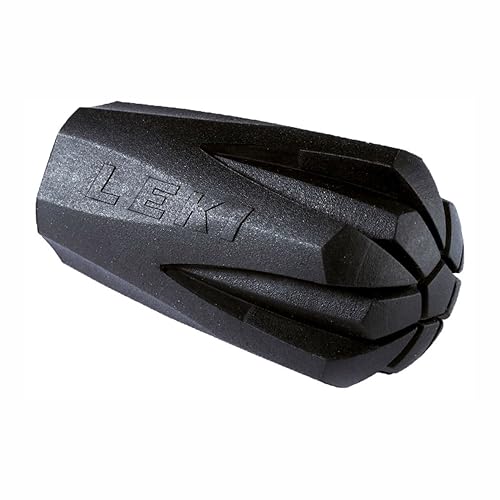
Thick rubber ferrules provide essential traction on hard, non-porous surfaces like concrete sidewalks, roads, and flat granite boulders. Quality rubber tips feature textured tread patterns and an embedded interior steel washer. This metal washer prevents the pointed tip or wooden tenon from punching through the rubber during ground strikes, extending tip life significantly.
Mud stops and broad baskets prevent your stick from sinking deeply into soft soil, sand, or snow. These discs attach above the ferrule to distribute downward load across soft ground. Inspect rubber ferrules regularly for tread wear, and replace them promptly if the inner washer or metal spike begins to poke through.
Safe Balance Assistance Versus Medical Weight-Bearing Devices
Understanding the functional boundaries of recreational walking sticks is critical for trail safety and joint health. Traditional wooden staffs and trekking poles are engineered as balance-assist tools that enhance stability on uneven paths. They provide an extra point of ground contact to negotiate roots and boulders, but they are not certified clinical mobility devices or crutches.
Individuals recovering from severe lower-limb injuries, joint replacements, or acute balance disorders require medical mobility aids prescribed by healthcare professionals. Recreational sticks should never be used to support your full body weight across gaps or during non-weight-bearing rehabilitation. Leaning your entire weight over an extended stick on steep ledges creates significant falling risks.
Using your walking stick properly means integrating it into a natural alternating walking cadence. As your left leg steps forward, your right arm plants the stick alongside your leading foot to distribute weight evenly. Wearing flexible trail pants for mobility complements this natural arm and leg motion by preventing restrictive fabric pulling at the knees.
Packing, Luggage Rules, and Ongoing Stick Maintenance
Maintaining your gear and knowing travel rules protects your equipment and avoids travel delays. If you fly with folding or telescoping poles, always pack them inside your checked luggage rather than carry-on bags. Aviation security rules prohibit hiking poles in passenger cabins due to their metal tips. Tri-fold poles collapsing to 15 inches fit easily into checked duffels.
Caring for natural hardwood sticks requires seasonal moisture protection to prevent checking, warping, and rot. After walking in rain or mud, wipe your stick dry and store it upright away from direct heat. Applying a thin coat of boiled linseed oil or tung oil once a year seals the wood grain and enhances natural timber figure.
Adjustable aluminum poles also need periodic maintenance to keep locking collars functioning smoothly. Disassemble telescoping sections after dusty outings to wipe away grit from internal tubes. Never lubricate telescoping shafts with oil, as lubricants cause locking collars to slip under load. Taking these simple steps ensures your properly sized stick delivers dependable balance across every mile.




Write Your Review
No reviews yet. Be the first to share your experience!