


Walking upright with confidence often comes down to dependable ground support and good body alignment. As older adults maintain their daily walking routines or explore nature paths, understanding how to use walking sticks for seniors helps reduce excessive joint pressure on knees and lower back areas. Pairing dependable sticks with supportive joint hiking apparel provides an active foundation for remaining steady across uneven turf, garden paths, and neighborhood concrete.
A well-fitted walking staff or collapsible cane provides an extra stabilizing anchor without looking like an institutional clinical crutch. Modern options range from traditional handcrafted willow staffs to adjustable aluminum designs with ergonomic handles that protect sensitive palms from cramping. Learning proper hand placement, posture alignment, and rhythm allows walkers to move comfortably while maintaining steady personal independence.




Essential Techniques for Walking Stick Stability and Safety
Maintaining balance and momentum begins with understanding the mechanical role of a walking staff during daily travel. Walking sticks act as a functional extension of the arm, dispersing downward body weight and creating a broader triangle of support on variable surfaces. When seniors learn the right habits early, a walking stick prevents compensatory muscle strain across the shoulders, wrists, and hips. Developing consistent walking form transforms a basic walking aid into a dependable tool for daily recreation.
Establishing Proper Posture and Measuring Stick Height
Setting the correct stick height is the first step toward preventing shoulder fatigue and hunching. To determine proper height, stand upright in regular walking footwear with relaxed shoulders and arms resting naturally at your sides. Measure the vertical distance from the interior crease of your wrist down to the floor surface. When you grip the stick handle, your elbow should form a comfortable bend of roughly ninety degrees with your forearm resting nearly parallel to the ground.
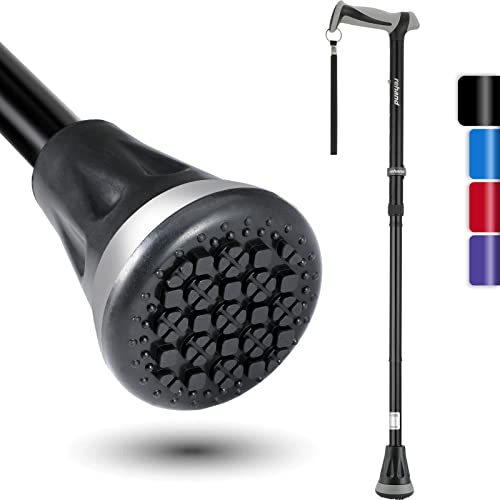
Adjustable sticks accommodate varying body proportions through push-button notches or locking collars. Designs like the Honmido and Rehand folding models offer height settings spanning from thirty-one inches up to forty-nine inches to suit both petite and tall users. If a walking stick is adjusted too high, the shoulder lifts upward into a constant shrug that creates tension along the neck and upper trapezius. Conversely, setting a stick too low forces the torso to bend forward, stressing the lumbar spine and degrading upright walking posture.
Full-length hiking staffs use a distinctly different sizing philosophy compared to everyday urban walking canes. Traditional wooden staffs, such as single-piece willow options from Vive, frequently measure fifty inches or higher so the top rests near chest or shoulder level. This extended staff height gives hikers multiple gripping positions when moving across changing outdoor gradients. You can grasp the grooved upper shaft on level soil, choke down during ascents, or palm the rounded head on descents.
Mastering Contralateral Gait Coordination and Stride Rhythm
The most common mistake new users make is holding the walking stick on the same side as their weaker leg. To create natural balance, hold the walking stick in the hand opposite your weaker, stiffer, or recovering leg. If your right knee feels stiff or unsteady, hold the walking stick firmly in your left hand. This arrangement mimics the natural contralateral swing of human walking, where your opposite arm moves forward in coordination with each forward step.
Coordinating your stride requires synchronized movement between your hand and foot. As your weaker leg moves forward to take a step, advance the walking stick at the exact same moment. Plant the rubber ferrule firmly on the ground parallel to the landing foot, allowing the stick to share a portion of your downward weight. Next, push smoothly through your arm as your stronger foot steps forward to complete the stride cycle.
Maintaining a compact base of support prevents tripping hazards and balance loss. Keep the tip of the walking stick within a few inches of your outer foot line rather than planting it wide like an outrigger. Planting the stick too far outward twists your torso and causes awkward lateral leaning that fatigues your core. Keeping the shaft close to your natural stride line ensures direct vertical support with minimal rotational wrist strain.
Navigating Uphill Inclines and Downhill Trail Slopes
Walking across hills and ramps alters your center of gravity and requires slight technical adjustments. When heading uphill, shorten your grip on the walking stick or adjust telescoping poles downward by two to three inches. Lean slightly forward from your ankles while keeping your spine straight and your eyes focused on the path ahead. Plant the stick firmly to engage your triceps and shoulder muscles, pushing down to assist your quadriceps as you step upward.
Downhill descents place the highest deceleration force on aging knees, hips, and lower back joints. When heading downhill, lengthen an adjustable stick or shift your palm to the top of a traditional staff head to gain downward reach. Plant the stick slightly ahead of your lead foot before taking a downward step, establishing a solid braking point. Allowing your arm to absorb part of the downward shock protects the knees from jarring impacts on paved ramps or packed dirt trails.
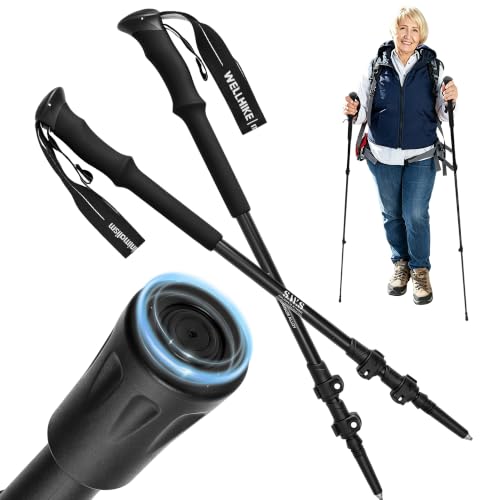
Dual trekking pole systems, such as lightweight 7075 aluminum pairs from Pataiven, offer symmetrical support for steep trail hikes. Using two poles allows hikers to distribute descending loads evenly across both arms, stabilizing both sides of the pelvis. Seniors navigating woodland paths can plant both poles slightly forward on steep drops to stabilize their footing before stepping down. This coordinated rhythm dramatically cuts cumulative joint fatigue during long afternoons in nature parks.
Ascending and Descending Stairs, Steps, and Curbs
Staircases and sidewalk curbs present common balance challenges that require deliberate footwork. An easy phrase to remember for safe stair climbing is to go up with the good and down with the bad. When stepping upward, lead with your stronger leg first while keeping the walking stick on the lower step to support your weight. Once your strong foot is securely planted on the higher step, bring your weaker leg and the walking stick up to join it.
Descending stairs reverses this sequence to ensure consistent joint protection. Lower the walking stick down to the next step first, followed closely by your weaker or stiffer leg. The walking stick provides a stable landing pillar that absorbs your downward weight as your knee bends. Finish the step by bringing your stronger foot down onto the same tread before attempting the next descent.
Always make use of structural handrails whenever they are available along public stairways or building entrances. Shift your walking stick to the hand away from the handrail, holding the rail securely with your dominant or free hand. If you must carry the stick in the hand using the handrail, hold the stick horizontally by its shaft to keep the rubber ferrule from tangling on the steps. Take your time on every tread rather than rushing to match someone else’s walking pace.
Utilizing Sit-to-Stand Assist Features and Leveraged Transfers
Rising from a deep armchair, sofa, or car seat requires balanced leverage rather than pulling on an unstable shaft. Never attempt to pull yourself upward using a standard walking stick, as the tip can slide outward and cause a fall. Instead, slide forward toward the edge of the chair with both feet planted flat on the floor beneath your knees. Keep the walking stick positioned vertically near your side to act as a downward stabilization brace rather than a pulling handle.
Canes like the DITROYZH design incorporate a secondary folding lower handle specifically engineered for sit-to-stand transfers. This secondary grip sits lower on the aluminum shaft, giving users a two-handed push point that eases strain on back muscles. Placing one hand on the secondary lower handle and the other hand on the main grip allows you to push straight down with both arms. This downward force transfers body weight through the cane base while your legs straighten smoothly.
Once you achieve a standing position, pause for several seconds before taking your initial step. This brief pause allows your blood pressure to normalize and ensures your balance is centered. Confirm that your feet are set shoulder-width apart and your hand grip is comfortable on the primary handle. Only begin your forward walking cadence after you feel stable and confident on the ground.
Handle Ergonomics and Palm Pressure Management
Handle shape directly influences how long an older adult can walk before experiencing hand fatigue or palm soreness. Traditional narrow T-shaped handles often concentrate downward pressure along the delicate center line of the palm, which can irritate nerves during long walks. Ergonomic handles, like those developed by Rehand with blended polypropylene and soft rubber materials, feature wider contoured palm surfaces. Expanding the surface contact area spreads downward force evenly, helping prevent joint pain for people with arthritis.
Traditional wooden walking staffs use shaped grooves or natural timber contours to provide secure tactile grip points. Willow staffs from Vive feature smooth finger indentations carved directly into the upper portion of the timber shaft. These grooves prevent the hand from slipping downward when moisture or sweat accumulates on warm days. Natural wood also provides a warm, organic feel in the hand that many walkers find far more pleasant than cold painted metal.
Foam grips and wrist lanyards offer additional comfort and drop prevention during extended neighborhood walks. Trekking poles equipped with expanded EVA foam absorb hand sweat and provide slight shock dampening over uneven gravel. Adjustable wrist straps prevent the stick from clattering to the ground if your fingers open momentarily to adjust a coat or answer a phone. Never wrap wrist straps tightly around your hand, as the strap should release cleanly if you trip to avoid wrist sprains.
Ground Traction Components: Rubber Ferrules, Pivoting Bases, and Trail Spikes
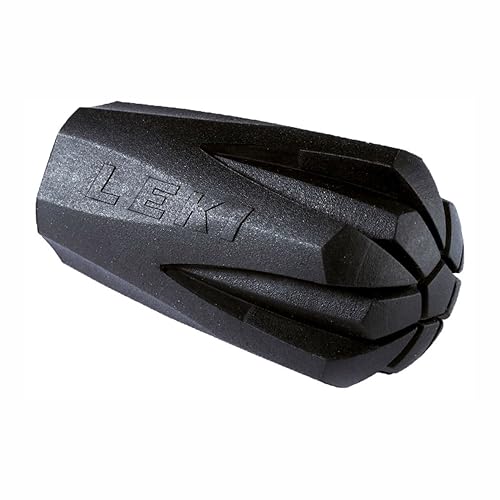
The tip of your walking stick determines how securely it grips slick floors, damp grass, or wet sidewalk concrete. Traditional single rubber ferrules provide dependable, quiet traction on smooth indoor floors and hard outdoor pavement. These thick rubber caps feature grooved treads that channel away surface moisture while cushioning the impact traveling up your arm. Walkers should inspect rubber ferrules regularly and replace them immediately when the tread wears smooth or exposes the internal metal washer.
Multi-point pivoting bases offer enhanced stability by remaining flat against the ground throughout your entire stride. Quad-base designs found on Rehand and DITROYZH models feature a rotating ankle joint that swivels smoothly as you step forward. This continuous ground contact ensures that non-slip rubber pads maintain total surface purchase even when the shaft angles forward. These wide bases also allow the cane to stand upright on flat floors, sparing seniors the strain of bending over to retrieve a dropped stick.
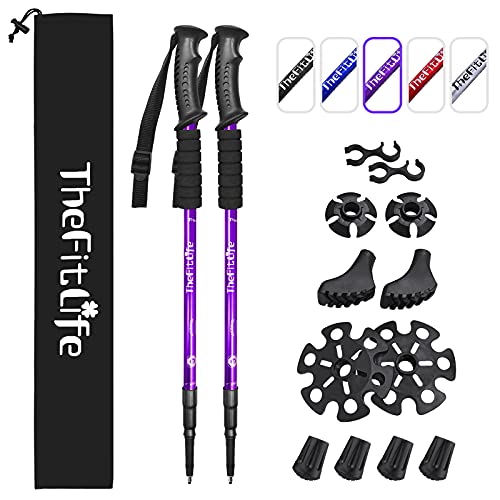
Outdoor trail spikes serve an entirely different purpose than rubber ferrules and should never be used on hard surfaces. Carbide or hardened steel tips on trekking poles bite aggressively into loose dirt, slick mud, wet gravel, and icy trail patches. Always keep protective rubber caps snapped firmly over metal spikes when transitioning onto asphalt, tile, or finished hardwood flooring. Bare metal spikes skate dangerously across hard, polished surfaces, creating an immediate slipping hazard for older adults.
Adjusting, Folding, and Transporting Travel Sticks
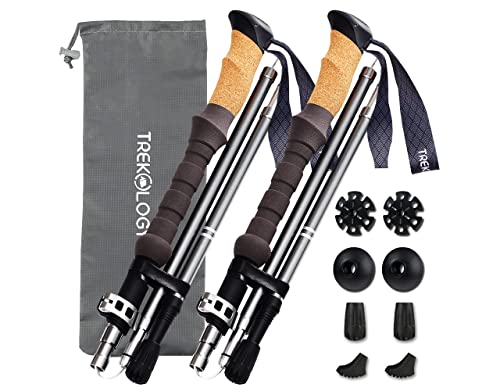
Modern collapsible walking sticks offer exceptional portability for active seniors who travel or run daily errands. Multi-section folding sticks feature durable internal tension cords that allow the aluminum shaft to fold into three or four compact segments. Once folded, these sticks tuck neatly into a tote bag, walker pouch, or vehicle console in just a few seconds. Selecting lightweight models under one and a half pounds ensures that carrying the folded stick never feels cumbersome.
Locking mechanisms must remain secure under downward pressure to guarantee user safety on every outing. External flip-lock clamps, like those on Pataiven poles, are easy for seniors with reduced grip strength to adjust without painful twisting. Push-button pin systems on folding alloy canes snap into pre-drilled adjustment holes with an audible click that confirms positive engagement. Always press down firmly on your adjusted stick before walking to verify that the locking collar or pin is fully seated.
Packing a folding walking stick for air travel requires minimal preparation when using well-designed travel gear. Reviewing a practical carry-on luggage travel guide helps walkers select daypacks with appropriate interior sleeve dimensions for collapsed shafts. Most folding canes collapse to roughly twelve to fifteen inches, easily clearing domestic airline carry-on size limitations. Keeping your walking aid inside your personal bag guarantees that dependable balance assistance is readily available the moment you exit the aircraft.
Recognizing Safety Boundaries: Balance Assistance versus Weight-Bearing Support
Understanding the exact structural purpose of a walking stick is essential for maintaining personal safety. Walking sticks and hiking staffs are designed as balance aids to steady your gait, improve posture, and offload modest joint pressure. They are not intended to function as full weight-bearing clinical crutches or prescription orthopedic mobility devices. Seniors recovering from major orthopedic surgery or managing severe vestibular disorders should always follow clinical advice regarding prescribed medical equipment.
Manufacturer weight ratings provide vital guidance regarding structural integrity and downward load capacity. Models from Honmido and DITROYZH carry weight capacities between two hundred twenty and two hundred forty pounds, while heavy-duty Rehand canes support up to three hundred fifty pounds. These ratings assume the cane is used vertically as an offloading balance brace rather than bearing a user’s entire suspended body weight. Exceeding structural ratings or placing extreme lateral force on an extended shaft can bend aluminum joints or damage locking pins.
Conducting a quick thirty-second inspection before leaving home ensures your walking stick remains safe and reliable. Check that all shaft joints are seated tightly without rattling, and confirm that the rubber tip has plenty of tread remaining. Examine natural wooden staffs for hairline grain splits or loose ferrule collars before heading out on nature trails. Taking consistent care of your walking equipment ensures steady stability and outdoor enjoyment throughout every walking season.




Write Your Review
No reviews yet. Be the first to share your experience!