


Stepping onto a trail or neighborhood path with dedicated poles turns an ordinary stroll into a full-body workout while cushioning impact on vulnerable joints. When you master how to walk with nordic walking sticks, every step engages your upper back, shoulders, and core rather than forcing your knees and ankles to absorb all ground contact. Many walkers start out carrying poles awkwardly out front or dragging them behind, which creates unnecessary wrist strain and interrupts natural forward momentum. Learning the correct coordination transforms your daily trek, providing steady four-point stability across loose gravel, uneven dirt, and paved sidewalks without requiring rigid clinical mobility devices.
Pairing an upright posture with active arm movement ensures fluid rhythm, especially when combined with comfortable gear like supportive hiking pants for joint comfort during longer trail sessions. Modern adjustable walking poles, such as aircraft-grade aluminum shafts with sweat-wicking foam grips, make it simple to customize stick height to your exact proportions. Dialing in proper technique protects your lower back, prevents premature upper-body fatigue, and delivers reliable balance whether you are taking a brisk morning fitness walk or navigating rocky inclines.

Pros
- Compact 15-inch folded size fits easily inside daypacks or stows neatly against backpack compression straps
- Aircraft-grade aluminum construction with reinforced metal joint caps offers reliable trail strength
- Moisture-wicking EVA foam grip and extended shaft sleeve provide secure handling during steep climbs
- External flip-lock mechanism allows quick, tool-free height adjustments between 100 and 120 cm
Cons
- Height range of 100 to 120 cm fits users up to 5'10", requiring taller hikers to select the longer pole size
- TSA regulations require folding trekking poles to be packed in checked luggage rather than airline carry-on bags
The Trekology Trek-Z Folding Trekking Pole set is a compact, tri-fold aluminum walking stick pair engineered for day hikers, backpackers, and active travelers who need dependable trail balance without taking up excessive pack space. Sized with an adjustment range of 100 to 120 cm, this specific model suits hikers between 4'11" and 5'10" who want an adjustable walking aid that easily stows on or inside a hiking backpack.
Collapsing down to just 15 inches (38 cm), the Trek-Z poles eliminate the awkward overhang common with traditional telescoping poles when strapped to backpack gear loops or slipped into stretch water bottle pockets. Weighing 10.4 oz (294 g) per pole, they offer solid ground support on ascents and descents while adding minimal base weight to your daypack or multi-day backpacking load. The included mud stops help prevent the tips from sinking into soft ground, making them useful across forest tracks, dirt trails, and wet crossings.
Built with aircraft-grade aluminum alloy tubing and reinforced joints fitted with metal lock caps, these poles are crafted to handle rugged trail conditions and repeated folding cycles. The ergonomic handle features moisture-wicking EVA foam that helps keep your hands dry during sweaty summer hikes. An extended EVA foam section down the upper shaft allows hikers to quickly choke up on the grip when climbing steep switchbacks without pausing to readjust pole height.
Deploying the poles involves snapping the folding sections into place and securing the top flip-lock mechanism, which provides 20 cm of micro-adjustment to dial in the correct 90-degree elbow angle. When you reach the trailhead or take a lunch break, unlocking the system allows the poles to quickly fold back down to 15 inches. Trekology includes a custom holder bag to shield the rest of your backpack contents from dirt and sharp tips during transport.
While the tri-fold aluminum design is versatile, buyers should be aware of a few practical constraints. Hikers taller than 5'10" will need the longer 115 to 135 cm version, as this model caps out at 120 cm. Additionally, for travelers heading to destination hikes via commercial airlines, TSA guidelines require trekking poles to be packed in checked baggage rather than carry-on luggage.
For day hikers, weekend campers, and budget-conscious backpackers seeking reliable walking support that packs down small enough for almost any daypack, the Trekology Trek-Z poles deliver practical utility and straightforward adjustment at an accessible price point.
A key advantage of the Trekology Trek-Z poles is their 15-inch (38 cm) collapsed length, making them significantly easier to carry than standard telescoping poles that often measure 24 inches or more when retracted. This short profile allows them to slide vertically inside a typical 20-liter daypack or tuck securely into the side water-bottle pockets of a backpacking pack without snagging low-hanging branches.
The included carry bag provides a clean barrier between trail mud and your gear, keeping the interior of your backpack dry and organized. Hikers who prefer external storage can easily lash the folded poles to standard pack compression straps, ice-axe loops, or trekking-pole attachments without throwing off the balance of their pack.
This 100 to 120 cm Trek-Z model is specifically tailored for hikers with heights between 4'11" and 5'10". Proper trekking-pole sizing generally requires your elbow to rest at a comfortable 90-degree angle when holding the grip with the pole tip resting on flat ground.
Height adjustment is controlled by an intuitive external flip-lock equipped with a metal stopper, offering 20 cm of variable adjustment. Hikers can shorten the poles slightly for steep uphill pushes or lengthen them for descents to maintain balanced posture on uneven terrain.
Constructed from aircraft-grade aluminum alloy, the Trek-Z poles balance structural rigidity with manageable trail weight. Aluminum is well-suited for rugged terrain because it tends to bend under extreme stress rather than snapping abruptly like ultralight carbon fiber.
Trekology reinforces the connecting joints with metal lock caps, reducing play and wobble across the tri-fold joints during heavy downhill impacts. The moisture-wicking EVA foam handles resist sweat buildup and provide soft, all-day hand comfort in varied weather conditions.
The Mechanics of Walking with Nordic Walking Sticks
Walking with poles is fundamentally different from leaning onto a traditional orthopedic cane. Instead of keeping a stick directly under your shoulder to prop up a weak limb, Nordic walking utilizes a backward-angled push that propels your entire body forward. This propulsion activates the latissimus dorsi, pectorals, and core musculature while reducing cumulative ground strike impacts on your knees and hips. Establishing this forward-driving rhythm requires a relaxed grip, an upright spinal posture, and an intuitive diagonal gait that works in harmony with your natural stride.
Biomechanical Advantages of the Propulsion Stride
When you walk without poles, your legs carry the entirety of your body weight across thousands of repeated heel strikes. Introducing a pair of fitness walking sticks distributes this load across four distinct points of ground contact, shifting a substantial amount of lower-body pressure onto the arms and torso. This redistribution significantly softens the percussive shock experienced by ankle joints, kneecaps, and the lumbar spine over long distances. The continuous engagement of the upper body also stimulates cardiovascular activity without forcing you to sprint or place jarring stress on sensitive joints.
The primary driving motion relies on planting the stick at a backward angle of roughly forty-five degrees rather than placing it vertically into the dirt ahead of your toes. As your opposite foot steps forward, you press backward against the grip, pushing the trail away from you. This rearward thrust gently lifts your center of mass and propels your torso smoothly into the next step. Hikers who maintain this continuous push experience smoother forward momentum and notice far less quadriceps burning at the end of an active day.
Sizing and Adjusting Shaft Length for Proper Posture
Achieving an efficient stride begins with dialing in the exact height of your poles before you take your first step. Stand upright on a level floor while wearing your preferred walking shoes or trail runners, letting your shoulders hang naturally without tension. Bend your elbows to an exact ninety-degree angle so your forearms rest completely parallel to the ground. The top of the pole handle should meet the palm of your hand comfortably in this neutral posture, ensuring your shoulders neither hunch upward nor sag forward.
Adjustable aluminum poles, such as the Trekology Trek-Z system, simplify this fitting process by incorporating quick-release lever locks. These external flip-lock clamps feature knurled metal stoppers that allow you to adjust pole lengths by up to twenty centimeters in seconds. Walkers between four feet eleven inches and five feet ten inches typically find their ideal setting within a one hundred to one hundred twenty centimeter range, while taller individuals benefit from extended lengths reaching up to one hundred thirty-five centimeters. Always lock the cam levers firmly into position and press your weight down on the handles to confirm the shafts will not slip before beginning your walk.
Grip Dynamics and Hand Tension on the Trail
Clutching your walking sticks with a white-knuckle squeeze is one of the fastest ways to cause forearm cramps and blistered palms. Nordic walking relies on a fluid grip cycle where your fingers alternate between holding the handle during the forward plant and opening up as your arm pushes past your hip. Moisture-wicking handles, such as ribbed EVA foam grips, help absorb hand sweat during intense cardio sessions, preventing slick surfaces that cause over-gripping. Keeping your fingers relaxed allows blood to circulate freely through your wrists, keeping hand joints supple and comfortable.
The wrist strap plays an integral mechanical role in transferring upper-body power into the ground. Slip your hand upward through the bottom opening of the strap loop, then bring your palm down to rest over the fabric against the grip shaft. This arrangement allows the strap to cradle the base of your palm, meaning you can exert firm backward pressure against the stick without needing to clench your fingers tightly. When your arm completes its backward push, you can release your grasp entirely, letting the strap hold the pole securely before swinging it forward again.
Coordinating the Classic Diagonal Cadence
Coordinating your arms and legs requires following the natural diagonal rhythm of human bipedal motion. Whenever your left heel strikes the ground, your right arm should swing forward from the shoulder to plant the corresponding stick tip near your left instep. Conversely, as your right foot moves forward, your left arm swings ahead in a smooth, alternating rhythm that mirrors your everyday walking cadence. Looking straight ahead toward the horizon rather than staring at your feet helps your brain synchronize this opposite arm-and-leg timing automatically.
A common stumbling block for beginners is planting the pole tip too far ahead of the body, which acts as a brake rather than an accelerator. If you plant the stick ahead of your lead foot, the ground impact drives backward through your wrist and shoulder joint, killing your forward momentum. Aim to plant the tip slightly behind or adjacent to your trailing heel, maintaining that continuous backward angle. Focusing on keeping your elbows loose and swinging your arms from the shoulder joint produces a smooth, effortless glide that feels natural after just a few practice walks.
Carrying water and trail essentials in comfortable gear, such as budget day hiking backpacks, keeps your shoulders level and prevents lopsided movement while practicing this alternating stride. When your pack weight sits evenly across your torso, your arms remain free to swing through their full range of motion without restriction. Maintaining a steady breathing rhythm in time with your four-beat stride cycle keeps your heart rate stable and helps maintain cadence over miles of rolling paths.
Modifying Technique for Steep Trail Gradients
Steep terrain demands slight modifications to your pole technique to maintain balance and protect your leg joints. When tackling steep uphill slopes, shorten your pole shafts by roughly five to ten centimeters or choke down your hand position onto the lower foam grip extension. Lean your torso forward slightly from the ankles, taking shorter, deliberate strides while keeping the pole tips planted firmly behind you. Using both poles in a synchronized double-plant rhythm can provide extra upward leverage to hoist your body through difficult, rocky sections without overtaxing your calf muscles.
Downhill hiking presents the greatest risk of joint strain and requires shifting from propulsion to active braking. Lengthen your poles by five to ten centimeters so you do not have to hunch forward over steep trail drop-offs. Place your poles slightly wider apart and plant them ahead of your descent foot to absorb braking forces that would otherwise slam into your knee cartilage and hip sockets. Keep your knees softly flexed rather than locking your legs, and refrain from looping your wrists tightly into the straps on treacherous declines so your hands can pull free if you happen to slip.
Traction and Tip Selection Across Different Surfaces
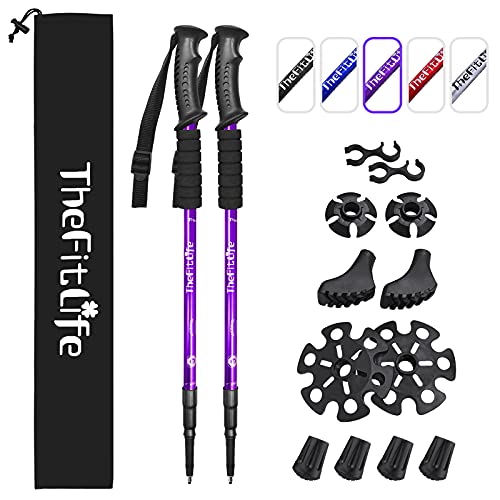
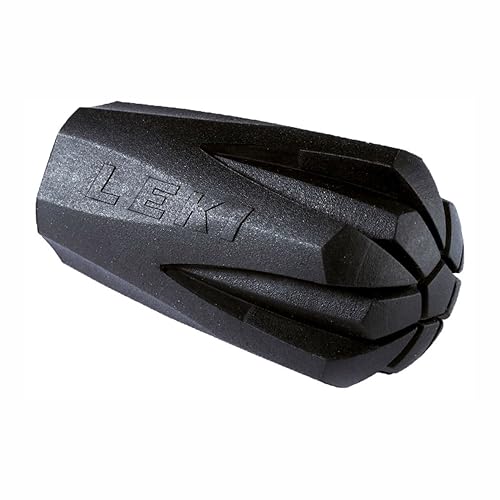
The terrain underfoot dictates which tip accessory you should attach to the end of your walking sticks. Walking across asphalt, concrete, or indoor tile requires using vulcanized rubber ferrules or angled fitness booties that slip over the bottom hardware. Bare metal spikes will slide unpredictably across smooth rock slabs or paved greenways, creating an alarming slip hazard and producing noisy clicks with every stride. Thick rubber feet dampen ground vibrations traveling up the shaft, protect delicate flooring from scratches, and provide high-friction traction on dry hardscapes.
When moving from pavement onto loose forest loam, gravel fire roads, or packed dirt trails, remove the rubber feet to expose the hard carbide tips. Carbide points bite into frozen dirt, slippery mud, and decomposing trail mulch, providing unyielding purchase that keeps your footing anchored on uneven ground. Adding screw-on mud baskets directly above the ferrule prevents the narrow shafts from sinking deeply into soft bogs, marshy grass, or loose scree. Regularly inspecting the rubber feet for excessive tread wear ensures you never accidentally expose the internal metal washer to hard asphalt.
Packability, Travel Considerations, and Trail Maintenance
Frequent travelers and commuters often prefer folding Z-style poles that collapse down to compact dimensions for effortless transit. Multi-section poles featuring aircraft-grade aluminum alloy and reinforced metal lock joints fold down to roughly fifteen inches, sliding neatly into daypacks or vehicle compartments. When preparing for flight journeys, check travel pack storage guide details and remember that security regulations require trekking poles to travel inside checked luggage rather than carry-on bags. Stashing your collapsed poles inside their protective travel pouch guards the rest of your gear against damp trail grit and sharp tip edges.
Preserving the structural integrity of your walking sticks requires basic post-hike maintenance after outings in wet or muddy conditions. Disassemble the folding sections or extend the telescoping shafts to wipe away trapped moisture, sand, and fine trail dust with a dry towel. Allowing the interior joints to dry completely before reassembling prevents internal metal oxidation and stops locking collars from seizing up over the winter months. Check the tension screws on your cam-lever locks periodically with a small screwdriver or coin to ensure the clamps exert sufficient clamping force without slipping under your body weight.
Balance Assistance Boundaries and Safety Verification
Recreational walking sticks provide superb stability for active adults, but they are not designed to function as medical mobility aids. While fitness poles stabilize your balance on uneven ground and offload modest joint pressure, they cannot support full weight-bearing loads required for acute fracture recovery or severe vestibular disorders. Walkers seeking non-clinical, athletic balance assistance appreciate the modern outdoor styling of hiking sticks, which avoids the clinical appearance of standard medical canes. However, anyone recovering from surgery or experiencing severe balance impairment should follow the guidance of a physical therapist before relying on recreational walking gear.
Before every trail outing, take thirty seconds to conduct a hands-on mechanical safety check of your walking equipment. Inspect the aluminum shafts for any hairline dents or deep gouges that could compromise structural strength under sudden downward pressure. Press your full upper-body weight downward against both assembled poles on a firm surface to verify that the locking collars and joint caps hold rigid without slipping. Ensuring that your wrist straps are free of frays and your rubber ferrules are seated tight gives you absolute confidence to enjoy a safe, energizing, and joint-friendly walk.
Developing confidence with your walking sticks takes patience, but the cardiovascular gains and joint-sparing benefits make the initial learning period well worth the effort. Once you coordinate your arm drive with your natural walking cadence, you will move faster across challenging terrain while feeling remarkably light on your feet. Keep your posture upright, stay mindful of ground friction, and let your poles power every stride toward a stronger, more stable trail experience.




Write Your Review
No reviews yet. Be the first to share your experience!