


Navigating uneven outdoor paths or recovering from a lower-limb strain often raises difficult questions about everyday stability gear. Choosing between orthopedic recovery equipment and traditional outdoor balance aids directly impacts walking posture, wrist fatigue, and joint protection. Many active walkers wonder is a crutch better than a walking stick when trying to reduce pressure on recovering knees or unsteady ankles. While a classic walking stick provides a graceful rhythm and steady balance on loose gravel, a dedicated crutch distributes substantial body weight across the entire arm and shoulder girdle. Hikers dealing with persistent joint tenderness frequently pair these balance tools with tendon knee support apparel to maintain natural movement while easing mechanical strain across uneven ground.
Forearm crutches provide structural forearm bracing and dedicated upper-limb load transfer that a standard single-point walking staff cannot replicate. Conversely, lightweight walking sticks and hiking staffs excel at fluid balance assistance, preventing slips on slick roots, and preserving natural gait cadence without a clinical aesthetic. Understanding the functional differences between weight-bearing mobility devices and single-point balance aids ensures you select the right support for your physical needs. Whether your goal involves recovering from an acute injury or steadying steps on steep trail descents, matching the tool to your biomechanical requirements prevents secondary strain on your wrists and shoulders.




Biomechanical Differences and Practical Selection: Evaluating Crutches Against Walking Sticks
Deciding whether a crutch outperforms a walking stick depends entirely on whether your body requires structural weight offloading or gentle balance stabilization. Forearm crutches excel when an injury, surgical procedure, or acute joint inflammation prevents your lower limbs from bearing full body weight safely. In contrast, walking sticks serve as dynamic balance extensions that steady your center of gravity across uneven terrain without disrupting your natural walking stride. Evaluating how each tool handles body weight, joint impact, and daily movement helps clarify which option aligns with your physical condition and lifestyle.
Both devices offer distinct advantages across different recovery stages and outdoor environments. A medical forearm crutch isolates vulnerable leg tissues by redirecting downward force into your upper body, whereas a traditional walking stick preserves posture and reduces knee stress during long descents. Examining their structural components, grip ergonomics, and weight-bearing ratings reveals why one tool cannot simply replace the other in every scenario. By exploring these mechanical variations, you can make an informed choice that protects your joints and supports lasting mobility.
Load-Bearing Capacity and Upper-Body Weight Transfer
Forearm crutches are engineered specifically for substantial load transfer, allowing users to offload anywhere from twenty to one hundred percent of their lower-limb weight. Models like the VISIONU Lightweight Foldable Forearm Crutch utilize reinforced aluminum alloy tubing with a 1.2 millimeter wall thickness, enabling a secure user weight capacity of up to 220 pounds. By securing the upper forearm in a molded composite cuff, these crutches distribute downward force across the entire arm rather than concentrating it solely on the palm. This dual-point contact provides structural rigidity, making crutches the superior option when walking on a fractured foot, torn ligament, or severely arthritic ankle.
Standard walking sticks, by comparison, function primarily as balance aids rather than load-bearing mobility frames. A solid hardwood staff or telescoping aluminum stick can easily absorb twenty to thirty pounds of downward force to steady a step, but it is not built to hold complete body weight. Forcing a standard walking stick to carry full body weight during an injury creates severe balance risks and can bend or splinter the shaft under sudden shock. While walking sticks effectively mitigate repetitive joint impact on hiking descents, they lack the mechanical stability required for non-weight-bearing rehabilitation.
Biomechanics of Gait: Balance Assistance Versus Injury Offloading
The biomechanical movement patterns generated by crutches and walking sticks serve fundamentally different physical objectives. Crutches alter your normal gait cycle to create a protective three-point or four-point stepping rhythm, slowing forward momentum to eliminate joint impact on the affected limb. This deliberate gait pattern prevents sudden twisting forces on healing tissues and keeps your base of support wide and controlled. While this altered gait protects recovering bones and ligaments, it demands significant upper-body energy expenditure and can tire the arm muscles during extended walks.
A walking stick integrates seamlessly into a natural, two-point contralateral gait cycle without hindering your standard cadence. When held in the hand opposite a mildly aching joint, the stick plants simultaneously with the affected leg, subtly unloading knee and hip pressure while maintaining fluid forward movement. This dynamic rhythm encourages an upright spine, open chest posture, and continuous arm swing, making it ideal for brisk fitness walks and trail trekking. Walkers seeking non-clinical balance support maintain a relaxed, continuous stride that keeps muscles engaged without inducing premature upper-body exhaustion.
Handle Ergonomics and Wrist Joint Strain
Handle design plays a pivotal role in preventing nerve compression, blister formation, and wrist strain during repeated ground contacts. Walking sticks traditionally feature curved crook handles, rounded knob grips, or classic derby grips that support casual palm resting. Derby handles position the user’s weight directly over the center of the vertical shaft, which minimizes rotational torque on the wrist during level walks. However, basic wooden knob or crook handles can cause palm tenderness if a user leans heavily on them for extended periods, as they lack contoured palm support.
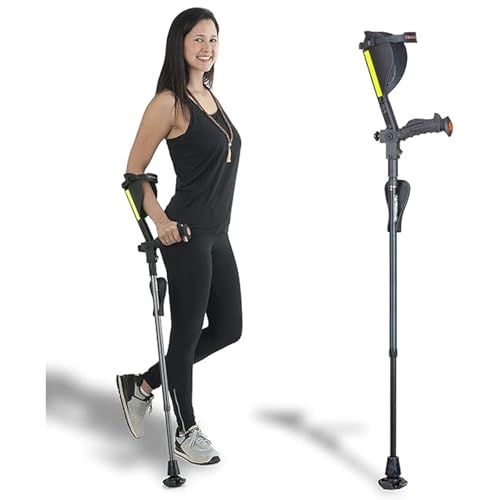
Advanced forearm crutches address wrist fatigue through specialized handgrip geometry and stabilizing arm cuffs. The Ergobaum 7G Ergonomic Crutch features a full ergonomic grip designed to match the natural contours of the human palm, complete with an integrated stopper that prevents the hand from sliding forward. By combining an ergonomic handgrip with a forearm cuff, crutches eliminate the acute wrist hyperextension that often plagues cane users who push downward with excessive force. This ergonomic synergy shields the carpal tunnel from excessive pressure, allowing users with limited grip strength to ambulate comfortably.
Shaft Materials, Structural Flex, and Shock Absorption
Shaft construction determines how a mobility device responds to sudden impacts and repeated downward strikes on hard surfaces. Forearm crutches frequently rely on tubular aircraft-grade aluminum alloy, which provides exceptional rigidity and lightweight handling without bowing under heavy loads. The VISIONU crutch weighs less than one pound per unit, ensuring that repetitive lifting does not cause shoulder fatigue over long distances. High-performance crutches like the Ergobaum 7G even incorporate internal mechanical shock absorbers within the lower shaft to cushion joint strikes before impact vibrations reach the elbow and shoulder.
Traditional walking sticks harness the organic mechanical properties of natural timber species like hickory, white oak, sweet chestnut, and hazel. Seasoned hardwoods possess natural cellular flex that absorbs trail vibrations organically, providing a tactile, grounded feel that synthetic hollow tubes rarely match. Solid wood staffs can withstand substantial lateral bending forces when properly cured and sealed against environmental moisture. While solid wood shafts carry more swing weight than hollow aluminum crutches, their tactile warmth, grain beauty, and inherent dampening make them beloved companions for trail enthusiasts.
Ferrule Engineering and Ground Traction Dynamics
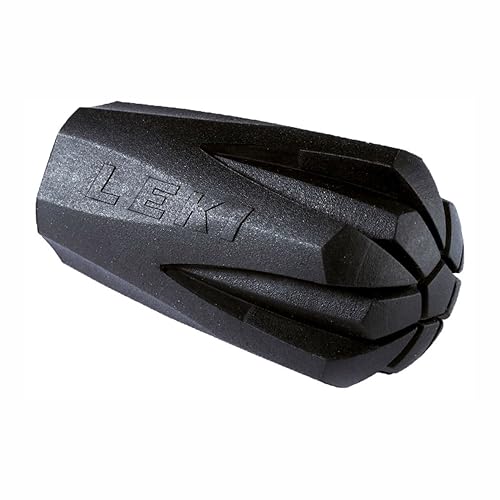
The ground contact point dictates how securely a stability aid grips slick pavement, polished tiles, or muddy forest loam. Medical crutches require high-traction, wide-diameter rubber ferrules with articulated bases that maintain flat contact with the floor throughout the entire gait stride. The Ergobaum design utilizes a patented Ergocap high-performance rubber foot that flexes dynamically to provide maximum surface adhesion on smooth indoor floors. Heavy-duty replacement options like the supregear Rubber Cane Tips feature a 1.4 inch ground base and an internal aluminum washer that stops the shaft from puncturing the rubber sole.
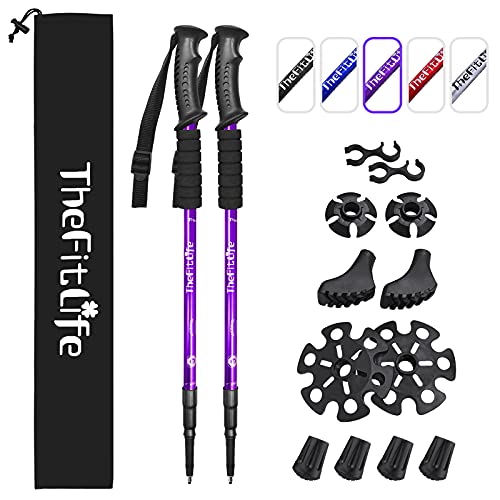
Outdoor walking sticks require versatile tip configurations that can adapt to changing backcountry conditions. While a slip-on rubber ferrule prevents skidding on paved asphalt and polished rock slabs, deep trail mud and winter ice demand exposed steel or carbide spikes. Carbide spike tips penetrate frozen soil, slick fallen leaves, and loose gravel, establishing a secure anchor point where wide rubber ferrules might otherwise hydroplane. Hikers often carry removable rubber tips over fixed metal spikes, enabling them to transition effortlessly between hard paved roads and rugged, unpaved wilderness trails.
Packability, Travel Portability, and Daily Convenience
Managing a mobility device during daily commutes, vehicle travel, and air transit requires smart folding mechanisms and manageable collapsed dimensions. Modern forearm crutches frequently incorporate internal folding joints or push-button pin releases that collapse the frame into a compact package. For instance, the VISIONU crutch folds down to just 19 inches (49 centimeters), allowing it to fit neatly into automobile trunks or standard luggage compartments. Travelers can consult our detailed carry-on backpack dimensions guide to ensure their packed mobility gear complies with common overhead bin standards.
Everyday convenience also extends to hands-free storage and temporary rest stops during errands or outdoor social outings. Accessory additions like the Merry Sticks Walking Cane Holder clip securely onto shafts measuring 3/4 to 7/8 inches in diameter, letting users balance their cane safely against tables and counters. Hybrid options such as the Yayayo Folding Cane with Seat provide an instant resting stool capable of holding up to 440 pounds while folding compactly when on the move. These specialized features allow users to tailor their walking equipment to busy public environments where seating may be scarce.
Terrain Adaptation: Pavement, Indoor Floors, and Rugged Trails
Evaluating your primary walking environment is essential when determining whether a crutch or walking stick is the better choice. Crutches perform exceptionally well on predictable, uniform surfaces such as indoor linoleum, shopping center floors, and paved neighborhood sidewalks. On smooth surfaces, their wide rubber pads maintain consistent traction, and the crutches provide reliable support when climbing curbs or stepping over low thresholds. However, their broad bases and rigid forearm cuffs can feel awkward on uneven mountain trails where sudden foot placement adjustments are necessary.
Natural hiking trails, rock gardens, and steep woodland slopes heavily favor the versatile maneuverability of a traditional walking stick. A single staff allows hikers to probe murky stream depths, brush away overgrown vegetation, and quickly change hand positions along the shaft during steep climbs. Hikers moving across varied topography frequently combine their walking stick with durable lightweight hiking pants to stay agile across changing outdoor elevations. The free-moving nature of a walking stick ensures that you can steady your balance without feeling mechanically locked into a rigid arm cuff.
Sizing Protocols and Proper Postural Alignment
Correct height sizing is vital for preventing trapezius tightness, shoulder hiking, and unnatural spine curvature with either mobility aid. To size a standard walking stick for everyday level walking, stand upright in your regular walking shoes with arms hanging naturally at your sides. The top of the handle should align with the crease of your wrist, creating a comfortable fifteen to twenty-degree bend in your elbow when grasping the grip. Hiking staffs designed for trail ascents and descents are sized taller, typically reaching shoulder or chest height to allow variable hand placement on steep gradients.
Forearm crutches require a dual-point measurement protocol to ensure both the handgrip and the forearm cuff align properly with your anatomy. The VISIONU crutch provides ten individual adjustment levels ranging from 28 to 37 inches between the handle and the floor, accommodating a broad spectrum of user heights. When standing straight, the crutch handle should match your wrist crease, while the supportive composite cuff should sit roughly one to two inches below your elbow joint. Correct cuff placement allows the forearm to flex comfortably without pinching sensitive nerves or restricting blood circulation during extended use.
Practical Decision Framework: Matching Mobility Aids to Recovery and Activity Goals
Choosing between these two mobility aids comes down to assessing your injury severity, physical independence, and long-term activity goals. A crutch is clearly better when you must protect healing bone fractures, severe sprains, or surgical repairs that cannot tolerate full weight-bearing stress. Crutches are also preferable for individuals experiencing chronic balance disorders or muscle weakness that requires upper-body bracing. In these clinical scenarios, relying on an ordinary walking stick could lead to accidental falls and delayed physical recovery.
A walking stick remains the superior option for active adults and outdoor enthusiasts seeking non-clinical stability and graceful balance support. It provides dependable confidence on slippery footpaths, reduces cumulative joint wear on long downhill hikes, and preserves an active, outdoor lifestyle without clinical stigma. Hybrid devices that bridge these categories, such as the Ergobaum 7G or seat-equipped canes like the Yayayo stool, offer adaptable middle ground for individuals needing extra support without sacrificing outdoor mobility.
Before heading out on any journey, regularly inspect your equipment to ensure safety and structural integrity. Always check push-button adjustment pins to verify they are locked into position, and examine rubber ferrules for signs of wear before they expose the underlying metal. Matching the right tool to your physical requirements ensures optimal joint protection, reliable traction, and confident movement across every path you travel.





Write Your Review
No reviews yet. Be the first to share your experience!