


Maintaining an active walking cadence while safeguarding sensitive knee joints requires dependable equipment that distributes body weight across every stride. For fitness enthusiasts and recreational trail walkers exploring outdoor paths, knowing what are the best nordic walking sticks helps transform a simple neighborhood stroll into a low-impact, full-body exercise routine. Pairing dynamic arm movement with specialized carbon fiber or aluminum shafts engages upper-body muscles, promotes upright spinal posture, and reduces cumulative shock on lower extremities. Walkers who also wear supportive hiking pants for joint relief often find that integrating rhythmic pole strikes brings noticeable stability over rolling terrain.
Selecting the right walking sticks involves balancing shaft stiffness, locking reliability, swing weight, and ergonomic grip comfort. The models featured in this guide, including options from TrailBuddy and Hiker Hunger Outfitters, emphasize lightweight carbon fiber construction that minimizes arm fatigue during prolonged outings. Adjustable flip locks and versatile ground attachments allow these multi-use walking sticks to transition smoothly between firm paved walkways, loose gravel trails, and snowy outdoor paths. By understanding how shaft materials, grip shapes, and ground ferrules work together, you can pick a pair that matches your specific fitness goals and outdoor walking habits.


Pros
- Lightweight 3K carbon fiber construction reduces carried and swinging weight to 7.6 ounces per pole
- Metal flip locks offer secure, slip-resistant tension compared to traditional twist-lock mechanisms
- Ergonomic cork handles paired with secondary EVA foam grips provide versatile hand positioning on varying trail grades
- Wide 24-inch to 55-inch adjustment span suits a diverse range of user heights and terrain angles
Cons
- Carbon fiber shafts can fracture if wedged between rocks and subjected to severe lateral bending forces
- Collapsed length of 24 inches may extend beyond the top or bottom of ultra-compact daypacks when mounted externally
- Metal flip lock levers require occasional thumb-screw tension checks to prevent slippage over extended mileage
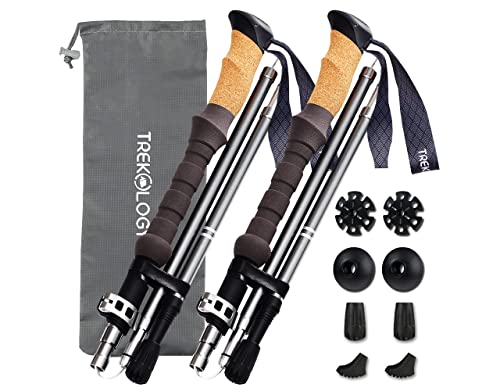
The Hiker Hunger 100% Carbon Fiber Trekking Poles are adjustable three-section telescoping trail poles built for day hikers, section hikers, backpackers, and campers seeking to shed weight without giving up stability. Constructed from 3K carbon fiber, each pole weighs approximately 7.6 ounces, making them an excellent choice for hikers looking to reduce joint impact on rugged trails while keeping their base gear manageable.
In terms of trail adjustment, these poles expand from a compact 24 inches up to a full 55 inches, comfortably serving both shorter and taller hikers across diverse terrain grades. Rather than relying on twist locks that can slip or freeze when exposed to dirt and moisture, Hiker Hunger equips these poles with quick-adjust flip locks built with metal hardware. This provides firm, slip-resistant clamping whether you are lengthening the poles for a steep downhill descent or shortening them for an aggressive ridge climb.
Grip comfort is a primary design focus, featuring ergonomic natural cork handles that actively wick moisture away from your palms while molding to your hand shape over time. Directly beneath the cork handles, secondary nonslip EVA foam extensions provide an immediate choke-down point for short, steep switchbacks, eliminating the need to stop and adjust pole length. Soft neoprene-padded wrist straps further enhance comfort, distributing downward pressure across your wrists without causing chafing during long mileage days.
Transporting and maintaining these poles on the trail is straightforward. When not in use, the shafts collapse down to 24 inches, allowing them to nest securely into side water bottle pockets, slide behind backpack compression straps, or strap onto front trekking-pole attachment loops. Maintenance involves basic trail hygiene: simply wipe away grit and moisture after wet outings and periodically check the thumbscrew tension on the metal flip locks to preserve optimal clamping force.
While carbon fiber provides exceptional weight savings and natural vibration damping, it behaves differently than aluminum under severe lateral stress. If a carbon pole becomes trapped between roots or granite boulders and is subjected to heavy sideways leverage, it is susceptible to cracking or snapping rather than bending. Additionally, hikers using compact daypacks under 20 liters should note that the 24-inch collapsed height will protrude somewhat above the pack rim when lashed to external straps.
For day hikers, multi-day backpackers, and travelers seeking an agile pair of poles with natural cork ergonomics and durable metal locking mechanisms, the Hiker Hunger Carbon Fiber Trekking Poles represent strong trail value. Backed by a 1-year warranty and a USA-based company, they provide dependable knee-saving support and steady balance across varied backcountry trails.
The Hiker Hunger trekking poles feature a telescoping three-section shaft that adjusts smoothly between 24 inches and 55 inches. This expansive range accommodates men, women, and younger hikers across flat paths, steep alpine ascents, and knee-jarring descents.
Length adjustments are secured using external flip locks equipped with metal levers. Unlike plastic components that can warp or weaken over time, the metal locking mechanism maintains consistent clamping pressure against the carbon fiber sections to help prevent unexpected slippage while hiking under load.
Constructed entirely from 100% 3K carbon fiber, these poles offer high tensile strength and natural vibration absorption while weighing only 7.6 ounces per pole. This lightweight profile substantially lowers the energy required per arm swing over long trail days.
The upper handle combines natural moisture-wicking cork with dense EVA foam for the lower grip extension, providing comfortable handholds in both warm and cold weather. To maintain the structural integrity of carbon fiber, hikers should avoid using the poles as pry bars and keep the locking collars clean of trail debris.
With a collapsed length of 24 inches, these poles integrate easily with standard hiking daypacks and multi-day backpacking packs. They can be threaded through dedicated lower trekking-pole loops, secured via upper bungee cords, or held fast by side compression straps.
For travel or public transit to the trailhead, the 24-inch collapsed size allows the pair to fit inside standard checked luggage or across larger duffel bags, keeping your trail gear neatly consolidated between outings.
Understanding Nordic Walking Stick Mechanics and Selection
Nordic walking sticks serve a distinct biomechanical purpose compared to standard single walking staffs or traditional medical canes. Rather than functioning simply as vertical balance posts, these poles act as dynamic levers that propel your body forward while absorbing joint impact. Understanding how shaft materials, grip shapes, and locking hardware interact ensures you choose equipment that matches your personal stride and fitness objectives. Evaluating specific build features allows walkers to maintain steady posture without placing undue stress on wrists, elbows, and knees.
Biomechanics and Propulsion Differences from Traditional Staffs
Traditional hiking staffs are often utilized as single-point vertical braces designed to steady your footing on steep downhill descents or across muddy creek crossings. In contrast, Nordic walking employs a paired pole system that coordinates with your natural alternating arm swing to engage the upper torso, shoulders, and core musculature. The technique requires planting the pole angled slightly backward rather than straight down in front of your body. This rearward angle allows you to push off against the ground, converting arm energy into forward propulsion across flat or rolling terrain.
This distinct planting angle shifts a significant portion of your body weight away from the hips, lumbar spine, and lower extremities. Recreational walkers often notice that using two poles creates a fluid, rhythmic cadence that eases repetitive pounding on concrete sidewalks and hard-packed gravel paths. Because the poles encourage an upright stance, walkers naturally avoid the forward slouch that often causes mid-back stiffness during prolonged outings. Adopting this technique transforms a regular neighborhood walk into an active cardiovascular workout without requiring high-impact stress on vulnerable joints.
Shaft Material Dynamics: 3K Carbon Fiber Versus Aluminum Alloys
Shaft material represents one of the most critical structural decisions when evaluating walking poles. Aluminum alloys like 7075 aluminum are known for high tensile durability and resistance to bending under heavy lateral loads. However, carbon fiber shafts offer a distinct advantage in weight savings and natural vibration dampening. The carbon fiber weaves found in models like the TrailBuddy 3K Carbon Fiber Hiking Poles and Hiker Hunger Outfitters poles weigh under 8 ounces per stick, coming in at approximately 7.7 and 7.6 ounces respectively.
Lower overall stick weight translates directly to reduced swing weight, which significantly lowers forearm and shoulder fatigue over several miles of brisk walking. In addition to being ultralight, the layered resin structure of 3K carbon fiber naturally absorbs micro-vibrations before they travel up the shaft into your hands and elbow joints. On hard asphalt or frozen dirt paths, rigid metal poles can transmit harsh resonance through the grip, potentially aggravating tendonitis or joint inflammation. Carbon fiber flexes microscopic amounts under downward load, cushioning repetitive ground impacts while maintaining dependable structural stiffness.
While carbon fiber provides exceptional vibration control and weight relief, walkers should recognize its physical boundaries. Carbon composite shafts handle downward axial compression with ease, but sharp lateral impacts against jagged boulders can compromise the outer resin finish. For everyday fitness walking, park paths, and rolling recreational trails, 100 percent carbon fiber shafts provide an ideal balance of stiffness, low swing mass, and shock mitigation. Selecting a robust weave ensures the shaft remains rigid during vigorous push-offs without flexing excessively under your downward cadence.
Grip Ergonomics and Materials: Natural Cork Versus EVA Foam
The interface between your hand and the pole determines how comfortable and blister-free your walking sessions will be. Manufacturers typically utilize either natural cork or high-density EVA foam for their primary grip surfaces. The 100% Carbon Fiber Trekking Poles by USA Brand feature moisture-wicking natural cork grips, which gradually conform to the specific contours of your palms over time. Cork naturally breathes, wicking away hand sweat during warm weather and preventing the slick, greasy sensation that can lead to palm chafing.
EVA foam, featured on the TrailBuddy poles, provides a soft, cushioned feel with excellent shock isolation and all-weather resilience. Dense EVA does not absorb rainwater or mud, making it exceptionally easy to rinse clean after wet outdoor sessions. Many premium poles also incorporate a nonslip EVA foam extension sleeve positioned directly beneath the main grip. This secondary lower grip allows walkers to choke down quickly on the shaft when navigating sudden uphill gradients, eliminating the need to stop and readjust pole length.
Wrist strap construction is equally vital for executing proper Nordic walking mechanics. Because proper technique involves momentarily releasing and re-gripping the handle during the backward push phase, wide, padded straps help transfer forward propulsion directly to your wrist. Neoprene-padded straps prevent skin abrasion across the back of the hand, while moisture-wicking fabrics keep sweat from accumulating under tension. Ensuring the straps adjust smoothly allows you to establish a secure, comfortable loop that supports relaxed, fatigue-free hand movement.
Locking Mechanisms and Telescoping Adjustability
Reliable locking mechanisms are essential for both walking safety and long-term convenience. Modern adjustable poles generally utilize external lever flip locks rather than older internal twist-lock mechanisms. Internal twist locks rely on expanding plastic wedges that can slip when exposed to internal moisture, road dust, or cold temperatures. External flip locks allow you to visually verify whether each lever is firmly clamped against the shaft before putting your weight onto the pole.
The construction of the flip lock components directly influences their durability under repeated adjustments. Metal flip locks, such as those utilized by Hiker Hunger Outfitters, offer superior resistance to cracking compared to all-plastic latches. External lever clamps also feature manual tensioning thumbscrews that let you fine-tune clamp pressure with your fingers if shaft tolerances loosen over seasons of use. Maintaining appropriate clamp tension prevents sudden, unexpected shaft collapse when you apply downward braking force on steep declines.
Height adjustability provides broad versatility across different family members and varying terrain profiles. The poles reviewed here offer generous telescoping ranges, spanning from 24 inches collapsed up to 54 or 55 inches fully extended. Incremental measurement markings printed along the shaft sections allow walkers to dial in symmetrical pole lengths quickly before every outing. This broad extension range comfortably accommodates walkers ranging from shorter adults and adolescents to tall individuals over six feet in height.
Tip Attachments and Ground Traction Across Surfaces
The bottom tip of your walking stick determines how securely the pole grips different ground textures. Bare walking pole shafts terminate in durable tungsten carbide spikes designed to bite directly into soil, grass, hard-packed dirt, and winter ice. However, bare metal spikes should never be used on finished indoor flooring, ceramic tile, or hard asphalt sidewalks. Carbide spikes can slip unpredictably on smooth rock slabs and concrete surfaces while creating harsh, distracting clatter and premature tip wear.
To walk effectively on pavement, greenways, and hard surfaces, walkers must slide vulcanized rubber ferrules over the carbide spikes. Specialized Nordic walking rubber paws feature an angled, shoe-like tread that matches the rearward planting angle of your arm swing, ensuring maximum surface contact on asphalt. Standard rounded rubber caps also provide dependable friction, protecting both the carbide tip and the walking surface from damage. Checking rubber ferrules periodically ensures the internal metal washer remains intact so the hard carbide tip does not punch through the rubber base.
Trail enthusiasts who transition between suburban pathways and muddy nature reserves benefit from interchangeable trail baskets. Both TrailBuddy and Hiker Hunger packages include screw-on mud baskets and wider snow baskets. Mud baskets prevent thin pole shafts from sinking deep into soft woodland loam or wet peat, maintaining consistent planting height. Snow baskets disperse downward force across powder and packed crust, enabling year-round outdoor fitness regardless of changing seasonal trail conditions.
Posture Alignment and Sizing Guidelines
Achieving proper pole height is fundamental to unlocking the posture and joint benefits of Nordic walking. When standing upright on a flat surface while wearing your typical walking or trail shoes, your elbow should form an approximate 90-degree elbow bend when holding the grip. In this neutral position, your forearm should sit parallel to the ground while the pole tip rests flat beside your heel. If your elbow bends significantly tighter than 90 degrees, the poles are set too tall and may cause upper trapezius strain and elevated shoulders.
Conversely, setting the poles too short forces your torso into a forward hunch, restricting lung capacity and compromising spinal alignment. Walkers can easily adjust pole length to match changing slope profiles during varied outdoor routes. Shortening each pole by two to three inches when tackling steep uphill grades keeps your arms at a biomechanically powerful pushing angle. Extending the poles by two to three inches on downhill sections allows you to plant ahead without leaning your chest awkwardly over your knees.
Packability, Travel Sizing, and Daypack Coordination
Portability is a primary consideration for travelers who wish to maintain their walking routine during vacations or business trips. Telescoping poles that collapse down to 24 inches fit easily into compact automobile trunks, gym duffels, and standard luggage compartments. The TrailBuddy carbon fiber model can even be disassembled into separate sections measuring roughly 21 inches, making it especially practical for compact carry. Hikers planning extended journeys can consult our carry-on backpack packing guide to determine how collapsible walking gear integrates with overhead luggage capacity limits.
Securing poles to the exterior of a daypack requires utilizing integrated lash points or side compression straps when not in active use. Having poles that pack down tightly prevents them from snagging on low tree branches or crowding other commuters on public transit. Lightweight carbon models add negligible weight to your overall pack load, allowing you to carry them on mixed outings where only certain trail segments warrant dual-pole stability. Quick lever locks ensure you can deploy and secure the poles in seconds whenever rough footing or joint fatigue demands extra support.
Routine Maintenance, Grit Removal, and Seasonal Care
Regular maintenance preserves the structural integrity and locking security of carbon fiber walking poles over years of regular use. After walking through wet mud, beach sand, or rain, you should pull the telescoping sections apart and wipe each tube with a dry microfiber cloth. Allowing grit, fine dust, or moisture to remain inside the shaft joints can scratch the carbon finish and reduce clamping friction on the flip locks. Hikers who coordinate their outings with comfortable lightweight trail pants and clean gear will enjoy consistent, squeak-free pole operation across varying seasons.
Avoid applying liquid lubricants, grease, or WD-40 to the inner shafts or locking collars of telescoping walking sticks. Lubricants create slick surfaces that cause flip locks to slip under downward load, while also attracting dirt particles that grind down internal components. If a flip lock lever feels loose, simply use your fingers or a small screwdriver to tighten the adjustment thumbscrew a quarter-turn until the lever snaps shut with firm resistance. Periodically inspecting your rubber feet for excessive tread wear ensures your poles maintain reliable surface traction without unexpected slipping.
Non-Medical Stability Boundaries and Balance Clarification
Walkers must recognize the distinction between recreational fitness balance aids and certified medical mobility devices. Walking sticks and trekking poles are engineered to promote dynamic propulsion, improve cadence, and provide secondary balance support on varied paths. They are not designed or certified as full weight-bearing replacements for medical crutches, adult walkers, or prescription quad canes following severe orthopaedic surgery. Leaning your entire body weight onto a single extended pole over a steep drop-off creates an unsafe fall hazard.
For individuals managing mild balance hesitation, joint stiffness, or fatigue, dual walking poles offer immense psychological and physical security. The extra contact points widen your base of support, preventing sudden slips on wet fallen leaves, loose gravel, and uneven sidewalk curbs. However, users should always inspect locking collars, tips, and strap stitching prior to each outing to verify structural soundness. Establishing realistic expectations ensures that walking sticks remain an empowering fitness companion that supports active mobility without replacing required clinical devices.
Practical Selection Takeaways for Daily Walking
Selecting between premier options like the TrailBuddy 3K Carbon Fiber poles and the Hiker Hunger Outfitters carbon poles ultimately centers on your specific grip preferences and travel habits. Walkers who prioritize classic comfort and natural moisture management often lean toward the molded cork handles and metal flip locks of Hiker Hunger models. Fitness enthusiasts seeking versatile EVA foam grips and compact disassembled packability find dependable value in TrailBuddy designs. Both models provide ultralight carbon frames that offload joint fatigue while delivering dependable ground feedback across diverse walking environments.
Investing in carbon fiber construction paired with metal or reinforced lever locks ensures your walking sticks endure thousands of outdoor miles. Outfitting your poles with the correct rubber ferrules for pavement and carbide spikes for woodland trails unlocks safe, year-round exercise. By matching your equipment to your walking stride and physical needs, you can elevate your regular walking routine into a joint-friendly, full-body activity that promotes lasting vitality.




Write Your Review
No reviews yet. Be the first to share your experience!