


Heading out across rocky paths and uneven dirt tracks requires dependable stability to avoid premature joint fatigue and accidental stumbles. When evaluating outdoor balance gear, determining %what length hiking stick do i need% stands as one of the most practical questions for any walker or trail enthusiast. A hiking stick sized precisely to your height and stride allows your upper body to absorb shock, transferring downward force away from tired knees and hips. Pairing a properly fitted staff with supportive clothing, such as knee-support hiking pants, helps preserve stamina on challenging terrain.
Using an incorrectly sized walking stick forces your body into awkward compensations, causing shoulder cramping if the handle sits too high or lower back strain if you must hunch forward to plant the tip. Standard walking sticks generally align with a ninety-degree elbow bend, while traditional outdoor staffs often reach chest or shoulder height to give you diverse hand placements on steep inclines. Whether you prefer a handcrafted wooden staff or an adjustable aluminum model like the Autuveen modular stick, dialing in the correct measurement ensures steady footing and upright trail posture.

Finding the right stick length requires balancing human ergonomics with the specific demands of the trail. The ideal measurement depends heavily on whether you intend to use a standard waist-level walking stick for flat ground or a taller hiking staff for steep mountain routes. While everyday walking aids rely on a fixed forearm angle to maintain natural posture, backcountry staffs give you greater leverage across changing grades. Exploring these sizing principles will help you establish proper mechanics, prevent joint discomfort, and choose the ideal equipment configuration.
The Standard Ninety-Degree Elbow Rule for Everyday Walking Sticks
For everyday neighborhood strolls, paved paths, and relatively level woodland trails, the most reliable sizing baseline is the ninety-degree elbow rule. When standing upright with relaxed shoulders, your elbow should form a right angle, placing your forearm completely parallel to the ground. In this position, your hand naturally grips the stick handle without raising your shoulder or dropping your wrist below your waistline. This neutral biomechanical posture allows downward force to travel straight through your forearm bones rather than stressing delicate wrist ligaments.
To measure this distance accurately at home, stand on a hard, level floor while wearing your primary walking shoes or hiking boots. Shoe outsoles often add between one and two inches of total height, which significantly shifts your ideal handle placement compared to standing barefoot. Have a partner measure the vertical distance from the floor up to the crease of your wrist, or hold a tape measure flush against your side. That floor-to-wrist measurement equals your ideal walking stick height, including both the handle and the bottom rubber ferrule.
Maintaining this right-angle arm position prevents the repetitive strain injuries that often accompany poorly fitted gear. When a walking stick is adjusted correctly, your arm functions as an efficient piston that assists your natural stride cadence. You push downward smoothly as your opposite foot steps forward, engaging the latissimus and triceps muscles without causing upper back tension. If your forearm slopes sharply upward or downward while gripping the handle on flat ground, the stick is misaligned with your body mechanics.
Hiking Staff Sizing: Why Traditional Trail Staffs Reach the Shoulder or Chin
Traditional single-staff hiking sticks do not follow the strict ninety-degree elbow rule used for casual walking sticks or orthopedic canes. A classic outdoor staff usually measures between fifty and fifty-five inches tall, reaching anywhere from the hiker’s armpit up to chin height. This generous vertical profile provides substantial surface area along the shaft, giving you the freedom to reposition your grip dynamically as the trail slope rises and dips. A chest-height staff acts as a versatile balance beam rather than a rigid single-height crutch.
Taller staffs prove especially valuable when negotiating deep mud, wading across rocky stream beds, or stepping over downed tree trunks. The extra shaft length lets you probe water depth and substrate stability well ahead of your lead foot before committing your full body weight. On flat ground, you can hold a tall staff near the top knob or rest your palm over the rounded head, allowing a long, relaxed arm swing that matches an extended hiking stride.
Many trail staffs incorporate long grip sleeves, leather wraps, or ribbed grooves that run several inches down the upper section of the timber or alloy tube. This deliberate design lets you slide your hand up or down instantaneously without stopping to fiddle with mechanical adjustment locks. If you primarily hike on undulating backcountry routes rather than manicured gravel paths, choosing a staff that reaches between your sternum and your chin offers superior versatility across unpredictable terrain.
Adjusting Length for Ascents, Descents, and Variable Terrain
Steep trail inclines fundamentally alter the relative distance between your hands and the ground ahead of you. As you climb a mountain switchback, the terrain in front of your boots rises sharply, making a standard-length stick feel uncomfortably high. To adapt on ascents, you should shorten an adjustable pole by two to four inches, or simply choke down on the handle of a fixed staff. Lowering your hand position allows you to drive your body upward using your chest and shoulder muscles without forcing your hands above heart level.
Descending steep slopes presents the opposite challenge and creates the highest impact stresses on your knee cartilage and hip joints. When hiking downhill, the ground drops away beneath you, requiring you to reach much farther forward to establish a solid brake point. For descents, lengthening an adjustable stick by two to four inches or gripping the very top knob of a staff lets you plant the tip early. This forward contact allows your upper body to decelerate your descent, softening the shock loads that would otherwise batter your patellar tendons.
Traversing across a steep hillside, commonly known as sidehilling, introduces an asymmetrical balance challenge. The uphill side of the slope sits much closer to your torso, while the downhill drop sits significantly farther away. When using a single walking stick on contour trails, hold the stick in your uphill hand with a choked-down grip to brace against the mountain wall. Alternatively, planting a longer staff on the downhill side gives you an outrigger point of contact that prevents vertigo and tumbling on narrow alpine ledges.
Handle Geometry and Its Impact on Usable Stick Length
The style of handle mounted to your walking stick directly dictates where your hand sits relative to the overall shaft length. Traditional crook and derby handles position your palm directly along the horizontal top surface of the stick, transferring downward force through the heel of your hand. Because your palm rests atop the handle rather than grasping a vertical tube, the measurement from the bottom ferrule to the upper handle surface represents the exact functional height of the stick.
Modular designs and tactical hiking poles often feature convertible grips that shift between straight staff handles and horizontal T-shaped configurations. For example, the Autuveen modular walking staff utilizes an aluminum grip that can be configured as a straight vertical extension or a horizontal T-grip. When configured horizontally, a T-handle lowers your palm slightly, providing a sturdy platform to lean into during rest breaks or steep downhill descents. Straight vertical grips, on the other hand, promote a fluid forward swing suited for brisk cross-country pacing.
Knob handles and rounded ball toppers offer a third distinct hand interface favored on traditional hardwood staffs. A rounded wooden knob allows you to cup the top of the stick comfortably in your palm during descents, then transition to a thumb-forward side grip when marching along flat stretches. When sizing a stick with a prominent knob or carved animal head, remember that the functional height includes that decorative crown, so measure straight to the highest contact point where your palm will actually rest.
Ferrules, Spikes, and Mud Baskets: Ground Contact Variables
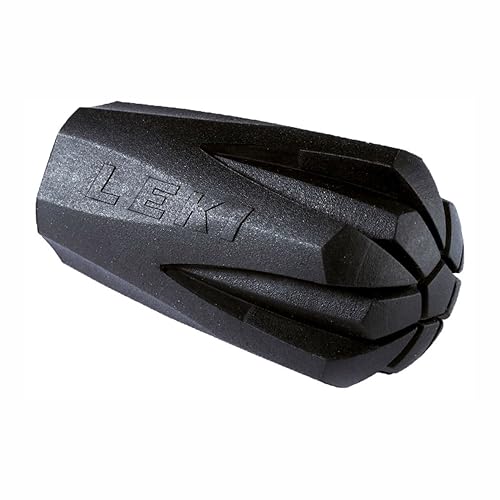
The hardware attached to the bottom of your walking stick alters both its total length and its traction performance across different substrates. Thick vulcanized rubber ferrules generally add between half an inch and a full inch of height to the bottom of a wooden or metal shaft. These rubber boots provide essential friction on hard surfaces like concrete, asphalt, and slick granite slabs, preventing dangerous slipping while dampening harsh vibration. When measuring your ideal stick height, always account for whether the rubber ferrule is installed.
Venturing off paved paths into loose soil, forest loam, snow, or muddy switchbacks requires removing the rubber cap to expose a carbide or hardened steel spike tip. A metal spike penetrates directly into soft ground to anchor your footing, but this penetration effectively shortens your stick by an inch or more as the tip sinks into the earth. On soft terrain, you may find that you need a slightly longer overall shaft setting to compensate for the tip sinking below the trail surface.
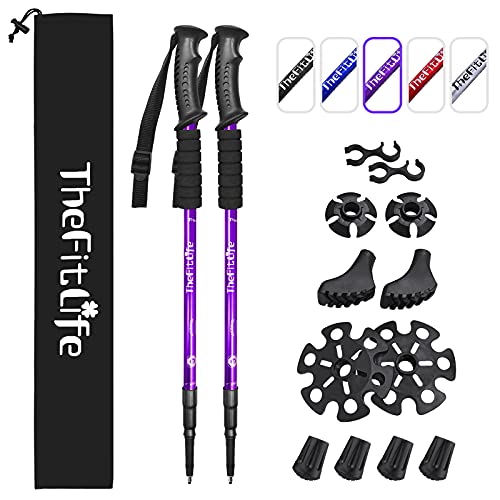
Mud baskets and snow baskets prevent the bottom of your hiking stick from sinking excessively deep into loose scree, boggy peat, or winter drifts. A wide basket acts as a snowshoe for your stick, arresting downward plunge as soon as the disc contacts the ground layer. Maintaining proper tip hardware is also a critical trail safety practice; never use bare metal spikes on wet rock slabs or polished indoor tiles, where the lack of friction could cause the stick to slide out abruptly from under your weight.
Fixed Hardwood Staffs Versus Multi-Section Adjustable Shafts
Choosing between a fixed-length wooden staff and an adjustable metal walking stick involves weighing aesthetic craftsmanship against trail adaptability. Traditional handcrafted sticks crafted from natural hardwoods like hickory, sweet chestnut, oak, and hazel provide unmatched visual character and organic vibration dampening. However, a wooden staff must be cut to an exact, unchangeable length using a fine-toothed hand saw before installing the permanent brass or steel ferrule. Once trimmed and sealed with boiled linseed oil, a wooden stick cannot be lengthened if you change your footwear or hiking style.
Multi-section aluminum walking sticks provide immense versatility for travelers and hikers who encounter diverse topographical gradients. Modern sectional staffs, such as the Autuveen aluminum tactical stick, use modular threaded segments that let you customize overall length by adding or removing individual sections. Extending up to forty-three point seven inches across its five threaded sections, an adjustable metal system allows quick personalization for different family members or storage inside a compact carrying case.
While solid hardwoods offer remarkable structural rigidity and heirloom durability, collapsible alloy sticks shine during vehicle transit and airline travel. A multi-piece aluminum staff packs down into a small footprint that easily stashes inside a daypack or carry-on bag alongside lightweight hiking pants for trail mobility. Evaluating whether you prioritize the natural flex and timeless feel of solid timber or the modular packability of sectional metal will guide your purchasing decision.
Recognizing Signs Your Hiking Stick Is the Wrong Height
Hiking with a stick that does not match your anatomical proportions quickly produces telltale physical symptoms. If your walking stick is set too tall, your shoulder on the carrying side will continuously shrug upward toward your ear with every forward plant. Over several miles, this unnatural elevation triggers painful muscle spasms in your upper trapezius, levator scapulae, and cervical spine. An overly long stick also forces your elbow into extreme flexion, making your arm tire out long before your legs do.
Conversely, relying on a walking stick that is too short causes you to pitch your upper body forward, breaking your upright spinal posture. Bending forward at the waist to plant a short stick increases shear strain across your lower lumbar vertebrae and tightens your hip flexors. Furthermore, a short stick fails to reach the ground early enough on steep descents, leaving your knees completely unprotected from jarring downhill impact forces when you step down off boulders.
Your natural walking cadence provides the clearest indicator of proper height calibration. A properly sized stick should swing forward effortlessly in coordination with your opposite leg, planting softly without requiring you to reach, lean, or contort your torso. If you notice yourself constantly tripping over the bottom ferrule or dragging the stick clumsily behind your heels, re-evaluate your handle height and adjust your grip mechanics accordingly.
Practical Height Reference Guidelines and Quick Sizing Formulas
When ordering a walking stick online without the opportunity to test it hands-on, standard mathematical formulas offer a dependable starting point. For level-ground walking sticks and canes, multiplying your total standing height in inches by zero point six eight gives an approximate target length for the ninety-degree elbow bend. For example, a hiker who stands five feet ten inches tall (seventy inches) would calculate seventy multiplied by zero point six eight, yielding an estimated stick length of roughly forty-seven point six inches.
For full-length hiking staffs designed to reach chest height, general height brackets provide a reliable buying guide. Hikers under five feet four inches typically perform best with a staff measuring forty-five to forty-eight inches. Walkers between five feet four inches and five feet eleven inches generally find a fifty to fifty-two inch staff ideal for diverse trail gradients. Hikers standing six feet or taller usually require a staff measuring fifty-four to fifty-eight inches to maintain comfortable descending leverage without bending their spines.
Keep in mind that individual body proportions, such as unusually long arms or torso dimensions, can shift these general guidelines by an inch or two in either direction. If you find yourself positioned exactly between two standard staff sizes, it is almost always wiser to select the longer option. A taller staff allows you to grip further down the shaft whenever needed, whereas an undersized stick permanently restricts your hand placement and downhill reach.
Balance Assistance Boundaries and Trail Safety Verification
Before setting out on any outdoor excursion, it is vital to recognize the distinction between recreational balance sticks and certified medical mobility devices. Outdoor walking sticks and tactical staffs are designed solely to assist posture, provide balance stabilization on uneven ground, and offload modest joint pressure during trail descents. They are not FDA-cleared clinical mobility aids and should never be relied upon for full body-weight bearing following acute orthopedic injuries or severe vestibular disorders.
Conducting a brief safety inspection before every hike ensures your equipment will not fail unexpectedly on the trail. Check that all threaded connections on multi-section poles are seated tightly without cross-threading or mechanical wiggle. Inspect the rubber ferrule at the base to verify that the internal metal washer has not punched through the rubber compound, exposing bare metal that could slip on slick rock. For wooden staffs, scan the grain for hairline fractures or moisture rot that could compromise structural integrity under sudden downward load.
Dialing in the correct hiking stick length transforms a simple piece of outdoor gear into an extension of your own skeletal frame. By assessing whether your adventures call for a precise ninety-degree elbow fit on level paths or a taller multi-grip staff for rugged alpine switchbacks, you can choose the ideal tool for your journeys. Take the time to measure accurately with your boots on, test your arm angles, and enjoy the dependable stability that a well-fitted walking stick brings to every outdoor mile.





Write Your Review
No reviews yet. Be the first to share your experience!