


Navigating steep woodland trails or neighborhood sidewalks requires a steady balance point that keeps the spine straight and offloads joint pressure from tired knees. Determining what size walking stick for 6 foot man depends directly on whether the primary goal is casual neighborhood walking support or rugged backcountry descent stability. While traditional walking canes rely on a hip-height posture to support downward leverage, outdoor hiking staffs require greater overall length to accommodate uneven topography and varying hand grips. Pairing a dependable staff with durable footwear and protective hiking pants can transform demanding descents into confident, controlled strides.
A person standing six feet tall needs distinct shaft measurements depending on the stick architecture and intended terrain. Level surface walking generally calls for a handle resting between 36 and 38 inches from the floor, allowing the elbow to rest at a comfortable 90-degree angle. In contrast, wilderness trail staffs usually measure between 55 and 58 inches, with specialized mountain staffs extending up to 72 inches for steep downhill braking. Selecting the right height ensures proper posture alignment, prevents shoulder cramping, and maximizes the natural shock-absorbing qualities of seasoned timber and modern alloys.



Sizing Guidelines and Structural Selection for a Six-Foot Walker
A walker standing six feet tall faces a common challenge when browsing walking sticks, because standard sizing charts often group taller adults into vague, overly broad categories. Sizing errors can quickly turn an otherwise dependable walking stick into an ergonomic liability that strains the shoulder, arches the lower spine, or skitters unpredictably across slick rocks. Getting the right length requires evaluating your standing posture, your footwear, and whether your primary destination is a paved neighborhood sidewalk or an uneven wilderness trail. Understanding these sizing rules helps you move confidently while offloading stress from hard-working joints and maintaining an upright walking cadence.
The Essential Distinction Between Walking Canes and Hiking Staffs
The first step in finding the right stick dimensions is distinguishing between a street walking cane and a backcountry hiking staff. A walking cane is engineered primarily for direct, downward balance support on flat, predictable surfaces like pavement or interior hallways. It must sit relatively low against your frame so your elbow maintains a slight bend while your shoulder stays completely relaxed. If a cane is sized too tall, your shoulder hikes upward with every step, creating neck stiffness and upper-back fatigue over longer walks.
A hiking staff, by comparison, serves as a dynamic balancing lever across fluctuating gradients, mud, stream beds, and loose talus. Because mountain trails rise and fall beneath your boots, a hiking staff must reach much higher on your torso than a standard city cane. Traditional trail staffs typically reach chest or shoulder height to give you multiple contact zones along the shaft. This additional length provides forward reach during steep climbs and crucial braking leverage when you descend slippery switchbacks.
Precise Floor-to-Wrist Measurement for Everyday Walking Support
For standard balance assistance on sidewalks, level paths, and indoor floors, a six-foot man almost always requires a stick height between 36 and 38 inches. The standard measurement protocol begins by standing straight in your everyday walking shoes on a firm, level floor with your arms hanging naturally at your sides. Measure the vertical distance from the crease of your inner wrist down to the floor surface. For most men standing six feet tall, this measurement falls right around 37 inches, assuming typical arm and torso proportions.
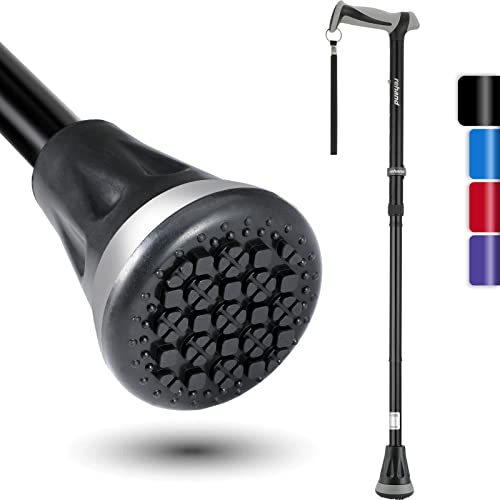
When you place your palm on a handle sized to this wrist crease measurement, your elbow naturally settles into a comfortable 15 to 20-degree bend. This slight bend acts like an anatomical shock absorber, allowing your arm muscles to cushion downward impact without jarring your shoulder joint. Fixed-length models like the GUYUE Handcrafted Wooden Cane arrive with a total length of 37 inches, tailored directly for individuals between six feet and six feet five inches. Adjustable aluminum options like the REHAND Folding Walking Cane offer eight push-button settings spanning from 31 to 38 inches, giving you room to fine-tune your height for varying shoe soles.
Trail Staff Sizing: Why Chest-to-Shoulder Height Dominates the Outdoors
Stepping off asphalt and onto woodland tracks completely changes your physical relationship with your walking stick. On an uneven footpath, a six-foot hiker requires a staff that stands between 55 and 58 inches tall, which generally aligns with the armpit or collarbone. Sizing guidance for the Brazos Twisted Hickory Walking Stick explicitly designates a 58-inch staff for individuals standing five feet eleven inches and taller. This taller profile accommodates changing trail slopes where the ground level rises or drops with every single stride.
When hiking uphill, your hand can naturally shift down the timber shaft to maintain an optimal 90-degree pushing angle without altering your upright posture. Pairing this balanced stance with comfortable lightweight hiking pants allows your hips and legs to move freely through steep switchbacks. During descents, the extended length lets you plant the tip several feet ahead before stepping downward, creating a rigid braking strut that absorbs deceleration force before it reaches your knees. You can easily cup the rounded top knob of the staff to steady yourself on steep downhill grades.
Full-Length 72-Inch Mountain Staffs and Multi-Point Grip Dynamics
For rugged backcountry trekking and steep mountain ascents, some outdoorsmen prefer an extended 72-inch staff, such as the CreationCarvings Tall Hickory and Elm Walking Stick. A six-foot staff matches user height exactly, extending all the way to the crown of your head when resting on level ground. While a six-foot staff might seem unusually tall at first glance, it provides tremendous versatility when crossing boulder fields, traversing river shallows, or clearing overgrown brush. The extra timber gives you leverage that shorter walking sticks simply cannot provide.
An extended 72-inch staff functions as an adaptable climbing tool through multi-position hand placement. On steep vertical pitches, you can grip the shaft at mid-chest level while using the upper timber as a visual plumb line and stabilizing counterweight. Navigating swift mountain streams also showcases the utility of a full-height staff, letting you probe underwater depths while keeping your hands dry above the waterline. Carrying trail gear in a supportive hiking backpack makes this multi-point stability especially valuable, as shifting pack weight can easily unbalance a tall hiker on wet, mossy river stones.
Shaft Material Mechanics: Hardwood Shock Absorption Versus Modern Alloys
Shaft composition plays a major role in how a walking aid manages vibration and structural load for a taller individual. Dense domestic hardwoods such as hickory, elm, and oak provide an organic dampening effect that synthetic materials struggle to replicate. Hickory in particular features an interlocking grain structure that exhibits subtle longitudinal flex under downward load, effectively buffering the impact shock that would otherwise travel into your wrist and elbow. Single-piece timber options like the Vive Wooden Walking Stick use natural willow coated in a clear weatherproof sealant to resist rain and trail mud.
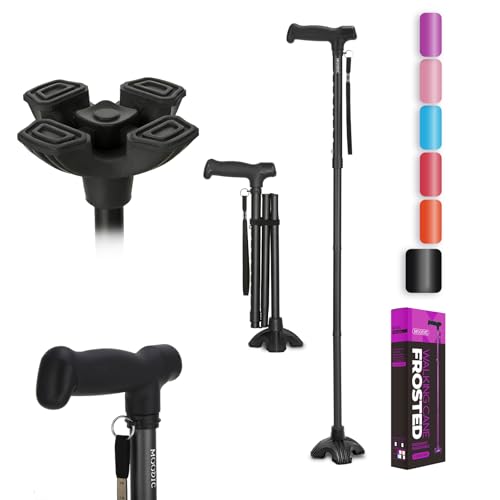
Because solid wooden staffs contain no mechanical push-buttons, cam levers, or internal expansion collars, they cannot slip or collapse unexpectedly when subjected to downward force. Modern aluminum alloy designs provide a different set of functional advantages, led by rapid adjustability and compact travel convenience. Collapsible models like the MOODIC Tall Men’s Walking Cane utilize thickened alloy shafts rated to support up to 300 pounds while weighing under a pound and a half. These metal shafts fold down into compact segments that slip easily into luggage, making them convenient choices for road trips and flights.
Handle Architecture and Ergonomic Load Distribution
The interface between your palm and the walking aid dictates how long you can travel before developing hand cramps or friction blisters. Traditional walking sticks designed for street use often feature derby, crook, or contoured palm grips that disperse downward pressure across the broader surface of the hand. The REHAND walking cane uses an enlarged ergonomic grip crafted with an interior polypropylene core and a soft thermoplastic elastomer outer wrap. This layered construction cushions the sensitive ulnar nerve at the base of the palm, preventing the numbness that often plagues taller walkers using narrow handles.
Hiking staffs require a different grip philosophy because trail hands shift position constantly across varying terrain. Traditional carved staffs feature grooved upper sections, leather wrist lanyards, or smooth polished shafts that allow immediate grip transitions without stopping to adjust mechanical hardware. The Vive hiking stick incorporates shallow hand grooves along the upper portion of the willow shaft, offering positive tactile grip even when your hands are slick with rain. Remember to keep wrist lanyards loose on steep descents so your hand can release safely if the tip catches between submerged rocks.
Ground Contact Hardware: Rubber Ferrules, Pivoting Bases, and Trail Tips
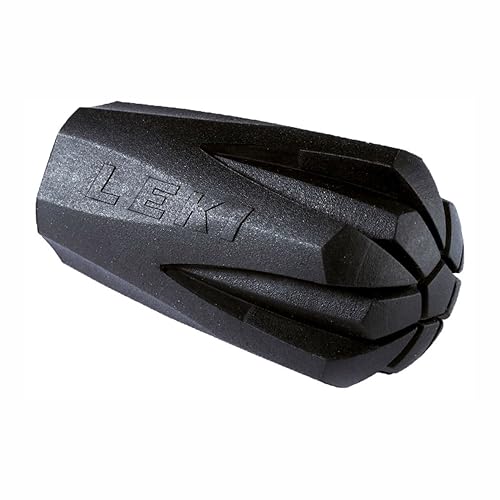
The tip of your walking stick determines whether the aid grips the ground securely or slips across hard surfaces. Most wooden walking sticks and trail staffs terminate in a heavy-duty vulcanized rubber ferrule, which provides dependable friction on pavement, packed dirt, and granite slabs. Quality rubber ferrules contain an embedded internal steel washer at the bottom of the socket cavity. This metal washer prevents the sharp, tapered end of a hardwood shaft from punching through the rubber base under repeated downward impacts.
For level urban walking, multi-point pivoting quad bases offer superior balance assistance compared to single rubber caps. Folding canes from MOODIC and REHAND incorporate wide, four-pronged pivoting bases that rotate naturally with your walking gait. This pivoting action maintains flat, continuous rubber contact with the sidewalk regardless of the angle at which the cane shaft strikes the ground. Never use bare metal spikes on paved asphalt, smooth river rocks, or finished indoor flooring, as bare metal offers virtually zero friction on hard surfaces and can slip outward without warning.
Trimming, Fitting, and Maintaining Fixed-Length Wooden Sticks
Purchasing a fixed-length hardwood walking stick often requires a minor home adjustment to achieve a customized, millimeter-perfect height. If you select a 37-inch wooden cane and find it sits slightly too tall for your arm length, you can easily trim the shaft from the bottom end. Begin by gently prying off the friction-fit rubber ferrule, taking care not to gouge the surrounding wood grain. Stand naturally in your walking shoes, verify the exact height of your inner wrist crease, and mark the excess length along the bottom tenon of the stick.
Use a fine-tooth handsaw to make a clean, square cut across the bottom mark, and lightly chamfer the outer edge with medium-grit sandpaper so the rubber ferrule slides back on smoothly. Tap the newly seated rubber tip against a carpeted floor to ensure the wood rests firmly against the interior steel washer. Long-term maintenance of natural wooden staffs requires keeping the timber protected against moisture cycles that cause swelling and surface checking. Hardwoods like hickory and willow thrive when wiped clean of trail mud and conditioned once or twice a year with a light coat of boiled linseed oil or pure tung oil.
Biomechanical Safety Boundaries: Balance Support Versus Medical Crutches
Every tall walker must understand the clear dividing line between a recreational balance aid and a clinical weight-bearing device. Traditional wooden walking sticks and folding balance canes are engineered to provide an extra point of ground contact, offload mild joint fatigue, and steady your stride over uneven obstacles. They are not designed to function as full weight-bearing orthopedic crutches for severe lower-limb injuries or acute post-surgical recovery. Leaning full body weight onto a single wooden staff or folding cane places immense lateral leverage on the shaft, which can lead to unexpected bowing or loss of control.
If a medical condition requires you to keep all or most of your body weight off a recovering limb, a standard walking stick cannot provide adequate structural support. For genuine non-weight-bearing recovery, healthcare professionals prescribe dedicated underarm crutches or rigid medical walkers designed specifically for high vertical load transfer. When used within its intended purpose, a properly sized walking stick acts as an empowering trail tool that restores walking confidence and smooths out trail rhythms. Sizing your stick correctly ensures every step remains stable, comfortable, and supportive across all your outdoor journeys.




Write Your Review
No reviews yet. Be the first to share your experience!